Alibaba

I like to follow the tech companies as a matter of interest; much to my embarrassment, I knew very little about the upcoming float of the Chinese tech company Alibaba Group Holdings on the New York Stock Exchange, so some research was in order.

  
Looking at what they do, I read the core business activities around an English language portal handling sales transactions between importers and exporters; basically a business-to-business portal linking Chinese manufacturers with overseas buyers. I view with interest eCommerce businesses with little to no revenue, no solid business plans to generate solid revenue streams that tend to generate unrealistic expectations and pricing.

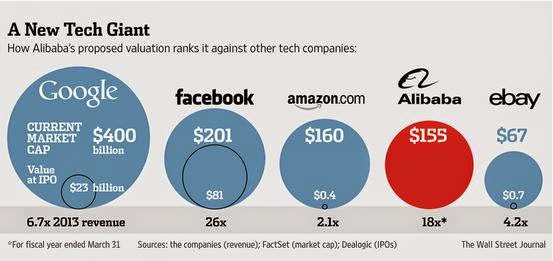
The secondary business revolves around Taobao, the consumer-to-consumer eCommerce portal that is similar in operation to eBay targeting mainly Chinese consumers with revenue exceeding Amazon.com and eBay combined. This is not a business with shaky earnings going to market seeking shareholder funds to stay afloat, it does appear to have higher price/earnings ratio than all tech companies except Facebook.

According to the Wall Street Journal, a market capitalisation of $155 billion will place Alibaba slightly behind Amazon.com in terms of size and approximately double the size of eBay. A fairly high projected price/earnings ratio sees of 18 times compared to Amazon’s 2.1 times and eBay’s conservative 4.2 times earnings. This appears to be an extremely interesting IPO that will be well worth following.

Wellington Dam – Collie

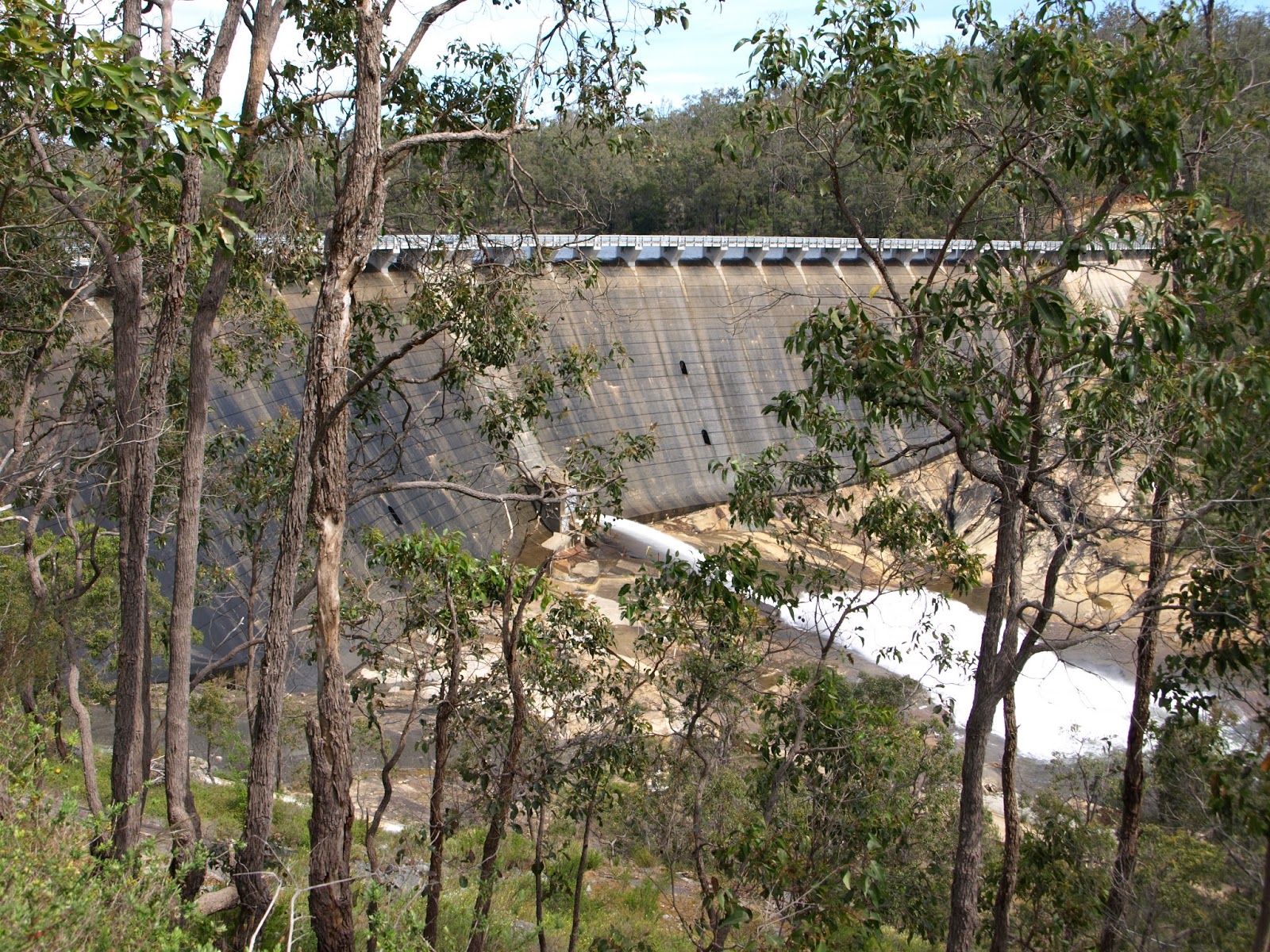
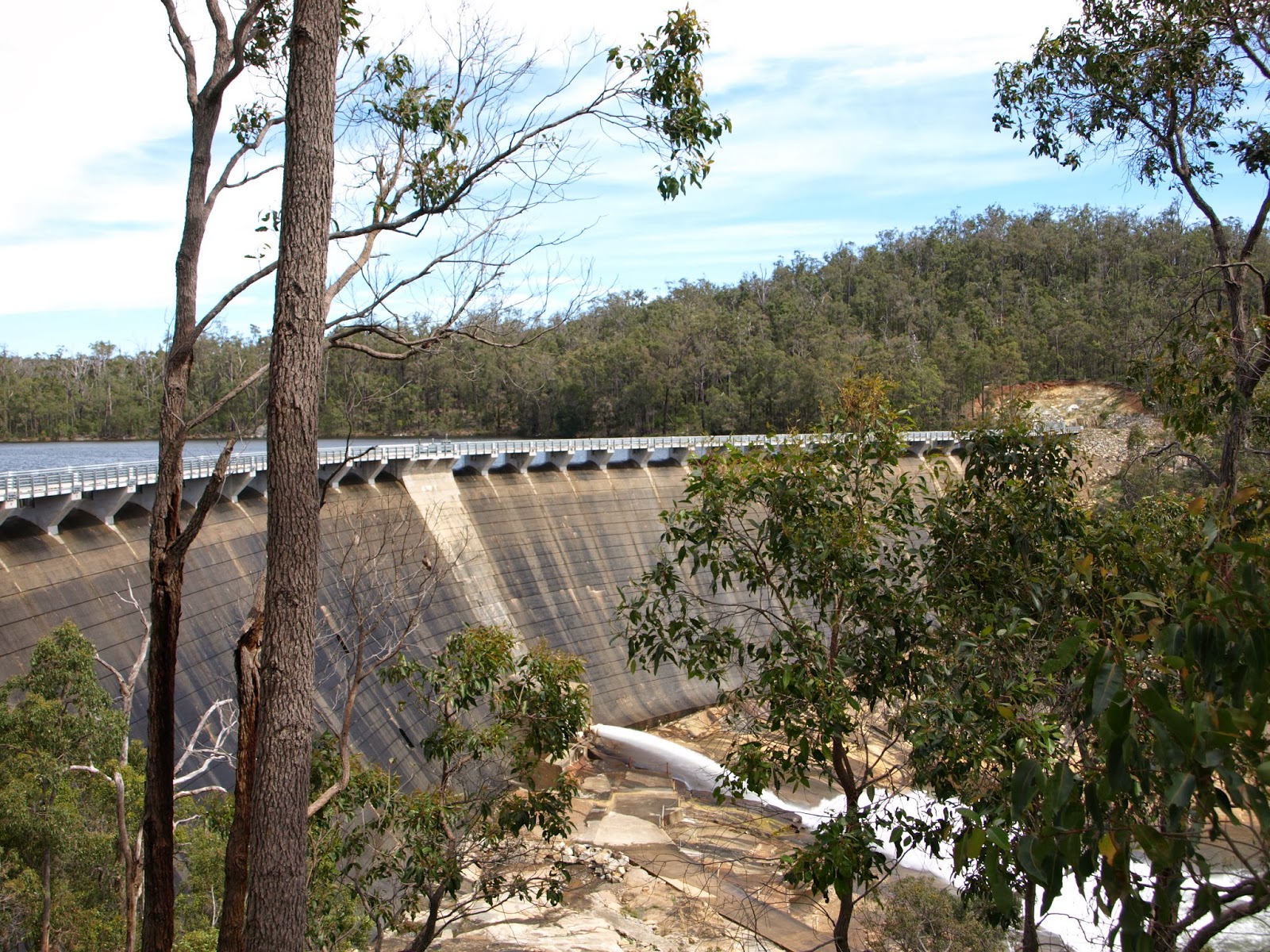
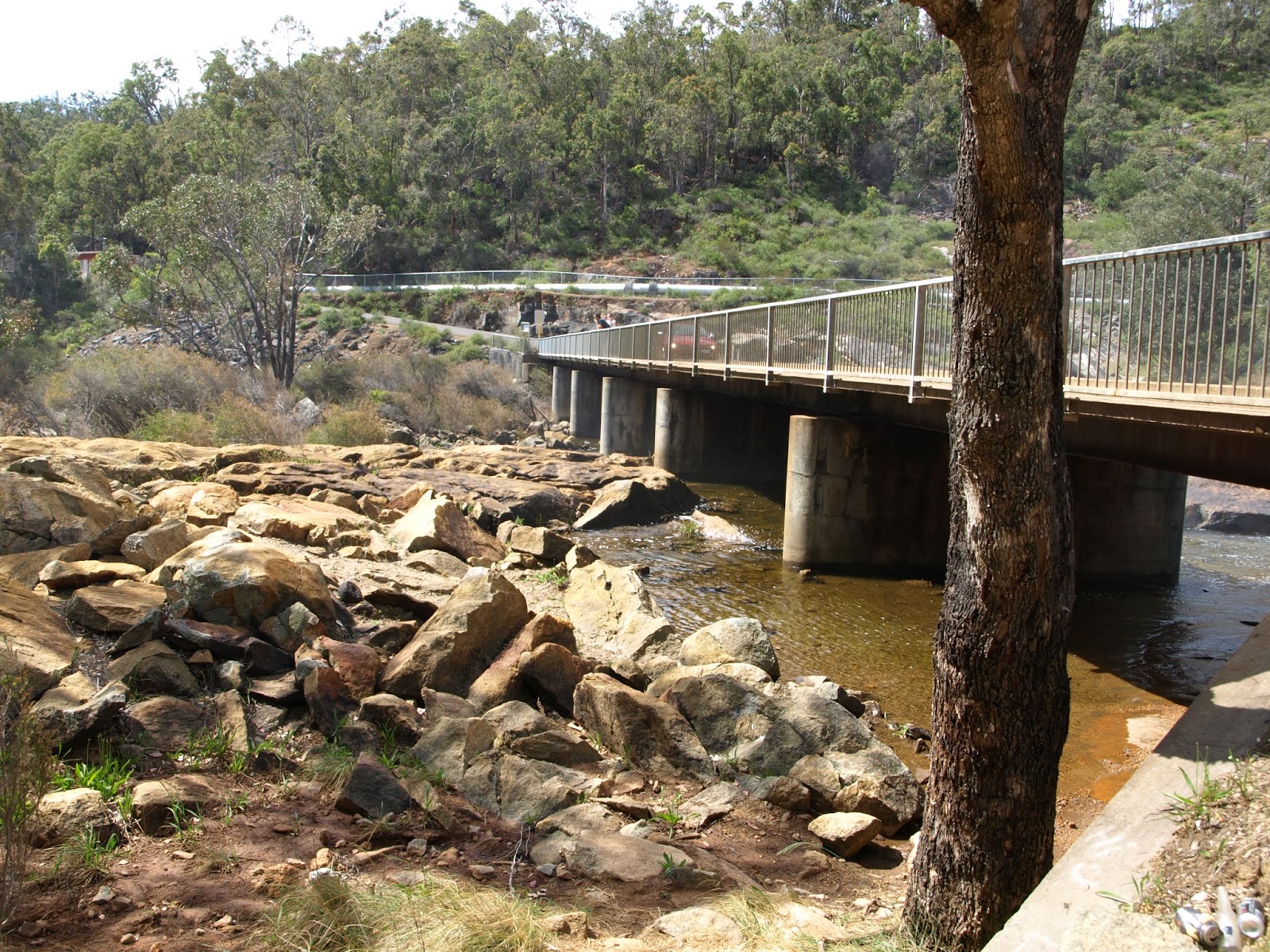
The Wellington Dam in Collie supplies water to the south west region of Western Australia, on a recent drive through the area, we stopped at the dam before heading to Bunbury.

The dam overflowed in September 2013, the first time since 2009. The last time a Perth dam overflowed was in 1996, the level of the Wellington Dam was once again close to overflow when we visited in November – a very wet spring accounted for the excess water.

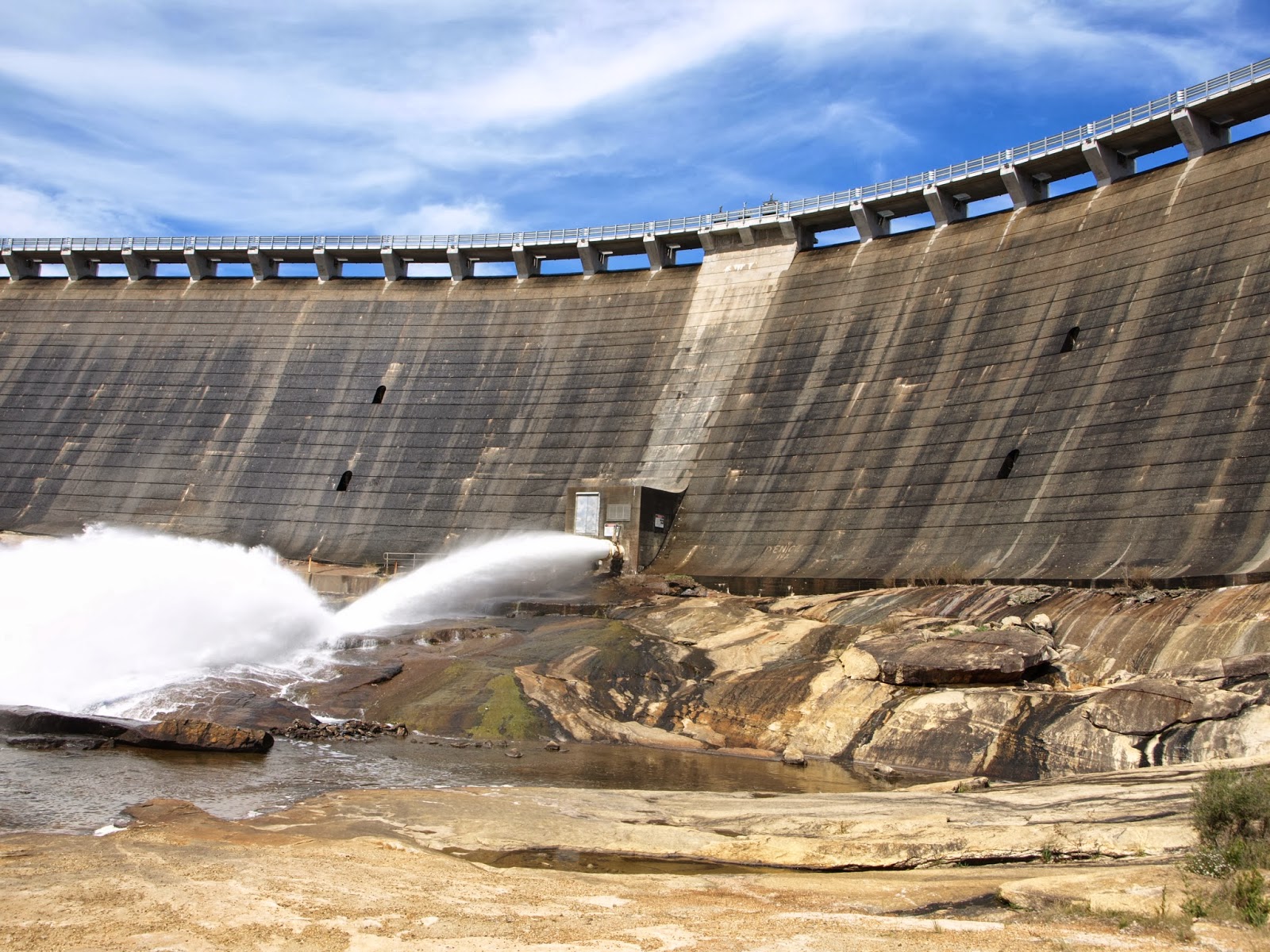
The outlet pipe shoots a stream of water down to the overflow region where a bridge allows access.

Only a small degree of overflow is occurring, this is the water exhausted through the outlet pipe at the base of the dam.

S97 state titles

A long weekend is a time for rejoicing, especially at the end of a long Perth summer when you have three days of sailing looming. Yachts in this class are moored at the Royal Perth Yacht Club, South of Perth Yacht Club and Royal Freshwater Bay Yacht Clubs on the Swan River.

As this is a blue water weekend; the yachts have to be motored down river, dropping the mast to clear the three bridges separating Fremantle and North Fremantle before mooring on the pontoons of the Royal Perth annex.

Rigging the yacht in the marina pre-race; the Royal Perth Yacht Club Fremantle annex requires yachts to be tied together, it makes rigging a little cluttered but very sociable.

The advantage of the S97 is the inboard diesel engine; no need to sail out of the pens, marina or onto the course. The downside was we snagged so much weed on the prop, we were slowed down on certain legs and paid dearly over the weekend.

Starting down the pin end, we believed a clear advantage could be gained by heading to the port side of the course, we sought clear air but got locked in position leaving us with limited maneuverability.

A great duel between yachts ensured close racing over the weekend, the difference between first and last was very narrow, any advantage required careful planning and positioning.

As the fleet splits heading towards the windward mark, we felt the advantage to the port side would give us a distinct advantage, however, we got buried at the windward mark on port tack.

Heading past the windward mark, setting the spinnaker pole and hoisting the spinnaker is where superior crew work pays dividends. Only a couple of weeks later, our forward hand was contacted by a radio station in regards to her being the oldest forward hand competing on the Perth waterways.

Spinnaker set and heading downwind, the light winds over the weekend suited a number of boats, unfortunately for us, heavy breezes didn’t eventuate – this just wasn’t our regatta.

What is wrong with TAFE?

I have been a lecturer for going on a decade now, for those of you who don’t know what TAFE stands for, it is Technical and Further Education, but the real question is, what does TAFE really stand for?

As a technical college, vocational training in trades based skills drives industry and the economy, there is little doubt a highly literate and skilled workforce drives economic development – the Technical of TAFE. The equity side of the equation sees similarities to the community college model – the Further Education; community access and lifelong learning.

The vocational education and training (VET) sector sits between the high schools and higher education providers, their lower level qualifications are eroded by the high schools system whilst their higher level qualifications are regularly poached by the university sector. The real strength of the TAFE sector is technical training in the form of apprenticeships and community access.

But what does it really take to become a TAFE lecturer? Well, you need vocational competencies, a lecturer needs extensive experience in the industry, you also need to maintain such competencies and you then need training qualifications. The Certificate IV in Training and Assessment is a totally worthless qualification, even deemed an at risk qualification by the auditing body. Making practitioners update to the latest qualification as the old ones were handed out in their droves in a race to the bottom does not improve quality.

Because, guess what? The low quality colleges churning out weekend Certificate IVs just do the same with the new qualification – they churn them out en masse.

The qualification should take close to six months fulltime study, a standard Certificate IV qualification aligned to the Australian Qualifications Framework is basically a supervisor’s qualification. Yet this qualification is often completed in just a weekend. I had to upgrade from the older qualification to updated qualification as required by the college, it took me just four hours to complete. Now while I held the older qualification, it doesn’t seem much effort, I did, after all know the material well.

You can imagine my surprise when some experienced staff, that is ten plus years employment, were unable to complete the upgrade themselves. As you can well imagine, the benefit to a practitioner of a four hour upgrade is highly questionable, it is purely a paper shuffling exercise, everyone knows it. Then the department can say, we have a highly qualified workforce, that may be true, they have met their KPIs. The question remains, do we have a highly skilled and technically competent workforce? I would say no.

What TAFE and the vocational education and training sector needs is suitability qualified and experienced practitioners. That is dual skills, vocation skills qualified to the level they are instructing to and teaching level skills. The problem then arises, to maintain top notch vocational knowledge and skills, the practitioner needs industry currency, that is, to remain working in the industry they teach.

To take three years to complete a university level teaching qualification usually requires three years fulltime study, to take this time out of industry seriously undermines vocational skills and currency, by the time the practitioner is ready to begin teaching, their vocational currency has already eroded.

The real troubles with TAFE stem from their middle management, that is, at the strategic business unit level. From what I have seen, upper management has shown the ability to strategically position the organisation in a heavily regulated environment. The system recruits outside the system on many occasions, this has the ability to bring new ideas to the organisation, this has to be balanced with enough internal recruitment allowing managers with specific knowledge of the VET system to prosper.

At the strategic business unit level, program managers lack the skills to lead a team mainly due to the fact many colleges will not place program managers in their area of expertise. In an engineering discipline, the college would place a manager from aged care, child care or horticulture. The program manager has to negotiate with business enterprises having a sole engineering purpose, if they don’t know the industry, the sector or the organisations, then problems occur. The program managers do not have the skill to overcome such hurdles, generally holding no management qualifications or experience.

As a state government body, the ability to attract and retain suitable personnel is a burning issue, all too often, a strategic business unit is burdened by non-performing staff. Not only is there no real performance management systems in place, management fails to follow such procedures. Yes, there is a policy document, that is what it is, a document saved in a computer somewhere.

In nine years, I have received only one performance review, apparently, according to colleagues in other business units, that is one more than they have received. I welcome a performance review, not only do I perform, I like many others exceed my job description. I review the manager critiquing him on his ability to provide an environment conducive to perform my duties. In my one performance review, my name was correct on the cover sheet but different in the review, did he not know who I am or does copy/paste work all too well?

The real issue arises from investment in resources, every time I deal with industry representatives, colleagues and myself beg for old components and equipment for our students to disassemble and inspect during practical projects. What this does is ensure management does not invest in the portfolio adding to a mish/mash of learning activities instead of a standardised professional approach. The strategic portfolio is not only profitable, it is highly profitable.

At the divisional directors level, they are able to siphon off revenue to prop up non-performing portfolio areas. They do not invest in the successful portfolio area, marginal areas not driving the state’s productivity are targeted – madness.

The real issue is the design and implementation of learning programs, my specialty. As lecturers are employed with mainly industry backgrounds; the college does not set aside suitably qualified and experienced staff to develop high quality learning programs.All too often, a program manager seeks a good worker with plenty of enthusiasm lacking in program design skills to throw together programs.

A whole professional field exists in program design, instead all too often, embarrassing and unprofessional materials are whacked together not meeting industry training outcomes or learning objectives. Indeed, most times, contemporary learning practices are largely ignored because the designer (that term is used freely) is unfamiliar with adult learning practices, learning models and facilitation methodology.

So, who are the losers here? The students learn material unrelated to their field, they are assessed against unrelated information and ultimately, when they fail, they are considered stupid. They have to remember inconsequential facts and memorise procedures for exams unrelated to their employment. The employers are losers too, they send their apprentices for training, returning to work failing to meet their workplace needs resenting time consuming low quality training that they are required to fulfill.

So, how is this quandary solved? Facilitators are not course design specialists, they instead need to concentrate on program delivery developed by suitably qualified and experienced staff. Mid-level managers must employ course design specialists or purchase professionally designed materials contextualised for their clients. Instead of shuffling funds around spreadsheets, they need to free up suitably trained and experienced course designers and offer a more professional service to their clients.

Program managers require the communication skills to negotiate with team members, the use of performance management techniques to identify possessed skills and knowledge whilst also identifying skills gaps to properly identify the correct person for the task. Utilising incompetent people to undertake high-level tasks purely because of enthusiasm in an attempt to force more competent people to work harder is not management, all this does is diminish the capability of the organisation.

An engineering workshop manager does not ask the trades assistant to undertake intricate diagnosis and testing merely because the trades assistant works hard. A competent workshop manager knows the abilities of their team members utilising the most technically competent tradesperson. The trades assistant may be asked to provide support to complete the job by removing covers, operating the machine, cleaning components and other task related duties.

The manager with no knowledge of engineering workshop management should be running the strategic portfolio like an engineering workshop. The problem is, they do not know how an engineering workshop runs apart from the occasional on-site visit that are nothing more than a photo opportunity. Sure, they have budgets to maintain but really need to leave the bean counting to accounting and finance.


Improving my health on the road

I’m 10 – 15kg overweight now after living an unsustainable existence for the last few years working full-time and studying part-time. I finally have broken the shackles on this overseas trip, not eating snack food whilst locking myself indoors all weekend to read textbooks, academic papers, pour over research and writing assignments to the early hours of the morning.

I had an ad hoc exercise regime at best; it was pretty ineffective really, just wasted money on a gym membership. Was all the study worth it? Too early to tell just yet, in the future, maybe. I still have a further two units to complete in 2015. It will only be one unit per trimester so not so arduous now, I have broken the back of the task, over the hump and on the downhill run. What I can’t allow is myself to be drawn down this path again; I need balance starting with a healthy lifestyle, plenty of rest and recreation overcoming the total exhaustion my life had become.

I am still drinking wine and coffee; yet I don’t require daily Mylanta tablets in the mid-morning around 10:30 am to 11:00 am and sometimes an afternoon one around 3:30 pm to 4:00 pm. So what has changed? I would say stress; while not an expert opinion on the matter, I have no research or empirical evidence to back up my claims, the results seem to speak for themselves. The one component removed from this equation is work related stress – now all I need to do is ensure it doesn’t creep into my life again.

University management

Why is it at not just leading universities around the nation, also second tier institutions as well; the academic staff must have formal vocational qualifications in their field, but management are not required to hold any qualifications at all? This also holds true for the government run Technical and Further Education (TAFE) colleges and private institutions. With no exceptions, no manager needs to be qualified to even a minimum level or hold full membership in a professional management association.

This is not limited to middle managers charged with controlling the great unwashed; that is, the frontline academic staff. This holds true for IT managers, HR managers, accounts managers (the accountant must be qualified though), maintenance managers, facility managers, customer service managers, divisional directors, general managers and finally, the CEO. The person sitting across the desk asking questions at your job interview is likely to be intimidated, maybe scornful and resentful of such candidates, but they need no licence or qualification to do so.

After all, universities churn out in their droves business and commerce students, accounting majors, postgraduate graduate certificates, graduate diplomas and master degrees, even a PhD in Management is available. A Master of Management or the highly prized MBA (and priced accordingly) is a qualification not seen in too many educational establishments.

So why do educational institutions not require their managers to possess the very qualifications they sell? They are in the sales business, the business of education. Do they not rate these qualifications they sell? Are the skills and knowledge not transferable to their business model? Are such qualifications designated for sole use in the private sector?

I wouldn’t think so, contemporary management practice is still management, accounting standards still apply to education and while leadership concepts change as per the situation, you still need to learn the theory, best practice and review case studies. Or really, you don’t need to be qualified to be a manager, this is just a commodity for sale where educational facilities don’t require the very qualifications they sell.

Matirx organisational structures in organisations

When asked about some famous instances of matrix structures for a university management course and how have they fared; I immediately though about the macro task force for the Claremont serial murders.


Residing in Western Australia, the Claremont serial killer case dominated the news locally for years and at this time is still unsolved. In 1996, an 18 year old woman disappeared followed by another two disappearances later in 1996 and 1997 from the same location almost without leads despite extensive CCTV technology erected after the first disappearance.

The Western Australian Police Force (WAPOL) assembled a task force after the second attack, to be known as the macro task force. The task force was assembled with personnel from a number of police units to investigate the disappearance of the then two women, with a further third disappearance, who at this time has never been discovered is missing presumed deceased. The bodies of the second and third victims have been discovered.

A criticism of the formation of the macro task force was that a team needed to be assembled from scratch with unfamiliar team members from different units losing essential investigative opportunities when leads with still fresh. At the time, police funding cuts and force structure change did not allow smooth transition due to internal restructuring efforts to achieve organisational and cultural change. The macro task force could be considered a matrix structure; viewed in a similar style to a project team.

Since then, the major crime squad has been reformed in 1997 with personnel holding investigative, forensic and intelligence expertise and skills. The initial leader of the macro task force was also involved in the recent Lloyd Rayney murder trial (no conviction recorded) and the Iveta Mitchell disappearance, presumed murdered but unsolved. The macro task force has been subject to 11 internal and external probes with none reporting errors or oversights.

Martin Luther King’s legacy

Room 306 at the Lorraine Motel, Memphis, Tennessee is the site of the 1968 assassination of Martin Luther King Jr, the prominent civil rights activist. Naturally, I knew of the “All men are created equal, I have a dream” speech. I must profess, I was unaware of sanitation worker’s strike or the events leading up to the fateful day. Today was the day I learned a little of contemporary American civil rights history without even going inside.

I was sitting outside on a retaining wall over the road; I was listening to these elderly southern ladies chatting. In their thick southern accent, I very much enjoyed listening to their colourful stories, they were joyful and happy, some of the things they said were just gold.

As I, she was waiting outside, she didn’t want to go inside to witness the museum for different reasons than me when she came out with “I don’t find this so exciting, I lived through the time, I don’t want to relive this.” I opened my tablet and started tapping keys, this was a defining moment in my United States trip, I wanted to make sure I recorded this moment.

The other lady came out and started describing the museum tour, she didn’t like it much, it was a little crowded and she was unable to go at her own pace when she came out with “I don’t like no confining, I like my freedom.” My blog is observations in an undemocratic world; my short time sitting on that retaining wall outside the National Civil Rights Museum in Memphis, Tennessee listening to these two wonderful southern women defines what I am trying to achieve, I only hope I do this moment justice.

The PADI Advanced diver certification

Does anyone really seriously believe a diver can not only be awarded an entry-level certification in three days, but a further five dives in two days allows them to be considered an advanced diver?

Apparently PADI, the Professional Association of Diving Instructors does. An advanced diver in less than a week with less than 10 dives logged, all training dives too. But what does this really mean? What do you learn on a PADI advanced diver course to make you an advanced diver? The navigation dive is good, no qualms about that, one dive won’t give you excellent navigation skills, it does introduce the diver to the compass in more detail, navigating a square using distance estimation underwater although I have never used fin strokes in a dive to navigate.

The deep dive is pretty worthless in its current form, anything deeper than 18 metres and no deeper than 30 metres, underwater tasks are more for giving you something to do so you can sell the course as a training dive. Most of the other dives don’t even require in-water or direct supervision. Is a boat dive, underwater photographer dive, fish ID dive, underwater naturalist dive, digital underwater photographer dive, multi-level dive an advanced training dive, the list goes on.

You are only performing only five dives needing a minimum time of 20 minutes per dive and only needing to exceed a depth of 5 metres (with the exception of the deep dive) to log the dive. This is purely a course for dive centres to sell courses to newly certified divers, PADI sells course materials and the certification fee allowing instructors to sell further marginal specialty diver courses. That’s about it.

What happened to Kodak?

During business courses, we look at case studies identifying strategy seeking to establish a cause and effect scenario, the question then arose, what then happened to Kodak?

As we know, Kodak was the world’s leading photographic film producer, an iconic global company brandishing a solid reputation before seeking Chapter 11 bankruptcy protection in the United States in early 2012. At the height of Kodak’s dominance in the mid 70s; the company held a 90% market share in the United States as well as worldwide market leadership. Eastman Kodak’s main business divisions now include digital printing, graphics, entertainment and commercial film technology, but what happened?

Major rival, Japanese based Fuji Film is not only still operating, the company is actively engaged in the digital photography business. The digital camera market is highly competitive; dominated by the traditional camera manufacturers of Nikon, Canon and Olympus; newer entrants of Lumix, Sony and former competitor Fuji Film add further competitive pressure. Who really uses a Pentax camera anymore?

The modern smartphone boasts an impressive camera and editing options for Samsung, iPhone, Blackberry, HTC and Sony users. Whilst the high quality DSLR will not be replaced for serious photographers anytime soon; both the compact and point and shoot camera market face stiff competition from mobile phone handsets.

Financially struggling throughout 1990s, the severe decline in sales of photographic film coupled with delays transitioning to digital photography technology caused severe financial duress for Kodak. Despite inventing core digital camera technology; Eastman Kodak failed to take advantage of its dominant position rapidly losing market share and revenue – profits diminished quickly.

Nokia is an example of a market leader with a dominant position rapidly losing market share and plunging revenues through slow rollout of technology due to technical issues, Microsoft beat Apple to market setting Apple’s development back years. Microsoft bought out the faltering Nokia handset and smartphone business and has now been eclipsed by Apple.

Early in 2013, court approval was granted allowing refinancing; Eastman Kodak emerged from bankruptcy in mid-2013. Eastman Kodak proceeded to sell numerous patents to competitors including market leaders Samsung, Microsoft, Facebook, Google, Apple, Amazon, HTC and Adobe Systems after attempting to generate revenues through somewhat aggressive patent litigation.

The revitalised strategy now involves Eastman Kodak focusing solely on digital photography and digital printing. During 2012, Eastman Kodak announced the company would no longer manufacture digital cameras, video cameras and digital picture frames, instead focusing on the targeted niche of the corporate digital imaging market.

During 2012, Eastman Kodak announced the sale of photographic film, with the exclusion motion picture film technology, their kiosk operations and commercial scanners to emerge from chapter 11 bankruptcy protection. Kodak still exists as a company; however, the restructure saw the company slip from a consumer based enterprise to a business focusing on corporate clients. Will Eastman Kodak under the revamped strategy continue into the future, or will the sale of intellectual property undermine future earnings?