Windows XP

As I travelled through eastern European countries, I became aware a large number of computers were still using the Windows XP operating system. From private shops, hotels and train booking counters; despite the fact Microsoft had withdrawn support for the now outdated software some time ago, the operating system was still in use despite the potential security risks.

Could third parties provide sufficient protection? I work at a state government college, we still used Windows XP right up to just weeks before the Microsoft support ended. I had asked the IT guys two years earlier why we hadn’t upgraded to Windows 7, they replied that this was not a stable platform as yet.

This begs the question, if a company like Microsoft is building obsolescence into their product, why not switch to a provider operating on different fundamentals? Business enterprises like Woolworths are making the switch to the Google operating system, Apple is providing business solutions to rival Microsoft and a host of providers such as Linux and Oracle offer corporate software packages. Why support a company with a business plan that basically shafts you?

The value of World Vision

I would not consider myself a religious person, the christian organisation World Vision is a worthwhile example of christian principles building hope across the developing world. I view this as an ethical organisation; whilst I don’t identify with their faith but I do identify with the values that this wonderful organisation espouses.

Care Australia, Oxfam, AusAID, Caritas Australia and Childfund Australia are of course worthy charities; I chose World Vision as it sponsors education for children. I feel education will impact on children’s lives leading to improved future outcomes for their regions and a sustainable community. They have low administrative costs, advertising is reasonable, they lose around 21% of funds to internal costs, that offers around 19% to their programs, I am fine with that.

Viewing World Vision’s Australian website, accountability is high as many people are concerned that their donations are spent on high wages and charges in Australia. With slightly under 10% spent on administration, one feels somewhat relaxed in the knowledge the funds are destined for grassroots projects. While I feel people should receive payment for their efforts, no one wants to see a top heavy organisation consisting of highly paid consultants creaming charitable donations – it would appear, this is not the case with World Vision.


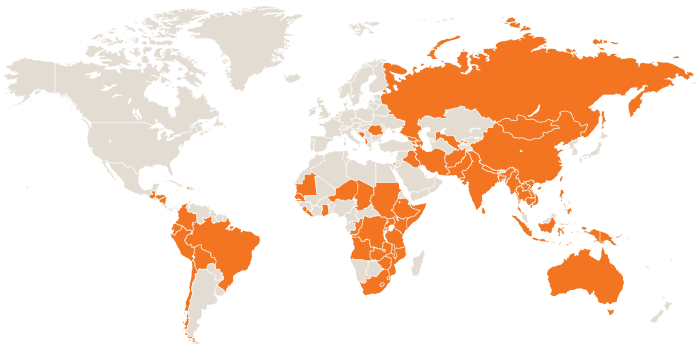
Looking at their coverage area, the work of World Vision is truly international, their strategic positioning ensures South America, Africa, Central Asia and South East Asia is represented. I personally believe this is a fantastic organisation, they provide a great service and they look after the needs of children, they are well worth supporting.

Rafting in Bali

This was not my first outing with Bali View Rafting and it is easy to understand why. The hotel pick-up was on time and polite. After a reasonably long drive up to the high ground, checking into the facility is a bit strange. While you receive a small container of bottled water, you just stand around waiting for your guide to introduce himself, formalise payment and provide you with your equipment and the briefing.

That is all forgotten when you shove off and your adventure begins. The guides are good, negotiating their way down the rapids with skill and expertise. At just over 12 km, you can expect to take around 2 hours for your adventure to unfold. Some of the highlights are the stop at the waterfall and the 4 metre drop over the wall. There is a 6 metre drop, however, you disembark just before while the guide pushes the empty raft over the edge and collects it on the other side.

At the end of the trip, a climb up the stairs with paddle and life jacket is all that is needed, the support staff look after the raft while you hit the showers and into dry clothes. Lunch is provided, the guides come around with photographs of your day for sale. I was very happy with our guide and was more than happy to tip him, we had laughs, some spills, plenty of adventure and it was all done safely.

Higher education deregulation

The question of higher education reform initiated through fee deregulation is an emotive issue in Australia, driven by ideological thought, such reforms are not fundamentally about who just pays the bills. It is passionately argued, fee deregulation seeks to change the basic nature of higher education policy in Australia. 


The higher education funding system, implemented by Liberal Prime Minister Robert Menzies saw the then majority state-funded public universities empowered with the prerogative to serve the public; the argument against private corporations acting as universities, business schools and colleges selling qualifications consumed solely as an individual benefit is somewhat mute. Worldwide data refutes such claims with French provider INSEAD, Swiss IMD, Spanish IE Business School and Lese all well received in the corporate world. Private universities currently operate in Australia, Notre Dame University and the newly certified Torrens University are well received, as are private business schools, such as, the Australian Institute of Business.

The Menzies government more than quadrupled higher education investment; dramatically expanding available provision, building new universities, enhancing existing facilities. Menzies fully understood advancing learning outcomes was socially and personally productive. All Gough Whitlam did was continue carry through with the Menzies government core policy platform, claiming credit along the way. Whitlam’s core principal was to make higher education free for all, an interesting note, it was the Hawke government and not Malcolm Fraser that brought back student fees for higher education.

It is claimed universities serve the public good with a to pursue unprofitable truth, however, we all understand universities are currently run as businesses. After all, they churn out great volumes of business and commerce degrees coupled with highly paid MBAs and Master of Management, lets not forget accounting majors. Menzies argued cultural awakening, rigorous social analysis and scientific discovery would be distorted if approached solely in terms of future financial interest. The last boom turned out graduates walking straight into triple figure salaries, at first opportunity they are lured overseas not paying tax in Australia accumulating personal wealth. These graduates are recruited directly from university, the quality and range of recruitment alone is a selling point for degrees.

But who is subsidising university graduates? It is, of course, the taxpayer, who more than likely never having the opportunity to attend university themselves pays for the individual to increase their personal earning potential. Now, if we have a system where the graduate must work in the public service at a certain (lower) pay grade for a qualifying period or serves the public interest through community work, then yes, I’m all for it. That is the basic nature of an apprenticeship, after all, why should the trades people of Australia subsidise university graduates after four years of low wages themselves, paying tax along the way to give the more fortunate a free ride?

Organisational structure – a bureaucratic organisation

Working at a large government training provider; one would immediately identify a bureaucratic organisation. The first distinction identifies an equal number of public servants as academic staff; the second would be the organisational structure including a governing council, numerous committees with five divisions across six campuses. Ultimately, the frontline services of academic staff actually derive income for the organisation whilst public servants may be viewed as a cost to the organisation; mostly generating no revenue for the organisation.

Moving to an operational level, training delivery is organised in strategic business units (portfolio teams) that operate with a high degree of autonomy. The portfolio teams are very functional in nature, able to quickly respond to the external environment with little input from the formal management. The teams are internally managed in regards to budgets, staffing, rostering and industry liaison. The success of the individual strategic portfolios does not impede the strategic direction of the college.

Furthermore, the divisional directors have a purely strategic role taking a very hands off approach to management issues. As such, the divisional directors do not deal at an operational level taking a more financial role in the organisation. A successful strategic portfolio generally funds the less successful strategic portfolio units in the divisional directors division as money is shuffled around.

A successful strategic portfolio unit loses all of its revenue to a struggling portfolio area. This has a negative effect on the successful portfolio as it loses most opportunities to invest in further growth impeding a sustained income stream over various economic cycles. The greatest motivation for frontline staff is they are generating income for the division; the divisional director does not interfere in a successful strategic business unit for fear of destroying the value the portfolio generates.

The less successful strategic portfolio unit may be unsuccessful for a number of reasons such as it may be part of a declining industry. But the portfolio may also be poorly managed in regards to student contact hours, class sizes, teaching aids, staff development or staff motivation. In such a case, the unsuccessful strategic business unit is rewarded to the detriment of the successful strategic business unit. In terms of pay levels in such a large organisation, the unsuccessful business unit may have the majority of its staff on higher pay levels than the staff of the successful business unit.

The long term effects of a successful strategic business unit propping up an unsuccessful business unit decreases motivation in both business units. The successful business unit sees no advantage to operational efficiencies resulting a decline in innovation, efficiencies and motivation. The question always asked is “why should we work harder when we seen no benefit for our effort?”

Furthermore, the inefficient portfolio is not under pressure to improve internal efficiencies, further develop their markets or increase motivation as the staff are aware that mediocrity is rewarded. The strategic portfolios then have to rely only on the professionalism of both teams for long term success as other forms of motivation now have little effect.           

Foundations of Business Strategy

Having just completed my latest online course on Foundations of Business Strategy at the Darden School of Business of the University of Virginia, I feel the ongoing experiment of online learning is gaining traction.

While I may not have engaged in the case studies directly due to backpacking through Europe at the time, I feel I reinforced already gained knowledge through strategic management courses previously undertaken. I downloaded and watched all video lectures when offline on planes, buses and trains; I read the downloaded chapters made available from the reference book and reviewed the discussion forums when online.

For the six weeks the course ran a weekly case study from Google Inc, Redhook Beer Company Inc, Apple Computer Inc, Sony Playstation 4, Piaggo and The Walt Disney Company ensured the class applied the learning in a traditional business educational environment. Analysis included SWOT, value chain, competitor, environmental, five forces, competitive life cycle, capability, strategy maps and diversification matrices.

The class had in excess of 90,000 enrolled students across the globe, the discussion forums were lively reinforcing learning with such a diverse backgrounds. I found this course beneficial as much of my personal strategic management learning was done via textbooks, this was reinforcement and I was glad I spent the time to review current business strategy.

Bricks & clicks affecting the scuba retail environment in Australia

Australian retail heavyweights Gerry Harvey from Harvey Norman and Myer CEO Bernie Brooks have propelled the issue of online shopping in Australia into the media spotlight. Buoyed by a surging Australian dollar, unlimited access to information and prices at the touch of a keypad, Australians are now adept at and loving online shopping.


Is this the end of scuba retailing in Australia as we know it? What effect will this have on retail dive operations? I say, no need to worry, scuba diving is not a virtual activity, you can’t get air fills over the internet, you still can’t effectively learn to scuba dive online – you still need to learn the drills by actually training in-water, you can book a dive charter boat online but that won’t get you out to the reef or on top of a wreck.

Dive certification agencies such as SDI/TDI, SSI and PADI have offered the e-learning options for years now in the recreational diving industry; my own experiences in the vocational educational sector offer online learning such as podcast lectures, webCT and assessment options. Open Universities Australia catchcry is Study anywhere, anytime and noted institutions such as the University of Western Australia, Curtin University, La Trobe University, UniSA and Monash University are some of the signatories. Both Monash University and UWA are G8 institutions, the leading practitioners of higher education in Australia.

My employer, offers online courses providing flexible learning opportunities for students seeking alternate learning experiences who are either working full-time or living in areas not easily accessible to facilities. As a project manager leading client focused programs, I can well attest the focus of management to the success of such programs.

The academic development of the course can be done online but the actual workplace assessment is best done in the actual or simulated workplace environment, that may change as new technologies emerge but at time of writing the most effective workplace assessment is actually being there and observing the participant. No sane dive instructor would assess the skills of a student diver by viewing their first dives on a computer screen via web cam.

Online media heavyweights such as The Australian Newspaper and The Sydney Morning Herald are online, well known publications such as Dive Log Magazine can be found at http://www.divetheblue.net and one needs to ask the question “Is the internet the evil destroying lives and jobs?” How many people bank online, pay their bills by Bpay, funds transfer or even use EFTPOS? Once upon a time we all received our pay packets in cash, I wonder how many of us still receive their pay in cash?

Looking at case studies it is clear to see that these business institutions have the so called physical bricks & mortar operations. These established organisations have adapted to change and remodeled their business structures accordingly to remain competitive. Do we need to legislate against online retailers, to fight the evil of competition or do we need to respond to the operating environment and develop competitive strategies?

Gerry’s main argument are that online retailers do not pay tax for sales under $1000 but lets look further into his argument. For starters, this only applies to foreign online retailers operating outside of Australian borders. Australian online retailers pay tax on all transactions so I assume that Gerry and Bernie only have an issue with off-shore and not Australian based online retailers. The bricks and mortar business has costs such as lease, electricity, wages, insurance and these costs are all added to the cost of the product whether it be goods or services, everyone understands that. Gerry is telling us to support Australian online retailers if you must shop online.

The implementation of such a program to collect tax from international online retail sales is estimated to outweigh the actual costs of the revenue gains. The GST has been with us for more than 10 years now and one might be a little suspicious of the timing of such an opposition to online sales. Unfortunately, collecting the tax by small retailers tends to cost more to collect than the revenue expenditure achieved, so this won’t go anywhere.

Dive centres and resorts will need to adapt to the changing retail environment, online shopping in Australia is growing and will continue to grow with sales exceeding $15 billion online in 2013. Businesses and corporations not meeting the needs of the consumer will always struggle, business that innovate succeed. Do we revert to protectionism of the retail industry when the rest of Australian industry has had to become globally competitive since the 1980s?

A dive centre or resort has much to offer the consumer; it may be diver training, equipment sales, equipment servicing, dive trips or services such as air fills. Travel agents reacted to online sales by restructuring their services and targeting corporate travel and upmarket holiday packages a decade ago. Travel agents continue to survive despite the fact that consumers can now book their ticket directly online with the airline.

Still one of the leading factors influencing new diver’s choice of equipment purchase is the advice of their instructor. The instructor builds a rapport with students and many new certified divers book directly on the next course and purchase their equipment through their dive centre. A dive centre and resort always has the advantage over an online retailer with personalised service where online sales are always price sensitive.

New divers generally purchase their mask, snorkel & fins kit straight after their course and may even include a wetsuit and bag. Secondary purchases include regulator, BCD and computer and these hardware purchases are more likely to be done online than the mask, snorkel and fin kits. Consumers at this stage tend to be well researched and price sensitive as opposed to newly certified divers seeking software kits directly after certification.

Many innovative dive centres offer far more than dive courses and equipment. Dive clubs are a fantastic opportunity for newly certified divers to learn new local dive sites while under the supervision of the store divemaster or instructor. Meeting people with similar interests in diving with exposure to dive travel & interesting pursuits such as photography, videography, marine biology, freediving, spearfishing and technical diving with the friendship and social gathering are a strong factor influencing the decision to join their local dive centre club.

Certain industries have barriers to entry, they may be due to government legalisation as an operator can’t just go and start up an electricity business and sell energy to the consumer or I can’t become a doctor without the appropriate university education, internship and registration with the AMA. The recreational diving industry has no such requirements; there is no requirement that a dive centre owner has to be a dive instructor or even a diver for that matter as I know a number of dive centre owners that don’t dive and there is nothing wrong with that. It is a free and open market where competition is encouraged as the market is for the consumer – not the retailer, wholesaler or manufacturer.

The ACCC mandate is to promote competition and fair trade in the market place to benefit consumer, businesses and the community. The dive consumer has the greatest information in the history of the world at their fingertips, the internet. Despite the efforts of the ACCC, Australian scuba prices are still inflated as compared to the rest of the world, the consumer knows this as all that is required is a google search to research the best prices, specifications and availability of the product that interests them.

This has not been the case for Australians in the past in the case of the recreational diving industry, being the island that we are, we are isolated in both location and competition. Unlike Europe, we can’t just jump in a car and be in another country in a matter of hours. We unfortunately have neither the population concentration, the manufacturing base for dive equipment nor the diversity of retailers in Australia to promote the required competition.

So how does that affect the recreational dive market in Australia? An equipment manufacturer is generally focused on their core business, designing, testing, manufacturing and promoting their line of equipment. Worldwide, the Australian market was relatively small as compared to the US, Asia and Europe and a manufacturer would (not in all cases) appoint a wholesale distributor for their product in a country outside of their core market.

The manufacturer would spare the expense and risk conducting business in a country outside of its core market and still enjoy the sales benefits with the possibility of setting up a regional office should the critical sales mass be met. Other advantages may include selling older models into the Australian marketplace while releasing new models into Europe and the US during the Australian winter.

Most new products are launched at DEMA in the United States for the North American market or the Dusseldorf Boat Show for the European market, how many new products are launched in Australia? I have had representatives from a leading equipment manufacturer tell me they intend to launch a certain range in Australia 15% above the northern hemisphere price.

The isolation of Australia geographically combined with major overseas equipment manufacturers led to a concentration of products in the hands of a few wholesale distributors who were able to dictate terms to the retailers. There have been a couple of high profile cases of price fixing in Australia in regards to scuba products; one such case required the manufacturer to print an explanation in Dive Log magazine.

The big multinationals such as Woolworths and Coles-Myer dominate the retail landscape in Australia with stores such as Woolworths, Myer, Coles, Kmart, Big W, affiliated liqueur outlets and fuel. In much the same way, dive centres and resorts are dictated to by the equipment manufacturers and wholesale distributors as dive centres and resorts are relatively small and have minimal negotiating leverage.

A retailer that bypasses the local Australian supply chains and then passes the savings onto their clients, the Australian diving consumer has to be meeting the needs of their community. The issue of grey imports, better known as parallel importing has been brought to my attention while at the ADEX show in Singapore earlier last year by a dive industry participant and I am unapologetic. I have been the same question by a number of people “Don’t you know you are spoiling the market” and I always answer the same “For who, the consumer? The retailer???”

I disagree with Gerry Harvey, the internet is not new nor is it going away. The Australian workforce has been exposed to globalisation since the 1980s and workers have had to deal with international competition and it has changed the way we work. The Australian retail environment should not hide behind protectionism and tariffs as the rest of the economy is competing internationally and competitive worldwide.

The government does not need to legislate against online retailers when heavyweight lobby groups pressure on the government to protect their special interests at the expense of the Australian consumer. The Gillard government has put its case forward for a national broadband network and one would expect that despite the lack of the cost benefit analysis, the Gillard government supports e-commerce.

The Australian consumer has embraced the internet and e-commerce, regressive policies designed to stifle competition will not be tolerated by the Australian consumer. The information age is now and consumers are able to research prices overseas in countries and economies that offer far more competitive pricing than some but not all Australian retailers.

In all other forms, Australian industry has reformed to become competitive in an international marketplace; the industries that were not competitive should not be subsided by the taxpayer or consumer. The retail industry has a captive market and consumers have paid for this in the past. This will change in the future, worldwide experience indicates e-commerce activity will increase, the internet is available in Australia so these worldwide trends will be replicated nationally.

Research shows that internet sales are increasing and will continue to increase in the future, businesses that have a clear strategy to meet the changing needs of the consumer will continue to excel and business that neglect the needs of the consumer will perish. Australian dive retailers will continue to exist as scuba diving is a physical and not a virtual activity, wholesalers and manufacturers will need to innovate their operating structures to support dive centres and resorts, the supply chain is the key to the success of the retailer.

I hope that Australian consumers will support continue Australian retailers operating in both bricks and clicks type operations, should Australian retailers be uncompetitive in their pricing and service. Who can blame people seeking better conditions if Australian retailers are unable to provide quality service and competitive pricing?

The Wolf of Wall Street

I had seen the 60 Minutes interview of Jordan Belfort recently by Liz Hayes, his book had been seen perched on bookshop shelves in the business and finance sections for a number of years now. I am a reasonably frequent flyer so I spend a reasonable amount of time browsing airport bookstores for reading material. Perth, Sydney, Darwin, Changi, Manila, Dubai and London are all bookshops I searched. By lets be clear, I am a cheap bastard and not keen to spend $25 – $30 on a paperback.

Mind you, I have to fork out anywhere from $60 – $160 for a textbook, but that is meeting my educational goals, this is money going to a shyster and convicted fraudster, somewhat different to the texts I have been purchasing. I had hoped to see the movie on in-flight entertainment, yet Singapore Airlines, American Airlines, British Airlines, Qantas or Emirates have failed to play the movie. I missed my opportunity at the cinema due to heavy workloads and scheduling issues. So, since I would be travelling around Europe and the United States on a very tight budget, the book was the best alternative.

There seems to be renewed interest in Belfort’s escapades after DiCaprio’s portrayal of him in Martin Scorsese’s film of the same name. I am sure that the people who lost significant amounts of money to his lavish lifestyle would not be purchasing his book nor handing out cash to see the film. As a neutral observer, I believe royalties go to him, I would be somewhat hesitant to say the proceeds would go to his creditors though.

Wandering the streets of Budapest, we came across an open air book conference, at first we were not too interested in the books as they were all Hungarian language, who would have guessed. We were drawn to a noticeable English language section, searching through, we found Rabbit Proof Fence for Noriko, then in another pile I saw the distinctive yellow colour of The Wolf of Wall Street for 2020 HUF. A quick calculation in my head, this is cheap, I pulled out my tablet to check, I didn’t believe myself, this was $10.

I snatched the only copy and headed to the counter, I handed over two crisp 2000 HUF notes fumbling in my pocket for the 20 HUF coin, the teller tells me, no no, this book has a 20% discount and hands me change. I am dumbfounded, I am truly happy I held out, very happy with this deal. I must say, reading with extreme interest Belfort’s exploits – he is nothing more than a crass, ego-centric wanker who never really showed any remorse for the people’s lives he affected in a negative way.

Smartphones and stupid walking

A smart phone in the hands of a less than smart person, at least whilst they are firmly gripping their handset seems to be increasing; then they attempt to walk intent on tapping the screen whilst weaving down the street. This is annoying to the average pedestrian sharing the footpath, they are trying their best to navigate past their slow moving counterpart whilst they appear to be doing their utmost to impede their movement.

This is compounded at traffic crossings, our smart phone operator is usually busy updating their online status as the signal to walk turns from red to green, people are walking and mayhem takes place. People travelling in different directions collide, people trying to stumble across the road before the light turns red again – mass confusion.

I have seen smart phone users walk out on the road with a red light illuminated nearly hit by oncoming traffic with their head buried in their screen, earphones in and totally oblivious to the oncoming danger. The term situational awareness seems to be two random words forced together in the same sentence by accident.

WA Inc – a lesson still not learnt

Coming from a rich western country, corruption is something we are supposed to read about in poor developing countries – or so I thought. The Western Australian government led by the now disgraced premier Brian Burke engaged high profile businessmen in shady business deals.

I am now employed by the state government; a large portion of my retirement benefits are invested in the Government Employees Superannuation Board (GESB); a number of the WA Inc investments (and hence losses) were underwritten by the fund in the 1980s. While this doesn’t necessarily affect me now as the losses were realised in the 80s, the fund was manipulated by corrupt politicians (and their union lackies) previously and could be corrupted in the future. Brian Burke is now a government lobbyist, connected to just departed Labor Prime Minister Kevin Rudd, the former prime minister’s dealings with Brian Burke as can be described as concerning at best.

Previous Labor Prime Minister Julia Gillard is facing her own corruption inquiry, her support of disgraced Labor politician Craig Thompson on 173 corruption charges (that will not be contested) and support for her selected speaker (Peter Slipper) who is facing his own dishonesty charges sets a very low parliamentary standard.

Slipper is also facing court regarding legal action brought about by former employee James Ashby in regards to sexual harassment for vulgar references to female genitalia and grooming Ashby as a sexual partner. Julia had no issues recruiting this fool from the Liberal party as the Speaker of the House when it kept her minority government in power, no outrage about misogyny when it suits her political goals.

Corruption in the Australian Labor Party, trade unions and trade union members promoted to government positions and the Australian Council of Trade Unions is rife and still largely unaccountable. The fallout from the WA Inc days where unionists struck business deals using taxpayer money, unionists booking private bills to union credit cards and creating slush funds from union members fees to purchase private property. The corruption of the weakest members of the workforce is incorrigible.

One has to remember, the Australian Labor Party is staffed by a bunch of unionists who have absolutely no experience in business (with the exception of Gary Gray) but have illusions of grandeur of their business abilities. They have played in business with public funds and lost big time, Kevin Rudd, Julia Gillard and Wayne Swan have also played that game with the mining tax and carbon tax having had their pants pulled down, they are confused and unrepentant. If you are entrepreneurial, get in their and risk your own funds because for too long, the steady flow of funds from gullible union members have funded their ambitions.