Internet Explorer – still around but why?

Way back in the mid 1990s when Windows 95 was introduced to the public, Netscape’s Navigator was the dominant web browser. Microsoft’s Internet Explorer then dominated the internet browser market as a free add on to Windows operating systems. At work, Internet Explorer is still the default browser to connect to the company intranet, as soon as we require internet browsing capabilities, most switch to their favoured browsers as most people have their preferred product. 

The introduction of Safari in 2003, Firefox in 2004 and Chrome in 2008 saw Internet Explorer’s dominant market share decimated. Although Internet Explorer still maintains just below a 15% market share slightly behind Firefox’s 16%: Internet Explorer dwarfs Apple’s Safari browser at slightly over 4% with Microsoft Edge trailing Opera at around 2% market share.  

Now that Windows 10 replaces Internet Explorer with Microsoft Edge: this effectively spells the end of Internet Explorer as an operating system. Technical support will apparently continue for the latest version for each operating system for an undetermined period as each product life cycle differs – it’s almost gone.

Command and control management

According to Sanjay, the business of command and control is dead. Unfortunately for me, my employment in the state government tends to contradict modern views found in contemporary business enterprises. The unleashing of potential does not exist my workplace, instead we resort to cronyism and nepotism including other outdated and unsavory tactics to manipulate workers. 

Trust, this is a foreign concept discussed in textbooks that I am yet to be exposed to during the hours of work, I am guessing we will not be seeing people’s potential unleashed. Instead, the manipulation of the workplace to meet the needs of the few to the detriment of the many still exists. We don’t trust the manager and his circle of cronies who actually have are at the same level as the rest of the workers in a flat organisation.  

Berkshire Hathaway

Legendary investment vehicle of Warren Buffett, Berkshire Hathaway Incorporated is a diversified multi-national company headquartered in Omaha, Nebraska. Berkshire Hathaway Inc owns Dairy Queen, FlightSafety International, GEICO, Lubrizol, BNSF, Fruit of the Loom, NetJets, Helzberg Diamonds and 26% of Kraft Heinz. More recently, Berkshire Hathaway Inc purchased The Free Lance-Star a Virginia newspaper.

Berkshire Hathaway Inc holds significant minority share holdings in The Coca-Cola Company, John Deere, Wells Fargo, Munich Re, Mars Inc, Goldman Sachs, American Express, The Procter & Gamble Company, Wal-Mart, Moody’s Corporation, Restaurant Brands International, The Washington Post and IBM among others.

Buffett began purchasing shares in Berkshire Hathaway in 1962 after learning his trade as an investment salesman, securities analyst and stockbroker. Originally a textiles business, Buffett transformed the company into an investment vehicle that now has diverse range of businesses that ironically moved back into clothing manufacturing, distribution and retail of clothing and footwear.

Berkshire Hathaway Inc has phenomenal share price growth under Buffet’s leadership, a $1000 invested in Berkshire Hathaway Inc in 1964 would be worth $11.6 million in 2015 according to Business Insider, now that’s a return on investment. Warren Buffett is a long term investor, this is the ideal position, he is a value investor and he makes long-term investments that have paid off for the investors Berkshire Hathaway and I believe they will continue to outperform.

The Nescafe red cup machine

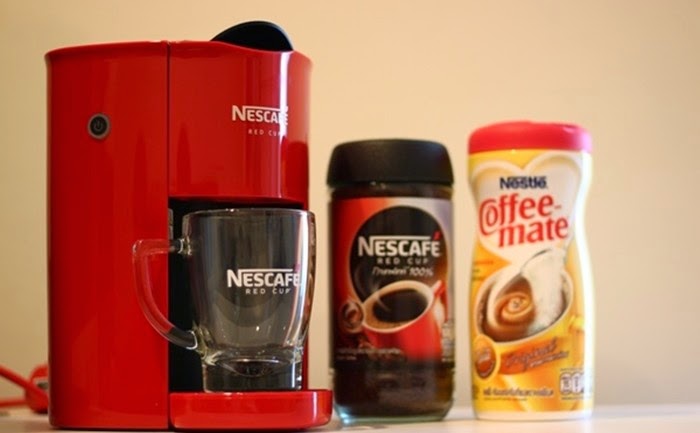
In what must has to be one of the dumber inventions on offer, the Nescafe red cup machine attempts to turn instant coffee into barista style coffee. That’s not going to happen, as far as I can work out, it pours hot water over instant coffee – an expensive kettle with a logo. 

I can’t profess to ever using such a machine so I can’t report on the quality of the drink, I just won’t force myself to drink instant coffee. Really, I am asking what is the point? The whole purpose of instant coffee is exactly that, just add hot water. Now if you are going to the effort of making a crema, why not just just purchase beans and a coffee machine capable of creating a half decent coffee. 

Championing against fraud

The financial scandals rocking the corporate world undermine confidence in the how businesses are run. The 2007/08 financial meltdown has affected just about everyone in the developed world and an increasing number of people in the developing world. 

I have a real issue with the privileged few who are paid outrageous amounts of money in the form of salary, bonuses and stock options who take no financial risk of their own to run a business into the ground. Adam calls for individuals to speak out against corporate fraud, whilst this is great in theory, most organisations do their best to cover up fraud and dishonest dealings whilst creating an environment of fear and distrust for those who feel strongly enough to speak out. 

A high net worth individual

Is the millionaire term changing? Is a millionaire measured as an individual with one million dollars in assets or an annual income of one million dollars? Some seem to think so but cash flow and assets can be misleading as a short-term contract or special payment such as a bonus could make a person a millionaire for just a year.

Under such a definition despite the fact that they invested that sum and receive a return on their investment. A 6% return on a million dollars isn’t a bad income after all – an average Australian income falls within that range. For me, I suggest a millionaire is an individual possessing a net worth of over one million dollars and that includes the primary residence. We do need a caveat on that though, because we need to ensure a common base and the USD is still the currency of choice for measuring wealth.

The financial services industry definition differs as it excludes the value of the family home instead defining a millionaire as an individual with at least one million dollars of investable assets – fair enough. That changes things slightly, a million dollars of investments is a far tougher club to become a part of as the sole purpose of the financial services industry is to get their hands on your hard earned dollars to earn fees from.

The Swiss bank and wealth management business Credit Suisse uses a less stringent definition; they believe a millionaire is anyone who has assets exceeding one million dollars. That definition includes the family home, superannuation, life insurance, stamps, wine or art collections and really anything of value. The Credit Suisse Global Wealth Report estimated that in mid 2010 there were 24.2 million individuals meeting their criteria worldwide measuring approximately 0.5% of the world’s adult population.

Merrill Lynch, the wealth management division of the Bank of America also defines a millionaire as an individual with one million dollars of investable assets excluding their family home. Needless to say, as an American banking powerhouse, they would measure wealth in USD and by their measure. High net worth individuals account for less than 2% of the US population. Capgemini, the French multinational consulting, technology and outsourcing firm reports in their wealth report that the Asia-Pacific region has 5.13 millionaires up 9.4% on previous years – impressive.

According to the Capgemini consulting definition, just a paltry 16% of high net worth individuals inherited their wealth informing us that 84% actually earned their own money with entrepreneurial endeavors accounting for nearly half of this earning potential. I’m guessing the average millionaire is extremely frugal with their money; after all, they actually earned it. People aspiring to become millionaires believe the Hollywood hype and really want to spend a million dollars to live the high life.

In the consumer driven marketplace, such short term thinking is misplaced instead believing short term consumption in the answer. They should be thinking about investing their money and joining this exclusive club for the long term. Thinking like a millionaire and spending like a millionaire are two totally different mindsets. The consumer ideal of spending like a millionaire is so much different to thinking like a high net worth individual, this is the difference between the two ideologies.


Blackberry Bold

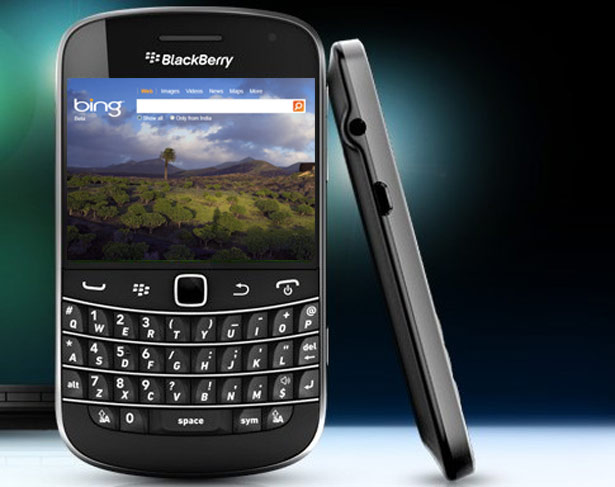
Whilst the latest Blackberry smartphone didn’t exactly reverse the company’s fortunes, I was able to upgrade my old BlackBerry Curve to the later release Bold model. Whilst this is my traveling and hence reserve phone, I maintain a second phone on a overseas plan for international work and travel. There is much to like with the Bold even though it is an old model, I don’t concern myself for the latest model, I just enjoy the functionality of a phone that works.

Moving away from the all plastic case of the Curve, the Bold integrates metal and plastic to give users a robust casing that carries a certain style. The letters of the keypad are larger than the previous model although I do have some issues typing with my big fingers. The Bold does have a touchscreen of sorts, not a full touchscreen function like an Android or Apple device but certain functions can use either the keypad or touch.

Blackberry still has a strong presence in South-East Asia unlike its declining markets in the United States, Western Europe and Australia. I believe BlackBerry devices are favoured by governments due to the high security features Research in Motion has embedded in their devices. I hope BlackBerry as we know it still has a market as I would hate to see this company disappear.

Transition to retirement

Since I was born after 1960, I can’t take full advantage of the transition to retirement scheme currently on offer. From age 55 a soon to be retiree is allowed to decrease their full-time work obligations and begin drawing down on their retirement fund and then re-contribute to superannuation for a taxation benefit. 

In my age cohort, we have to wait until age 60 to transition to retirement. At that age, you can just retire, use your retirement benefits up until age 67 and apply for the age pension, why not just do that? That assumes the federal government doesn’t bugger around with superannuation any further, we know the government loves to routinely interfere in such a long-term scheme vitally important for the retirement incomes of working Australians. 

Whilst this isn’t a strategy I would currently be seeking, the purpose of transition to retirement is to keep experienced workers gainfully employed drawing on their vast experience whilst not draining the pension system. The federal government has over spent and is now looking for areas to tax so they can improve their accounts, how about leaving the retirement accounts alone of the people who actually planned and saved for their retirement to remove the burden from the taxpayer. 

The value of superannuation

Compulsory superannuation was introduced in Australia in the early 1990s with employers contributing 3% of worker’s salary into a forced retirement account. This was phased in over a number of years and was initiated in lieu of pay rises at the 3% level moving to 6% and finally the 9% contribution level. This is an untaxed payment, throughout the accumulation phase, the accumulated benefit grows untaxed with the tax liability paid upon withdrawal. For the most of us, our tax burden reduces during retirement, a 15% tax rate is fair and reasonable. 

However, as I was employed by a small businesses, they were not obliged to immediately contribute to the scheme. When those lucky enough to work for large companies moved to the 6% level, I was just beginning on the 3% compulsory stage. Likewise, we were not all equal moving from 6% to 9%, this put a large section of the population at a distinct disadvantage in regards to retirement savings.

I tried to sacrifice part of my salary into superannuation post 2000 but was denied the opportunity as the business I worked for stated their payroll was too small to warrant this. Basically, the company I worked for could make extra untaxed payments into my retirement account for my future but they were uninterested in the extra effort.

I gained my first lucky break when I began employment with the state government, this was my first large employer in 20 years of employment. I was able to join the state government scheme where the unit purchase price was well priced and contribution rules were favourable. For those employed a year later, the unit prices were not so generous, contribution rules were much tighter and significantly less restrictive.

I finally have joined a scheme where I have the ability to accumulate a reasonable retirement benefit, I have lost the opportunity to benefit from compounding interest but I have to put the wasted twenty years behind me and just get on with it for remainder of my working life. Getting out of that old school private superannuation was the best move I made despite the fines involved.

Bali as a relax and unwind destination

Most nations have their cheap holiday destination; the English head down to Spain, the Germans drive south to Italy, the Japanese fly to Siapan and the Australians have Bali. Naturally there are other destinations where people can holiday, I am just thinking of the cheapest country with the cheapest deals to lure foreign tourists for a week long spree away from the stress of work and home.

For me, Bali is a three and a half hour flight to a resort location for sun, sea and surf to wind down. I have been plenty of times so there isn’t much I need to see – especially in Kuta. After a couple of days I am keen to head up north too a more remote destination. I have no need for the nightclubs, bars or a loud disco with exorbitant prices for watered down drinks so I am more than willing to stay out of the more popular areas.

Bali is also known as an adventure destination with white water rafting, scuba diving, mountain biking, hiking and the water sports of parasailing, water skiing and jet skiing. Maybe the lure of the long weekend will be the motivation to visit Bali in the cold and wet winter months. The ability to fly over for a weekend is one of Bali’s greatest attributes, there is an abundance of flights, developed infrastructure and a mature tourism industry.