A Turkish coup

I awoke on Saturday morning to the news that elements of the Turkish military have attempted a coup to remove hardline president Recep Tayyip Erdoğan but had been unsuccessful. Flicking over to the newswires, I also saw that the military opened fire on unarmed protesters – this is disgraceful.
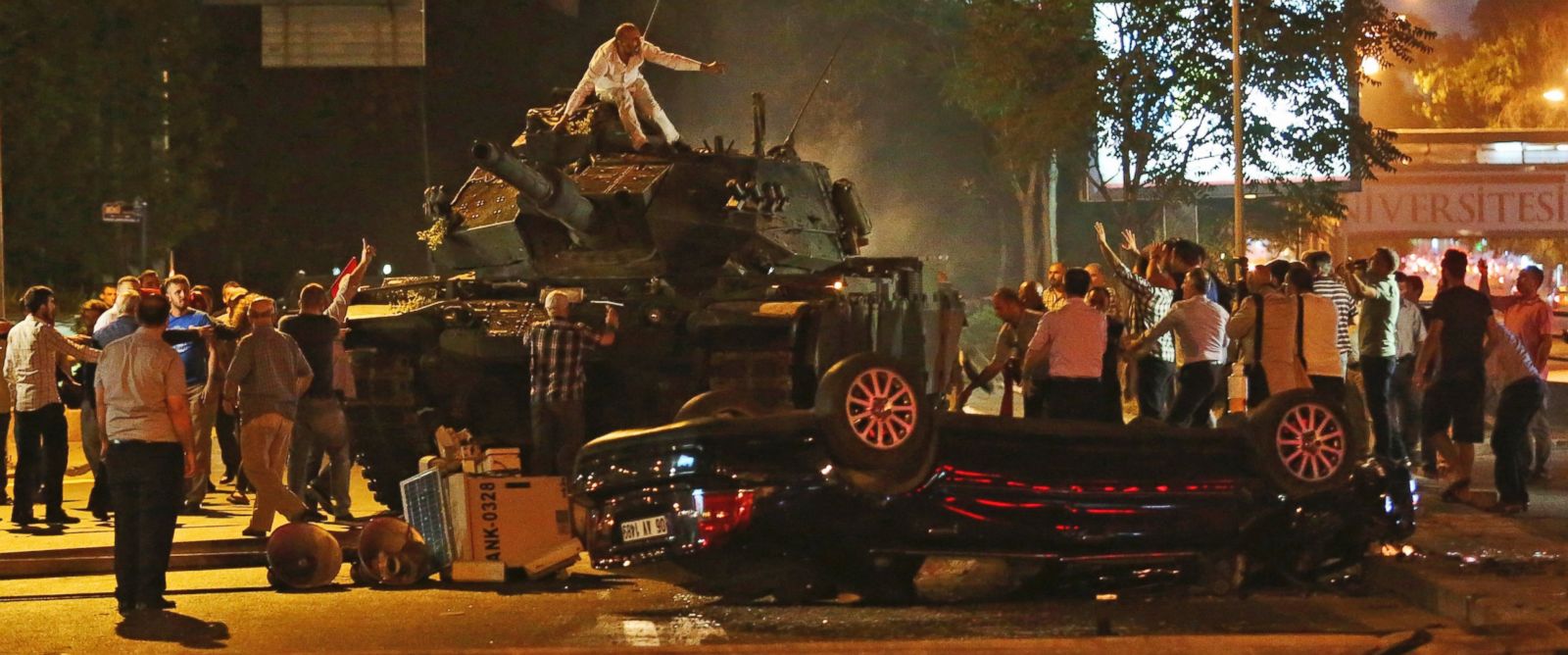
The Turkish military has a history of staging coups in this now secular nation when the government of the day is becoming less secular instead attempting to impose their brand of Islamic idealism on the nation. It would appear a section of the military is attempting to return Turkey to a secular nation, this has happened a number of times over the years but it would appear the coup doesn’t have widespread military support and was defeated.

Instead of staying true to the teachings of the revered Mustafa Kemal Atatürk, the founder of the modern Turkish nation, the government of Recep Tayyip Erdoğan is taking Turkey down a dangerous road in an attempt to return Turkey to religious a religious state.

Terror hits Nice

I am once again saddened at the senseless terror attacks in Nice. The French people have endured much over the last couple of years after welcoming so many immigrants into the country, this is how they are repaid – religious hatred. Murdering innocent people driven by the homicidal ideology of their satanic cult is just pathetic. It is up to the Islamic imams and scholars to show some leadership and eradicate this hatred of western nations by repudiating this religious bigotry.

France is a secular country, the banning of religion in public affairs is known as laïcité where the separation of church and state is enshrined in the constitution. Asserting state secularism is based on the belief of freedom of thought and freedom of religion for the French. You can practice your religious beliefs in France, that is the freedom the French enjoy. Even a cult that indoctrinates the mentally weak and socially inept can be practiced openly in France recruiting murderers that claims religious cowards can meet 72 virgins when they take the lives of infidels – pathetic.

A wallet no longer required

As a college lecturer, I am constantly in contact with young people and I see trends emerging. That ridiculous trend of baggy pants falling down exposing boxer shorts has thankfully passed. I watched the young guys walk around constantly pulling their pants up, they couldn’t walk ten paces without the need to pull their pants up again.

You are not much of a gangster if you can’t get away from the police due to your pants falling down. Somebody forgot to tell them the look originated after punks were apprehended and the police confiscated their belts during the arrest process – ouch. The current trend I see is for young guys to ditch the wallet and keep their credit and debit cards along with some bank notes in their mobile phone cover. This actually has a degree of functionality, the mobile phone stores all their data, they constantly look and play with their phones, it is also their timepiece so there is no need for a watch.

The rise of LinkedIn

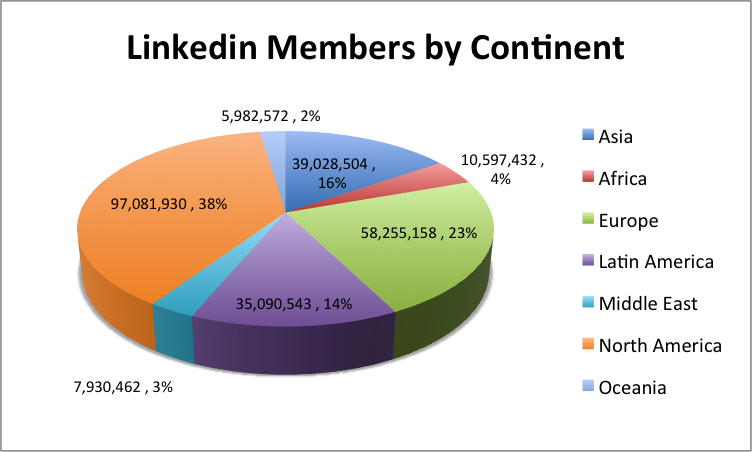
Whilst sometimes described as a social network; LinkedIn may be really be described as a professional networking site with less emphasis on social and a greater emphasis on professional. Founded in 2003 by Reid Hoffman, former Yahoo! executive Jeff Weiner now calls the shots as CEO and the business is gaining some traction in a highly competitive social networking market with offices based worldwide and revenue mostly generated by advertising income.

LinkedIn is very much a networking site, it is also a business newsfeed following selected companies and sectors. The ability to follow groups and engage in discussions allows user to remain engaged with the site. The basic function of LinkedIn is the creation of user profiles allowing users to showcase their skills and experiences for potential recruitment.

LinkedIn is an excellent online recruiting tool with businesses and potential employers searching for potential and vet potential candidates with candidates able to review the profile of hiring managers.

Teaching business skills to dive operators

What hinders the growth of the recreational dive industry is the lack of business training and development for dive centre and resort owners. Notwithstanding, dive centre and resort managers fall within the scope of dive management professionalism. The certification agencies package and sell dive courses to entry level divers, continuing education for recreational divers and professional level courses yet they fail to adequately train operators in the virtues of dive centre management.

Dive certification agencies, under increasing competitive pressures lack the will to drive change through an industry sadly in need of leadership and direction. The focus of professional level courses is dive training, almost oblivious to the stark realities of the industry that they operate in. No dive certification agency offers a dive centre and resort management course aligned to business principles incorporating principles of leadership, pricing, marketing, operations, accounting and bookkeeping, finance and teamwork.

Whilst a full micro-economics course is not required, presenting the principles of supply and demand to business owners allows business owners and managers to analyse their business and local competition. Touching on basic principles of macro-economics allows managers to analyse the industry seeking expansion opportunities. Teaching the principles of strategy allows managers the ability to internally analyse their business to enhance their value chain allowing value adding leading to a sustainable competitive advantage.

No longer would the dive centre and resort manager immediately engage in a costly price war, they would have the knowledge and skills to develop a value added product or service differential and market their product to targeted consumers based on their strengths and not to the old fallback position of lower prices unless a focused cost leadership position is identified by careful value chain analysis and exploited by a prudent marketing strategy.

Antarctic sea ice growth

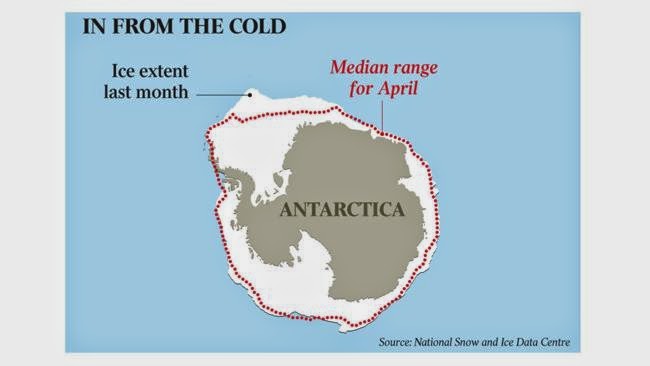
I have been viewing conflicting information on climate change, the National Snow and Ice Data Centre reported 2014 April sea ice growth was at record levels. NASA reported Antarctic sea ice data in September 2014 had increased; yet a number of agencies state Antarctic sea ice will completely melt in coming centuries and is unstoppable, what is going on?

I have to ask, how could the two leading agencies publish such widely different from conclusions from other agencies? Surely, one group of agencies has to be right and the other wrong – how could these conclusions differ so greatly? What are the implications of Antarctic sea ice growth over the period, surely this has to be positive?

We are now heading into a La Niña weather pattern following the El Niño phenomenon, the Pacific Ocean warmed three to five degrees during El Niño and summarily cooled by a couple of degrees below standard causing higher than normal air pressure in the Western Pacific and lower air pressure in the Eastern Pacific. As La Niña generally causes extreme storms with increased cyclones (typhoons in Asia) and heavy flooding, I will be eagerly following sea ice growth in Antarctica to see if it reverses current trends.

Finally fixing my inflator

I purchased an Apollo EX2000 BCD way back in 2002 and have never bothered to service the unit. For a long time it was my first choice BCD until it was replaced with a Scubapro T-Black and retired to travel duties. I worked on the theory that this was a reasonably lightweight BCD well suited for airline weight limitations, I also retired by jetfins from travel duties and replaced them with lightweight Mares x-stream fins.

The inflator hasn’t worked for about 7 years, since I never use it. I just disconnected the inflator hose as it self-inflated with the jammed inflator button – no big deal. My recent trip to Easy Divers in Sipalay saw me run foul of the dive centre management. The dive staff informed me of my constantly inflating jacket as they set my gear up as this is all part of the service here, my casual response didn’t impress the German dive centre manager.

When I told them not to worry about it they went into a flat spin, I have been diving for a decade in the Philippines and this is the first time I was questioned about the state of my equipment. They took my BCD off of me and quickly ran it through their repair centre. They stripped the inflator mechanism down, cleaned the internals and returned it to me – I was astounded.

Unfortunately I am a creature of habit and never used it during the trip. Once you are correctly weighed with a balanced scuba unit and old and beaten up 3mm wetsuit, there is no need to inflate your buoyancy control device – thanks for the repairs though. I understand and respect their position, they want to ensure all of their customers are using operational equipment and orally inflating a BCD didn’t impress them one bit.  

Running into deco

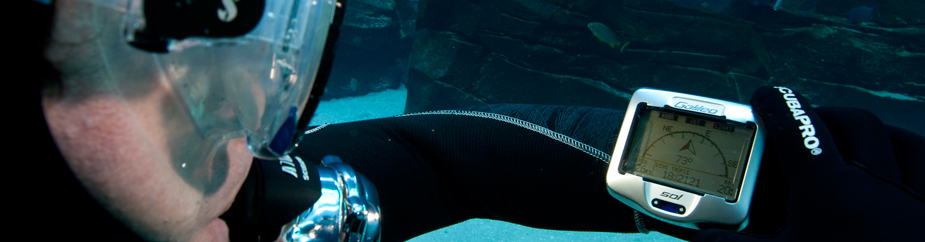
I had a conversation with a colleague in regards to his first 50 metre dive on air that entailed a small decompression obligation. Despite the depth, he was still concerned about allowing his computer slipping into required decompression stops. He expressed concern about allowing his Galileo computer to enter such uncharted territory as PADI had always maintained a no-decompression policy. Even as a PADI instructor, he expressed concern about decompression, the PADI instructor course (IDC) teaches you to teach – not dive.

The IDC assumes you have some diving experience, although 100 dives isn’t considered a whole lot of experience and a potential instructor only requires the advanced, rescue and divemaster courses – the minimum. Furthermore, the divemaster course is pretty light on dive theory as it is really a course designed to gain exposure as a teaching assistant.

At best, he would have had a few minutes at 3 metres to complete his mandatory stops. In essence, despite the depth, he spent just a short time at that 50 metre depth with the majority of his multi-level dive at significantly shallower depths. Now I’m not stating that divers should slip into deco and dive to depths beyond the scope of recreational diving limits without the training, experience, equipment and ultimately knowledge. I am stating that a through knowledge of dive computers should be taught at the supervised experience course between entry level and rescue – I can’t force myself to call it an advanced diver course. A higher level of knowledge is required for dive masters, assistant instructors and instructors.

What he didn’t require was a decompression stop regime requiring mandatory stops at 12 metres, 9 metres, 6 metres and finally 3 metres as the fast tissue compartments controlling his dive at depth was now controlled by the medium and then slow tissue compartments as he made his way up the wall. I knew the dive site well as I have dived this vertical wall numerous times. I also knew the top of the wall has a depth of 6 metres so he is able to off-gas in the shallows and I bet his deco ceiling had actually resided as he ascended.

Tulamben wreck diving

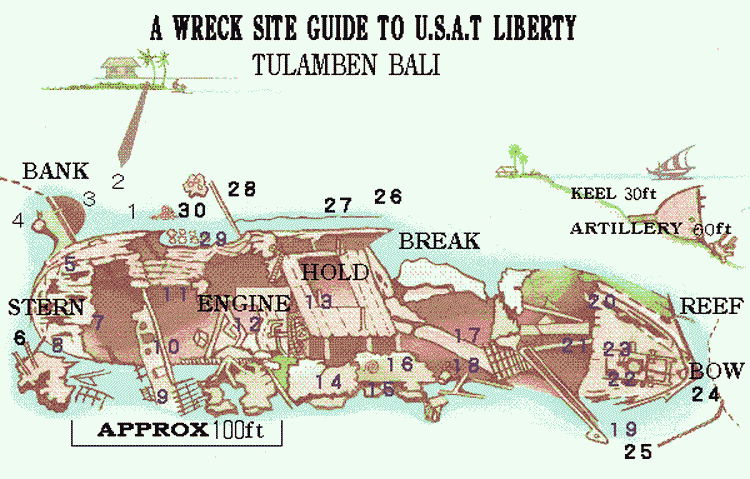
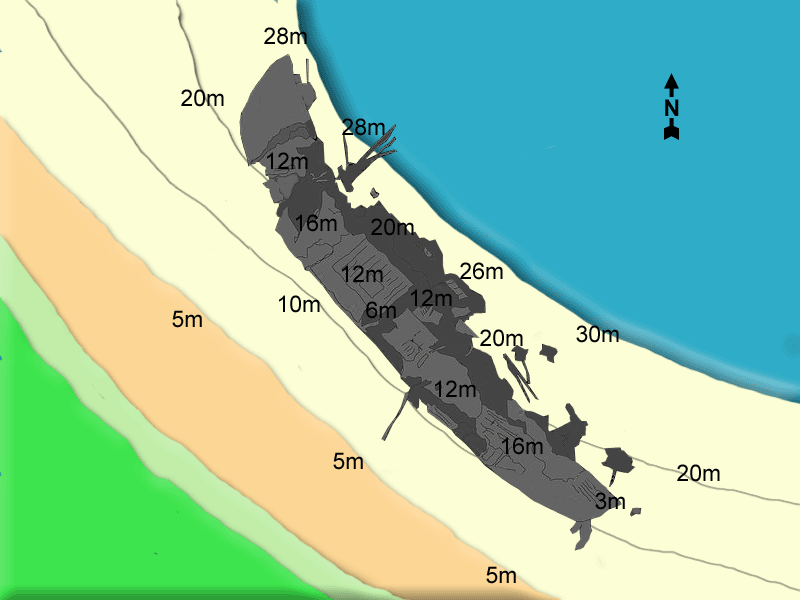
On trips to Bali, a drive up the island to the small village of Tulamben from the more developed areas of Kuta, Legian or Seminyak always results in a couple of dives. I have always thought this was a Liberty class ship of WWII; mistakenly named as the Liberty – I was wrong.

I have have only just learnt that the ship is in fact named the USAT Liberty, a cargo vessel nonetheless as a Design 1037 type and launched in 1918, there was close to 50 of this ship type constructed. This ship was torpedoed by a Japanese submarine in January 1942 and run aground in Tulumben where the ship was unloaded, a 1963 volcanic eruption pushed the ship into the water to sit in its current resting place.

Walking in from the shore, the site quickly drops off to 20 metres and extending out to 30 metres. The site drops deeper, but there is no reason for chasing further depth as the areas of interest sit around the 20 metre depth. This is one of the premier dive sites in Bali, I would recommend this dive to all of my friends and I don’t mind diving this wreck over and over.

The 70:20:10 learning model

Hailing from a technical trade background, on-the-job learning is the preferred method of training with a 70:30 split of on-the-job and off-the-job methodology as fairly standard industry practice. Embracing the 70:20:10 training and development model; this current methodology is really built on the foundations of apprentice training that is ideally suited to workplace training and development.

The 70:20:10 learning model has been credited to Morgan McCall, Robert Eichinger and Michael Lombardo from the Center of Creative Leadership during the 1980s. However, many believe the origins of the model go as far back as 1968 with Professor Allen Tough publishing Why adults learn: A study of the major reasons for beginning and continuing a learning project, although he never mentioned the term directly, he planted the foundation seed.

Currently, the 70:20:10 model is being implemented in organisations with 70% of learning occurring on-the-job from experimental means such as action learning projects and supervised practice. Mentoring, coaching forms a further 20% of on-the-job learning with retention increased through a formalisation of the process. The final 10% of learning occurs off-the-job through structured learning interventions such as face-to-face courses, eLearning courses and webinars.