The Pennsylvania class battleship

The Pennsylvania class battleship succeeded the Nevada class battleships. Built in the period prior to WW I, the Pennsylvania class was a super dreadnought battleship; the second of the dreadnought design of the United States navy after the Nevada class battleships.

Commissioned in 1916, this WW I class of battleship was looking fairly dated prior to the start of WW II and saw limited service in WW I. The New Mexico class, the Tennessee class, Colorado class, North Carolina class, South Dakota class and finally the Iowa class succeeded the Pennsylvania class battleship. This is an amazing fleet despite the fact that the battleship was considered obsolete at the beginning of the war, the aircraft carrier was the emerging technology although shore bombardment was a key requirement of the Pacific war.

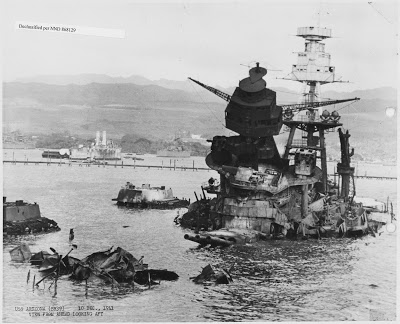
Two ships of this class were constructed, the USS Arizona BB-39, possibly the most famous of all US battleships was sunk during the surprise attack on Pearl Harbor by Japanese forces beginning the Pacific phase of the second world war. The USS Pennsylvania was in dry dock at the time of the attack and sustained relatively minor damage, the USS Arizona is now a memorial at Pearl Harbor.

Armed with 12 x 14″ main guns mounted on 4 turrets, 22 x 5″ secondary guns, 4 x 3″ anti-aircraft guns and 2 x 21″ torpedo tubes, the Pennsylvania class battleship was an significant improvement on the Nevada class armament but was ultimately an outdated battleship seeing service in the second world war involved in shore bombardment. After the war ended, the USS Pennsylvania BB-38 was involved in the atomic tests at Bikini Atoll and later sunk as target practice in 1948.  

Tap and go

The tap and go feature on the current crop of credit cards is more than concerning, this lack of security to increase convenience is just madness. I tried to turn this feature off, I couldn’t and that really annoyed me, I am on the hook if I lose me card and it is used fraudulently.  

Credit cards previously had PIN security and signature security that the vendor was required to check, none of that now exists. If someone physically has control of your card, they are able to run up multiple bills on your account to the value of $100 each transaction unabated – the cardholder can be liable. You can’t even opt out, there is no choices, the card has tap and go for convenience – security is not an issue anymore. Let’s face it, the banks are not making a loss – they are back charging the consumer. 

To recline or not to recline?

Many a battle has been fought over airline seats but I can’t see the issue, the seats are designed to recline so people can recline if they wish. Naturally, you can’t recline on take-off and landing for safety reasons and food service for space requirements, any other time you are free to recline your seat.

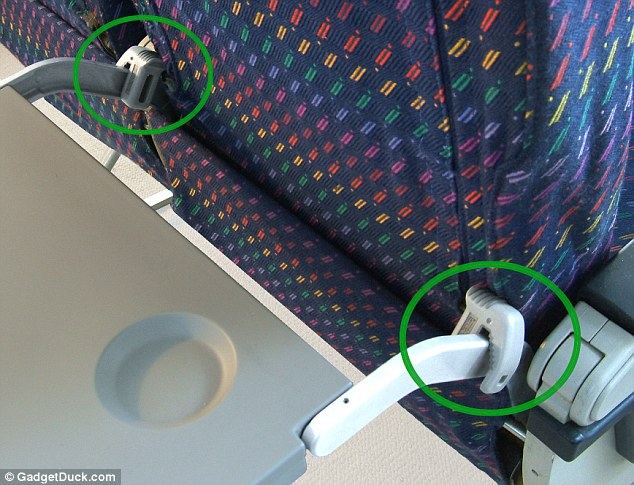
Some certain etiquette is required, do so slowly so if a person has a computer set up has a chance to move without damaging the screen. That etiquette also applies to the person behind, there is no need to carry on like a fool, get over it. What would annoy me is if a person attached those locks to a seat preventing me from reclining, this arrogance will induce a response that is sure to end in a fight.

These locks should be banned and the person charged with an offence of bringing a banned substance or item aboard a flight. If seats are designed to recline and the situation allows then a passenger is within their rights to recline, obviously take-off, landing and food service are the times a straight seat are required – all other times are open to recline.

From boom to bust – what happened?

It has been argued baby boomers received free education, lived through the age of free love, found employment easily and then there was the pill to supplement their life of free love. Sounds pretty good – I guess it was.

What did Gen X grow up with? Well, they learnt all about AIDS at school so free love was pretty much out. Jobs dried up in the 80s with the recession of 82/83 and the resulting aftermath that lasted for years. Then the recession of 90/91 further killed the jobs market just when Gen X were starting to find their feet. But all is not bad, that was the last recession Australia endured, sure there have been slowdowns but no official recession.

Want to head to university to increase your employability? A nice HECS debt influenced such a decision; yep, you paid for it as free university education was now a distant memory. Thinking of buying a house as a young person in the late 80s and early 90s; interest rates around the 17% – 18% mark certainly put a downer on such thoughts. Then when Gen X got established in their careers, the GFC came along and there goes any chance of keeping their employment – hard call.

The first of the Gen Xers are hitting 50, still too young to retire, yes they have had some of the benefits of superannuation. That started at 3% and only if your company could afford it. Likewise, when the rate moved to 6%, the unlucky ones started on 3% and when they moved to 9% the unlucky ones moved to 6% and waited another cycle before they finally received the full 9% benefit.

The baby boomers could get their hands on their superannuation at age 55, that has changed with anyone born after 1963, yeah, the baby boomers have more generous contribution rates too – gotta love it. So when the Gen Xers get to 60, that is still a decade away for first of the crowd, the transition to retirement scheme will have gone, the contributions rules have changed and they can’t dump large amounts of into their retirement accounts as they are now capped.

Wait for the age pension? That was 65 but the Gen Xers have to keep working, it is already 67 before they can get any money from a lifetime of taxes and will more than likely be age 70 by the time they get there. The new superannuation rules will prevent many Gen X enjoying that comfortable retirement as the defined benefits scheme was unavailable to most Gen Xers as that was phased out before many could get to those positions.

The defined benefits scheme is pretty much the domain of the Baby Boomers unless a Gen X was lucky enough to score that cruisy government job early in life. The defined benefits scheme will pay out 75% of their final salary until they die but these funds have be unavailable for years as they were too generous.

Most Gen Xers have an accumulation fund that is funded by employer contributions that isn’t going to cover their retirement. But hang on, this isn’t free money – this was the pay rise you never got to see. You forfeited the immediate pay rise and that was paid into superannuation on your behalf. When Gen X finally gets to benefit from that contribution, the taxation rules change and their retirements are not going to be anything like they expected.

The real benefits for Gen X was they were kids in the 1970s and teenagers in the 1980s, despite some of the problems associated with the 70s and 80s the kids played outside until dark, we had plenty of bush to run around in and sport was played everyday. Yes, we were the first generation to learn technology but as far as I recall nobody stayed inside playing video games, you ran around outside and had fun. Sure we are getting screwed with retirement benefits and in the workplace but we are going to enjoy life despite the inconveniences.


Typical Cebu Pacific delays

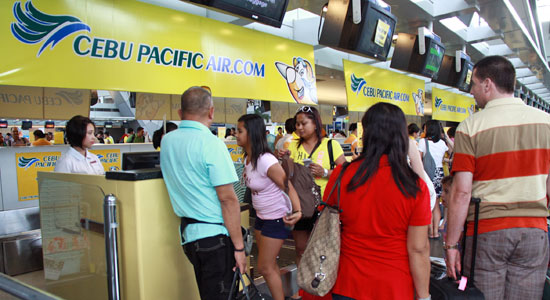
Every time I fly Cebu Pacific the story is always the same, flight delayed and no information as to why. Even worse, flights are frequently cancelled without any communication whatsoever. When taking short flights of an hour to an hour and a half, if you are still sitting on the runway when your flight is supposed to be landing then something is clearly wrong.

If a plane is late arriving, tell us as we understand that this occurs from time to time. Likewise, should there be a technical issue with the aircraft – then keep us informed. We may need to change flights, contact transfers or reorganise flight connections, it is still an inconvenience but we have at least the opportunity to organise alternative arrangements. This lack of customer service exhibited by the management of Cebu Pacific damages the brand and hinders growth whilst alienating the very people who they derive their income from. How about treating your customers with respect?

Executive pay

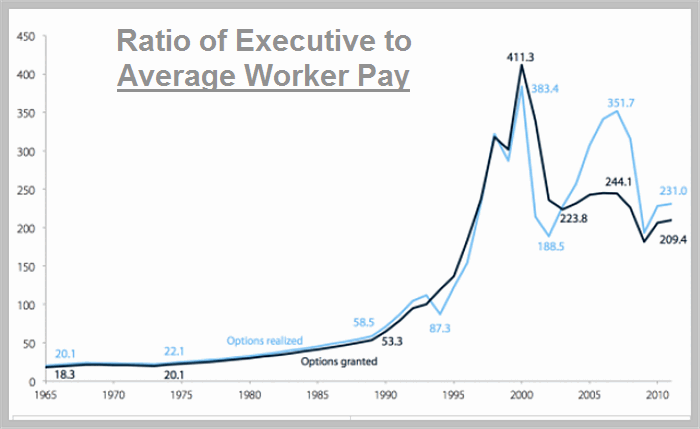
The touchy subject of executive pay is once again a hot topic with Yahoo! CEO Marisa Mayer looking to receive a severance pay of around $36 million – it’s hard to believe. Former Woolworths CEO Paul Simon once stated no executive should earn more than 30 times the wage of the lowest full-time employee in the company – that was a very astute observation. Now Woolworths is in real bother, the company is once again seeking the services of Paul Simon to repair the damage.

Furthermore, Paul Simon spent three days per week walking the aisles of the supermarket chain talking to not only managers; he spent considerable time speaking to rank and file employees and customers alike seeking ways to improve the business – he managed to position the supermarket as the leading retail business in Australia. As a shareholder, they are destroying the value of the company, yet the way they pay themselves you would think the share price is rocketing skyward unabated. We need sense to prevail, we need to respect the principles of corporate social responsibility.

A manager in title only

It has been said you don’t leave jobs, you leave managers – in my case, how true it is. Henry Mintzberg once stated “managers not MBAs” are required, we are teaching the wrong skills to the wrong people. In my case, my manager lacks the pre-requisite and necessary communication skills, lassiz faire combined with the avoidance of important issues and conflict does not translate into leadership nor does it constitute a management style – it is just a accountability mitigation strategy.

While Mintzberg does not say we don’t need MBAs, he believes we should differentiate business and management as they are totally different skill-sets. What he says is the average MBA candidate lacks the people management skills honed through actual experience. In my case, the manager has plenty of experience, insofar as, he has been there too long and he has a title but that is about it. So where does that leave us? Shuffling funds around a spreadsheet does not constitute good management practice, we need a holistic approach to management.

Yes, managerial accounting is important and must not be discounted, but if that was all that was needed to run an organisation, universities would be pumping out accountants en mass only. This is not the case as the subjects of leadership, management, human resources, ethics, globalisation, sustainability, marketing and operations are taught together with accounting, analysis and finance.

A balance of capabilities is required; this is not what I am seeing in my workplace. All I see is a guy who has inherited a highly capable portfolio, has failed to invest in physical resources and human capital and diverts funds out redirecting to divisional revenue to enhance his personal reputation whilst penalising the efforts of highly efficient workers.

These funds prop up inefficient business portfolios, the question is, why not re-engineer the inefficient portfolios to become self-sufficient instead providing disincentives for efficiency and rewarding inefficiency. Ambition is good, business is a team game and the principles of inclusion and team-building should dictate strategic direction.

What happened to AltaVista?

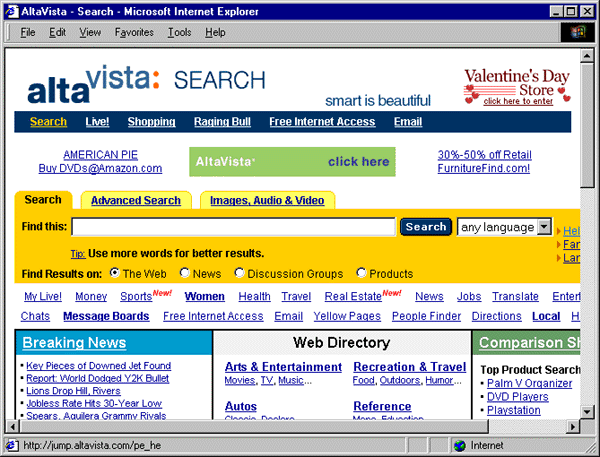
Recently I was thinking, what happened to AltaVista? This was a very popular search engine in the early days of the internet, yet here is another early internet business that is no longer around. Founded in 1995, AltaVista’s traffic is now redirected to Yahoo’s search engine after being purchased by Yahoo! in 2003 that has now been redirected to Microsoft’s Bing search engine – who would have thought?

Google has dominated internet search after Microsoft’s Internet Explorer has lost favour with consumers. While AltaVista was not as dominant as Google’s search engine; it was a serviceable search engine along with Yahoo!, Netscape Explorer and Lycos. While some of AltaVista’s innovations made it through to Yahoo!, the name AltaVista has been relegated to internet history.

A Subic Bay washout

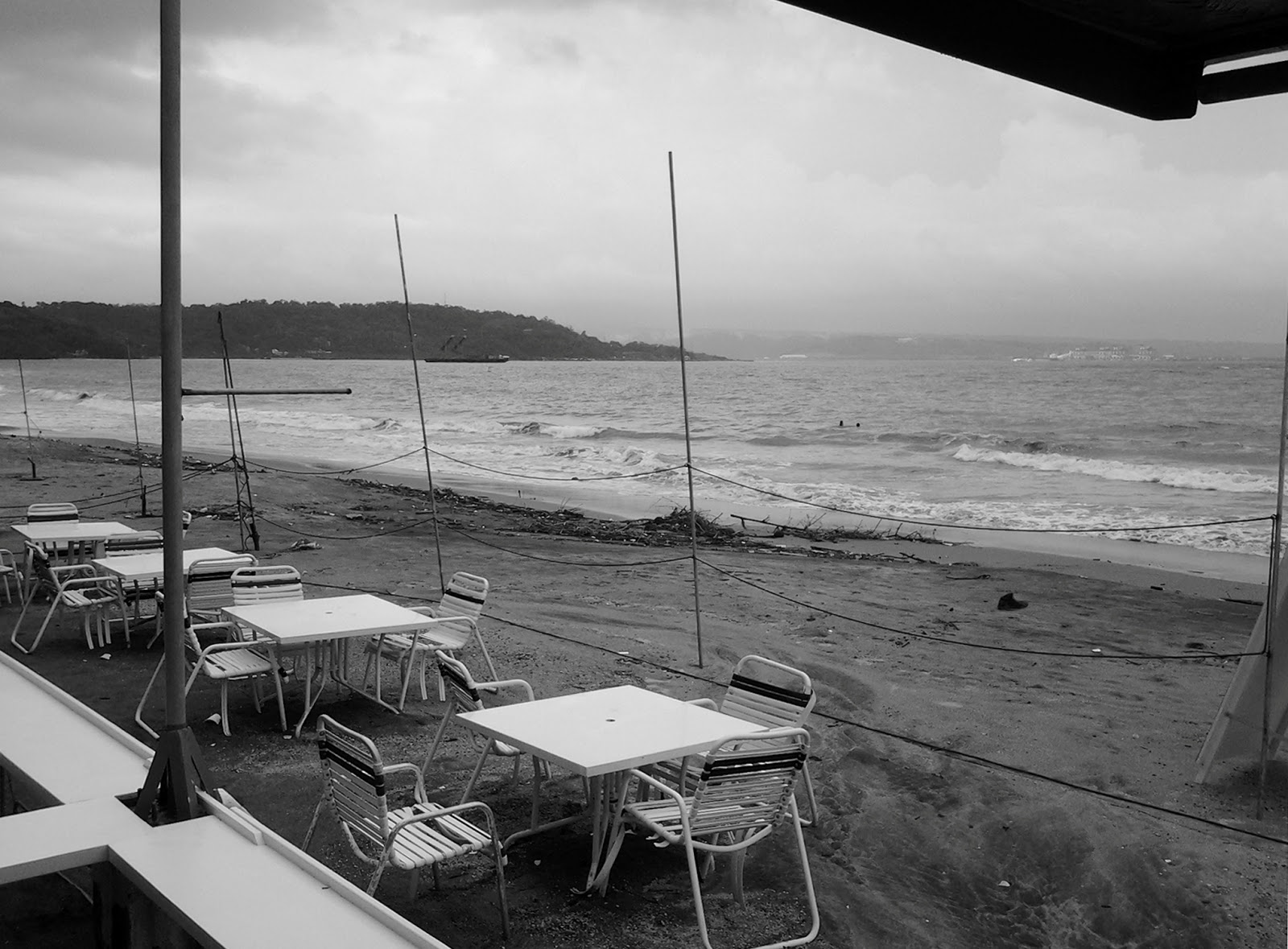
A week earlier, I had been diving down in Bohol just as the weather turned inclement, the Philippines can turn pretty nasty weather wise with a multitude of typhoons ravaging the islands frequently. This wasn’t a total lock-down typhoon, there was still a chance of getting some diving in so I decided to head up to Subic Bay as the harbour is fairly protected; as it turns out, it was a wasted bus trip.

The week I was down in Bohol a ferry sank with a major loss of life and a day or two later some Korean divers were swept away in strong currents resulting in more loss of life. Notwithstanding, the coastguard were somewhat apprehensive about allowing dive boats to depart in rough conditions and you can’t complain about the coastguard being ultra-conservative. Hence, local shipping was restricted with the coastguard requiring clearance to set to sea. I wasn’t going to get any diving in, I just sat around the shop waiting for a coastguard permission that wasn’t forthcoming so it was back on the bus and back to Manila – such a waste.

Hanging in Ortigas

The central business district of the Philippines is Makati; located north east of Aquino International Airport, the Philippine stock exchange is located on Ayala Ave. The major financial institutions are based in Makati as well as major international corporations.

While people think of Manila, that is really the greater Manila area made up of the various sub-districts extending east of Manila Bay, north to Quezon City and south to Parañaque. You can still head over to the rundown and shabby old central Manila area, but it really isn’t a worthwhile experience unless you want to photograph outdated and rundown infrastructure.

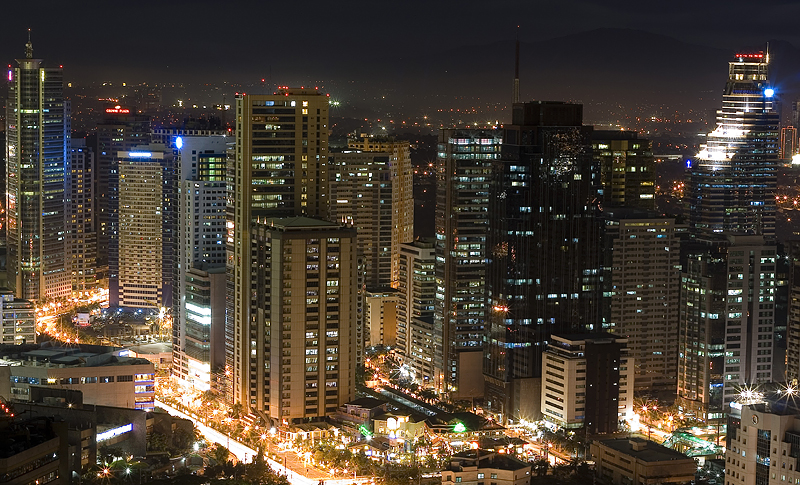
An area gaining both influence and affluence is Ortigas, on weekdays the area is buzzing with workers in this business district; yet on weekends, the locality had the atmosphere of an out-of-hours business district where all the office workers had headed home – it’s empty. Major businesses are investing in the area, large property developments transformed the district including commercial retail property, residential hi-rise apartments, commercial office property and naturally for the Philippines – multiple large shopping complex.

The nightlife is improving, many consider Manila nightlife to consist only of go-go bars, massage parlors and other establishments of ill-repute. The fact is, many reputable bars, restaurants and cafés flourish in the area. This is not a bad area to hang out during the work day as the vibe is pretty good, the area is clean and everything seems to work.