Corporate learning and development

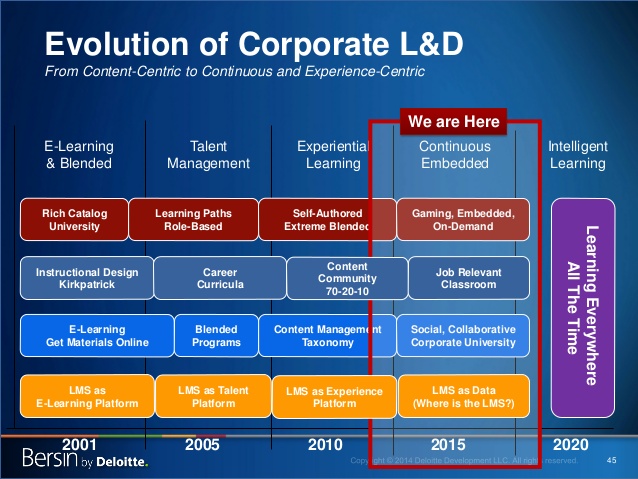
The development of corporate learning and development is moving from an content centric approach where learning materials were published online in the early 2001 through a blended approach to a social collaboration between team members.

The learning management system was simply a repository for content with limited interaction between facilitator and learner. I can recall downloading such materials, then printing them out to a paper based format and working through the exercises. You had limited opportunity to embed the knowledge or skills and just waited for the paper versions of your assessments to be mailed back after you posted in your work to the marker.

Moving to the talent management approach in the mid 2000s, the software program addressed the four pillars of talent management involving recruitment, performance management, learning and development and compensation management. Experimental learning started getting interesting with the 70:20:10 approach with 70% of learning performed on-the-the-job through action learning projects, job rotation and delegation.

Likewise, 20% of learning is still conducted on-the-job through active processes such as mentoring and coaching and the final 10% of learning is conducted off-the-job through formal courses. Continuous embedding of learning ensures a continuous learning program that is further expanding skill-sets in response to a changing environment. New developments are considered less static and more fluid incorporating internal learning and development departments within the human resource structure and the rise of the corporate university.

The Anti-Murdoch brigade – the QAnon of the left

When I read comments sections on social media posts from news outlets, the comments leave me shaking my head. Still, I read these comments to gain a perspective for my blog, but this isn’t always indicative of what the electorate is actually thinking, this is a small and vocal cross-section of the community that are less representative than I initially thought. The comments sections are filled with left leaning commentators who are loud and willing to shout down any opinion that doesn’t align to theirs. As I subscribe to The Australian Newspaper online, I can easily find links to articles published on social media sites such as Facebook and Twitter, it is not as if Rupert writes the articles himself.

I also read The Sydney Morning Herald, now owned by Nine Entertainment and The Guardian owned by the Guardian Media Group in the United Kingdom. Both the SMH and The Guardian are left leaning media groups. I also read the Australian Broadcasting Corporation (ABC) online and whilst it is considered left leaning, they are reasonably unbiased in their reporting. This could actually be said about The Australian Newspaper as well as journalists are employed from both a right and left leaning perspective.

So when I read the dropkicks loudly commenting online about Murdoch, he doesn’t actually write for The Australian Newspaper blaming all their election losses on Rupert, one might actually ask why his media group employs so many left leaning journalists? Might it be The Australian Greens and the Australian Labor Party have lousy policies that keep them almost in perpetual opposition? There are a lot of loud commentators on social media and despite their best attempts at bullshit conspiracy theories not grounded in reality, they don’t actually change public opinion.

So the ALP are normally consigned to another three years of sitting on the opposition benches and wondering why they seem to be perpetual losers at a federal level. The ALP ability to lose an unlosable election might not only be based on their lack of coherent policy, it might also be the higher than thou chattering social media commentators doing damage. They need to revamp and realign policies to what Australians want, this is not just pandering to minority groups, this is targeted policy. 

The trouble with the old boy’s club

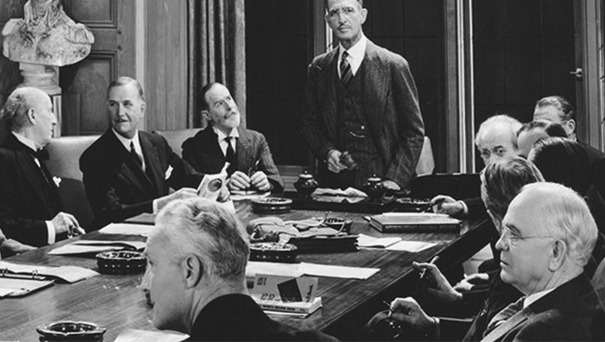
The trouble with the old boy’s club, is well, the old boy practices of exclusion, the blatant favoritism, nepotism and cronyism. This is not a winning formula, this is linked to groupthink and ultimately failure – a losing formula. 

This is so much more than a lack of process, this is the basic denial of opportunity to talented individuals who refuse to engage the outdated and unethical practices of the old boys. What this produces is a sub-standard product, inhibits team performance that hinders business growth – a favorite strategy of government organisations.

This is a government dilemma, service isn’t an issue in the old boy’s club, governments need to offer a customer centric service but this doesn’t fit their narrative. This starts with recruiting, selecting and employing the best candidate for the job. Talent management is a major organisational development requirement, the acquisition of high-level talent is the defining requirement for organisations. That’s what makes me laugh, government organisations that deny economic gravity, the taxpayer funds roll in and the cycle continues.

Classes on leadership

Leadership is such an overused term, sure you can take a leadership class, but does that truly instill leadership qualities in an individual? I’m not so sure. That being said, I have seen some great examples of online MBA graduates with top notch leadership abilities.

With so many articles, research and academic papers dedicated to the art of leadership, I ask myself, can you really train people in leadership? There is individual leadership and organisational leadership, authoritarian and democratic, situational and contingency theories, task or relationship oriented, trait and charismatic and then there is laissiz faire.

I view leadership as a social influence, the ability to motivate others to achieve goals, these may be organisational or team goals and are exhibited at all levels of the organisation. Can leadership be learnt in classes? Absolutely leadership can be, with modern delivery methods one doesn’t even need to sit in a traditional classroom but learnt online.

Much has been written about transformational and transactional leadership theories. Then there is charismatic leadership, whilst trait leadership has pretty much been outdated and disproved, the cult of the CEO is currently the order of the day. What we do know is leadership is power and the personal values displayed has a positive effect on the team.

Failing Chinese economic coercion

So what is China trying to do with all the tariffs imposed on Australia producers? They are attempting to use Australia’s democratic society against our national interests – they are engaging in foreign interference and need to be called out.

Clearly the CCP are attempting to create divisions in Australian society, they know a free and open press can report opinions as they please. A free and open press, in their opinion, can be manipulated to create unrest, but their poorly conceived strategy is embarrassedly failing and they have no retreat strategy.

China doesn’t have this problem, they control the media and the people are dominated by state manufactured opinion. However, they are concerned as their control of the Chinese people relies on the promise of improved living standards by the totalitarian regime. These rising living standards are appearing to become harder to deliver. The rest of the world is watching and are rightly concerned about the economic coercion of the CCP. The CCP are concerned about internal unrest and the potential to unravel their complete subjection of the Chinese people.

What we have learnt is China is an unreliable trading partner. Japan has long been a partner trading with Australia and has always been an honest and reliable partner. Australia has built up too much of a reliance on Chinese demand and that needs to change. However, the rising iron ore price and required Chinese demand to develop their infrastructure program to aid their recovery ensures Australia still has an iron ore market. The iron ore income is improving Australia’s trade deficit funding the social programs of the pandemic.

This rising iron ore price created by Chinese demand is shielding Australian producers from the ravages of the Chinese economic coercion. Australian producers now have an opportunity to develop new markets. Eventually, Chinese officials will target iron ore imports, that is unlikely in the short-term until they are able to secure new suppliers. By that time, Australian producers will have arranged new clients to diversify exports away from China.

Sure, it is more than likely that the Chinese government is humiliated by successful Australian calls for an independent enquiry into the origins of the coronavirus. The social unrest from a failed policy threatens the control of the CCP over the population and that scares them. China is seeking to manufacture discontent in Australia, this has so far failed and further humiliated Chinese government officials. The architects of this plan care little about the next commodity whether it be wheat, beef, university education or dairy products.

The CCP is engaging in foreign interference, and so far, industry sectors can see through this transparent plan and refuse to become lobbyists for the Chinese government. So far, they are hurting themselves, Chinese steel mills are bearing the cost of increased costs. Chinese consumers can no longer drink Penfolds wines after becoming accustomed to quality wine. Chinese consumers are prepared to pay a premium for Penfolds, sure, new markets will have reduced margins but they will be reliable supply chains.

The Chinese government is attempting to use democracy against Australia, they believe the Labor opposition will pressure the Liberal government to yield to it’s will – this policy is failing. Xi Jinping is humiliating himself, his policies are a failure and damaging Chinese national interests to soothe his massive and over-inflated ego.

When your mind is engaged

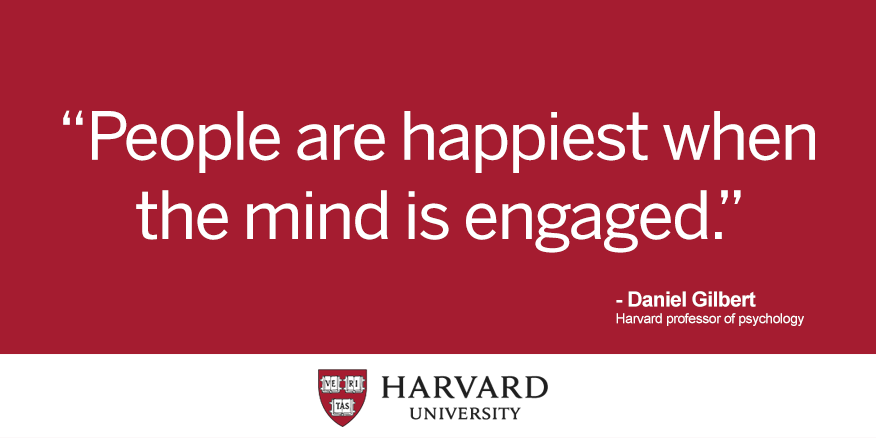
Reflecting on Daniel’s statement, I could not agree more. No matter what your motivation is; whether it be business, community service, medicine, research, science or humanities – the ability to engage in continuous learning is absolutely paramount to any endeavor.

Learning does not need to be formalised; the greatest learning potential takes place in the workplace with up to 70% of all learning occurring on-the-job. What is required is an inquisitive mind and the ability to translate learning into action. Adult learners are really responsible for their own learning and should be seeking to engage in genuine learning interventions.

Landing on Balicasag Island between dives

More amazing dives around Balicasag Island, the first dive on the vertical wall at Diver’s Heaven is fantastic, this is my favourite diving location in the Philippines. It is going to be a long time before I get to dive here again though, that is really a shame and I will miss diving here.

After mooring the dive banca close to shore, a small banca arrived and we made our way to the island while the crew stayed on board. Of all my trips to Balicasag Island, this was my first time actually landing on the island, usually we stay on the boat for our surface interval.

There was a selection of seafood restaurants on the island, I loved landing here and supporting the local infrastructure and community – they even come and bring you to their restaurant by small banca.

You choose your seafood, it is fresh caught by local fishermen and it is cooked for you, I like to support the local community and this is a fairly decent way to do it. The fishermen in the Philippines are very poor, this is a good way to support the fishermen and their families.

You negotiate your choice of seafood, the quantity and the way you want it cooked – great stuff. They take it away and not long after your freshly cooked seafood is ready for you for a very enjoyable lunch.

When your meal is done, time to get back on your banca and head off for your second dive before leaving the island and heading back to Alona Beach on Panglao Island – this is a pretty decent day.

The Rolex Explorer

Rolex has plenty of iconic timepieces, they have great marketing and they know how to create demand through scarcity. Sure they could increase production to sell more units, they are very aware they hold premium sales and they protect their market and retailers with much vigor.

Rolex Explorer


The Explorer Reference 6350 was released in 1953 not that long after the 1953 Hillary/Norgay Everest expedition. Whilst there is still some conjecture as to what Hillary and Norgay actually wore on their wrists when they scaled the summit, there is no doubting that the Explorer is associated with Everest – this is certainly what Rolex advertising indicates.

While Hillary was apparently wearing a Smiths, Rolex was supporting and sponsoring expeditions testing the oyster perpetual series. Rolex was involved with prototypes leading up to the Explorer series, the Reference 6150 that was imprinted with Precision on the dial and not Explorer. The early series had a 36 mm case size that has increased over the years.

If I was to be a Rolex owner, then an Explorer would be my choice of timepiece. At 39 mm, the case isn’t large by any means and the over-size watch style seems to be receding. Although I tend to prefer a 41 mm case diameter for my wrist size, I have had smaller watches in the past. The Mercedes hour hand is an iconic Rolex feature, although I am not personally thrilled by the hour hand.

A number of references have been produced over the past 65 years, the charm of Rolex is they pretty much don’t change their product. Whilst the vintage Rolex market is booming, the latest COSC certified 3132 movements with the parachrom hairspring are far superior to their predecessors with + 2 seconds a day precision. I get nervous with vintage watches, the opportunity to create frankenwatches increases, that is watches using non-original parts. The movements already exhibit wear and you have to trust previous owners serviced their timepieces only at authorised dealers.

The older series watches didn’t come with sapphire crystal so tend scratch easily although I’m told they buff out easily. Whilst not a feature of the Explorer, ceramic bezels don’t scratch or fade, the stainless steel bezel ring can scratch. The case is manufactured from 904L stainless steel, known by Rolex as Oystersteel and is more scratch resistant than competitors. For me, the Explorer is the quintessential Rolex timepiece and the model I would own.

Transiting through Changi International Airport

I can’t recall the amount of times I have either transited through Singapore’s Changi Airport, in a ten year period I was travelling three to five times a year through that airport – that all stopped pretty quickly for coronavirus.

As a watch guy, I love the airport and I wonder what deals I can get in Singapore central. If I have a short transit time I remain in the terminal, if I have more than four hours transit then I catch the MRT into the city for a short break. I like books, so I love looking around Changi bookshops, but what charge is outrageous. Yet, I have still purchased the odd book from Changi book stores. They have a pretty good selection and some of those books I haven’t seen in other bookshops. I believe Changi is the best airport in at least South East Asia and I guess East Asia. Now a new terminal has been opened, there is more to like about transiting through Changi Airport when we start travelling again.

New Mexico class battleships

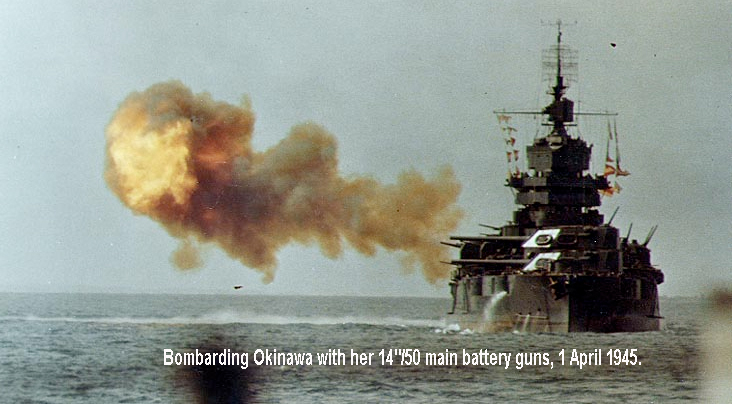
The New Mexico class battleships all began construction during world war one; the USS New Mexico BB-40, USS Mississippi BB-41 and USS Idaho BB-42 formed a battle group in the Atlantic fleet and were thus not damaged during the Pearl Harbor surprise assault by Japanese carrier aircraft.

An armament of 12 x 14″ guns mounted on 4 turrets, 22 x 5″ guns and 2 x 21″ torpedo tubes were fitted with the 5″ guns reduced to 14 during refits ensured the ships were fitted with sufficient firepower. The 14″ guns were retained in the Tennessee class battleships before the Colorado class battleships were equipped with the larger 16″ guns mounted in 3 turrets.

The class saw plenty of action during the second world war transferred from the Pacific fleet to the Atlantic fleet and then returned to the Pacific fleet after the Pearl Harbor surprise attack in December 1941 supporting the amphibious landing of the theatre of war. Although the ships were refitted in the mid 1930s, the ships were extensively utilised in the Pacific war, the ships were soon retired at the end of hostilities.