Pyjamas in public

I really don’t get it, why do people go out in public wearing their pyjamas? This seems to be the new norm in Perth these days, whilst mostly women, I have seen men getting around in public in their pyjamas too.

On a Sunday afternoon at 1 pm, why do I see people down the shopping centre dressed in sleepwear? The first time I saw this I thought someone had lost a bet, then on multiple occasions I experienced these sights. This is a very unusual attitude among young people, they get up late and don’t even make the effort to throw a set of clothes on.

I see children at the local shopping centre early in the evening, for me this makes sense as the parents have got the kids ready for bed and then needed to duck down the shops to purchase missing ingredients for dinner – all easily explained. People can’t even be bothered to throw a set of clothes on to go outside – oh, come on.

Mountain bike pain

I would like to tell you I am a star mountain bike rider, this would be a dirty horrible lie though. Can I ride? Well, yeah, to a degree, although I am 50 years old weighing 92 kg, I work out in the gym, run when possible and keep myself as fit as I can for my age. So when I was riding flat out down a very steep hill with the pedals over-running, I could not go any faster. We were on a 47 km ride in each direction and we had just logged over 72 km at the last rest stop so I was feeling fatigued.

I was riding on the edge, too loose for the conditions, jet-lagged and fatigued, this was telling. Don’t let that detract from my decision-making, I was travelling downhill as fast as the bike would move, my weight distribution was correct and I was not using the brakes. So as I crossed up the handlebars after hitting the hole and flew through the air I already knew this was not going to end well. The point of impact hurt, I just lay there for about ten seconds without moving so I could determine the extent of my injuries.

I tried to roll over, that was a bad idea as I rolled on the arm I landed on, that hurt a little. Ok, roll over in the other direction and as I slowly rose to my feet I knew my arm was hanging down. No problems, it was an impact so I expected it to be sore. It may have been dislocated, I accepted that, they may have to pop it back in. The x-rays told a different story though, I had to fly down to Johannesburg for some surgery. That involved a pin in my arm, some stabilisation and I was ready to return to work.

Sure, a year on and my arm still feels pain. I had limited movement so my rehab was pretty intense. Some of the exercises came from the hospital physio, some were my own but I knew I had to push on. I was warned if I couldn’t get movement they would put me back under and do it for me – that was pretty good motivation. I did my exercises daily, pushed through the pain and got my mobility back. I am back participating in sport, I ride my bike, run, sail and I am trying to get a decent weights program going.

A Tissot or a Daniel Wellington?

I am a watch guy and I prefer solid old style watches, I also love the manufacturers who created the styles that we wear. Needless to say, I have a certain preference for Swiss watches although I appreciate manufacturers from a number of countries.

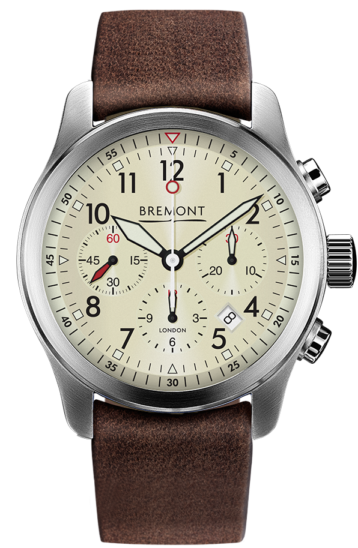
Sure, the Swiss make great timepieces but the Americans have Hamilton and Timex, the Germans have A. Lange & Söhne, Japan is the home of Seiko and Citizen, the Dutch now have TW Steel, Bremont is a British watch with an aviation focus and Australia is home to the Melbourne Watch Company.


Tissot is a watchmaker with plenty of heritage dating back to 1853, they are known as the entry-level Swiss watch, this is especially prevalent with their quartz watches. When you look at their automatic watches, the Powermatic 80 is based on the workhorse ETA movement with an 80 hour power reserve.

This is opposed to the standard 38 hour ETA power reserve. I have used David Jones, an Australian department store as a price comparison as they carry both brands. I looked at their online page that supports their bricks and mortar department store for pricing. As David Jones carry both brands they should utilise pretty much the same pricing structure as both watch brands are sold almost side by side in similar display cases utililising similar merchandising. 

For $325 you can be a proud owner of a Tissot Everytime watch, a minimalist style timepiece with leather strap from a leading Swiss, albeit an entry-level watch manufacturer. The Daniel Wellington Bristol priced at $329 is also a minimalist style watch on a leather strap. The Daniel Wellington Dapper is a similar style also sold at David Jones for $359 so you are pretty much comparing like-for-like priced goods. 

I’m not into fashion watches so I couldn’t see myself purchasing a Daniel Wellington, that being said I do respect their branding and marketing, they have really done well to target their market segment with the DW Moments initiative. Needless to say, Daniel Wellington markets well to a young cohort linking their product to travel experiences and adventure. This is a user driven promotion based around social media platforms. They are masters at marketing, that I must respect.

This is the domain of the millennial generation that use young beautiful people that are not highly paid models that won’t get out of bed for under 10K per day, they are leveraging the experiences and passion of the generation who are their customers. The Swiss watch manufacturers should take a good look at the marketing prowess of this firm, they can match price but they should be looking at revamping their marketing for specific lines.

We all know their sports timing and sponsorship is excellent yet they are still getting out-performed in this segment. At this point, I don’t really see Daniel Wellington going upmarket and having a crack at Tissot’s premium lines so Tissot should be targeting Daniel Wellington’s key customers. Throwing a last sentence, I wrote this post a number of years ago and it sat in the draft file for a long time.

The prices are now outdated, I reflected, should I rewrite the whole post or should I  just publish as originally intended? As I schedule in post going back a year now and sometimes they sit in draft for a year or two. I might sometimes bump a position to place a new topical post – I decided to not change it too much.

Chinese disgrace

When it comes to Africa, the Chinese are disgraceful. This is based on my first hand experiences, the current Chinese influences in Africa are deplorable. The CCP and CCP controlled companies like to work with totalitarian regimes and dictatorships that share common interests of subjugation of their population – one party nations.

We all know the European history in Africa; it’s not great. It can’t be defended on so many levels, the Europeans exploited the wealth of Africa during the period of colonialism – we all know that. That being said, we now live in an enlightened world where racism no longer exists – ok, now I’m pushing it.

You shouldn’t work in Africa if you are racist, that goes without saying. That being said, the racism in Africa is astounding, coming from a Caucasian background, for me, this is embarrassing as I just don’t believe in this bullshit. From my work in the Democratic Republic of Congo, I am exposed to a large number of Congolese nationals with high-level skill-sets. As a trainer, I would love to take credit for this but it just isn’t true, these are long term employees of the company who have been trained on the job.

So when I see the Chinese influence in Africa, I cannot believe what I see. Sure, the Chinese see this as their time to exploit the wealth of Africa, this is the final untapped frontier. Africa is mostly undeveloped and there is opportunity, unfortunately the wealth of Africa isn’t shared around to the people. This is where we disagree, why not return a degree of wealth through employment, through training, through development and through development?

Learning on demand

I’m interested in instructional design and the integration of technology into instructional design models. In the technical trades area, we have moved away from traditional time-based training to competency-based training. The emphasis is what tasks a person can perform in the workplace as a result of completing a training program or alternately through relevant experience and learning that has taken place in the workplace or possibly elsewhere.

The 70:20:10 framework is an integral component of competency based training where a training event occurs, coaching and/or mentoring takes place to reinforce learning and action learning projects are devised to implement the learning in the workplace. Learning on demand is associated with just-in-time learning specifically addressing a learner’s role in what must be learn at a specific time. As such, learning on demand requires a blended learning methodology utilising self-paced learning involving eLearning programs.

A training event occurs followed by social learning that may also be identified as collaborative learning. The social learning aspect is based upon mentoring, 180° and 360° feedback and coaching. The on-the-job experiences include increased scope of responsibility, job shadowing, action learning projects and problem-solving. I still believe in learning interventions such as courses; however, longer courses are being supplemented by micro-learning and mLearning where small bites of information are disseminated adding to the informal learning practices mentioned. 

Green watches – will this trend continue?

Green watches are very popular at the moment, the Rolex Submariner Kermit reference 16610LV with aluminum bezel insert released in 2004 got the green revolution going. The Hulk reference 116610LV released in 2010 featured the ceramic bezel and whilst not popular at time of release, it is certainly popular now and outrageously priced. It took a while to catch on, but Rolex got the colour combination right. 

 
The lightish green dial of the Carrera really doesn’t suit my tastes, for me, the Carrera works well in a one watch selection and I wouldn’t select a green dial Carrera as an only timepiece as I don’t think this is a timeless option. The light green dial and stainless steel bezel do work well together though, the blue and black dial models use a ceramic bezel insert but no so on the green dial version.
 
 
The Oris Aquis Date has a green version, I am an owner of a green Aquis Date dive watch on a stainless steel bracelet. For myself, I decided on the green dial with ceramic bevel insert as I wanted something different from the standard blue or black dial combination. So I can honestly say, this is the green version watch of my collection even though it hardly gets any wrist time, this is a big heavy chunk of a watch, only worn with short sleeves as it doesn’t fit under a shirt sleeve, I love the deep green though. 
 

The TAG Heuer Aquaracer has a green dial and stainless steel bezel, the horizontal teak dial striping adds an interesting dimension to the dial. Whilst this is the most interesting selection, I already own a blue Aquaracer so it makes no sense to have two identical models of different colours. There is a choice between the stainless steel bezel and ceramic insert, I think the deep green of the WAY201S.BA0927 is superior to the latest WBP208B.BF0631 faded green model, I am no fan of the date at the 6 o’clock position and round cyclops. 


The Glashütte Original Panomatic Lunar in forest green is the brightest and most vivid green of the selection. This is a very elegant timepiece lacking the brutish dimensions of the Aquis Date, the Panoramic Lunar is very stylish, well finished and a stunning example of a green timepiece. The brown leather strap provides great contrast to the stainless steel case, the whole dial is superb, I am not a fan of a date window on most watches as it is too small, poorly located and messes up the balance of the dial. The Panomatic Lunar has a large date window that is extremely legible in perfect balance with the whole dial a t the 4 o’clock location. 

 
Will the trend continue, I really don’t think so. When the green dial goes out of style, there could be a bunch of people left with green watch dials that look so 2020. I will be keeping my Aquis Date, but bearing in mind this isn’t my daily wearer and I just wear it when I want something large and chunky on my wrist. The Aquis Date is a largish timepiece and is not my daily choice. This is basically my summer timepiece as the watch does not fit under my shirt sleeve and is difficult to read in these circumstances. The large case and three link bracelet suits my 8 inch wrist, I just wear when I want chunky on my wrist.

Berlin water pumps

We were walking down Leberstrasse towards Babette’s apartment when we came across this old disused water pump on the footpath, I was dumbfounded, this is what I expected to see in an African village, not the German capital.

The pumps still work, however, the water is now not drinkable, this was not always the case. In the immediate period after the defeat of Germany in world war two, the German capital lay in ruins from strategic bombing and then later fighting street to street. Essential services such as water, electricity and gas were damaged to the point of non operation. People lined up in the streets to pull water manually from the system as the main pumps providing flow and pressure were damaged.

In this older section of Berlin, the housing and streets maintain pre-war construction, I was informed the buildings in the street and immediate surrounds are used for filming period movies. Where we stayed, we could see the buildings they used for filming, apparently the rooms in the area pretty much filmed at night for various reasons. This was for me very interesting, no doubt throughout Berlin these types of water pumps would have kept the population with water, I guess they took it home, boiling the water for drinking and used for washing other purposes.

Backing up a dive with an analog timepiece

I dive with a wrist mounted computer, yet I still back up my computer with a dive timer. If I am decompression stop diving then I always back-up a dive plan with two computers and a mechanical depth gauge.

On this particular overseas dive trip, I used my VRX dive computer backed up with my TAG Heuer Aquaracer. Whilst dive computer algorithms are cutting edge technology, analogue devices are still considered reliable and fail-safe. It is true the dive fraternity has embraced technology for well over two decades now, dive computers are standard equipment now. I either back up the dive computer with a second computer or a dive timer and depth gauge.

I will continue to back up planned decompression stop dives with an analogue timer, mechanical depth gauge and tables. You can bet I will be planning decompression stop depths, decompression stop times and gas usage prior to plunging into the water and that includes a redundant timer. Decompression diving is about training, planning, execution and redundancy so I will always practice redundancy with multiple dive computers, a depth gauge and mechanical timer. I might still be diving open circuit but I still follow the principles that I learned in the mid-1990s.

Dive computer ascent rates

I have read a number of articles in regards to dive tables v dive computers and I am astounded to believe the vehement defense of dive tables.

My first retort is the difficulty of dive table use for repetitive diving, the majority people can learn table use locking the procedures and terms into short-term memory but when tested three months later are unable to recall dive table use. The ascent rates prescribed on the majority of dive tables are simply outdated, there is no defending an ascent rate that was a compromise in the 1950s and still used today. Getting newly certified divers to follow an ascent rate without an ascent rate indicator is nearly impossible, getting back to a shot line isn’t always practical and even then, the majority of divers still ascend way too fast on a line without dedicated training.

Training divers to follow the ascent rate of their computer has many benefits, from early on in their training, the instructor is able to reinforce ascent rates and safety stops. A number of dive computers now have safety stop timers so at least a three minute stop is incorporated into ascent procedures. More modern algorithms utilising micro-bubble prevention strategies also incorporate deeper stops in direct contrast to neo-Haldanean models seeking the highest pressure gradients to reduce decompression obligations. We seek technological advances to enhance our lives, we carry around more computing power in our pockets than the Apollo astronauts took to the moon. We need to teach divers how to use their dive computers, this is a great tool – use it.

Once upon a time, dive certification courses were around three months in duration and highly physical in nature. With better instructional techniques and learning materials, the process of instruction is enhanced. I sometimes ask myself, do you need to know how an engine, transmission, drive-train, steering, brake and electrical systems operate to drive a motor vehicle or do you just need to know where to put the fuel and how to turn the key?

Does the average person understand electron theory to illuminate the room at night or do they just flick a switch? Do they require a working knowledge of refrigeration including the latent heat of vaporisation and thermal expansion valves to work the coolness switch on their fridge? We no longer use J-valves, twin hose regulators or wear horse collar buoyancy devices in diving just like you no longer need a motor vehicle to mount a mobile phone; this is outdated technology that should be relegated to museums.

When was the last time anyone actually used an abacus just in case a battery failed in a calculator? I also laugh when people say what if a computer fails underwater? Dive computers fail, this is a fact of diving and divers should be prepared for this inevitability. Then you follow the profile of the person or team you are diving with, then the response always is, but they could be following a different profile with depths and times – this doesn’t happen on tables? Plenty of areas around the world only allow guided dives, the divers follow the dive guide around and they plan the dive profile.

If that is the case, then I would be asking more serious questions about in-water diving habits and less about dive computer use. This is why dive guides are employed, this is exactly their role, they plan and supervise diving activities. I now advise new divers to consider their dive computer as their first item of equipment purchased. The prevailing wisdom is to purchase the mask, snorkel, booties and fins kit; yes, these are important but the most relevant dive planning and execution tool.

Many would argue you can dive without a computer but you can’t dive without a mask, fins and other equipment – fair comment. Sure, people dived for decades without dive computers, I began diving on tables and used the PADI Wheel for multi-level dives. If you follow your dive computer recommendations maintaining a slow ascent rate then you will reduce the incidences of micro-bubbles in your tissues and more than likely decompression sickness. Oh yeah, you can also maximize your bottom time and execute multi-level dive profiles – a great tool.

The Carrera Calibre 5

The Heuer Carrera of the 1960s and 1970s was always a chronograph, Heuer manufactured chronograph timepieces. Well every Heuer timepiece of that era was a chronograph apparently – that is what they did.

TAG HEUER CARRERA
 

So when TAG Heuer has reinvented the three hand Carrera with a Calibre 5, one has to ask, would I purchase a Calibre 5 Carrera? The Calibre 5 is generally an ETA 2824-2 but could also be a Sellita SW-200 so one has to be a little cautious. I am not a fan of the SW-200 based on previous experiences and whilst the ETA 2824-2 is a solid movement, the attempts to create greater competition between movement manufacturers has caused supply issues.

As far as a three hand Carrera, whilst it wasn’t the original design, I find the three hand Carrera a clean looking design. My concerns are with the engine under the bonnet and I hope TAG Heuer is a little more transparent with serial number designations so the consumer can make an informed choice. I like the three hand Carrera, I hope in the future that TAG Heuer move away form the SW-200 and come up with an in-house movement as this is the direction the industry is moving.