The TAG Heuer 6000 Series

The TAG Heuer 6000 series from the 1990s era was supposed to be a premium offering from a then struggling TAG Heuer. As far as the premium offering, I really didn’t think so, the style of the 6000 series was not really to my tastes.

TAG Heuer 6000 Series

As the range progressed, the 4000 series was added with the S/el the premium timepiece until surpassed by the 6000 series. The six feature philosophy of TAG Heuer meant the range was similar in design and styling, this was a problem. The TAG Heuer of the 1990s lacked a diverse style as a point of difference between ranges.

The S/el, 1500 series, Formula 1 and 4000 series allowed the TAG Heuer finances to somewhat stabalise after a very tumultuous 1980s. The 6000 series was manufactured with precious metals including 18k yellow gold, white gold, and platinum for a premium product. I am not a fan of the bracelet, I really don’t much like the link design but what I do find interesting is the TAG Heuer name at the lower lug area. 

Jorg Hysek was contracted to design the 6000 series, a couple of years later he was contacted again to design the Kirium. Whilst I am not a fan of the bezel, I have seen this design replicated in other timepieces so I appreciate this is a popular design. The Mercedes hour hand is retained, the minute hand is baton with a lollypop second hand. The dial has applied index markers and the chapter ring has printed minute markers. 

During this time, TAG Heuer was designing their timepieces utilising the six features of water resistant to 200 metres, screw-in crown, double safety clasp, unidirectional bezel, sapphire crystal and luminous markers. The six features were to differentiate TAG Heuer as a sports watch manufacturer, whilst this made all TAG Heuer watches somewhat similar, it did achieve its goals in a difficult period for not only TAG Heuer but all Swiss watch manufacturers.

The Tissot PRS516 automatic

The Tissot PRS516 is a pretty interesting timepiece, whilst the PRS516 comes in a number of configurations, the automatic chronograph is what interested me, for a chronograph, the dial is relatively clutter free and reasonably clean.

T100.427.11.051.00

I had an interest in this timepiece, then all of a sudden, I lost interest. Not because I didn’t like or want this watch, it was because I just have too many watches. I was just never going to wear this watch, I didn’t need a chronograph for a daily wear. So, where did leave me? I do like a chronograph, I have a number of chronographs in my collection so that was an issue and I couldn’t justify the purchase. This was just going to sit in the safe and that would be a wasted opportunity.

Powered by the Valjoux 7753, this movement is pretty much the workhorse chronograph movement relabeled as the Tissot A05.H31 movement. I must say, I really like a mechanical chronograph and this movement has 60 hours power reserve. Tissot are producing some pretty decent timepieces at the moment, whilst you cannot expect a hand-finished timepiece in this price range, this is a solid watch with a respected movement. I like the two sub-dial version, it is well balanced with the large date window that looks symmetrical.

Cronysism trumps competence

Unfortunately, in the government sector cronyism trumps competence every time. This is not just limited to ability, this is associated with qualifications too.  At no point should any government manager or any person in a leadership role be in that position without the prerequisite qualifications. 

A model of Cronyism in organizations. | Download Scientific Diagram

Sure, you could argue there are people with qualifications that are absolutely hopeless. That is true, but there has to be some form of determination of competency and the tertiary sector is a pretty good start. The private sector values qualifications, what I see is education and training opportunities aligned to business outcomes, the tertiary sector targets outcomes industry consultation. 

What I see is friends and associates brought in by a marginal selection process that has unfortunately been corrupted. These compromised people owe their position to their personal benefactors and the cycle of incompetence continues. They plant their people below them, now they have a force field of people surrounding them forming a shield of corruption. 

They reinforce their positions and engage in empire building, this is a non-competitive practice that the public sector employs. They parachute their friends, associates and followers into acting positions in direct contradiction to merit based employment requirements. When an official position is available, there is already an incumbent in the role and they are slotted in officially. Nobody else stands a chance, they never get a look in and that’s their plan.

Does self-interest corrupt ethics?

Working back in Africa, I am exposed to corrupt management practices now that the Chinese have taken control of mining operations. I ask myself, does self interest corrupt ethics? Studying ethics at tertiary education, we learnt about the theory of ethics and how to apply ethical practices in the workplace.

3. Ethics - Psychology Research Portal

Ok, so do businesses apply social responsibility in practice? In business, based on my workplace experiences, is ethics mandatory? The answer is a resounding yes. Corporate social responsibility is not just a buzzword, this is a values derived philosophy that underpins all facets of business operations. A values driven organisation is mandatory in the current business environment, a business does have a ## to maintain strong relationships in their community.

So why don’t government departments embrace business principles? Well, it is their recruitment practices for starters, they do not recruit managers, not mates. Whilst an employment standard is required, this requirement is frequently circumvented by cronies appointing their stooges in influential positions to prop up their little empires. Instead they promote the schemers, the empire builders and networkers – they do not promote competent and ethical people.

Next, recruit leaders, this is the disconnect. You need managers to plan, coordinate, organise and control – management is measurement. Leadership is developing a vision, creating motivation through inspiration for team members – this is not the domain of the public sector. Now, leadership is more than hanging a few leadership pictures on the wall, some quotes here and there, genuine leadership is embedded in everyday activities.

With no values, no direction and no ethics displayed, this is where the disconnect is seeded. A select few receive all the benefits whilst the rest toil away for poor conditions and little to no benefits. This mistrust occurs, this is not teamwork that gets the job done, this leads to inferior performance, increased absentees and the rest of the team emulating the behaviours they are witnessing.

A Penfolds 2013 Bin 389

Known as Baby Grange after Penfolds most famous shiraz, the Bin 389 has some parts of the wine matured in the same barrels as the previous vintage Grange.  As this is a Cabernet Shiraz, I am not really seeing Grange here, but I get the linkages to some degree.

Max Schubert first blended Bin 389 in 1960, but the 2013 really isn’t a Baby Grange as this is a 51/49% cabernet sauvignon/shiraz blend. Grange is pretty much shiraz so it really isn’t the same. With fruit sourced from the Barossa Valley, McLaren Vale, Padthaway, Wrattonbully and Coonawarra, this is an elegantly blended wine.

I had planned to drink a Yarra Yering Dry Red No.1 but forgot to pull the bottle out before I headed off to work. I had just reached a milestone in my retirement fund on Friday the 9th of April 2021, so it was worth a drink with my father on a Friday night as we had a barbecue. So I picked up a pretty decent bottle on the way over to my parents house after work. Drinking a 2013 vintage in 2021 is a decent enough maturation. Pretty smooth, not over done – this is a pretty decent example of Penfolds winemaking.

Fighting in the Donbas region

As the fighting rages in the Donbas region, is Russia taking heavy losses? Media reporting would tend to indicate that it is, what is supporting my views is Russian forces are not making any gains either. Ukraine is at least holding ground and possibly making some inroads into regaining some of their lost territory – they are fighting back effectively. 

Whilst it would seem imperative Ukraine is taking back ground, locking down Russian forces and denying further advances is pretty good at this point. Yes, we would all like to see the Russian invades chased out of the country, locking Russian forces into a defensive strategy. Given their logistics problems, if Ukraine can disrupt their supply lines they can not get fuel, food and ammunition then they can be cleaned up.

Whilst Ukraine has ceded control of Maripol to Russian forces, this dogged resistance has locked down Russian assets that could not be deployed to the Donna’s region. Now that Maripol has been taken, a smaller occupying force will be left in place with forces moved to shoring up Donbas defensive areas. There is discussions that Russian moral is low, they are exhausted and they are running low on equipment and munitions. 

It appears Russia is not engaging in offensive tactics after the bungled Donbas River crossing. I am reading that Russian troops are disobeying orders as they are aware their commanders are just treating them as expendable canon fodder. Mothers and wives are asking questions in Russia, they want to know where their sons and husbands are, they are protesting out in the open.

Is the Zenith El Primero better than the Rolex Daytona?

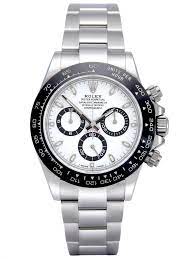
When viewing a high end chronograph, the Rolex Daytona is highly sought after, they are next to impossible to purchase from an authorised dealer. This is ironic, when the Daytoma was initially released back in 1963, it was not a success, they wouldn’t sell. Now though, purchasing a Cosmograph Daytona [if you can get one] is going to set you back the price of a decent motor vehicle. 

116500LN

This is amazing how this has changed, the Rolex Daytona is very much collectable, I have tried one on when I was in Hong Kong in 2017. Mostly when I visit a Rolex boutique, there isn’t much chance to try on a Cosmograph Daytona, they are pretty scarce, don’t expect a discount.     El Primero Chronomaster Sport Ref 03.3100.3600.21.M3100

An oystersteel starts at around $18,000 AUD, that’s really stainless steel to the non-Rolex buyer. An oystersteel and yellow gold starts at $24,600 AUD before the price really starts to head north. A yellowgold is $46,350 AUD in basic form, white gold isn’t much more at $48,050 along with the everose gold with a platinum version with price on request. 

So, a little searching on the Chrono24 website, starting around $160,000 AUD right up to $220,000 AUD with a version with Arabic numerals replacing the hour index at $417,916 AUD. This outrageous, precious metal Cosmograph Daytona will set you back a pretty decent motor vehicle or a sizable deposit on a property.

Navigating around the Zenith webpage, a Ref 03.3100.3600/69.M3100 El Primero Chronomaster Sport retails for $14,300 AUD, not cheap by any stretch of the imagination, but well priced as compared to the Rolex Cosmograph Daytona. A ceramic bezel insert really accentuates the dial, the three sub-dials are coloured in a unique dial styling. The 41 mm case is fitted with a stainless steel bracelet, a fabric strap is also available with a triple folding clasp but I prefer the steel bracelet version. 

Ok, so what do you get movement wise? A column wheel chronograph with a power reserve of 60 hours. The El Primero movement is iconic, the 60 hour power reserve is pretty decent considering the 36,000 vph [5 Hz] frequency. The 1/10 th of a second chronograph has a central counter making a revolution every 10 seconds, a small seconds counter at the 9 o’clock position, a 60 second counter at 3 o’clock and 60 minute counter at the 6 o’clock position. I would certainly consider the Zenith Chronomaster Sport as an alternative to a Rolex Cosmograph Daytona.

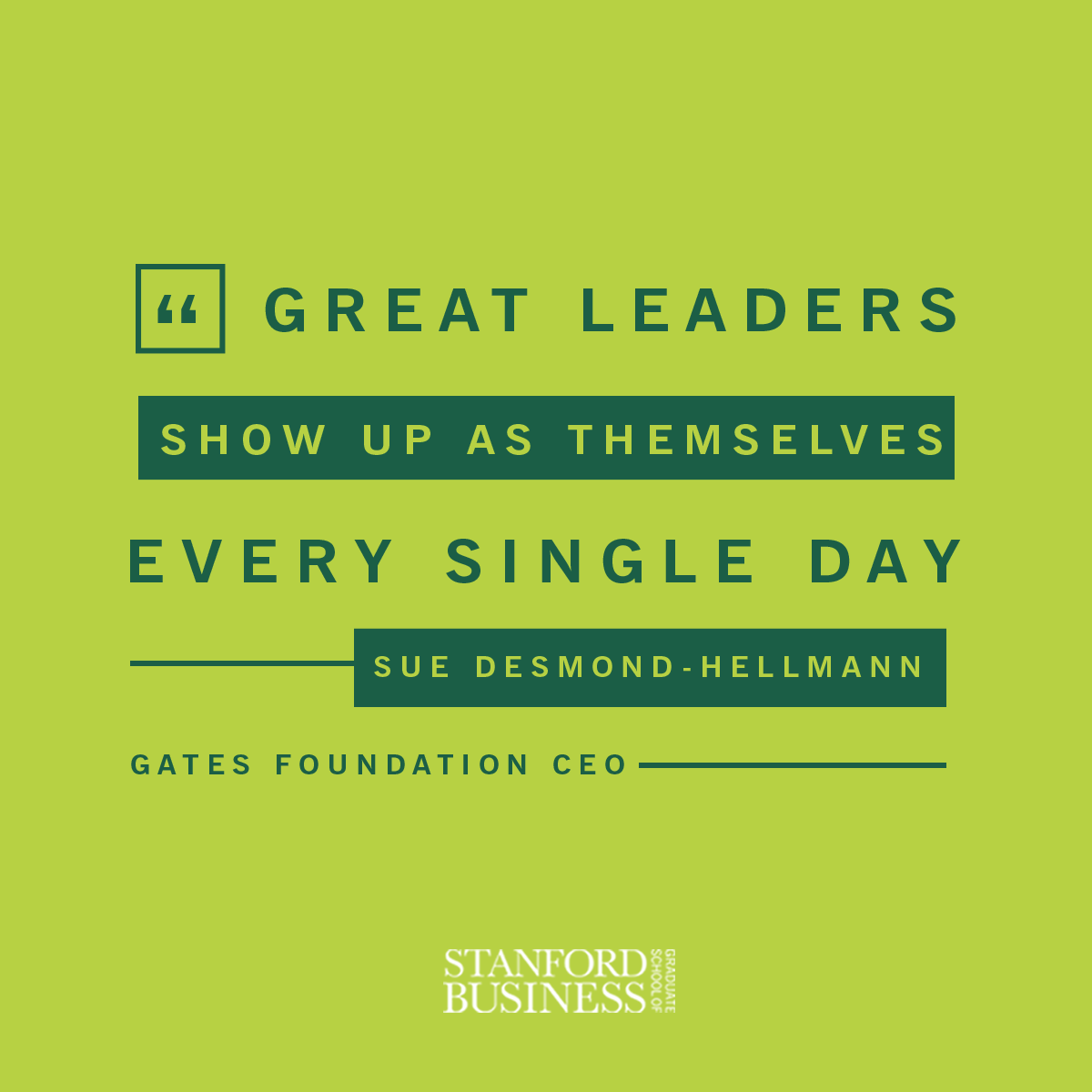
Leaders show up as themselves

I am fascinated by both the definition and application of leadership and how leadership is applied in the workplace. Sue Desmond-Hellmann makes a very valid point, great leaders act like themselves on a daily basis, I am a firm believer that leadership can be taught as not everyone is a born leader. This is why tertiary institutes have leadership programs, this is an important facet of a program.

Great leaders have self-doubt, great leaders have fear just like everyone else, they start to question themselves. However, great leaders have the ability to overcome self-doubt and potential self-destruction to influence team members in positive interactions to maximise team performance. Self-doubt is healthy, it makes you question yourself, your motives and your abilities to create positive outcomes for team members.

Leadership is a political game, leadership is persuasion and the best leaders are very persuasive relating to team members in a way that influences team behaviour. Likewise, networking is important to widen their scope and increase offers for future advancement even if they are not looking right now but never more important than team relationships.

It has been argued that leaders in progress are well supported by managers and team members alike but as they start to reach expectations they become unpopular. I tend to disagree with this view as I notice new leaders try to stay grounded to remain part of the crew they were recruited from. As the pressures of the job start to weigh on them and they have to make unpopular decisions, this support will subside if they are unable to effectively communicate with team members.

This is fine as this is a natural progression in the role, what especially grates on former team members is when the promotion goes to their heads and they start to believe they are special and better than everyone else. This has a negative effect on the team, it is a misuse of both power and trust with detrimental consequences for the team, the best thing in my opinion is to return the person to their former position and search for a new leader either internally or externally.

Basic negotiating tactics for basic level negotiators

So, I deal with a bunch of predictable idiots, they are pretty easy to read and just as easy to apply countering tactics to. Basically, you apply a loose concept of game theory and predict moves, you have already generated your counter moves, so you know your next move based on their previous move. It really is not that difficult, they are that easy t read, they are one dimensional and static. 

7 Essential Negotiation Skills for Bloggers and Marketers

They are fun to negotiate with, their default answer is NO, their default move is blocking and obstruction, and their base strategy is to combine these strategies so people get fed up and ultimately give up in despair. So I document the entire chain of events, I not only save emails, I scan and save in pdf format in event grouped files. This is important for later, you need to recall these important communication for later – you always need this back-up. 

Naturally, I don’t give up, now I can make these old arguments disappear for a while, they believe their strategies have been successful, then I can make these issues reappear at opportunistic times, they are exasperated., But if they are stupid enough to not resolve the issues when they occur, then they deserve to continually revisit these problems. It really isn’t  that hard, it shouldn’t be this way, but it is. 

The PID Act

The Public Interest Disclosure Act 2003 is very clear here, you cannot take detrimental action against a person who has made, or intends to make a disclosure [14. (2) (a)] . Nor can they incite another person to commit that offence [14. (2) (b)] as a $24,000 fine or 2 years imprisonment is a pretty big deterrent [14 (1)]. 

Public Interest Disclosure Act | Office of the Commissioner for Public  Sector Employment

Ok, so where does that leave individuals seeking to make a disclosure? Well, proceedings in tort under subsection (1) may be undertaken against the perpetrator of an act of victimisation. Proceedings may be dealt with under the Equal Opportunity Act 1984 under Section 67 of the Act. They need to be careful here, a tort is a civil wrong and the $24,000 could indeed be the cheap option for some of them. 

Right, so individuals need to be calm here and document everything, Section 8. (2) states that a proper authority may refuse to investigate or discontinue an investigation if it is considered that (a) the matter is trivial or (b) the disclosure is vexatious or frivolous and this would be their most likely strategy. Documentation is the key to their survival here, if every action is documented, it is defendable – including timelines. 

Individuals should be very careful here, a person purporting to be a disclosure of public interest information knowing it to be false or reckless also commits a crime and faces a $12,000 fine or 1 year imprisonment. So, they need to ensure they are not looking to make a misleading statement, or one that can be dismissed as frivolous or vexatious.  

Regardless, the last thing they would want is proceedings in the Equal Opportunity Commission to test this defense where all the news outlets are in attendance and this issue is played out in a public forum on the record. Of course that’s not going to happen as I am not going to take them there as despite their shortcomings, I see them as a rational negotiator.