The Longines Conquest

The Longines Conquest is a steel sports watch with a pretty decent pedigree, released back in 1954, this timepiece has gone through a number of transformations.

L3.778.4.58.6

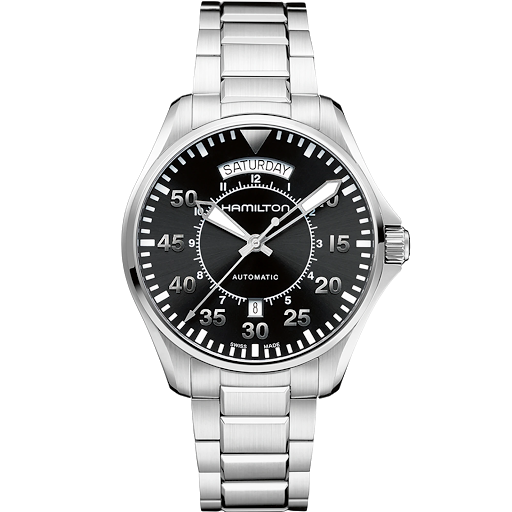
Ok, so what do I like about the Conquest? The 41 mm case with downward angled lugs fits the wrist well, my 8” wrist demands a larger style timepiece for symmetry. I like the flat sapphire crystal with a smooth chamfered bezel. The dial has index markers for the hour hands with oversize numerals at the 12 o’clock and 6 o’clock positions. I would prefer the watch to not have a date window at all, if it is required, then the date window placed at the 4 o’clock position would be the best option.

I really like the chamfered dial retaining ring with indexed minute/second markers, viewed through the flat crystal, it improves the dial. The large baton hands have plenty of lume along with the index markers although the second hand does not. I prefer the black dial, the Longines name and winged hourglass is placed above the hand pivot, Automatic appears on the lower dial with a 30bar (300meter) impression below that. The white dial is a pretty decent option too, just not to my tastes.

I would prefer less details on the dial, you can easily work out the sweeping second hand for an automatic movement or a jumping second hand for a quartz movement. There are quartz versions, my nephew has the 41 mm quartz, it is a good match for him. For me, it is the parallel H-link bracelet that improves this watch, the butterfly clasp with the dual pusher centres well on the underside of my wrist. I don’t much like the crown guard or the crown on this watch as I find it a little hard to grasp. Apart from that, this is plenty I like about the Conquest.

Tag Heuer 1000 series

Running through the base models of the TAG Heuer range of the 1990s; a restructure of operations was brought about largely by the disruption caused by the introduction of quartz technology during the 1970s. The Heuer watch company was in severe financial distress by the 1980s and not only financial rationalisation was required; a review of all products that formed the basis of the current TAG Heuer range was undertaken.

The 1000 series formed the entry-level base models and I liked what was on offer. This was a 1970s vintage timepiece based on Rolex styling although I can’t say I’m a fan of the jubilee type bracelet. As an entry-level timepiece, the 1000 series was an affordable purchase into Swiss watch ownership for plenty of people. I knew very little of the 1500 series and really had to search for examples finding the 1500 series is actually a hybrid of the 1000 and 2000 series. The 1500 was purely a quartz series as the watch was released when quartz movements threatened traditional mechanical movements.

The 1500 was a little too close to the 2000 series, the lugs on the face of the bezel on the 1500 are pointed whilst the 2000 series lugs are much smaller. The 2000 series morphed into the Aquaracer, I looked into purchasing a 2000 series briefly before deciding on a S/el chronograph. In a somewhat ironic turn of events, I finally purchased an Aquaracer with ceramic bezel.

This was in late 2016 nearly twenty years after first TAG Heuer purchase after seriously considering the 2000 series. I am glad I waited as I really like my ceramic bezel Calibre 5 automatic Aquaracer. The 4000 series was replaced by Kirium, during my initial searching; I never really considered the 4000 series but ended up with a Kirium requiring repair as a gift. I had to replace the quartz movement in the Kirium as the movement was left in the sun burning the electrical components out.

I still wear the Kirium occasionally but really can’t regard myself as a fan of either the 4000 series or the Kirium. The S/el series was and still is my favourite TAG Heuer timepiece of the era. I was initially drawn to the 2000 series as a close friend of mine was the proud owner of a gold/stainless steel 2000 series.

The S/el was transformed into the Link range and whilst good, I hope the S/el is re-released as a heritage model as the Link has already been reviewed a re-released already. Heritage models are keenly sought after with 1960s inspired timepieces driving heritage inspired sales, I guess a S/el revival is still a number of years away.

The 6000 series was considered the the premium range but I really struggle to see why. After TAG Heuer was once again deemed financially secure, the search for a flagship timepiece led to the development of the 6000 series that also came in precious metals. I just don’t like the styling or design of the 6000 series and think the watch looks very dated. I don’t the bezel on the 6000 series, the case or the bracelet but the redeeming feature of the timepiece is the dial.

The Heuer Montreal

In what could be described as outrageous styling of the 1970s, the Heuer Montreal 110.503 white dial adds a little colour to what I thought was a pretty outrageous time of styling. I was all aboard 60s styling, but there are times I have thought that this is the decade that style bypassed.

Vintage Heuer Montreal 110.503 White Dial for sale

The 1970s was the time of big sideburns, bell bottom trousers, paisley shirts and dungaree shorts with long socks and leather shoes. Yeah, as a kid growing up in the 70s, I thought the style was terrible, the food bland and the attitudes backward. Still, it was an interesting time to be a young child, we had a fair degree of freedom and Perth in the 1970s resembled a big country town.

The Heuer Montreal differed to classic Heuer chronographs of the era from the Carrera, Monaco and Autivia with oversized case and white dial. The rough ground case top with polished case side offers an interesting aesthetic. The white dial, the yellow features on the sub-dial, red hands and blue and red highlights on the tachygraph ensure this is an interesting vintage timepiece.

The Heuer Daytona

As Heuer moved from the 1960s into the 1970s, the Carrera, Autavia and Monaco were the backbone of the Heuer range. That could be considered 1960s styling influences, the big and bold Silverstone and Montreal represented the early 1970s with the Calculator and the over-sized case with rotary slide rule. 

Heuer Daytona Chronograph - Menta Watches- Buy Vintage and Modern Timepieces

Moving to the mid 1970s, the style required was more elegant, so enter the Daytona released in 1975 and later the Cortina released in 1977. Heuer had a long history of naming their watches after racetracks and the name Daytona clearly targeted the US market, the Cortina was  named after an Italian town. The Calibre 12 chronograph movement that was introduced in the late 1960s and the pushers on the right and crown on the left suit the distinctive style of the Daytona. 

The integrated bracelet was an early 1970s style with the Gérald Genta inspired Royal Oak in 1972 and Nautilus in 1976. Unlike both these iconic integrated bracelet designs, the 1976 Daytona was more rounded and I feel the three link bracelet is better integrated into the case. The two sub-dial chronograph at 3 o’clock and 9 o’clock with the date window at 6 o’clock makes for a pretty decent dial with the chronograph as part of the chapter ring allowing for a rounded case. I reckon the Daytona is a pretty decent timepiece and I hope it is reissued some time in the future.

Learning leadership by experience

I’ve studied both leadership and management so what I have learned about leadership and management has been part of my formal education. I can’t say I hang my certificate on the wall but I do admit to framing it and giving it to my mother as a token of appreciation for all she has done for me.

Leadership Development

I really learnt leadership from thirteen years employment in the state government; that supplemented my textbooks and course work. What I really learnt about leadership from this particular state government department is how badly leadership failure can affect an organisation. Now I am back employed in private enterprise in a role that my former colleagues would be unable to do. The manager of my division is a mechanical engineer who holds an MBA specialising in leadership and also project management – a handy knowledge base for an engineer.

The superintendent whilst not degree qualified has worked on numerous mining operations on a number of continents. Ten years as a technical adviser at Caterpillar in the United States really fills out a resume – not hard to see why he is a superintendent. I may talk the superintendent into undertaking a Graduate Certificate in Management, with his actual experience he would breeze through the program as long as accounting, economics and finance were not part of the program.

Dealing with guys of this calibre allow you some freedom; sure, they expect a lot but they also want you to succeed and will do whatever it takes to make it happen. As we are expats, our role is to provide leadership to the national workforce, we are basically hands-off and advisors. I was basically taught at state government level how not to go about leadership; in private enterprise, they do the exact opposite to government employees. Naturally, the government talks a lot about leadership without show any interest in actually providing it.

In their defense, they have absolutely no idea of how to lead so you can’t blame them for getting it so miserably wrong. Whilst they regurgitate the term constantly, they haven’t the slightest clue about leadership as I have dealt with so many career bureaucrats who have little knowledge of private enterprise and are totally out of their depth but are totally unaware. Our role is to provide structure and accountability, our behaviour has to be role model and we must maintain the highest standards. This is where the textbook leadership models come into play, we can now utilise proven leadership models underpinning core values.

I am enjoying the challenge of being part of a professional team where we are all working towards the same goal; there is no sniping, white-anting or undermining. This is teamwork at its and we are all attempting to perform in a difficult environment and not take credit for anyone’s work; this working environment is so different from the government.

Cointreau – the orange liqueur

One of my favourite drinks is Cointreau, the orange liqueur is a special drink for me. I prefer my Cointreau on ice, a very simple and uncomplicated drink, I would suggest elegance is understated.

Cointreau is an amazing liqueur, I keep mine in the refrigerator, I live in Perth so room temperature can be a little warm. Ok, as previously stated, I prefer mine on ice, so I don’t believe in mixing it down. To be honest, I have never mixed a Cointreau so I really do not know how to mix this drink. I have had shooters before, so I am aware of mixing Cointreau with other liqueurs in shot glasses. The B-52 is the example of the best known Cointreau based shooter.

The Cosmopolitan is a pretty decent example of a Cointreau based cocktail along with the Margarita and Vodka Sidecar – good stuff. So maybe I am incorrect, I have mixed Cointreau before. What I can say though, I have never mixed Cointreau with lemonade, orange juice or Sprite. Maybe that’s not how you mix it down, naturally, you sip it fast enough so the ice doesn’t melt and water it down. I just like chilled Cointreau, it is as easy as that.

Why I dive with two dive computers

Having received technical training, we always ensured we carried redundant equipment in case of failure of the primary device. A loss of the primary light in a cavern, sinkhole or cave was not a life-threatening issue when you switched to your back-up device.

VR3 and OSTC

Likewise, we carried redundant gas and regulators in various configurations in case of failure in an overhead or virtual overhead environment, you can’t always head straight to the surface. Needless to say, a redundant depth and bottom timer was required for obvious reasons. Even when diving recreational scuba, I carry multiple dive computers. This is especially important on overseas dive holidays where the option of fully desaturating is not possible to take possession of a clean dive computer during a trip.

Dive computers can and do fail, I have had a number of computer failures diving and would have been in real strife to effectively execute my decompression obligation otherwise. A two-week dive trip could be ruined by a dive computer failure; dive computers are not as reliable as one would think. So while some look at me strangely with two dive computers strapped to my wrist, as a former dive guide I have seen too many computer failures underwater to risk my overseas holiday for. I have a number of dive computers to choose from, why not have a redundant unit on holiday?

The Oris Aquis Date dive watch

I have always had an interest in quality watches but recently I have have stepped up my collecting whilst I have some cash to spare. I was currently looking at the now superseded Oris Aquis Date model as a change from my normal dive watch.

The 2016 model had a very chunky bracelet and I am looking for a more overstated than understated dive watch to add to my collection. I want chunky as I have a number of understated timepieces and just want to round my collection out. Putting the two watches side by side, I can only see the bracelet size as the only notable differentiating factor with both models fitted with a folding clasp to secure the bracelet.

The bracelet is secured to the case by screws as opposed to the usual pins and I really don’t see the point of a leather strap on a dive watch, that is reserved for a dress watch. Fitted with a Oris Calibe 733; this is really a SW 200-1 automatic movement with 26 jewels, a 38 hour power reserve and a 4 Hz frequency. The SW200-1 is now the default movement now that ETA has limited sales to non Swatch manufacturers.

I viewed a blue dial with the dial indicators not numbered and a date window at the 6 o’clock position but possibly other colours are also available. In the end I chose the green version as I had a number of blue dials and as an occasional timepiece, green would be something different. There was a trend towards green when I was looking, so whilst the blue dial was excellent, the green dial offered something a little different.

Rated to 300 metres, the 43 mm stainless steel case has a screw-in crown, a display case-back and the dial is viewed through a sapphire crystal glass. The unidirectional bezel is standard for diving timepieces. The bezel is ceramic marked in minute increments to the 15 minute mark and then numbered at 10 minute increments. For me, I like collecting watches and I prefer new timepieces so I have to put plenty of research in to get the pricing I am willing to pay.

Junghans – the bauhaus leader

An interesting watchmaker is Junghans, the German watchmaker from Schramberg in the Baden-Württemberg region, known for the black forest and traditional villages. Founded in 1861 by Erhard Junghans, the company produced wall clocks before later breaking into wristwatches. Based on their company bio, they believe style is not loud, so they favour a highly restrained approach to design. They state their watches are consciously understated with a preference of underscore the personality and attitude of the wearer.

They have some interesting designs, Junghans certainly embraced the bauhaus movement to create some iconic designs. Max Bill is of the most notable of the bauhaus designers, a wall clock is displayed in the Museum of Modern Art. The iconic Max Bill watch released in 1961 has inspired a minimalist design approach that has been copied by numerous watch manufacturers. They have other watches in their collection from pilot watches, Meister, Radio Controlled, Form and Driver Series but are known for the Max Bill.

Diving Antique – Panay

I love diving in the small resorts and out of the way islands of the Philippines; for many, their only Philippines diving experience is Puerto Galera and Anilao, this is a shame as the Philippines has so much more to offer the diver.

The dive shop within the resort is small, exactly how I like it. The term resort is a bit of a misdemeanor, this is more of a guest house, small and friendly, exactly what I was looking for. Diving here is pretty casual, the dive guide was a young fella and we headed out to around the island for the first dive. We had plenty of depth for the first dive, what I noticed at these locations was there wasn’t the sloping reefs found pretty much throughout the islands, you were descending and ascending through blue water, I love these conditions.

Yes, there was a bit of current around, but I have never seen a current as anything to fear, just another challenge to overcome and besides, a current usually brings the fish out. Yes, swimming into a current at depth increases your gas consumption but as there was only the two of us, I wasn’t concerned. I arrived at the dive resort Monday morning and departed Friday morning to Iloilo City for my afternoon flight back to Manila. I logged thirteen dives during those three and a half diving days with all but two dives deeper than thirty metres, I want to return in the future.