CEO paypackets

CEO and executive remuneration is outrageous, why are boards signing off on such packages? As seen in the chart average worker income has risen 26% since 1970, now while corporate profits have soared 250% in the same time frame, executive income has risen 430% during the same period – the numbers don’t stack up. This is shareholder profits, they are the owners of the business and the executive team is putting shareholder earnings at risk. The question is, how do shareholders reverse this alarming trend?

These are really disgusting figures, former Woolworths CEO Paul Simon once famously stated the the highest paid person in the organisation should be paid no more than 30 times the lowest paid person in the organisation. Paul Simon ran Woolworths for two decades up to 1994, he kept a tight hold on executive remuneration – his own included. In his final year as CEO, Paul was pulling $750,000 and second in charge was on $600,000 – unlike now Woolworths was a top performing business. An executive, unlike an entrepreneur takes on no financial risk of their own as they still get paid as the company fortunes decline.

Teaching tables to entry-level divers

The argument has raged for years, should an instructor teach dive tables to entry-level divers or should entry-level divers learn computer use during their certification course? There is still a need to cover basic table procedures for entry-level divers to adequately build the foundations of dive computer use; that statement may upset some members of the dive community.

What that doesn’t mean is actually teaching specific dive table use but the basic foundations of general dive table development. Is there is no need to assess table use? That argument will rage for some time but I argue a better grasp of dive computer use is achieved by knowing how dive computers calculate no-decompression limits.

If a diver is taught the PADI Recreational Dive Planner, NAUI dive tables, Buehlmann dive tables or DCIEM dive tables; are they qualified to plan dives using the BSAC dive tables? The answer is no, all the tables utilise different gas absorption models, procedures and rules. My experience with occasional divers is retention of specific dive table use, many divers can’t plan any further than NDLs for a single dive. They cannot calculate residual nitrogen uptake from previous dives instead planning repetitive dives using first dive NDLs instead of adjusted NDL limits; so the question is, if divers aren’t planning dives correctly using dive tables, why keep using dive tables?

Who really dives with dive tables these days? Sure, I plan square profile decompression stop dives using tables but that falls outside the recreational diving sphere anyway. If I am planning a multi-level dive on a wreck then I plan that dive using a computer or decompression software and execute the dive with the appropriate dive computer. The theory of dive tables supports dive computer usage, why would you limit your diving knowledge to just tables when everyone dives with computers.

Is the socialist utopia a distant memory?

The fight against totalitarian regimes is not fought in my native Australia; although many left leaning academics and wannabe socialists feel this is indeed the case, nothing is further from the truth.

My sojourn in Prague reinforced the values of a free and democratic society.; the champagne socialists engaging in the last bastion of union influence, the Australian public service now number just 12% of the Australian workforce, they are indeed a dying breed.


The socialist utopian dream of the sheltered workshop defying free-market influences that must be maintained at all costs is crashing down around them. Instead, a confident nation free from the shackles of protectionism is engaging globalism and free-market forces propelling the nation to the forefront of economic might.

Reflecting on the artwork and inscription at the base of Petrin Hill; the artist depicted the human form in various states of distress and decay, as we look further back, people are disintegrating physically and mentally under the total duress of the totalitarian regime. The victims of the communist regime is not just measured in deaths and prison terms for political dissidents; all society is affected by the discredited totalitarian ideals, independent thought and action, once controlled by the state are almost relics of history – North Korea, Zimbabwe and Burma stand alone as organised despot regimes.

Failed African and Middle Eastern states are far less organised, instead brutally controlled by warlords engaging factional forces against their own people intent on destroying the fabric of the human being. Democracy unfortunately is not viewed as a fundamental right for many world inhabitants by their undemocratic regimes intent on holding power using all means at their disposal to subdue their citizens to enrich themselves only.

Advanced open water – what’s in a name?

The advertising of the Professional Association of Diving Instructors (PADI) tells divers to go deeper with the Advanced Open Water diver certification – bad idea. This is not the certification to undertake any forms of deep diving despite what PADI or your local dive centre tells you.

The performance objectives do not correlate to deep diving requirements; there are no additional equipment requirements different to standard scuba, no advanced dive planning and gas requirements or gas panning procedures taught. There is no real training should the diver accidentally slip into decompression and no contingency management planning. PADI perceives any dive to a depth greater than 18 metres as a deep dive so you can be qualified as a deep diver with a 19 metre dive. I used to frequently see divers certified at the 21 metre depth after diving in warm and clear blue water with 20+ metres visibility – not good enough.

TW Steel – big in oversized watches

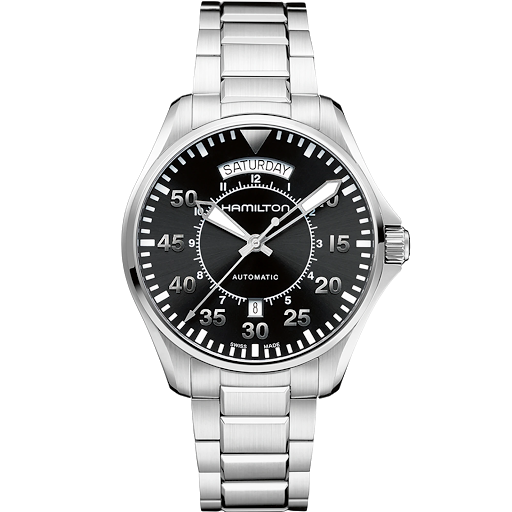
Whilst I tend to gravitate towards the higher end brands with a heritage and pedigree dating back to the early 1900s and 1800s, I like to view what the younger set are wearing. TW Steel is a fashion watch first and foremost, that is their market and their slogan is Big in oversize watches – it is pretty accurate. They have their market and they are doing a good job servicing their market.

TW Steel is a brand that caught my eye when I was holidaying in South East Asia. Walking around the malls I noticed a number of boutiques where the brand was distributed. Naturally, I decided to wander in and try some of their watches on as I had a little time to spare and plenty of interest.

As I discovered, the brand is relatively new, founded in 2005 by father and son proprietors Ton and Jordy Cobelens in Amsterdam and now distributed worldwide. From my research, I learned that Ton already had plenty of experience in the watch industry via advertising accounts he managed before deciding to launch his own brand.

TW Steel didn’t invent the oversize watch market but were astute enough to identify the trend as an early adopter. Their timepieces are big, generally in the 46 mm to 50 mm range and although I prefer a larger timepiece on my wrist, I reckon the 42 mm – 44 mm sizing is about right. Still, this is what the younger set are wearing and this is fashion and trends so who am I to complain?

As a college lecturer, I take notice of what is on the wrists on my students and their general fashion trends, I’m just glad those silly baggy pants that always fall down are no longer worn. Will the oversize watch trend continue? In the short term, yes definitely, although the long-term trend may seen sizes reduce as men’s watches tended to be in the 37 mm to 39 mm size category and for most people, a couple of years wear at that price point is acceptable.

Ten steps to a learning organisation

Getting involved in organisational development and training management; I thought I had better read up on the basics of learning organisations. So I pulled a copy of Ten Steps to a Learning Organization out of my bookcase to help me to learn the process – then I need to apply in the workplace.

While I work in training, our organisation is pretty regressive, failing to embrace and adapt to current technologies and practices. The book, while a less than exciting read allowed me to reflect on what we do and how bad we are at it, the ten steps are pretty mundane and are:

  1. Assess your learning culture. 
  2. Promote the positive. 
  3. Make the workplace safe for thinking. 
  4. Reward risk-taking. 
  5. Help people become resources for each other. 
  6. Put learning power to work. 
  7. Map out the vision. 
  8. Bring the vision to life. 
  9. Connect the systems. 
  10. Get the show on the road.

Ok, so accessing your learning culture is the first step in pretty much a training needs analysis is required. For me, Chapter 6 Putting learning power to work contained the best information with the sub-section Why most training doesn’t work reviewing current training methodology failures. Keeping up with current practices is paramount to maintaining professional practice and remaining relevant – I hope this increases my future opportunities after a decade in the job. Professional development is an important aspect of maintaining a professional standard. 

The prevalence of LinkedIn to assess candidates

The continued growth of social media site LinkedIn to assess potential candidates for recruitment is an interesting trend. If Jobvite’s figures are to be believed, the preference of 94% of recruiters to review potential candidate’s credentials via the site is an interesting development. A candidate is able to showcase their profile on the site reaching a larger cohort of potential employers.

The growth of LinkedIn as a professional networking site has grown exponentially since the site’s 2003 launch. According to Statista, LinkedIn’s 380 million users in the second quarter 2015 have increased from 364 million users from the first quarter 2015 figures. Now that Microsoft has acquired LinkedIn, one expects this professional site will continue to grow with employment opportunities to grow. I have personally noticed upper management viewing my profile and this is an excellent feature to keep track of who is viewing your profile.

Management v Leadership

The essence of the leadership construct is the synergies created within the power and influence paradigm; however, what I learned from leadership literature is no one true definition of leadership actually exists.

Management is coping with complexity whilst leadership is coping with change according to Kotter (1990). I found that to be an extraordinary explanation; change management certainly underpins management processes and is taught both within the existing management frameworks and as a stand alone course. I prefer to define leadership as influence that is exercised by providing purpose, direction and motivation. Leadership is more concerned with mission, direction and inspiration.

Management involves designing and implementing plans, team-work and getting the job done. As such, management is measurement and leadership is inspiration developing personnel to achieve shared goals. I see plenty of mid-level managers trying to fulfill the classical management principles of planning, organising, leading and controlling where they do plan and they control.

Organising is usually undertaken at a senior management level although controlling definitely occurs at the middle management level with mid-level managers reporting to senior management. It was once thought that leadership could only be fulfilled by senior managers within the organisation but I argue leadership is commonly exercised at not only middle management, the most effective leadership actually occurs at worker level with smarter managers recognising this.

The Hong Kong luxury watch market

Hong Kong is one of, if not the most significant prestige watch markets in the world for predominately Swiss and luxury timepieces. When the Hong Kong watch market declines; the heads of the main horology conglomerates get very nervous.

Hong Kong is significant for a number of reasons, this former British colony is a major financial district within the region linking Asia to not only Europe but the United States, the Middle East and Australia. Hong Kong as a financial centre is also significant for China; although areas within China, such as Shanghai control financial flows. Notwithstanding, international businesses still operate within Hong Kong and hold a regional presence and finally, Hong Kong is a major logistics centre.

For an extended period, Hong Kong was the gateway to China with the inhabitants building significant wealth over the years that was influenced by dual Chinese and western interests. From my limited travels to Hong Kong, interactions with locals through extensive travels throughout the region and personal studies, I have witnessed the Hong Kong appetite for luxury goods.

Hong Kong is an important international hub with international airlines offering great deals for stopovers from Europe, America and Australia redirecting airlines to both Asian shorthaul and longhaul destinations. Hong Kong is also a major travel destination with tourists and lets not forget business travel. Shopping in Hong Kong is world famous and although the great deals Hong Kong once offered tourists no longer exists, the reputation of major retailers is ingrained within the very fabric of Hong Kong.

Needless to say, the wealth of Hong Kong residents demands the latest trends in luxury goods with the aspiring middle class of a resurgent China keen to display their new found wealth. Thus, Hong Kong is in the envious position of generating high volumes whilst maintaining high prices and margins. The geographic location of Hong Kong works well to service Chinese buyers as well as the countries in the region including the airport hub.

Reporting wrongdoing – who is really wrong here?

You can’t be fired for reporting wrongdoing, this is the sad fact that a few people in my organisation are going to have to come to terms with, yet they can’t let go. What they fail to comprehend is the reporting of wrongdoing is not the issue, the real issue is why the conditions to engage in wrongdoing are allowed to prosper – it really isn’t that hard.

They might not like me, I might not be part of the cool crowd but people who stand up against the prevailing order can’t be disadvantaged either – that’s the rules. The real issue here is not just the reporting of the wrongdoing, but the actual wrongdoing – what are they going to do about it? Why don’t they just concentrate on addressing the issue instead of trying to track down the whistleblower?

Even better, from my perspective as a reporter of wrongdoing is the failure to follow state government recruitment and selection policy – the exact policy designed to prevent such occurrences happening. So we need to start asking questions such as who authorised this recruitment policy? Who knew about this? How far up the executive chain of command did this go? What other appointments are tainted? Unraveling this interconnected web of corrupt activities is going to be fun, we know there will be roadblocks at every juncture, false leads and a distinct possibility of a cover-up. This is going to a very interesting period so let’s get this party started.