Overlooked for promotion

You ask yourself, how could this happen to me? You did everything right, you worked harder than everyone else producing excellent results – you are a workplace leader. You know deep down, you challenge the manager’s authority and you suspect this is the reason why you were overlooked for the promotion despite the fact that you act as the team leader and spokesperson in an unofficial role.

Looking to get leaped over by those less technically competent is difficult to fathom, especially when my manager has absolutely no idea what is actually going on in the workplace. They are the number cruncher, the paper shuffler but you are the leader, the motivator, the technically proficient driver of change. We all know workplaces are driven by interpersonal relationships – how did it come down to this?

Your manager doesn’t like your brash outspoken persona, when they try to unload their responsibilities on you, it is a simple process to check their job description and point out in no uncertain terms that they need to do their job so you can do yours. Or maybe they need to rewrite your job description with the necessary increase in salary; maybe they need to explain to their boss why this is so, one suspects their salary won’t be reduced accordingly.

Unlike most people, you look forward to your performance review as you know the real reason for such a review is to see what the manager has to do for you to perform your job efficiently. This is your opportunity to control the review, not to sit idly by whilst criticism flows freely and you and forced to defend your actions. Turn the situation around, you control the meeting and all of a sudden they have to defend their decisions and conduct. To be sure, you had better be well prepared.

But at the end of the day, you know the manager likes the other guy better than you; really, the manager doesn’t like you at all, if it was legal to run you down in the carpark, they probably would. Even though you have not come out and said it, they suspect that you don’t respect them yet you work with them in a professional manner. Do you need to call their professionalism into question? Are you able to lodge a formal grievance? It has been said, people don’t leave jobs, they leave managers – how true this is.

Diving with a snorkel

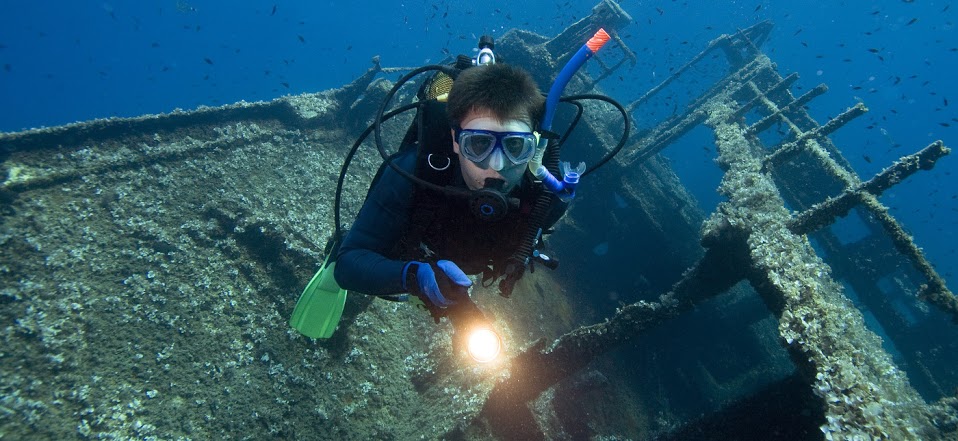
I hate snorkels, I don’t think I have dived with one in 20 years. When I started scuba diving; like most new participants I had one mounted on my mask until I worked out how much it annoyed me.

I don’t recall the point I took the snorkel off my mask, there was no defining moment for me. I had started out, like all new divers following the rules that had been laid out in my open water course, blindly following what I was told to do. The snorkel has entanglement issues, this has the potential to break the seal on the mask causing flooding, I have seen time and time again freshly minted divers confuse their snorkel with their inflator – a serious buoyancy issue. Yet why do scuba certification agencies such as PADI maintain as a requirement that divers in training must wear snorkels?

Corporate finance – will I ever really use this?

Writing about my MBA experience, I try to reflect on what I have done and what I am attempting to achieve. Somehow I managed to fumble my way through the corporate finance unit, I even received a 65% credit; yet, I would feel less than comfortable in working in a actual finance environment. 

I get the feeling this is one of the units I have to get through and in my case; hopefully to never to use this skill set again. Sure I have utilised finance principles in my personal business dealings, doing this for someone else is a whole new ball game for me. This is by far the hardest unit I have undertaken; I am relieved this ordeal is over and I hope I don’t have to undertake anything like this in the future. As I seek to relaunch my management career from the private sector to the state government payroll, I am wondering if I will ever use such skills as a mid-level manager. 

I have gained a new respect for corporate finance practitioners; this would be a tough full-time role with tons of analysts packed in offices working diligently for the large stockbroking, banking and finance companies. In many respects, I am glad I am way too old to break into this industry; I am just hoping be am able to hold my own in meetings in the future and not embarrass myself too much. This is important to know, but as I no longer run my own business and will not be engaged in corporate finance, finance is probably not necessary for me.

Aches and pains after deep air dives

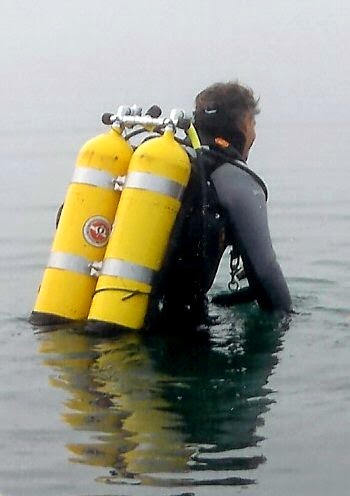
Long exposures requiring mandatory decompression stops using air as both a bottom mix and decompression gas usually results in aches and pains post dive that are difficult to explain. I used to feel pretty sore after a extended exposure dive, for me, it was mostly around the shoulder and upper arm area, I also felt like I had nitrogen bubbling out through my back.

I attribute this effect to asymptomatic bubbles kicking around the system despite executing the ascent flawlessly to the prescribed dive plan. Naturally, the best combination is nitrox or trimix for the bottom mix (depending on depth) with nitrox mixes for travel and EAN60 – EAN80 or 100% O2 for decompression gasses.

For the travelling diver to remote areas, this isn’t always feasible in both terms of logistics or cost. Once again, the highest percentage decompression gas is preferred, but you sometimes take what you can get. I feel unexplained (low key) pain in my left elbow and shoulder that may remain during subsequent repetitive dives; I feel this is the so called slow tissue compartments off-gassing probably around the site of scar tissue from previous exposures.

Incidentally, I don’t tend to feel such low-key pain when diving with nitrox as a bottom mix for dives in the 40 – 50 metre range despite low nitrox mixes for deeper dives. If I am able to off-gas on higher oxygen mixes I feel no such pain, so I have attributed this phenomenon to the high nitrogen loads of deep air diving. The obvious answer is to avoid deep air dives decompressing on air.

Slow ascent rates and extended shallow stops may lessen the impact but does not fully negate the phenomenon, nor does short duration mid-water stops lasting for 1 – 2 minutes in length. So when diving in remote areas, if no nitrox is available I will continue to utilise air as a bottom mix and decompression gas and continue to exhibit mild asymmetric symptoms attributed to the so called silent bubbles without exhibiting actual decompression symptoms.

Global warming estimates – are they flawed?

Reviewing material from global warming estimates, anyone who questions the validity of the figures or the methodology used to obtain these figures is immediately decried as a climate change skeptic.

Science is all about robust debate, the people who are trying to shut down debate really run against the principles of science. The debate to question the methodology of the estimates must be questioned, has the scientific community used flawed models to reach these conclusions?

Citing a different source, there is little doubt atmospheric CO2 has risen in line with advancing industrialisation, the question is, is it purely carbon dioxide in the atmosphere or are other factors affecting the climate? One of the byproducts of industrialisation is the building of infrastructure, is the decrease in forests and more importantly the trees that absorb CO2 the issue?

Union corruption must be eradicated

I am at a total loss to explain why any union member would not want to investigate and eradicate corruption within union ranks. Their fees directly affect outcomes, these fees pay for the services they receive.

The majority, but not all of union funding comes from member’s pay packets; therefore, members have a vested interest to ensure their money is spent in their best interests. The protection of corrupt union officials building personal empires at the cost of the lowly member who pays their wages must be eradicated.

The Fairfax/Reachtel poll tells us in round figures that about half of all respondents want the Australian Labor Party to distance itself from the union movement. However, this will not happen as the union movement funds political advertising for both the Australian Labor Party and the Greens with enormous political donations, this is where a large part of union member’s payments are spent.

About a quarter of all respondents don’t want the Australian Labor Party to distance itself from the union movement with close to a quarter of respondents unsure. We need unions, I don’t think any sane person would disagree that a balance of power is not required, what we don’t need though is militant union officials forcing the cost of major projects up costing everyone in the community.

Coopers dive resort – Palawan

This post was not written online whilst at the resort; with the 30 – 45 minute average download time for a single webpage, it is not difficult to guess this posting was a copy/paste exercise from a document. The free WiFi is a misdemeanor; there is no way they could charge for such a slow service. So WiFi aside, how does the rest of the resort fare?

The rooms are large and spacious, so too with the bathroom, my hot water system didn’t work but no issues really as it wasn’t required. Same with the TV, the only show I needed to watch was the Mayweather/Pacman fight; I wasn’t able to see a replay until I arrived back in Manila on Friday night. I unable to read any analysis of the fight until a week later due to resort download speeds – damn.

I was in Palawan to dive, so other issues aside, that’s what I was mostly concerned with. The dive centre was run by the son of the owner and I was diving solely with Kevin during this time. The dive sites were unfortunately unspectacular, they were run of the mill dive sites – nothing more. Still, I was in the water so I was happy, away from the stresses of work that three flights afforded me.

The cost is 1500 php for a single dive with own equipment supplied, the cost per dive comes down to 1250 php for a 10 dive package, that is what I decided on as I had five days worth of diving planned. They tried their best to bugger up the diving, on my arrival I was informed the boat was to be chartered out out to a group. 

I complained as it was pre-arranged that I would be diving, a solution was reached as the group never eventuated and I went diving after all. This was however poor management, it was just luck I was able to dive due to the cancelation – nothing more.

The boat was good, it was mostly empty – the crew members were excellent, these were seriously good guys constantly jerked around by the son of the owner. I had to feel for these guys, they worked hard, never complained and just got on with it.

A French group had an issue on a tour, whilst the tour was conducted by a third party, the complaint was poorly handled in full view of every guest and continued for hours. It was a textbook case of how not to handle a complaint, this really damaged the credibility of the resort.

Corporate finance completed

Managing finance was by far the most difficult unit I have undertaken to date, I am really concerned waiting for my results as I struggled to complete my assignments. If I had planned to work on Wall Street, finance is an important skill-set, for me, it is less likely to be required.

I sometimes wonder on the value of this unit, should this be a core unit or an elective unit as this is such a specialised area. This unit does have applications in regards to corporate structure and capital funding; however, seeking a manager’s role in a government department, this knowledge will be in excess of what is required for the position.

As this course is fairly expensive, I wonder if a more specialised MBA is the answer such as human resources, project management, marketing, operations, organisational effectiveness or finance. What I do know is I have to put in a whole load of extra study in to really feel competent in this area – because I don’t think I am at the moment.

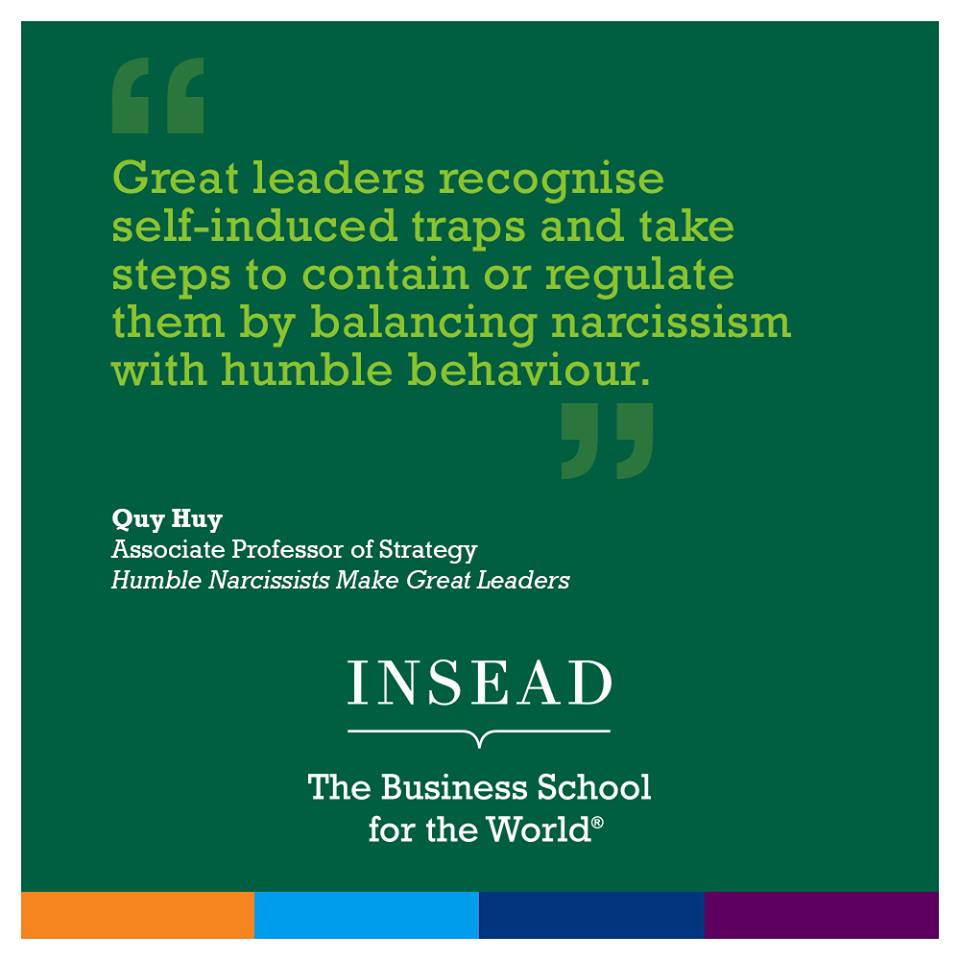
Balancing narcissistic behaviour for team cohesion

The art of leadership is fast becoming the science of leadership. The United States has the Department of Behavioural Sciences and Leadership at the US Military Academy at West Point.

Likewise, the Australian Defence Force Academy is a partnership between the Department of Defence and the University of New South Wales educating military leaders in a range of skills from critical thinking, critical reasoning, reflection and decision making – all under the stress and pressure of simulated battle conditions.

In military circles, leadership has been an integral process of maintaining both morale and discipline. The principles of military leadership processes promote selfless service for the team; this is the essence of the servant leadership principle. Military leaders are conditioned to focus on team members, placing personal safety and well-being behind that of the people they are leading. Military leaders share a common lifestyle with followers developing high levels of trust, loyalty and respect.

This tends to be the opposite to business leaders who tend to distance themselves from team members through tall hierarchical structures, taking credit for team successes – the domain of the narcissistic manager. Military leaders are classically trained; they are equipped with the knowledge and tools required to effectively and selflessly lead under pressure. Regulating narcissistic behaviour in commercial enterprises promotes team cohesion for mutual goal achievement.

The academic argument to employ instructional designers

Adult learning institutions such as state government training providers suffer from a lack of professionalism due to their cumbersome academic structures, they do not place the correct emphasis on learning, they do not design learner-centric resources that make learning difficult or almost impossible, trainees learn in spite of the resources.

According to their job descriptions, lecturing staff are training facilitators – that is exactly their role and most perform it well given their lack of professional training. A Certificate IV in Training and Assessment is more than often awarded over the course of a weekend and does not constitute a professional qualification in any way shape or form.

Advanced Skills Lecturers are tertiary qualified academic leaders supporting rank and file lecturers; they undertake standard full-time facilitation roles as well as part-time academic leadership duties – a dual role. Likewise, Principal Lecturers advise full-time lecturers on academic matters undertaking part-time curriculum development and part-time training delivery. The Head of Programs is a part-time academic role and part-time administrative role managing enrollments, student issues and timetabling.

A Head of Programs requires no academic qualifications and is essentially a supporting role as they hold no decision making capabilities whatsoever. The Advanced Skills Lecturer, Head of Programs and Principal Lecturer are academic roles with both the Head of Programs and Principal Lecturer requiring reduced teaching times to perform their role, the Advanced Skills Lecturer is a full-time teaching role with extra duties attached.

All three positions require written applications meeting selection criteria adjudicated by an independent selection panel, should the applicant be successful in the written application process, they are invited to a face-to-face panel interview where they are required to perform a project to prove their suitability. Naturally, should the selection panel not perform its role correctly, the process may be questioned and formal grievances lodged.

The pseudo promotion of people willing to perform these roles under the guise of mates promotions when selected staff fail to perform the roles what they are paid to do. This is an internal process that reaches far outside the formal structures in place – this is a stunning example of state government nepotism and wastage.

Furthermore, as these roles already have reduced teaching hours to perform the job, what are the incumbents doing? The unlikely scenario of the Head of Programs not performing any teaching duties now exists where they hand their timetabling duties off to lecturing staff. These staff  have been selected by virtue of friendship instead of competency who are supposed to be undertaking full-time teaching loads must stop. Naturally, they then receive reduced teaching loads to perform the duties essentially double dipping.

This all sounds good in a perfect academic world and is enshrined in formal job descriptions. At a strategic portfolio level this structure falls apart due to poor management practices that sees nobody performing their role as per their job description – this is where the cronyism creeps in. The upper management do not see the value in investing in training and development, they lack a quality focus and they lack the leadership skills to drive change.

Although a defined job structure is in place, many unscrupulous team leaders create special roles for the favoured few bypassing independent selection processes. What really happens in an environment swimming with nepotism and dysfunction; the art of delegation sees everybody handing their paid role off to the next poor sap in the hope that someday they might get paid for their work so they can hand it off to the next unsuspecting fool.

In comparison, universities and private tertiary colleges employ instructional designers to develop in-house cutting edge learning materials. They fully understand their competitive advantage relies on top quality delivery via a variety of methodologies supported by top notch resource materials. Corporate institutions also outsources instructional design for the best part, otherwise they employ instructional designers to create professional products.

Naturally they invest in learning management systems and charge a premium for quality tuition. Universities and private tertiary colleges fully understand the ramifications of strategic planning and management and the need for differentiation in a highly competitive and increasingly global educational market.

In a contrasting style, the ramshackle approach of state government colleges sees untrained facilitators throw together a course that has not been professionally designed packed with resources littered with inaccuracies not tied to individual learning styles, adult learning strategies and are unfortunately of marginal educational value.

This is due to no one performing their roles as set out in formal processes agreed under formal enterprise bargaining agreements lodged with the industrial relations commission. The assessments are now so dumbed down and not aligned to course outcomes that are thrown together by people who are neither trained or experienced in such professional skills. They do not hold any academic value whatsoever – this is such a tragedy for the students and the industries they serve.