On-the-job assessing

As a training and development practitioner, I really enjoy the training component of the role; needless to say, assessing forms a key requirement of the training skill-set. What I really enjoy is on-the-job assessing, this allows myself as an assessor to really immerse myself in the trainee’s actual working environment.
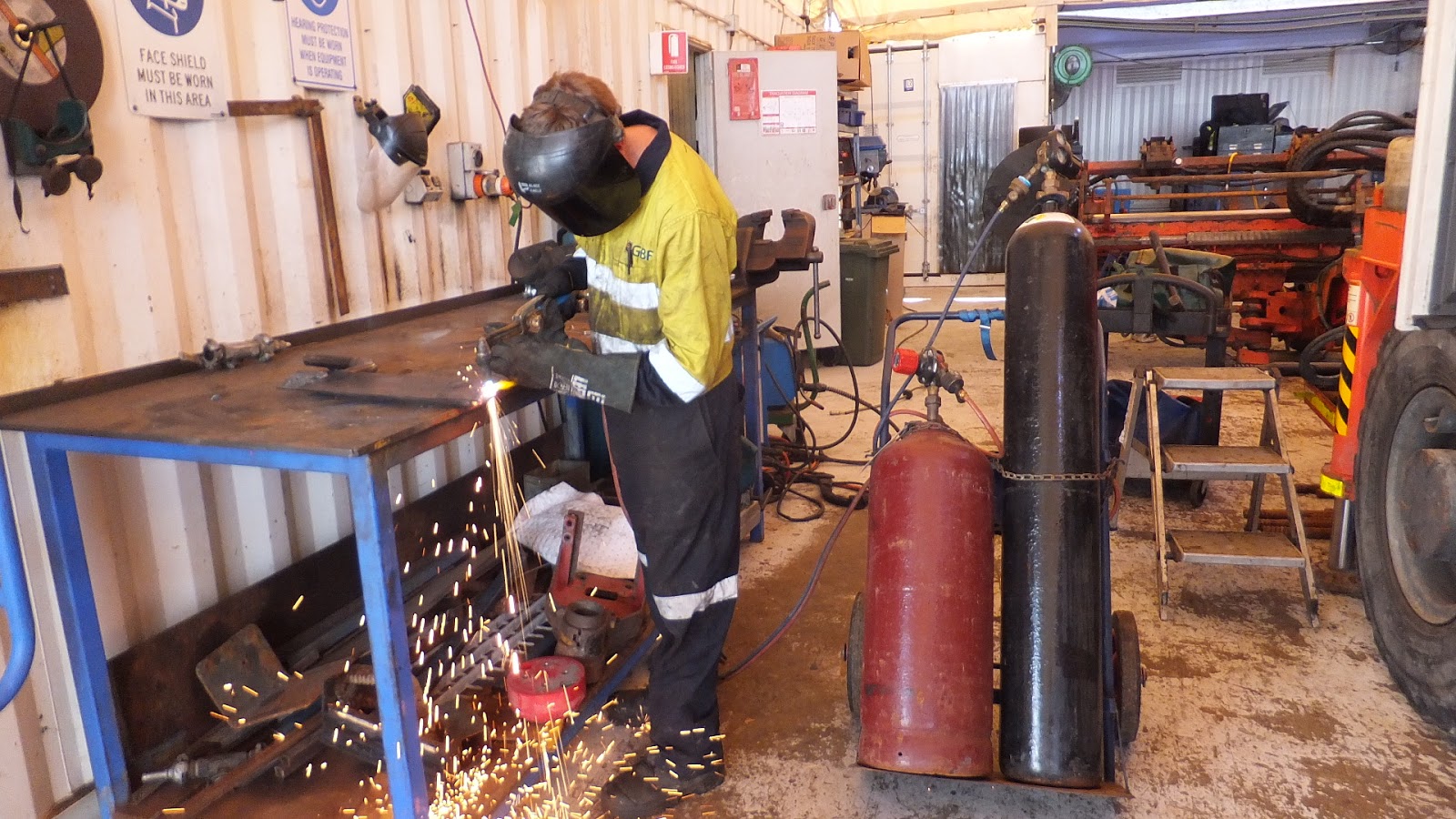
When I travel to site, I am able to view current industry practices in a realistic environment with trainees required to perform under the same workplace pressures they experience in their normal job role. Notwithstanding, the trainee is required to perform their assessment on the equipment in their workplace, this maintains my currency in the industry in regards to machinery and equipment trends.

As a trainer and assessor, this industry consultation process also satisfies the requirements of trainer currency and on-going industry applications as well as individual workplace processes. As a dual professional, I am required to maintain both vocational and training competencies. In reality, this is more difficult than one expects as I had to spend a disproportionate amount of my personal time undertaking tertiary training to develop university level training and development competencies.

The opportunity to engage in professional development on-the-job is welcomed, I love keeping up with the latest trends in the machinery maintenance and repair field. The technology now utilised in this field is extraordinary, productivity is linked to technology and automation is a large driver of technological development. We generally conduct off-the-job training with trainees, we engage in classroom training for the knowledge development process before heading into the engineering workshop for skills practice before engaging in the practical assessment.

This is a simulated working environment, the issue we face is the learning and assessing tools and equipment, they tend to be outdated and not as related to current work practices as organisational management believes. For the training organisation, the benefits of reduced capital expenditure and maintenance allows a more efficient use of resources. The benefits of utilising the client’s resources allows a seamless learning environment where trainees are comfortable being assessed in their work environment.

Trainees who are familiar with equipment, procedures, tooling and work flow tend to perform better. It is my preference to assess trainees on-the-job for they are richer for the experience and so is the assessor. This is all about confidence, a person who is relaxed generally performs to their potential with a greater benefit to their employer. it is about making people comfortable in their work environment, they can either perform the assigned tasks or they can’t so you don’t want to let nerves skew results.

The end of Google +

Now Google has announced the end of Google+ there are a number of upset people who will have their G+ accounts deleted. So much for the internet being forever, April 2nd is the end of G+ and our accounts gone.

Despite protests and an online petition, Google won’t be backing down on this decision. G+ never had the following that the mainstream social media sites have such as Facebook, Instagram, Snapchat, Twitter, YouTube, Reddit, LinkedIn, Tumblr and Pintrest. Unfortunately, this situation embarrassed Google management and they needed a reason to shut down this unpopular social media site; they still have YouTube so I don’t think they will back down on closing down G+.

We need more tradies in politics

We need more tradies in politics, for people not acquainted with the term tradies, this is a person holding a vocational qualification in a certified trade. Trade based training is strictly controlled by the state government with the qualification awarded by the government and not a training institute. A trade is a great opportunity to earn a living, tradies are in great demand and highly sought after.

In Canberra we have way too many career politicians with no real background in running a business, working in a business or even holding down a job. Currently we have a whole cohort of people who finish high school, head off to university and gain a certain political ideology along with a law or arts degree and then enter politics.

Then these people head into government as a political advisor, communications advisor or some other role rubbing shoulders with our political masters. Tradies on the other hand learn the job from the bottom up, trades are workplace based with part-time training and assessment over a four year period.

Tradies have a first hand knowledge of the job, it is a true hands on role and the high performers are identified and slotted into supervisory and management roles. This is what we need in government, practical people who solve real life problems on a daily basis – this is how you prepare people for public administration.

Heading to the Public Sector Commission

I returned home late on a Friday afternoon, it was the final day of the year for me so we had been out for our Christmas drinks and I then had a barbecue out on the back lawn with my father.

There was a letter sitting on the kitchen counter when I returned home later in the evening with OHMS in bold print on the top of the envelope. This is an official government letter, On Her Majesty’s Service usually spells trouble and I was concerned I had some sort of traffic offence. Instead, I had been contacted by the Public Sector Commission to give evidence in an investigation they were undertaking. To be fair, I had initiated this investigation as a breach of employment standard as I had applied for a position and had been unsuccessful.

No big issue there, job applications are a competitive process and there are winners and losers. You can never challenge the decision but you can challenge the process and I was able to support my claim that I was overlooked for the position because I had reported misappropriation of government funds as we had claimed funding that we were not entitled to claim.

I had evidence that poor practices were being undertaken, certain individuals were receiving promotions without a competitive process and positions were being abused. My claim had merit as I spoke to the case officer on the telephone as she requested further details for clarification.

She then presented the case to the executive and they made a decision as to whether the claim had merit and should be pursued. The official letter from the Public Sector Commission left no doubt in my mind, they were taking this case seriously. I had also told her that I was seeking alternative employment and resigning over the matter. I informed her I did not want to drop the matter as whilst there was no personal benefit for myself, I could improve the prospects of future applicants for fair and equitable treatment.

In Western Australia we have just had a high profile case where government employees had acted in a corrupt manner for procurement of state government tenders. This case had been plastered across the front page of the newspaper for days on end forming a huge discussion on talk back radio, letters to the editor and kitchen table discussions.

Now I had unearthed questionable practices in a state government agency that could be interpreted as corruption. Apparently there had already been a Corruption and Crime Commission investigation but I was unaware of the outcomes as only the person who had made the report was notified and that reporter was anonymous – despite this, I was the one held responsible.

It is unlawful for an organisation to take action against a person making a report of impropriety. All I know is that I am glad I have found another employer and I no longer have to work here anymore. I had to return for weeks after Christmas and I am then free of this poorly managed organisation.

Living well is the best revenge

The best revenge is success and happiness; what I have learnt from dealing with dysfunctional work environments is you should get out and never look back. However, if you are in a dysfunctional work environment with generous pay and conditions, that makes the decision a little harder. From what I have learned, I had the ability to get out, they have no such ability and this is the catalyst of their bitterness.

The art of revenge then is to let the people who dislike you know that they have no effect on you; be nonchalant but do not overplay it as you may come over as desperate. You have moved on, the best part is, when they haven’t and they are still filled with anger and resentment then George Herbert is correct, living well is the best revenge.

Vasse Felix Classic Dry White

What I liked about the naming of some Western Australian wines is their understated style. The Classic Dry White from Vasse Felix is a great example of a great drinking now style – no need to cellar. The Semillon Sauvignon Blanc is a summer blend with a basic 60/40 Semillon/Sauvignon Blanc that is light straw in colour, this light style is great value drink is priced slightly under $20 per bottle.

The zesty citrus and passionfruit flavours are layered over an initial dryness tapering off to a slightly sweet finish. This wine is drinking now and I wouldn’t be cellaring more than 48 hours. For me, this is a fantastic drink on a hot afternoon, I can’t ever recall drinking this wine any later than daylight hours – this is summer. The screw cap is convenient, corks are out so I don’t even require a bottle opener anymore so this is a great drink for on the boat or out in the backyard.

The case study method

Harvard Business School (HBS) pioneered the use of case study methodology in their Master of Business Administration (MBA) course over a century ago. The MBA format pioneered by HBS, whilst receiving periodic updates is almost unchanged from its original structure.

The majority of MBA assessment utilises case studies; however, as an online student we were also required to submit essay type assessments. When undertaking an online MBA, it is somewhat difficult to present a case study whilst taking questions and defending methodologies and recommendations.

Whilst I am familiar with online assessments where we would firstly undertake a solo case study followed by working in remote teams on the second case study, I feel full-time on-campus is an easier option as collaboration is easier.

We utilised almost exclusively HBS case studies, as I understand it, HBS professors write case studies and use for a year or so before producing new case studies and sell now obsolete case studies to other universities. This, I believe, works well for all institutions as HBS continuously updates their materials whilst MBA students worldwide benefit from quality HBS materials.

For a world renowned business like HBS, they are able to attract world class scholars and staff, the Harvard MBA is not only world class, the lecturers are pretty much the pick of the crop and in high demand. Clearly, business schools such as Harvard attract the highest level candidates with competition for places difficult to achieve with 8% acceptance rates fairly standard.

Second tier business schools such as the one I attended do not have the same capabilities, reputation and quality of candidates as HBS. I am ok with this as my MBA education, whilst nowhere the price of HBS also doesn’t offer the same opportunities for graduates so it is up to me to get on with it and earn my ROI.

Safari – I hate it

When you become an Apple convert you get locked into a certain range of products, you are now firmly entrenched in the Apple world.

Their web browser is a prime example of a substandard product you are forced into using. In short, Safari is rubbish and I seek to avoid it at all costs. My problem is I own Apple hand me down products, I have never in my life purchased an Apple device.I am forced to use the crappy Safari browser and can’t update to something decent like Google Chrome, Mozilla Firefox or even Microsoft Edge since I now have an old product.

I am having difficulty upgrading to IOS 10.0 or 10.3 to run the latest versions. Then I got lucky, Opera was supported on these devices. I was able to download a version of the Opera browser and all the issues I had evaporated. I am happy now, I don’t think I will ever be an Apple convert and this will limit my annoyance.

Blogging on the road

The vast majority of my posts are written on the road using Google Docs. Then the post is cross referenced and fact checked when I can log onto a WiFi connection in a cafe, hotel or restaurant. I spell check at that stage too hopefully preventing embarrassing blemishes on the page.

As I wrote this particular post, I was awaiting entry into Neuschwanstein Castle in Fussen overlooking the spectacular countryside, a view fit for a king. I had some time to burn as I was on a guided tour of the castle and made sure I was early, this required exerting some energy walking up the hill but better to be early. Besides, I not only enjoy the exercise, I need it.

I can use Google Docs offline to write the bulk of the content on my Samsung tablet before a copy/paste to Blogger and finally uploading pictures to accompany the post. If I am working from home, then I generally upload the picture and write the content around the pic, different methods depending on requirements. What I know is I enjoy writing and travelling and will hopefully continue to do so until I am too old to carry my backpack around.

Rolex shops in Hong Kong

When wandering around the waterfront district of Tsim Sha Tsui as a watch enthusiast, I immediately noticed the distinctive green Rolex logo with gold crown perched above numerous stores. There were purely Rolex retailers in this tight area along with authorised dealers retailing an array of high end luxury timepieces from Patek Philippe, Chopard, Omega, Tudor, Audemars Piquet, Hublot, Breitling, IWC, TAG Heuer, Panerai, Cartier, Longines, Bruguet, Blancpain and Tissot.

I wandered into their store expecting to see row after row of DateJust and a few DayDate watches, I was pleasantly surprised, they had quite a selection of timepieces. As I sat in front of the display case trying on an Explorer I, an Air King and then a Cosmograph Daytona; a blue/gold Yachtmaster II caught my eye. Within a minute, I had this wonderful expression of nautical precision engineering firmly clamped to my wrist.

I glanced at the price tag and I realised I had a $202,000 HKD ($33,000 AUD) watch in my possession – the watch was impressive. I have been instructed that throughout the 1970s, Hong Kong retailers discounted luxury goods as Hong Kong was a major shopping hub of Asia and was the place of a bargain, but this is now unfortunately no longer the case.

I then thought about the supply and demand curves taught to me in economics classes and how retailers are able to demand full retail prices with such a high level of competition in a tight area. Retailers must be making sales to warrant the maintaining of prices otherwise a wave of discounting would then lead to a destructive price war.

A state of equilibrium must have been achieved with a critical mass of sales for both Hong Kong and one also guesses mainland China. I am aware Hong Kong has slowed down in economic terms and luxury item sales are under pressure. Still, they are a strong market as the gateway to China and the largest air travel hub in the region.

Hong Kong was a great place to be, there was plenty to do and I thought the place was vibrant. I was somewhat surprised at the luxury goods for sale, there was no differentiation, a Rolex is a Rolex anywhere in the world along with, Versace, Ralph Lauren, Armani or Louis Vuitton. There is wealth in Hong Kong and they are happy to flaunt it but the bargains evaporated a long time ago.