The art of watchmaking

I was having a conversation at work in our open plan office about watches when a colleague who overheard me then informed me he owned a Rolex.

He had my immediate attention and I had a ton of questions of model, age and cost. The next day he brought in a slip of paper with some details scribbled down and I was straight onto the Rolex website searching for details. I had his DateJust all speced up and printed off a picture when I showed him and he confirmed to me that this was indeed the watch he owned. I asked him if he wanted to know the cost of a new DateJust and let him know that the going rate was $10,800 for a brand new purchase.

He then informed me he purchased his in 1991 when he was working in Karachi for $2000 off a dealer secondhand but in new condition. Apparently, back then locals were having difficulty getting their hands on hard currency so they would purchase precious commodities such as Rolex watches only to sell them to dealers for US dollars.

I share a desk with a guy and he was exasperated on how anyone would pay $10,800 for a watch, it was just a watch he said, he could buy two mountain bikes for that type of money. My first thought was who would pay $5000 for a mountain bike? Ok, if I was good enough I would if I was competing and I’m not. A luxury watch is a work of mechanical art built by watchmakers who are skilled in their fields and deserve to be adequately compensated for the skills.

I believe a mechanical watch is a work of art in both aesthetics and engineering. As we are both engineering tradesmen, I thought he would appreciate the level of engineering precision required to ensure this series of springs, sprockets, drive mechanisms and balance wheels work in unison to accurately measure time.

As a business student, I loved researching the business of the Swiss watchmaking industry. Watchmaking companies such as Rolex, IWC, Breitling, Heuer and Omega produced timepieces for occupations, these roots in occupational timekeeping developed a heritage of utility. The industry had to reorganise and rebrand, the quartz revolution destroyed their business models and the luxury watch industry was created.

The Rolex Submariner and Sea Dweller were standard issue for commercial divers, Breitling produced timepieces for aviators, IWC supplied the Luftwaffe during the second world war, Omega supplied NASA timepieces and Heuer produced timepieces for motorists and racers. During the 1970s, the quartz crisis nearly derailed the Swiss watchmaking industry with cheap products forcing the industry to reorganise. The Swiss watchmaking industry reinvented itself seeking the upmarket luxury goods sector.

Heuer was purchased by TAG Industries in 1985 to form TAG Heuer before being sold to luxury goods manufacturer Moët Hennessy Louis Vuitton in 1999, Omega is now owned by the Swatch Group and Rolex remains an independent company. The art of watchmaking is not limited to solely the mechanical specifications, the beauty of the art of the watch cannot be underestimated. How do you value art?

There is a market for fine art from Claude Monet, Salvador Dali, Pablo Picasso that could be described as simply as just oil on canvas or watercolour and paper. Likewise, Tchaikovsky created the masterpiece of the 1812 Overture, Vivaldi created the four seasons and then there was Beethoven and Mozart.

Can the sum of the parts be simply calculated in terms of value; Van Gogh, a man who couldn’t sell a painting within his own lifetime is now strongly represented on the list of highest prices paid for art. Artists like Willem de Kooning, Paul Gauguin, Paul Cézanne, Rembrandt or Jackson Pollock fetch outstanding prices.

The brilliance of Rolex is their marketing; their relative rarity creates a market as people are willing to place an order and wait two years for timepiece – that’s pretty special. This also supplements their design that doesn’t change much, the Rolex Explorer I is pretty similar to the 1953 design. The Cosmograph Daytona only just upgraded from a manually wound movement to an automatic movement.

The 1957 design Speedmaster Professional still utilises the 1861 manually wound movement and is pretty much identical to the watch worn on the moon by NASA astronauts. For a reasonable price, the average citizen is able to purchase identical hardware that not only traveled to the moon, NASA still issues the Speedmaster Professional to the current crop of astronauts.

Fixed interest investments

A balanced investment portfolio includes a percentage of fixed interest securities, this is considered a conservative portfolio structure – but is it really? Fixed interest markets are the largest capital markets in the world, a true diversified fund must consider fixed interest investments.

With Australian equities comprising between 16% to 25% and international shares from 20% to 30% of an investment portfolio, equities are viewed as the more volatile investment class offering greater returns albeit at higher risk. The definition of fixed interest is an income derived from a pre-determined payment allocated by the issuer at regular intervals with the principal returned after a set period. As such, fixed interest is a debt instrument allowing no ownership in the firm ranking in front of equities in the case of liquidation.

Whilst government issued bonds are the most common form of fixed interest instruments, corporate bonds form secondary fixed income sources. Differing levels of government from federal, state and local issue debt securities raising cash to finance both day-to-day operations and projects. Fixed-income investors receive a set interest rate of return in the form of interest in exchange for lending money to the enterprise. Investors are repaid the principal, the original sum at the maturity date. I reckon 15% to 25% is the correct ratio depending upon the degree of conservatism investors require.

An introduction to understanding economic policy making

2020 was looking to be a reasonable year for both equity and bond markets, international financier George Soros spoke after a recent Sri Lankan economic forum and spooked markets with his prognosis that we will be faced with a similar financial meltdown to what we experienced in 2008.

Understanding economic policymaking | Coursera

Professor Gayle Allard guides budding economic students through excellent online course material explaining the basis of economic policy making. This course builds on macro-economic policy taught by the best international business schools. Run by Madrid’s IE Business School, this online course draws on actual course material utilised in her face-to-face economics course taught at the business school.

Speaking to the producer of this online course, he believed Gayle holds the ability to just stand in front of the camera and explain the concepts – such is her grasp of the material and ability to deliver to an online audience. With current economic policies confusing the lay person, this online course gives the average non-financial person a chance to dissect government policy.

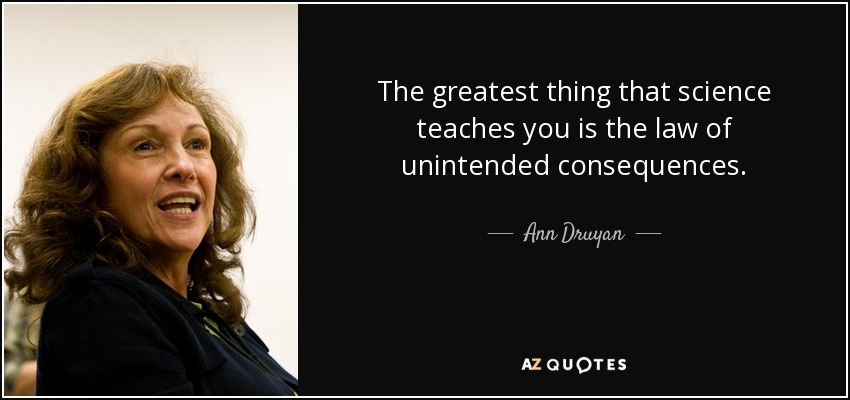
The rule of unintended consquences

When planning a strategy, one expects senior management to acquire advanced planning techniques yet this didn’t happen in my organisation. The state government was offering a severance package to reduce personnel in the public sector, a tried and proven technique – so far, so good.

A severance differs to a redundancy insofar as a severance is generally voluntary and the position itself doesn’t become redundant. As such, a person may accept a severance package and apply for further positions within the organisation that may include the same job under different pay and conditions. Needless to say it includes a pay out of some form.

In their wisdom, our mob stated there will be no severance packages offered as the package includes three weeks pay for every year served capped at seventeen years plus an immediate payout of a further 12 weeks if the package is accepted immediately. Naturally, the strategy was to not offer a package with a pay out instead relying on redeployment to minimise payments so staff can walk away with nothing after six months of redeployment if no other offers of employment are available.

So when the only severance package was offered to union representatives within the organisation one has to question their motives. However, if the current union representatives accept the package then when we reconvene our employment in 2018 there must be union representative positions available.

Naturally I would have to be nominated and then endorsed by a vote by the members but such a group of people require an individual who is well versed in such techniques and unafraid to confront senior management at their level. It didn’t turn out that way, I was nominated with no one else putting their hand up so no vote was required.

So, here we are at an unusual situation where the current union reps are gone but willing to step up into the position is the chief protagonist who is well researched, has uncovered and reported corruption, has uncovered and reported selection and hiring practices that are in breach of the industrial award and public service guidelines.

By denying an individual to fair workplace selection practices, I have the energy to address these issues for all union members to fight for a fair system for all. The rule of unintended consequences is ironic on this occasion, they have provided me with the vehicle to pursue organisational change.

Dairy Queen – great product but terrible service

During trips to South-East Asia I am exposed to an array of American products yet to be seen in Australia, this is great as I had advanced knowledge of franchises such as Krispy Kreme, Tony Romas, California Pizza Kitchen and Dairy Queen.

I have to admit, during sojourns to SE-Asia I don’t mind slurping on one of their ice-cream cups mixed with crushed kit-kat or crunchie chocolates. I see the Oreo biscuit mix is pretty popular too but I have never drifted too far from my favoured chocolate kit-kat blizzard drink. I’m sure the major brands are more than happy to support this company as their sales of product would make them a major client with plenty of bargaining power.

I was in one of their branches where a sign informed us that if no receipt was offered then the purchase was free. Bringing to their attention the failure to produce a receipt resulted in no free ice-cream drink. Now while I am not worried about the cost of the ice-cream, they advertised their code of conduct and they failed to deliver. Really, this is pretty pathetic, the cost of an ice-cream is negotiable but the loss of trust is difficult to repair.

The hunt for yield

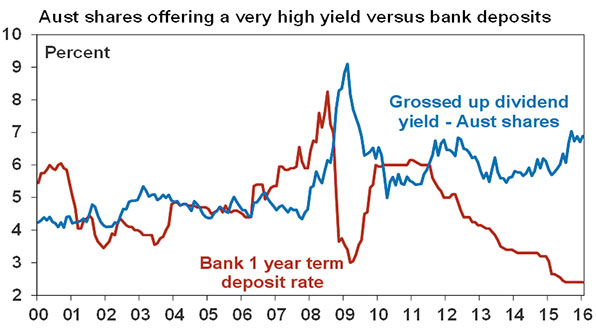
I recently read an article about dividend yields and the correlation between yield and share value. Investors such as myself are attracted to shares paying strong and sustainable dividends. It has also been argued that dividend yield is a stronger indicator of value than the perennial price/earnings ratio (P/E) – I do research dividend yield as an important decision-making factor.

Currently, bank deposits are paying between 1.5% to 2% with no capital appreciation, government bonds fare a little better with closer to 3% yields with equities offering reliable and stable yields ranging from 4% to 6% with the possibility of capital appreciation. Then there is the franking credits of dividend imputation, that is a strong incentive to chase high yielding equities.

This strategy is enhanced in the low interest rate environment brought about by central banks to stimulate growth with quantitative easing strategies. One has to be careful as dividend yield may rise as share prices plummet without earnings per share (EPS) and dividend per share (DPS) revaluations. In such a case, share price growth still correlates P/E ratios with rising EPS and DPS mirroring revenue growth.

With more people setting up self managed superannuation funds (SMSF) as baby boomers are nearing retirement, the search for yield whilst protecting capital is a huge consideration. For me, it certainly is as my strategy revolves around generating a future income stream whilst currently reinvesting dividends as a compound interest strategy.

We are tired of fund managers not only unable to beat a market index but also charging outrageous fees to underperform benchmarks. We are able to outperform fund managers although the average SMSF does lack the diversity of retail funds. That is mainly due to the requirement of a critical mass for each investment, yes diversification is good but if each individual investment is so small that even a doubling of capital ensures such a small return that people can’t live on in the future then it just isn’t worthwhile.

Costing a job opportunity

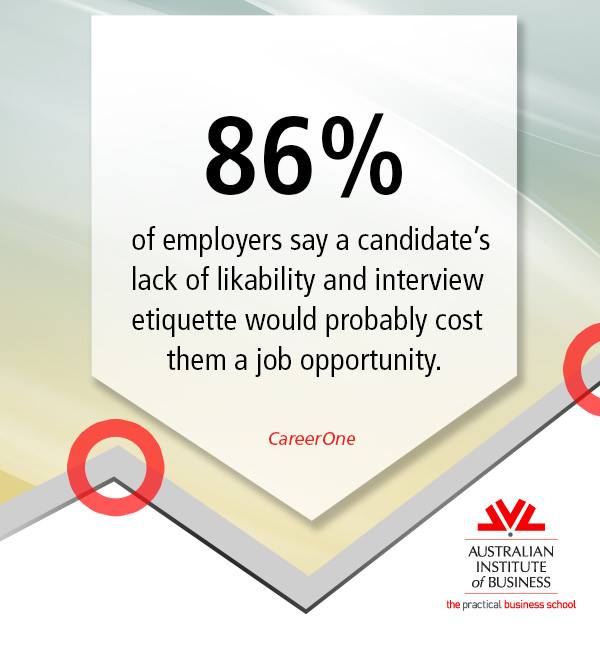
These are pretty damning numbers from CareerOne; poor interview etiquette is costing job opportunities, with that comes personal likability. We are in a tight job market, getting shortlisted is difficult enough in this current subdued economic environment, let alone actually picking up the prized position you have applied for is hard enough.

This tends to indicate that the job candidate held the necessary skills and experience to win the job but somehow managed to sabotage themselves through their conduct. I was not shortlisted for a government position; now anyone who has worked in the government service knows a very formal process exists. This is primarily to stamp out the nepotism that has occurred in the past preventing talented personnel moving forward and instead protecting the well connected already embedded in the organisation.

What really happens is the management place their person of choice in the position in an acting role; they are required by law to advertise the position externally and potential candidates are required to dislodge the incumbent from their position. The day I formally lodged my grievance application, I immediately noticed the organisation’s lawyer and lead investigator viewing my LinkedIn profile. No doubt they had also taken the time to view my Facebook, Google+, Tumblr, Pintrest accounts and blog to build a case against me.

Notwithstanding, I was immediately concerned at this development, this organisation was treating me like a criminal as I was now required to defend myself against their accusations. Rapidly flicking through my Facebook account, did I have anything posted that would implicate myself? I wasn’t too concerned about LinkedIn, it is a professional networking site and you generally don\’t post anything defamatory or engage in idle chit chat.

Facebook on the other hand is the social networking site you post drunken statements about footy games, that include team selection, umpiring decisions, any current racism and drug or rule changes. Then you have to think, what inflammatory videos have I posted in the past? Are they likely to incriminate me in any way, shape or form that is inconsistent with the values of their organisation? Job hunting is rapidly changing – that’s for sure.

An interest in German watchmaking

I have an interest in Swiss watchmaking, French watchmaking, British Watchmaking, United States watchmaking and German watchmaking. Whilst my greatest interest has traditionally been in Swiss watchmaking, I respect the innovations of the British and I love the reemergence of German watchmaking skill and design excellence.

I was lucky enough to be able to visit the town of Glashütte, the centre of German watchmaking prowess in Saxony. After the disaster of the second world war in regards to the division of Germany, this region fell under the control of the Soviet Union. Whilst West Germany prospered, the authoritarian control of the Soviet regime waned.

German watchmaking wasn’t totally dead, the factories were rebuilt and knowledge was retained, the watch manufacturers produced timepieces for the Soviet military. When the communist regime collapsed, East Germany was liberated and the free market once again reigned supreme. German timepiece manufacturers such as A. Lange & Söhne, Glashütte Original, Union Glashütte, Nomos Glashütte and Muhle Glashütte are up and running again. Whilst I would love to be a proud owner of a A. Lange & Söhne, I need to be realistic, this is so far out of my price range and whilst I can appreciate their engineering excellence – it’s not going to happen.

The TSA – now there is inefficiency

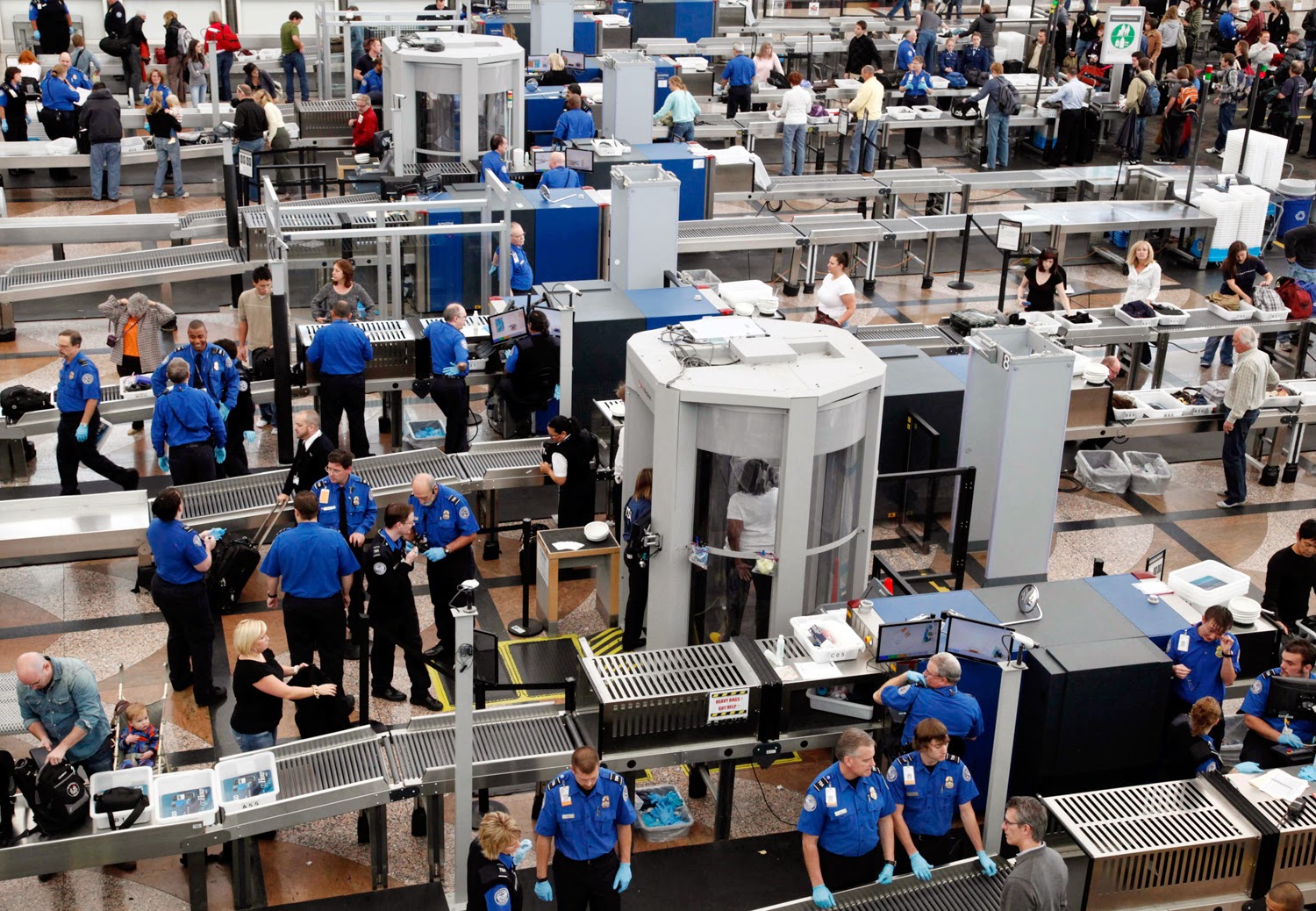
My observations of the TSA began at New York’s JFK airport, then later at La Guardia and then back at JFK again. They only seem to appear at check-in, swarming around the entrance to the gates for departure, mostly standing around doing what appears to the naked eye as nothing.


What I viewed was inefficiency, disorganisation, arrogance and rudeness – they do not answer to the public, it is if they are dealing with the sworn enemy. Even fellow TSA officers don’t trust each other’s propriety, let me explain. I was taking my wallet out of my pocket, my watch off my wrist and belt to walk through the metal detector, I had placed the items in the tray but not yet in my bag. A TSA officer came up behind me and told me to put my watch back on my wrist and wallet in my bag, he looked at me and said “don’t leave this in full view” before looking at other TSA staff screening bags.

The way they spoke to the people they were screening was incredible, these are members of the public, they created the pandemonium, it was their lack of organisation that had people confused. There was enough officers standing around, they could have set up with officers directing people, instead, there was 9 officers standing around doing nothing and 1 working the scanner.

What is lacking is leadership, someone needs to take control to get a steady flow of people moving through the scanner having been briefed on what to do and how to prepare. I get the feeling America’s best and brightest aren’t being recruited into the TSA, they are probably paying minimum wages, providing minimal training and fueling a culture of them versus us.

When I arrived at the baggage collection at LAX airport, I saw the shape of my bag knowing full well it had been tampered with, the shape was all wrong and straps hanging off. The locks had been cut with a TSA note inside, they had rummaged through my bag and messed everything up. I had purchased a bottle of vintage port in Porto for my nephew’s 21st birthday, he is from a Portuguese background and the year matched his date of birth. I had packed the bottle in such a manner to ensure it does not get broken, I view baggage handlers with the same disdain as TSA officers, that is, dumb and dumber.

So the bottle of port was unwrapped from its protective layer of clothing, its position in the middle of the bag was shifted to the edge, it is like these fools wanted my fragile goods to be broken. I lock my bags because I have had items previously stolen straight out of my bag. They are actually making air travel less secure as minimum wage baggage handlers now have access to previously secure baggage. Most people are aware of the levels of commitment, levels of training and screening of potential hires, this is particularly disturbing.

Every other airport in the world screens baggage and allows travelers to secure their baggage, after all, x-ray of baggage, is more valid as a search strategy as hidden items are discovered more readily. This is taking us back to the 70s, the physical search is the last option as it is the most inefficient option, the TSA really needs to get its act together, the TSA is just an expensive joke – that’s all it is.

Growth on a shaky foundation

I have a fair amount of experience watching empire building in the workplace, if you view personal empires as a shaky foundation, then it is kind of fun to hang around to view the implosion first hand.

What I enjoy most is the empire builder must firstly surround themselves with yes men, secondly they must ensure they remain hands-on leading to micro-management of the yes men cartel. They refuse to take breaks or holidays as they fear their personal empire will disintegrate before their very eyes. Unless you own the company, then you are not immune, even owners have been moved sideways or out of the very company they built.

They place spies around the workplace to create a culture of fear, trust is lacking and workplace productivity is low. Well, why would you work hard when you know who will take all the credit? Do you want to join the inner circle and lose all scruples? I think not, instead it is better to gain superior workplace skills to move to the next job for better conditions and pay. You would guess right that promotions are not based on competence, they are based on alliances and the ability to undermine your fellow workers. But such structures build no real loyalty as real leadership is lacking and the first sign of trouble sees the minions run away as soon as they can.