60, it will be time

I was listening to a channel on YouTube about preparing for retirement, it was American but still pertinent to me. They discuss their 401(k) retirement accounts, whilst different in structure to Australian superannuation accounts, there are similarities as we are all trying to achieve the same outcome here. He made a very big statement, at first I was bewildered, it was to stop saving when you get to age 60. It is time to start drawing down my savings, there is no point going any further, it is time to enjoy retirement.

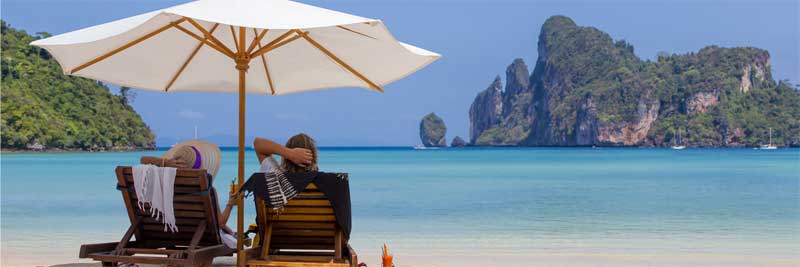
Secret #36 Make Your Travel Dreams a Reality 52 Secrets to Successful  Retirement

I am planning on retiring at age 60, this is how my retirement planning is structured. This is the time I can begin drawing down my retirement account. I can work part time if I want to, I can travel, I can write and I can spend my time enjoying life. My birthday is at the beginning of the year, I initially intended to retire at the point I turned 60, but since the Australian financial year ends on June 30, I will delay my retirement to correspond with the end of the financial year so I do not pay excess tax on my retirement payments.

I need to look at sporting activities. I love scuba diving, mountain bike riding, sailing, kayaking, hiking, and climbing. Ok, I do not do as much climbing as I should, this will need to change. I still do 20 km runs in my mid 50s, the times are not world beating but still respectable. To be fair, most of my runs are 14 km in distance, not every time is a 20 km run. As long as I retire early enough I can enjoy these activities whilst drawing down my retirement savings. I may work part time, it will be seasonal and it will be only if I want to to fill the day in. So yeah, whilst I am still able to dive, cycle and run – I should be retired because I have enough funds to do so.

Yarra Yeling Dry Red Wine No. 2

I have become a bit of a convert to Yarra Yerling, from the Yarra Valley in Victoria’s oldest wine region. The Dandenong Ranges are low mountain ranges with a maximum height of 633 metres just 35 km from Melbourne. The Yarra valley comprises of  over 80 wineries supporting the region.  

Firstly, I really like the basic bottle labelling, it looks like they designed the label themselves and then pumped them out of their office printer. The label is minimalistic, it is really basic, it hides the true quality of this wine. The label makes the wine look cheap, then there is the wine name, it is Dry Red Wine No. 2, this doesn’t tell you much, it gives nothing away about the origins of the wine. 

Ok, so what is the Dry Red Wine No. 2? I had to check the tasting notes as this is a complex wine. They describe this as violets, plums and savoury spices with hints of bramble. I had to jump online and search for the smell of bramble, I had always thought of blackberry bramble. That is what it was, I have been out picking blueberries in Canada, but this is not native to Australia so  I have no real experience with blackberries. 

This is where the tasting notes are important, I do review the tasting notes for specific criteria and to see if my tastes align to the notes. The most important information  gain is the maturation process, this vintage spent 12 months in French oak barriques, with 30% new oak. For me, for the price of this wine, it isn’t cheap, I would have thought newer oak would be selected. I appreciate that they are looking for a fine balance of oak and fruit.

As I am assuming that since older oak imparts less wood flavour a blend of old and new seeks to strike that balance. These guys know what they are doing. I am enjoying the 2018 vintage that I have in my collection but you sometimes compare the wine you are tasting to wines in a similar price range. This is not always correct, but as a consumer I need to determine how my money is being spent and if I need to divert these funds to more effective wines in a cheaper price range. I am happy with the Dry Red Wine No. 2 for special occasions. 

Cote D’Or Bouchee chocolates

I was wandering the aisles pushing my trolley at my local Woolworths supermarket, by chance, I felt like some Cote D’Or Bouchee chocolates and started looking in the confectionery aisle. I was staring where I believed I thought they would be, there was a woman looking around the same area as me, I asked what she was looking for and was surprised when she said the same chocolates as me.

Cote d'or bouchees chocolate pieces milk praline - 200 g

So, after a short but polite conversation we began looking elsewhere, she asked for assistance and was directed to the international aisle. This would make sense if all foreign produced chocolate and confectionery was split up this way – it was not. When we met again at the check-outs, she had been successful, I had nothing. So what do I like about Cote D’Or Bouchee chocolates?

I was under the impression these were hazlenut flavoured chocolates from the Czech Republic, but this is not true. These are Belgium chocolates, not Czech and they are constructed from nut praline. Now I had to work out what this nut praline is, this is almonds ground into a paste and mixed with caramelised sugar. I remembered them to be better than what I tasted, the question I ask myself is am I being too picky or has the chocolate changed?

So I went searching for the box and I needed a magnifying glass, the printing is so small but I saw some hazelnut references and I also found they were manufactured in Slovakia, Mondelēz International is the owner so I see production has been outsourced. When I read some reviews there were complaints that the recipe had changed, from what I remembered this was a better chocolate that I remembered, they had changed the recipe and I was not living in some self imposed land of nostalgia.

The 2019 Vasse Felix Filius Chardonnay

I have been a long time fan of Vasse Felix wines going back to the late 80s and early 90s. This high quality West Australian wine producer is relatively young for a winery, opened in 1967, Vasse Felix was one of the pioneers of the Margaret River wine region.

There was a time I liked their Classic Dry Red, but not so much their Cab Merlot. That was some time ago, but I can’t remember opening a bottle recently. The Classic Dry Red is still around and the cabernet merlot has been repositioned in the Filius range. The Filius chardonnay is a sub-$30 wine, so it is well priced for what you get and does not infringe on the Premier range.

Instead, Vasse Felix released the Filius range in 2013 if I remember correctly, so I have preferred these options when selecting their budget options. I cannot say I was that impressed with the cabernet sauvignon, but the chardonnay worked for me. The cabernet sauvignon isn’t bad by any degree, I had just become accustomed to their premium wines.

When I checked the technical notes for this vintage I was surprised to learn they used 13% new French barriques, 14% one year old barriques with the remainder between two to five years old. The cellaring potential is up to 2025, so this isn’t a long lasting chardonnay, but it has some legs. Despite the oak, I see this is a fresh wine with stone fruit flavours with a hint of peach in the aftertaste.

An MBA alumni

An MBA without a strong alumni does not open doors, it is as simple as that. If a second tier or third tier business school wants to improve their rankings, they need to invest in their former student support network to provide opportunities for advancement. Otherwise, they become degree mills where you pay your money and receive your qualification – then you are on your own.

Why the big business schools charge so much is that they have a reputation to uphold. This is based on the quality of their learning resources, their highly paid academic staff, their assessment process, their support network, their exclusiveness and competition for places. Therefore, if you choose to attend a second tier, or third tier business school, then a significant discount to tuition needs to apply.

The Harvard Business School, Stanford Business School, Chicago Booth, Kellogg Northwestern and Wharton are all high profile business schools in the US. Insead, IE Business School, Saïd Business School [Oxford University], IMD Business School, London Business School and Esade in Europe are highly credentialed as well. They have well earned reputations, they are difficult to get into, they attract a high quality student and they are worth the increase in earning.

So there are a number of factors that influence the quality of the reputation of the business School. The MBA alumni of these schools are highly organised and influential, they have special access to a serious job network with employers seeking to offer not only graduates, but current student opportunities with internships and special projects. The business school has access to graduate programs with student engagement officers employed to create graduate opportunities through ongoing investment.

The alumni network opens doors with the largest corporations, sure it is an old boys club, this is what the most prestigious business schools market themselves on. As a potential student, these business schools offer a significant cost/benefit ratio that should not be discounted. Likewise, the alumni network creates ongoing social events for networking and post-graduate association, business opportunity generation and entrepreneurship.

Retire early and enjoy those years

I believe that if people have the funds then they should retire as early as possible, not as late as they can. Sure, if they have a job they really enjoy then they should keep going for as long as they enjoy that job.

In Australia, the mandatory retirement scheme is superannuation where employees must forgo 9.5% of their salary with those funds locked up in long-term investments. Whilst the older generation missed out on a large earning potential of retirement saving, younger workers will benefit from participation in schemes throughout their working lives.

Retirees born after 1963 are able to access their retirement funds from age 60, if they have sufficient funds then they should retire at 60 and begin their retirement. Currently, people are able to access the government provided age pension from age 67 should they have insufficient funds to support themselves.

For me, I suggest if people should retire at age 60 and immediately begin drawing down their retirement savings. If they can provide self-funded retirement for 7 years then they reduce the burden on the taxpayer also enjoying the early stages of their retirement. Governments just need to stop messing with superannuation so we can plan for our retirements. 

The Breitling Endurance Pro

The Breitling Endurance Pro has garnered my interest, this is a new definition of a sports watch. Previously, a sports watch was a dive timepiece, a chronograph for motor sport or an alpine climbing watch. A sports watch is functional, legible, durable, shock resistant and has some form of clasp to prevent loss during activity.

The Endurance Pro is seeking a different clientele with bold colouring and styling. The adoption of technology in the timepiece suits a younger sports orientated wearer with a higher disposable income and sense of style. The 44 mm diameter case is Breitlight®, I wasn’t sure what that was so some online research was in order. The proprietary polymer material is claimed to be 3.3 times lighter than titanium and 5.8 times lighter than steel. 

Breitlight® is claimed to be significantly harder than steel, I really can’t see it though. Breitlight® is claimed to be non-magnetic, thermally stable and hypoallergenic that is reasonably scratch resistant and corrosive protective. A number of watchmakers are experimenting with new materials including titanium, ceramic and carbon fibre, if it is a polymer composite then it is plastic. The case-back has retaining screws and 100 metres water resistance, the crown is not screw-down, but apparently has twin gaskets.  

The Breitling 82 Thermocompensated SuperQuartz™ movement has 4 jewels and a claimed battery life of 4 years. The Calibre 82 is COSC-certified chronograph with timing to 1/10th of a second. The bezel is uni-directional with a compass scale etched in the bezel. The chapter ring matches the rubber strap colour and highlights on the pushers and crown. The Endurance Pro is fitted with a sapphire crystal with anti-reflective coating with a date window located between the 4 and 5 o’clock position.

Still share investing

I am a long-term share investor, I began share trading in my early 20s after attending a night school course to learn the fundamentals of the Australian Stock Exchange. The Australian Stock Exchange better known as the ASX was located on St Georges Terrace and still had boards with chalk boys running around. You could go in and see them at work running around, I eventually worked with one of the old chalkies on a mine site near Laverton after they went electronic in the early 90s.

An introductory guide to investing in the share market

As I was a young guy working in the mining sector back in those days, I was investing my hard earned dollars in Australian shares. I purchased a newsletter Your Money Weekly from Ian Huntley, I was put onto this by my stockbroker and I would read and review each newsletter as if my life depended on it. I would call my stockbroker when I was on night shift, discuss the market and make purchases with the funds I had just earned.

I was also involved in margin lending, this is where I would borrow money from a credit provider arm owned by the Westpac bank to purchase shares. For a 21 year old, this was a risky investment strategy as I had only put a 10% deposit on a property [requiring mortgage insurance] to purchase the property that I still live in today. Whilst I still have the option to

In the mid-1990s I decided to open a self-managed superannuation fund (SMSF) to do my own investing. In the early 1990s superannuation became mandatory in Australia, I had a private superannuation account that I joined as an 18 year old. Despite all the promises from National Mutual, this was a high fee, low return account that was really set up to benefit the advisor and not the ##. For me to get out of this fund, I would be fined an enormous amount of money, this was a quasi life insurance fund with high upfront fees and a declining penalty to get out.

I still needed an industry superannuation account as employers would not pay into my private super fund or my SMSF. So for a long time, I was paying fees on four accounts. This was devastating financially, I was being ripped off and there was nothing I could do as I had a contract with National Mutual, then sold to AXA, the French financial company and later to AMP, the Australian investment company.

My fund was on-sold to a series of financial advisors within these corporations who offered me no services of benefit at all, this was a scam affecting my long-term financial viability. After 25 years of membership, all I ended up with was half a year’s salary at current earnings – pathetic. They held me to the initial contract, I have really regretted these managed funds, I decided I could do better myself and created my own investment fund that is performing far better than what they offered.

I also had a state government fund that I was required to join when I began my government employment in the mid 2000s. I did not understand it at the time but this is my best performing fund. The fund’s benefits were so good that they prevented new members from joining a year after I was employed, the fund was closed to new members. I am lucky that they have grandfathered the tax deferred status of the fund, I effectively pay no tax on my earnings until I withdraw an income. Since I have also closed my private superannuation fund where tax was already paid and rolled the proceeds into this fund, I will not pay tax on my withdrawal.

Yet, what has been able to resurrect from this financial catastrophe was the independence of my SMSF where I control my investments. At this point in my life, I am making regular post tax contributions and I am attempting to get my cash balance down and share investments higher. I cannot get caught up in my mistakes, I can only build on my successes and learn from these mistakes and opportunity cost.

The intent is to be fully invested and use the share dividends to fund my retirement, I use dividend forecasting and attempt to maintain my level of contributions. I will also be drawing down my state government superannuation account for my primary income, this will form my secondary retirement income once I turn 60. So at this point I still have 6 years of contributions to pay off my investment property and top up my share trading account.

The IWC Portugeiser Automatic 40

In what might be considered the most stunning example of IWC watchmaking, the Portugieser 40 is the quintessential IWC model. This is the model that I feel best aligns what IWC represents. Yes, sure, their flieger series is pure IWC heritage, admittedly this is what I first think of when I pass an IWC boutique, so I like to take a look at what else they have on offer.

Release: IWC Portugieser 40mm Auto - ATELIER DE GRIFF

I like what the Portugeiser represents, this is a move away from their traditional market and towards a more up-market offering. At 40 mm, the case is large but not oversized, I think a dress watch should be around the 38 mm case diameter with a thickness below 13 mm. The Portuguiser meets these style requirements, I like the brand but couldn’t see myself going out and purchasing an IWC for my collection. What I like to do is view and review watches, for me, IWC is a worthy contender for luxury watchmaking, I just don’t think it represents what I am looking for.

A no fault workplace – apparently

I really don’t think a no fault workplace is what was envisioned in management literature in regards to actual management practice. If management actually considers themselves to not be at fault – then who is?

Workplace stress

We are all a little to blame apparently, when you spread the blame around to everyone, you are a little less culpable; well, a whole lot less culpable actually. This is very much a cultural issue when management refuses to take the blame when it all goes bad, but hands out accolades to themselves when some level of success is achieved. They will eventually stumble and fumble their way through this, they have pretty much unlimited resources and the advantage of incumbency. My guess is they will be handing out special honours, selection decisions will stand, maybe some promotions and even awards later on. 

Generally, you hand out awards for not getting into this mess in the first place, but this doesn’t really suit their narrative so let’s watch this play out. When it comes to compliance and quality, you should be onto it. Compliance should be a managed program driven from the top down. If the management doesn’t take responsibility for quality and compliance requirements, then what is the point of having a layer management? We are not talking about a blame free culture, we are talking about an accountability free workplace.