A Master in Management or an MBA?

It was once a non-decision, if you wanted to get ahead in business, you undertook an MBA. These days, is a Master of Management (MiM) rated just as highly as a Master of Business Administration (MBA) by many employers, so what is the difference?

Whilst primarily a European qualification, the MiM has spread to South East Asian universities as professional experience is not required to apply. As such, MiM programs tend to have a younger cohort whereas MBA programs gain value from the professional experience students bring to course discussions and case studies. So, MiM programs are primarily designed for students in early career stages directly preceding an undergraduate degree with MBA programs, by contrast, targeting people with management experience of at least five years of workforce experience.

According to analysis, MiM and MBA programs tend overlap by about 30% with both programs providing an overview of general management topics, fostering team work utilising case studies simulating real-world problems as well as written exams and essays. The MiM tends to focus on the theoretical side of management with the MBA requiring strong analytical and mathematical skills; as such, MBA programs primarily emphasis practical application. The MiM tends to be shorter in duration than the MBA and tend to run cheaper course fees than the MBA.

Ultimately, the MiM is a qualification for young and ambitious people who perceive their initial bachelor degree as insufficient for early career progression. MBA students have begun careers requiring updated knowledge, analytic tools and networking opportunities or may have hit a career wall seeking the qualification to gain a promotion or change jobs and/or industries. The question now remains, do employers rate the MiM as highly as the MBA?

Anilao rubbish

I was appalled at the volume of rubbish in the water after a recent trip to the well-known Philippines macro dive location of Anilao. Floating in the water was all kinds of plastic from bags, wrappers and packaging of various sizes. It was not only disgusting, it is harmful to not only the local marine environment but to the broader regional marine eco-system and ultimately the dive tourism sector.

Anilao is the first choice for most Manila based divers for weekend dives, just a short road trip towards the port city of Batangas before veering off to the Mabini peninsular. Batangas is the port connecting the island of Mindoro to Luzon; it is busy, heavily polluted and reasonably close. There is plenty of dive infrastructure at Anilao, this is where all the dive resorts are located, pretty much side by side in the bay, you then chose where you want to stay and who you want to dive with. 

Not that far from Batangas and Anilao the somewhat famous village of Puerto Galera on the island of Mindoro, known for diving and nightlife. If the Philippines wish to become a world renowned dive location, the issue of marine rubbish must be identified and acted upon immediately. No reasonable person wants to go on holiday to swim through rubbish infested water when pristine sites beckon.

Of the South East Asian competitive markets, Malaysia is outstanding diving that is well organised and managed, Thailand has been the tourism leader for decades in terms of volume, Indonesia is excellent diving and emerging as a place to dive, Vietnam is improving dive infrastructure and slowly gaining in popularity while Brunei still sadly lacks.

Triumph & Demise: The broken promise of a Labor generation

Attending a recent lecture at the University of Western Australia, I had the opportunity to listen to and chat with the editor of The Australian Newspaper. With much anticipation, Paul Kelly outlined the structure of his latest political commentary; Triumph & Demise: The broken promise of a Labor generation.


He spoke about the failings of the Rudd/Gillard/Rudd government with the current and future consequences on Australia discussed at length. He argues leadership was, of course, an important issue; however, the real problems stemmed from enormous and systematic policy failure.  Paul spoke about the legacy of the Hawke government and why Hawke and not Whitlam must be the standard future Labor governments aspire to. I must say, it’s difficult to disagree with Paul’s analysis. I look forward to reading my signed copy of the tumultuous 6 years of power of the Labor party that wasted the goodwill of the Australian people.

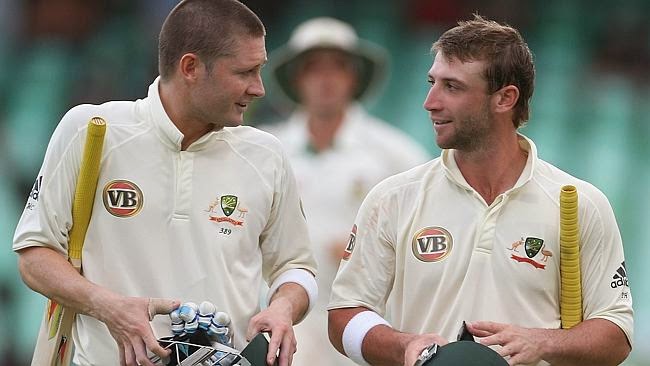
Phil Hughes will remain on 63 not out

This week, the funeral for Australian cricketer will take place, his death at the crease after been struck on the head by a short ball was untimely, he was just short of 26 years of age.

Naturally, there is no good age to lose your life, in the context of his career, he was just about to perform once again on the international stage. Phil was just about to be recalled to the Australian test team to cover for Michael Clarke who was expected to miss the upcoming test against India through injury. He started the bay fighting for a recall to the Australian test side and ended the day fighting for his life – he tragically lost that fight a day later.

In Australia, we are understandably upset, he was, after all, one of ours. What has really struck me was the outpouring of grief and respect from cricketing test nations. We have seen very respectful condolences sent from India, Pakistan, Sri Lanka, South Africa, England, the West Indies, Zimbabwe, Bangladesh and New Zealand to just name a few. These condolences have been very much appreciated. Now we find out an umpire and former national captain, Hillel Oscar has been struck in the jaw whilst officiating in a game in Israel. He died this week, this is another tragic event in world cricket.

The Schooner

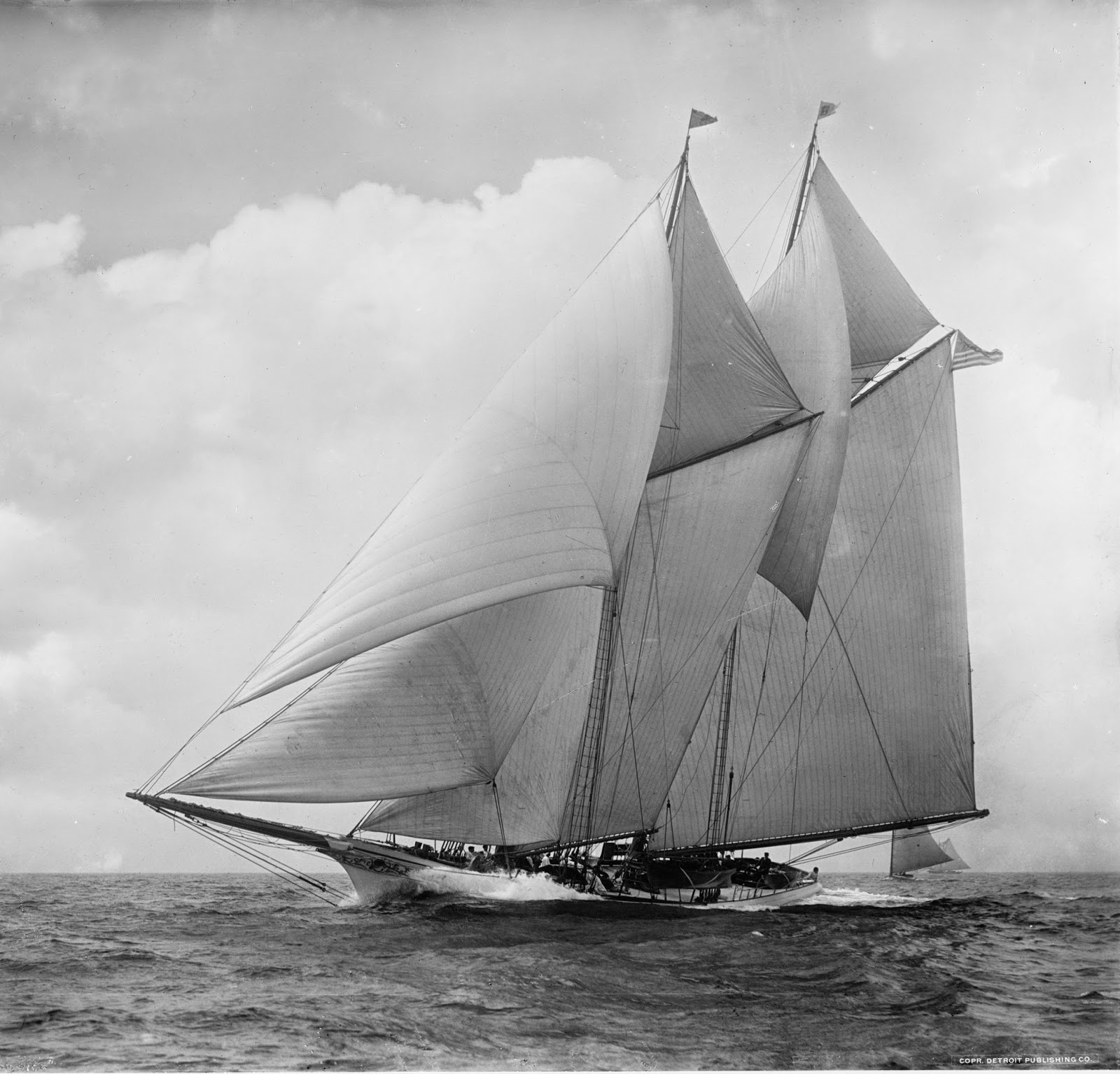
I love the old style schooner, for me, the schooner was a two mast vessel with the aft mast larger than the fore mast. Whilst initially defined as two mast vessels; three mast vessels were introduced around 1800 with multi mast vessels introduced soon after and these vessels remained as schooners.

Whilst maybe not being entirely correct, the gaff rig, topsail, hull shape and bowspit with stay sails define the schooner. Of course, many vessels of the era featured bowsprits, so such a feature alone can not define the vessel, for many, the shorter fore mast is the defining feature of the two mast schooner.

Cutter rigs predominately feature a centrally located mast and a bowspit with multiple fly jibs. There was three and more mast schooner types, the two and three mast schooners were the sleekest with all the sails working together in a complementary fashion optimising airflow and forward drive through the water.

The immense sail area of the schooner with gaff rigs extending the main sail length, topsails filling void between the gaff upper boom and mast and multiple fore stays secured to the bowspit. The schooner is an elegant vessel from a bygone era eventually replaced by bermuda rigs and then later the ketch rig. I love the multiple masts with the foremast smaller than the aft mast, the topsails completing the gaff booms is fantastic. The old style schooner on the water is a sight to behold, they are fantastic working upwind with the full sail compliment hoisted, hard work to get the sails up, but when they are up, the schooner is a beautiful vessel.


The CIA ice bucket challenge

I was in Subic Bay on a dive trip in the Philippines just recently; interestingly, I overheard a couple of American marines discussing the CIA ice bucket challenge. I had never heard of this before, so my ears were up, this sounded interesting, was the CIA really cool?

As we know, the CIA is not allowed to waterboard anymore so enter the ice bucket challenge; what a novel way of bringing alleged terrorists and their associates into mainstream society and popular culture following contemporary internet trends. I wonder if there were allowed to plank as well, or is that so 2012?

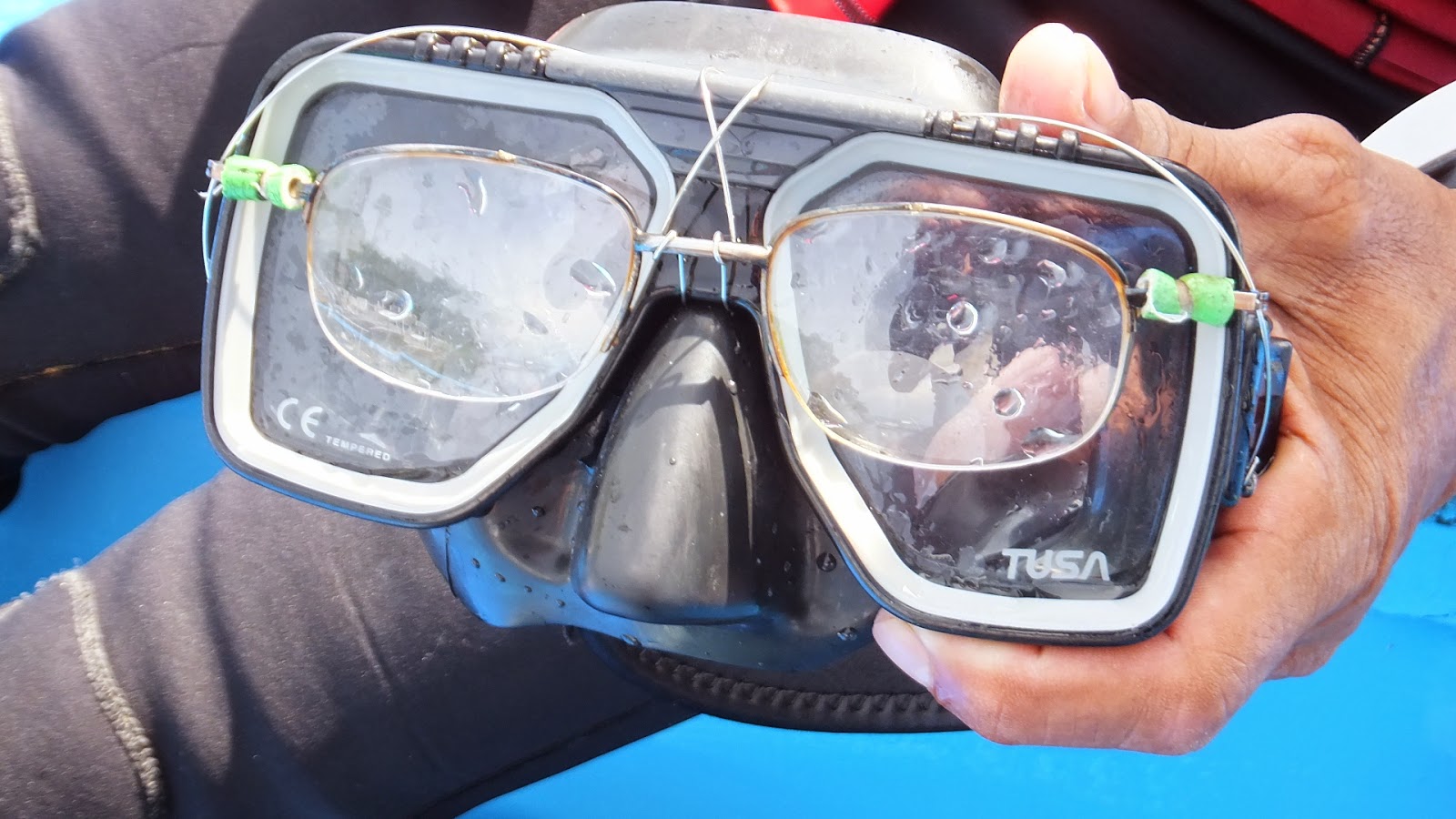
A Pinoy style prescription mask

I have to say, I was impressed, this was the first time I had encountered a Filipino style prescription mask. Full marks for originality, construction and application; this mask worked a treat for a fraction of the cost of commercial prescription lens mask.

Dive guides out in the provinces of the Philippines aren’t paid a great deal; what they forgo in salary is repaid by having a great job with good employment conditions, a low stress environment and an excellent lifestyle. The mask worked great, I have to say, he wore it well.

The origins of the MBA

The Master of Business Administration (MBA) has been taught for barely over a century; Harvard University launched the program and enrolled an inaugural class of 37 candidates in 1908. Initially targeting professionals in non-business related fields, the MBA has now developed into a more mainstream qualification.

Firstly gaining acceptance in the United States before becoming established Europe, the MBA became the preeminent qualification for upper management. Asia and Australia progressively adapted the management program with the University of Melbourne awarding the first Australian MBA in 1965.

It has been argued too many poor quality and over-confident MBA graduates with little actual workplace experience are foisted onto unsuspecting workplaces. As national and international accrediting bodies determine course content somewhat blunting such claims, this may be a little overstated. A professional such as a doctor, engineer, architect or lawyer generally tends to be entrepreneurial in nature building or purchasing a practice, business or engaging in a partnership.

The advanced degree followed on from the notions of scientific management that were prevalent at the time undergoing revisions from time to time whilst retaining an analytical nature. Well known management practitioner and McGill University management lecturer, Henry Mitzberg described the MBA as a 1908 program utilising a 1950s strategy, an interesting reference to both the origins and overhaul of MBA curriculum.

Interestingly, MBA curriculum is accredited by United States, European and Australian professional bodies maintaining a consistency in program delivery and graduate outcomes. Mintzberg maintains the MBA is a business course and not a management course describing management as a practice and not a science – fair enough.

When running a business, the professional requires knowledge of accounting, finance, marketing, strategy, economics, quantitative analysis, leadership, ethics and decision making. Thus, the MBA tended to be technical in nature and is well suited to such professionals trained in technical knowledge and skills.

One could argue the relatively recent European model of Master in Management (MiM) better addresses the soft skills of management whilst the MBA retains the analytical structure required by consultants and technical practitioners. Generally, MBA programs are centred on an essentially standard curriculum and structured around eight to ten core units with specialist units aligned to specialisation majors.

Typically, the majority of MBA courses run twelve to sixteen units that may be considered a generalised MBA. From there candidates may specialise in areas such as finance, human resource management, operations management, logistics, marketing, economics, information technology or educational leadership – to name just a few.

Usually, the program culminates with initial coursework in business strategy with a dissertation or capstone project as the final examination. The de facto course two years full-time study with a number of worldwide institution running accelerated one year, part-time, online and executive courses. Top tier universities dominate international MBA ratings with the all-important student networks and alumni giving these programs the edge. It has been said, employers don’t hire the graduate, they purchase the prestige of the institution, they are probably right.

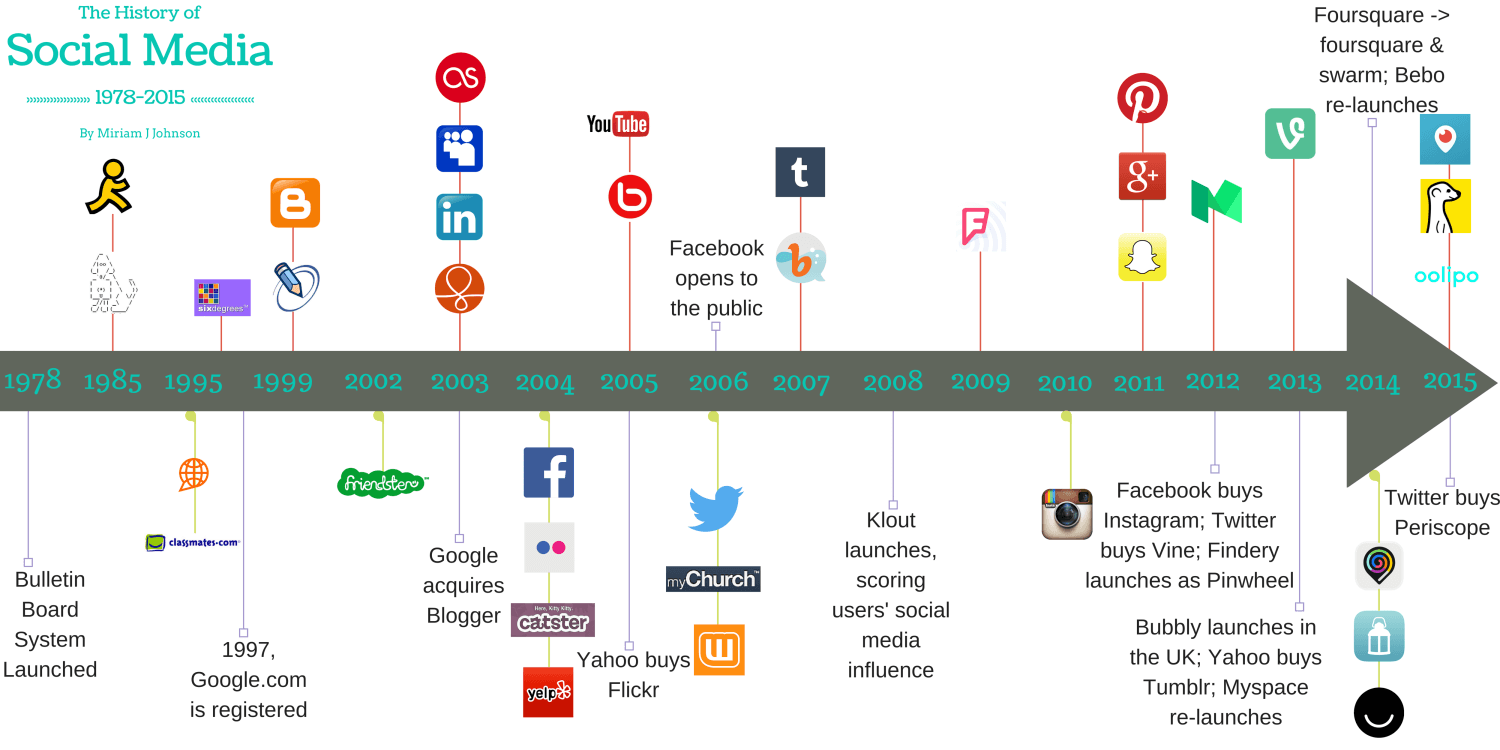
The history of social media in 90 seconds

Where is social media taking us? We have seen some huge advances in social media uptake and usage in recent years, will the growth continue unabated? Who uses Friendster or MySpace now? They pretty much kicked off the social media explosion but have been left behind. Despite the size and reach of Google Inc, will Google+ survive?

The History of Social Media - Where did it all start?
Surely news coverage is the obvious answer, maybe we need to ask less about what social media platforms are going to be around and what news services and news papers will be around in 25 years? I’m pretty sure AAP and Reuters will still be around, will they be selling news to The Times, The Australian, The Jakarta Post, The Straights Times, The Sydney Morning Herald, The Washington Post or The New York Times in 25 years time?

Or despite their current size and span, will traditional newsprint become the equivalent of Kodak or Blockbuster Video? We saw from the Arab spring how quickly young protesters could get organised, this was the democratic uprising that quickly spread, what are the implications of social media for the future? Whilst we expect new platforms to burst on the scene, the established social media companies are expected to consolidate and buy out rivals, that is what I expect to happen.

Did Abbott front Putin on MH17 at the G20 leaders meeting?

Did Tony Abbott actually front (the political shirt-front) and discuss the issues of Russian involvement with Ukrainian separatists of the shooting down of Malaysian Airlines MH17 over Ukraine?

Yes he did – Vladimir Putin was told in no uncertain terms to assist with and not hinder the UN investigation into the shooting down of Malaysian Airlines MH17. He was told to pay compensation to families citing American repatriations to Iranian families of the Iranian Air 655 passenger jet shot down by the US Navy in 1988.