#‎JeSuisCharlie‬

The freedom of speech, the foundations that western democracy are built upon have been attacked; French editor Stephane Charbonnier stated “I would rather die standing than live on my knees.” He died defiant, gunned down by Islamic extremists who feared the the man wielding the tools of freedom.

Freedom of speech, freedom of thought and freedom of expression have been attacked by the pathetic cowards of the satanic cult. Terrorists attempt to invoke fear; but it is these prophets of evil that live their lives in fear – fear of democracy, fear of women, fear of freedom of speech and freedom of thought.

The world stands in solidarity with the people of France – Viva la France.

The flat white

The flat white is a Australian version of a white coffee is prepared by pouring steamed milk over an espresso, the term velvet micro-foam is bandied about freely instead of stiff froth. When I am out in a cafe, my choice is usually a flat white, while I normally drink a long black at home, I appreciate a barista produced flat white at a cafe.

It is often said, the espresso shot does the talking – not the milk. The coffee uses less milk, meaning less foam and hence a higher coffee ratio than a latte. A flat white is not a small latte served in a standard ceramic coffee cup; nor is it a cappuccino with less froth, the flat white requires free poured milk with no discernible layer existing between coffee and foam. Now I find out Starbucks is offering the flat white in their stores, it’s finding out McDonalds is offering roast lamb on their menu.

Sangakkara joins the elite 12,000 test runs club

Sri Lankan batting giant Kumar Sangakkara becomes the 5th player to join the elite 12,000 test runs club. Not only is Sangakkara joining retired greats Sachin Tendulkar 15,921 runs, Ricky Ponting 13,378 runs, Jacques Kallis 13,289 runs and Rahul Dravid 13,288 runs; he is the fastest player to achieve the 12,000 run club in 224 innings with both Ponting and Tendulkar requiring 247 innings to achieve the feat.

It is hard to believe Sangakkara is an still an underrated player despite being placed second in the list of test double century makers with 10 double centuries behind Donald Bradman’s 12 double centuries and Brian Lara’s 9 double centuries.

A functioning manager

It is argued in many business textbooks that the four main roles of management are planning, leading, organising and controlling – to my method of thinking, this is true and correct. It is also thought managers need to place a lesser reliance on hard technical skills instead possessing higher conceptual reasoning as they progress into a management role. I feel the ability to communicate with team members rates highly in a competent manager.

Yet, this is the soft skill frequently overlooked by most poor managers; in my case, this exactly the reason behind my lack of confidence in my direct manager. I wonder why I have bothered to work so diligently, my efforts have been wasted from a professional standpoint, all because I do not get along personally with my manager. This has been going on since almost time began, so why am I complaining?

Looking to get leaped over by those less technically competent is difficult to fathom, especially when my manager has absolutely no idea what is actually going on in the business portfolio. I have told him to get his head out of the spreadsheets and learn what is going on around him. This is, of course my problem, I am too blunt, to the point and combative; yet, why should I tolerate such ineptness from a manager?

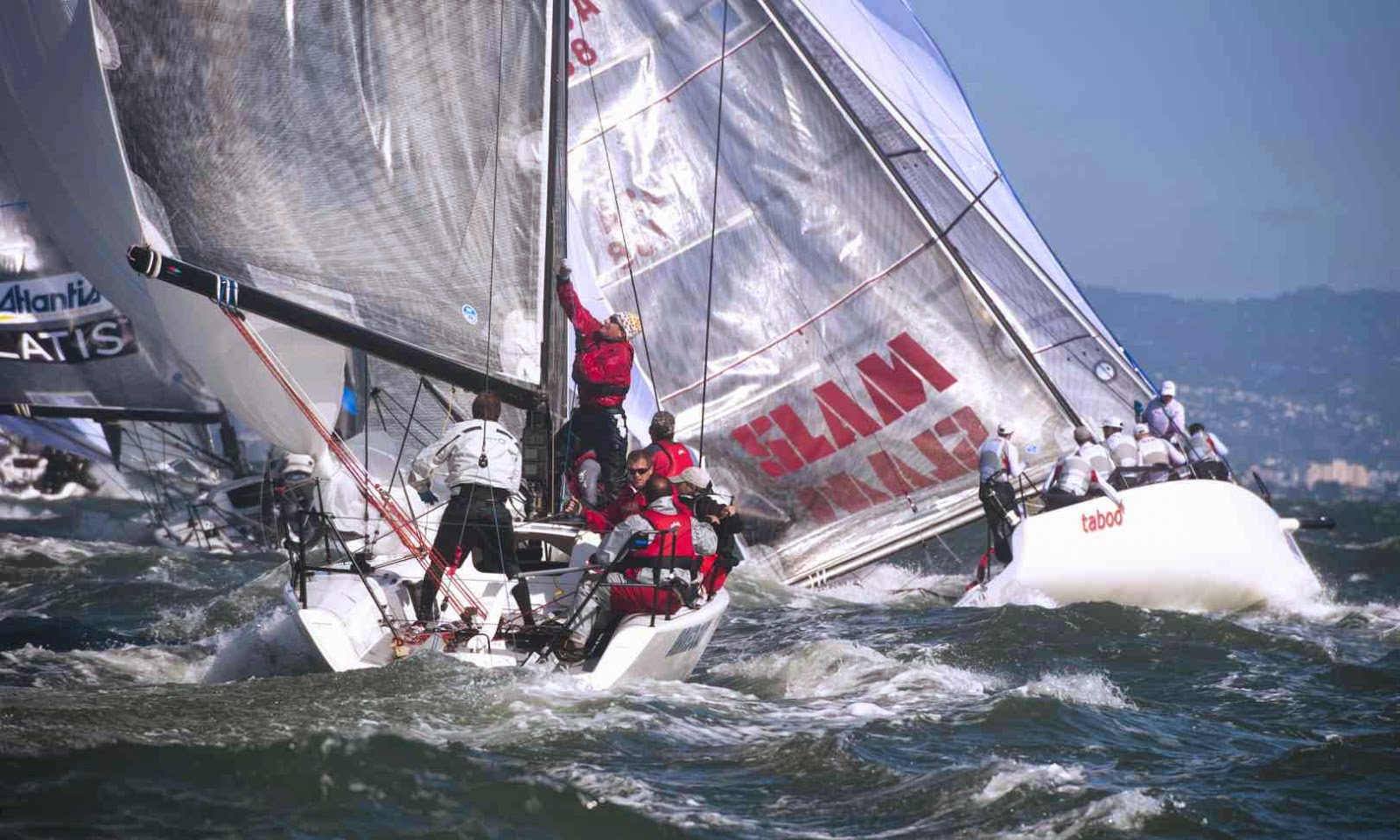
I bring him solutions, not problems; yet with solutions, he still has to act. I am a sailor, not the helmsman but I fit into a crew currently filling the mast-man role. While I have trimmed the main, the jib and been forward-hand over the course of racing cruisers, I acutely realise crew interaction is the deciding factor in winning races. We were losing races because of poor fore-deck work; I put forward a number of solutions to rectify the problems we encountered and was duly seconded to the mast-man position from my favoured jib trimming position – ouch.

Without a competent forward-hand and mast-man, the gains of the upwind work would be negated on the spinnaker reach and downwind run. Likewise, trying to make up places lost to competitors sailing efficiently downwind after a poor upwind work is haphazard practice at best.
However, the fore-deck crew don’t just sit on the side and provide ballast when not performing their spinnaker handling duties. A good crew provides the helmsman (or helms-woman) with vital running information regarding tactics, wind direction, lifts and knocks, other boats, fleet positioning and navigation hazards.

The workings of the forward crew are systematic and procedural in nature; it does involve working in tandem with the spinnaker trimmer, a certain feel is required, you need to anticipate what the other is doing. Get the systems right and the role is easy, almost to the point of mundane; get it wrong and the failures are spectacular – from broaching, dropping the spinnaker in water, ripping sails, bending and breaking spars or fittings, dropping the mast and/or seriously injuring crew.

Running a business is similar; the manager, like the helmsman is the prime decision maker and receives raw data and recommendations from the team. The helmswoman steers the yacht using a wind indicator on the top of the mast as guidance and wools on the jib to indicate airflow across the sails. Ideally, both wools are to stream similar to cash-flow, it can be a little tricky as wind direction frequently changes requiring minor changes to the rudder for optimal flow.

On the yacht, the main-sheet hand is usually the tactician holding a foreman like position working the mainsail alongside the helm position. As such, the main-sheet trimmer is a working position and exerts a fair degree of influence to the helmsman, they frequently exchange ideas and commentary.

If the jib is poorly trimmed, the yacht is difficult to steer and the helmswoman must then steer the yacht to the jib trim to keep the wools flowing, this is an incorrect and inefficient course. Any crew member can speak up to inform the jib trimmer, the main trimmer or spinnaker trimmer to correct the setting; this 360° feedback is encouraged as the team goal is the sail the yacht as quickly and efficiently as possible.

Naturally, it is in the best interests of the yacht for the more competent sailors to coach the less experienced crew members with each crew member assigned a specific role. The less experienced crew members benefit as they receive on-the-job training and improve their knowledge and skills.

I enjoy sailing on the weekend, I sail with a highly experienced and proficient helmsman, he listens to feedback and acts accordingly. You are treated as a highly valued member of the team and we win and lose together. If only I could experience the same level of performance during the weekday from the manager – we would experience the jubilation of being part of a winning and effective team.


In memory of Dennis Baker

It is with much regret I reflect on the mentoring abilities of the late Dennis Baker. I had joined Polytechnic West as a lecturer with a 20 years engineering experience and 5 years training experience.

Due to the fact I held vocational qualifications, training & assessment qualifications and training experience, I was not assigned a formal mentor. This proved to be a difficult transition to to learn the organisation and its systems, for this reason, I have also mentored new employees. Dennis was a principal lecturer in the organisation, that is to the layperson is a highly skilled lecturer who advises lecturing staff on issues such as classroom practice, curriculum development, training delivery and alternative delivery strategies.

Dennis was a strong advocate of lifelong learning, a fitter and machinist by trade, Dennis had achieved a Masters degree in Training and Development from the University of New England in Armidale, New South Wales. Dennis heavily influenced my decision to seek further tertiary qualifications. I had already completed my graduate diploma from an Australian college allowing me to apply for an advanced skills lecturer position, this is a reasonably difficult proposition in the organisation.

I had sought Dennis’ counsel on how best to succeed on the written and practical applications; this after all was Dennis\’ area of expertise. A number of team members had previously applied for the limited positions; spectacularly failing in the process. When I sought expert advice; Dennis was the go-to man, his knowledge of vocational education and training was extraordinary. Now having gained my advanced skills lecturer; I now seek further progression through the ranks.

I remember a conversation with Dennis in a vehicle on route to a meeting with a client. Dennis felt an ASL 2 was the best position in the college followed by the principal lecturer. This was not lost on me as I was a) being informed by one of the better principal lecturers in the college and b) seeking to move forward in the organisation. Dennis is a guy who is sorely missed, apart from his extraordinary working knowledge, he was an all round good guy.

Has Mitchell Johnston bowled the ball of the series?

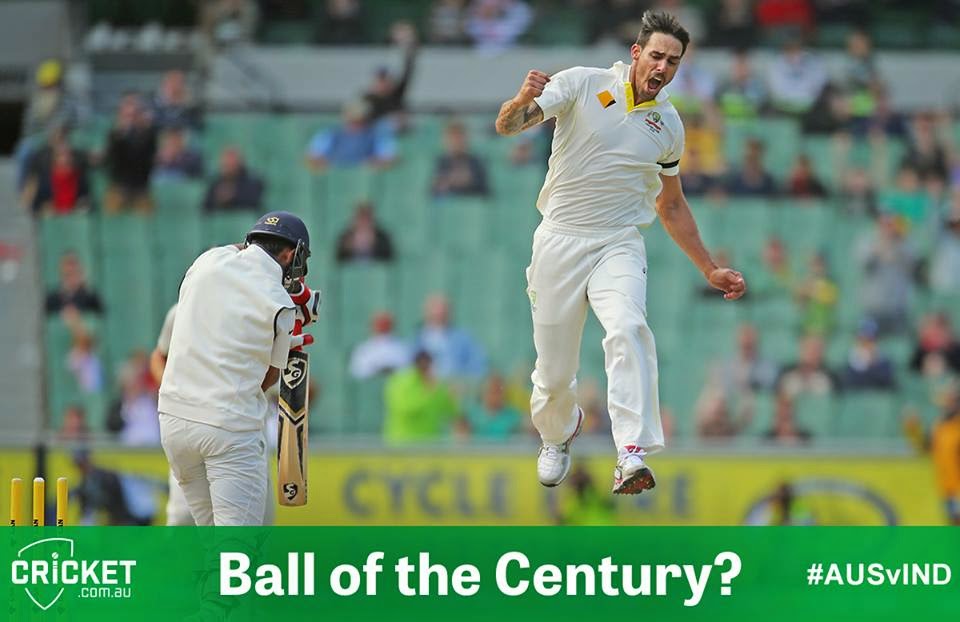
I think Cricket Australia is a bit excited here, but I do ask myself; has Mitchell Johnston bowled the ball of the series? I think Cheteshwar Pujara didn’t do much wrong here, he played the line as Johnston moved the ball like a spin bowler at pace, he didn’t stand much of a chance.

Now that the match ended in a draw, one has to ask, did Steve Smith wait too long to declare? The general consensus would now be yes; however, had the Australians held their catches, the outcome may have been different.

Should Shane Watson bat at number 3?

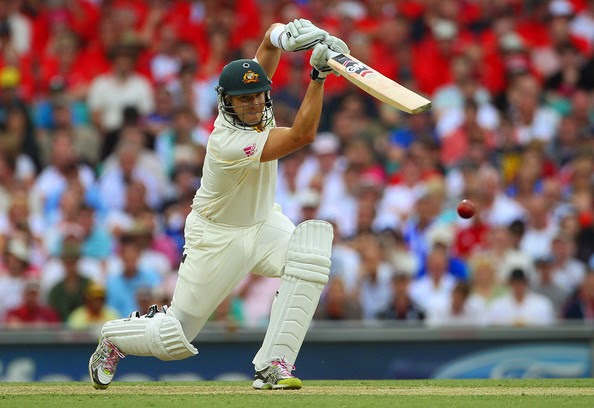
Shane Watson is an immensely talented cricketer; there is no doubt about that – he can bat, bowl and field. He should be in the team when fit; absolutely, no sane person would argue against that, the question then is, where should he bat?


A look at his statistics tells us that in his 54 test matches so far played, he has scored 4 centuries and 22 half centuries for an average of 35.51; not so great for a batsman coming in at number 3. His 22 half centuries are a good return; that’s why I feel he is better suited batting in the middle order at number 5 or 6.

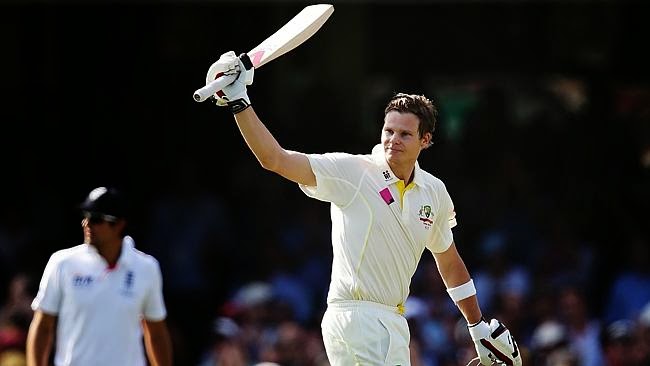
To keep everything in perspective; stand in captain Steve Smith now bats at number 4, promoted up the order from 5 where skipper Michael Clarke normally bats. In 2014 alone, Smith has scored 4 centuries and over 1000 runs at an average of 84.33; he is having a break-out year, Watson is not having a break-out year. Both Clarke and Smith go on and make big scores; Watson does not and must bat down a couple of positions to the middle order.

Will Twenty/20 cricket change test match cricket?

Will Twenty/20 cricket change test match cricket batting? Watching some strokes in the current Boxing Day test between Australia and India, I watched stand-in Australian captain Steve Smith attempting to push the run rate along playing strokes more accustomed to the short form of the game. This also brought on his demise at the crease at 192, a pretty handy score attempting to play a shot on the stumps normally reserved for the the last over in the shortest form of the game instead of a test match on day 2.

At the other end of the spectrum, Indian batsmen Virat Kohli (162) and Ajinkya Rahane (147) played with a more traditional batting style. As a matter of course, the Indian batsmen generally have solid batting techniques. Rahane came to the crease with Kohli holding a 26 run head start, playing aggressively, Rahane overtook Kohli in the 80s to beat him to triple figures and ended the day with a strike rate of nearly 86 – pretty good stuff.

Wild Oats XI leading the Sydney to Hobart race

What an interesting turn of events, while Comanche was clearly the faster yacht out of Sydney heads, it would appear the race dominated by tacticians and navigators has entered a new phase – raw boat speed isn’t everything. The Sydney to Hobart is a bluewater event, there is plenty of opportunities for a yacht to run down an opposition given favourable conditions – Wild Oats XI did just that. 

Both Wild Oats XI and Comanche have headed out to sea far off the rhumline searching for wind, it appears the faster Comanche may have sailed into light airs and Wild Oats XI has powered on stronger breeze. Comanche is not far off catching winds and given the superior boat speed of the new maxi, a tacking dual up the Derwent River is a real possibility – this could be a real cracker of a finish.

Boxing day – the start of the Sydney to Hobart race

Boxing day is recovery day, the opportunity to view the start of the Sydney to Hobart yacht race from the comfort of lounge room is a long standing annual event. I see a little of the Boxing Day test at the MCG before flicking the television over for the start of the Sydney to Hobart race.

The inaugural race held in 1945 took 6 days, 14 hours and 22 minutes; at the other end of the spectrum, the 2012 race record of 1 day, 18 hours, 23 minutes and 12 seconds is currently held by Wild Oats IX beating their 2005 race record of 1 day, 18 hours, 40 minutes and 10 seconds.

This year, the brand new American carbon fibre super maxi, Comanche was setting the early pace, this yacht was simply awesome. Since 2005, Wild Oats XI has dominated line honours and is certainly the yacht to beat – is their dominance under threat this year?

Comanche set the early pace with a super fast run to the rounding mark outside of Sydney heads, onboard Wild Oats XI, they could be heard on the camera stating they were slow and seeking to change settings and sail trim. They weren’t slow, Comanche was just so fast; however, the majority of the race will be spent punching into strong southerly winds, that may change the dynamics of the race.