You are only a dive instructor when you are instructing

You are only a dive instructor when you are instructing, other duties in a dive business may include working as a divemaster, dive guide, boat skipper or behind the counter but you are only an instructor when you are instructing.

Naturally, it is a more efficient use of resources to have dive instructors performing those roles, as a dive centre manager, you have the ability to engage in job rotation to prevent people burning out. If this principle applies to dive centre staff, it certainly applies to customers. So why is it when divers show up at a dive centre as paying customers they need to let all and sundry know they are dive instructors? At this point they are paying customers. I never gave discounts to instructors who dived with us, why would anyone?

You are not getting paid so you are neither a dive master nor instructor at this stage. Would you let this person skipper the boat – not likely? Imagine the problems that would arise if an accident occurred, even though you have signed a liability release and possibly code of practice – the dive centre is liable.

When you show your rescue diver card, it tells the facility that you have done an AOW course, now you are not depth limited to 18 metres and you are capable of self rescue, now they should leave you alone to a degree. Any competent staff can work out your actual diving ability by the way you prepare, gear up and enter the water – that’s all you need.

When they ask about deepest dive during sign in, it is 40 metres as a PADI rescue diver, you have done 100+ dives and your last dive was you actual last dive, you have been honest and have not overstated your experience or ability. If they are not paying you to instruct, then you are not an instructor for this facility – it’s as easy as that.

Perth Scorchers win the Big Bash League final

What a great game, the momentum changes, twists and turns and the pressure. The final for BBL04 was an absolute cracker, I was jumping around all excited – the game came down to the last over, what looked unlosable for the Perth Scorchers was now looking decidedly shaky.

Brett Lee was handed the pill for the last over, eight runs required from 6 balls didn’t look a tall order – or so most people thought. In his last over in professional cricket, this wasn’t an easy task. With three balls to go and one run required, the result looked certain, get bat on ball because at Lee\’s pace the ball could end up anywhere. They could even scamper a run on a miss as the wicket keeper is so far back.

The third last ball of the game smashed the stumps out of the ground, new batsmen in and no cross, imported specialist batsman Michael Carberry was purely an onlooker stuck at the non-striker’s end. The second last ball of the game, once again, Lee bowls fast and true and the stumps are shattered, another wicket falls and Lee is on a hat-trick for his last ball of professional cricket. Another wicket would force the game into a super over and Sydney has the chance to win, a run and Perth Scorchers win.

So the final is all set for the last ball of the game, Yasir Arafat makes his way to the crease – he is not a noted batsman and has to only face one ball – the last ball. Lee bowls well, Arafat makes contact and the ball races straight to a fieldsman – they run. As the ball is fielded and returned to the non-striker’s end, Arafat will be well short and run out. The throw is true and with one bounce makes its way into the hands of the fieldsman ready to break the stumps.

The ball is fumbled by Moises Henriques, the ball breaks free of Henriques’ hands as he breaks the stumps, Arafat makes his ground, Lee drops to one knee clutching his head and the Perth Scorchers are BBL champions for 2014/15. This was an amazing finish to Lee’s professional cricketing career and the series, this was an exciting game of cricket – fitting for a final.

A week without a watch

My whole working life is based on schedules; I wear a watch at work, at home, when diving, sailing, in the shower and even in bed.

So my decision to head on my pre-Christmas holidays and intentionally leave my watch at home is proving to be more difficult than expected. I am used to the weight of the watch on my wrist, I always select a timepiece with a metal band, so I carry a little weight on my wrist. My wrist is bare without my watch, I frequently refer to the time throughout the day, whilst it was a purposeful decision to leave my watch at home, I won’t be making this mistake again.

Why talent leaves and non-performers remain

Why does the top talent leave an organisation yet the non-performers remain in their jobs? Even worse, the poor performers are then promoted to the vacated positions when the talented employees leave. When conducting exit interviews; a lack of vision, poor organisational culture or ineffective management is cited but not usually enacted upon – but why? 

First and foremost is poor leadership in an organisation; a lack of confidence and loss of trust in senior managers failing to provide a clear vision and implementation of strategic plans risk alienation of talented individuals who know their skills and abilities are in demand. Naturally narcissistic and unethical managers quickly force employees who have current marketable knowledge to seek new employment opportunities.

Non-existent performance management hurts everybody; overly negative feedback and a lack of coaching generate a poor corporate culture. Poor managers ignore top performers; they view low maintenance employees as easy to manage citing the Pareto principle as gospel, they believe they can set them loose and just forget about them. As high performing people appear to be self-reliant; they still require feedback and support.

Effective communication is undoubtedly important – competent leaders ask rather than tell, they listen, provide timely feedback and encourage open discussion. Naturally, strong interpersonal skills are required. Competent leaders connect through rapport, adaptable management styles, behavioral flexibility and empathy. High performing managers need to demonstrate their trust and confidence in the workforce by delegating and not micromanaging.

Competent leaders embody strong organisational culture and values – they live and breathe personal ethics. They create strong employee engagement and loyalty. Competent leaders recognise, reward and empower staff; they understand and encourage aspirations, motivators and values that drives productivity and increases profitability. Competent leaders develop team building with the right people performing right roles with clear succession planning fully promoting people-focused principles driving the business creating improved company performance and results.

However, a lack of personal growth and advancement opportunities surely the raise ire of high performing team members; top-flight employees need and want personal growth opportunities. Research tells us developmental opportunities rate higher than remuneration, high performers seek new opportunities when they are not challenged; managers need to take development seriously.

Ok, so we think we know why high performers leave; now, why do poor performers stay? At times, employers love poor performers, they are seen as reliable and are not remunerated as highly – they feel they are saving money and they don’t resign. Plenty of managers see a large mortgage, kids at school, a lifestyle beyond their means and credit card debt as an opportunity to squeeze cost savings.

Some managers view talented people as difficult to deal with, more than likely, they do not suffer fools lightly, this requires advanced management communication skills – a skill most managers lack. High performers are always seeking better opportunities, they don’t like to settle, they get noticed by competitors and receive offers. Generally they are better educated with tertiary education, with higher technical skills, they also tend to hold better soft skills learned at college or university. Non-performers prefer a lighter work rate, they aren’t as competitive; but most importantly – they are not a threat to the direct manager.

Torrens University MBA

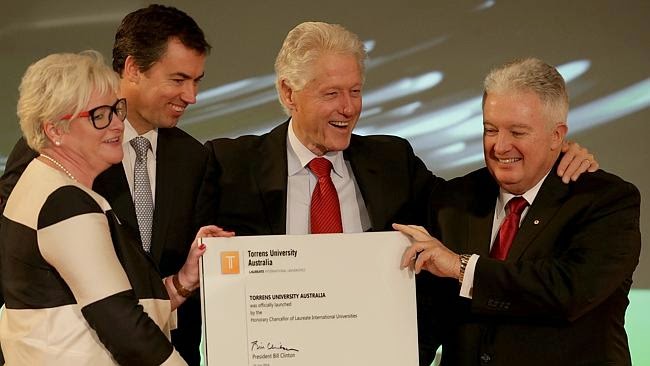
Having been accepted into the Torrens University MBA program, it all starts this week; either the two most exciting years of my life or the two worst years of my life ahead – I guess I’ll find out soon. Starting with two units in trimester one, Accounting for Leaders & Economic Principles and Decision Making; it isn’t going to be easy. I have decided to kick off with what I perceive to be the most difficult units, so as I edge closer to the completion date, it should begin to get easier.

As I had previously completed Contemporary Management & Leading and Managing Teams and Dynamic Leadership; I was granted advanced standing on three units – that not only saves money, it saves time and effort. As a capstone project looms right at the end, life is going to get pretty tough so I thought better to start with difficult subjects and progressively lighten the load until the capstone project begins – I’m regretting this already.

Brett Lee announces his retirement

After a long test and one-day career, pace bowler Brett Lee has now announced his retirement from the shortest and most lucrative form of the game, Twenty20 cricket. Having given his test career away in 2010 after not playing a test in 2009 due to injury; the toll of bowling at speeds in excess of 150 kph took a cumulative toll on his body. Lee made his international test debut in 1998 against India taking a wicket in his first over and becoming the first bowler since Dennis Lillee to take 5 wickets on debut.

He gave up all forms of international cricket in 2012 after playing 76 test matches for Australia taking 310 wickets and scoring 5 half-centuries, 221 one day internationals for 380 wickets and 25 T20 internationals – fairly impressive figures.

Still playing in the Indian Premier league and Australian Big Bash League, Lee has now announced his retirement from all forms of cricket at 38 years of age, almost unheard of for an express pace bowler. There aren’t too many bowlers cracking the 160 kph barrier, there was Jeff Thompson in the 1970s and Pakistan’s Shoaib Akhtar who played in the same era Lee, both with much shorter careers than Lee.

Charlie Hebdo

Under normal circumstances, I probably wouldn’t be a subscriber to a publication like Charlie Hebdo. However, the publication has now come to symbolise free speech and democracy and, as such, I feel an obligation to support a publication espousing free speech.

As the attack on the offices of Charlie Hebdo was also an attack on free speech and democracy, I now feel the need to support the publication. In all honesty, I had never heard of the weekly magazine prior to the cowardly attack by armed gunmen hell bent on returning civilization back to medieval times. I probably wouldn’t read the magazine even though the editors and journalists mocked Roman Catholics, the French state, Jews and Christianity with the same gusto.

For some, the depiction of Mohammed on the cover of the survivor’s edition is blasphemous, possibly reviving further waves of animosity – they are unapologetic. Releasing a joint statement, the French Council of the Muslim Religion and the Union of French Islamic Organisations called for the Muslim community to “stay calm and avoid emotive reactions that are incompatible with its dignity while respecting freedom of opinion.”

The unfortunate realism is that we Australians don’t share the uncompromising views on free speech, after all, it is illegal to publicly engage in activities that offend, humiliate, intimidate or insult an individual or group in accordance with section 18C of the racial discrimination act in regards to race, colour, ethnic or national origin of some or all of the people in the group. Not listed in 18C is religious beliefs although I’m pretty sure they will find a way to include the group under the racial discrimination act. A magazine such as Charlie Hebdo that sets out to offend, in all likelihood would not be able to be published in Australia these days at any rate.

IS and social media

We live in an interconnected world, not just the rich western nations; developing nations may have slow intermittent connections, yet individuals are able to maintain a degree of connectivity in the information age.

The Islamic State’s use of social media is well developed and efficient. As a recruiting tool for disaffected youth, the effectiveness of this campaign has been and continues to be highly effective. Often overlooked is that ISIS does not just have strong organic online support; ISIS employs social-media strategies that inflate and control its message. Extremists are increasingly using social media to recruit, radicalise and raise funds – ISIS is the most adept practitioners of this targeted approach. The use of #hashtags to trend messages has been their mode of operation with retweets causing a run on social media getting their message out.

Just worry about your dive – not mine

This is not the first time this has happened to me, nor will it be the last. On this occasion, I was diving on the LST wreck in Subic Bay Philippines. I wonder why divers from other boats feel the need to start giving you directions, forget about me, just worry about your dive.

We had a full boat and the skill level wasn’t high, we were having difficulty gearing up, I quickly threw my gear on and back rolled off the boat freeing up room for the other guys to prepare. So, I swam forward and began my descent down the line, there is no way I will bob around on the surface getting sun burnt while these guys move in slow motion.

We were the second boat in line, another dive shop had divers in the water so I swam forward below the surface, I didn’t descent full depth as the wreck has some depth attached and I didn’t want to be burning my no-deco time up unnecessarily. As the mooring line is fixed, the diameter of the rope is reasonably sized and sports a fair degree of growth, I was happy to descend and look for interesting life on the line.

These guys took ages gearing up, I’m glad I was in-water and not on the boat or sitting on the surface. I slowly worked my way down the line pretty interested interested in the marine growth on the line, I was at 18 metres now and 15 minutes into the dive and getting a annoyed at this stage.

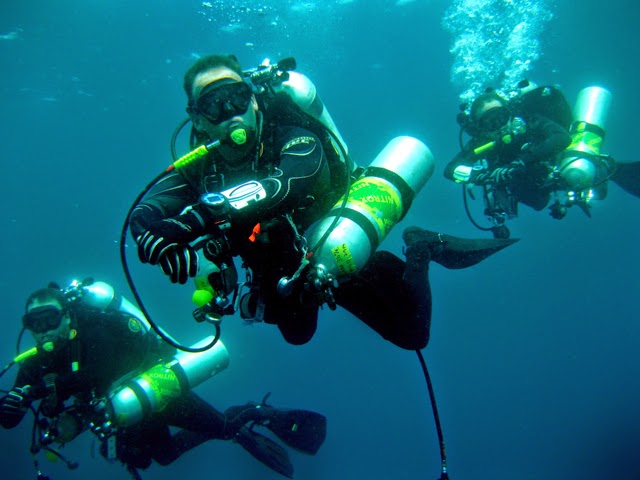
I saw the bubbles arrive at the ascent line and two guys with a double set-up and stages for deco appeared. They made their first gas switch at depth and began their descent, then all the hand signals started, where is you buddy, get with your buddy. I’m hovering near the line, no need to hang on, buoyancy is fine, breathing rate slow, no kicking to maintain buoyancy and no erratic movements to indicate that maybe I knew what I’m doing.

They were clearly in deco, it wasn’t a simulation and they need to concentrate on their ascent, not worry about what I’m doing, I’m fine, thanks – now bugger off. His ascent wasn’t going that well, his wing bladder was over pressurised and his ascent too fast. Maybe I need to swim down and release some air from his buoyancy control device, after all, I had no decompression obligation at that point. Apart from annoy me – what could they do anyway? Nothing, that’s right so just get on with your dive and leave me to mine – I don’t answer to these dickheads.

#‎JeSuisCharlie‬

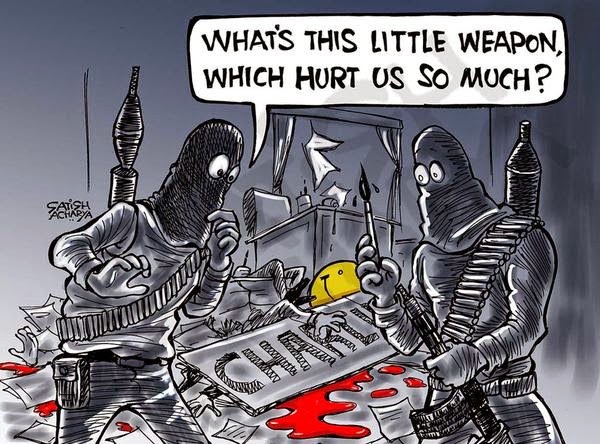
The freedom of speech, the foundations that western democracy are built upon have been attacked; French editor Stephane Charbonnier stated “I would rather die standing than live on my knees.” He died defiant, gunned down by Islamic extremists who feared the the man wielding the tools of freedom.

Freedom of speech, freedom of thought and freedom of expression have been attacked by the pathetic cowards of the satanic cult. Terrorists attempt to invoke fear; but it is these prophets of evil that live their lives in fear – fear of democracy, fear of women, fear of freedom of speech and freedom of thought.

The world stands in solidarity with the people of France – Viva la France.