How not to control mosquito numbers

I lived in southern Turkey in the early 2000s; back then, we had to get home before 1 am prior to the smoke truck made its nightly rounds. Sometimes, either affected by alcohol or a short span of memory, we would hear the truck spewing out smoke and would have to make a run for it.

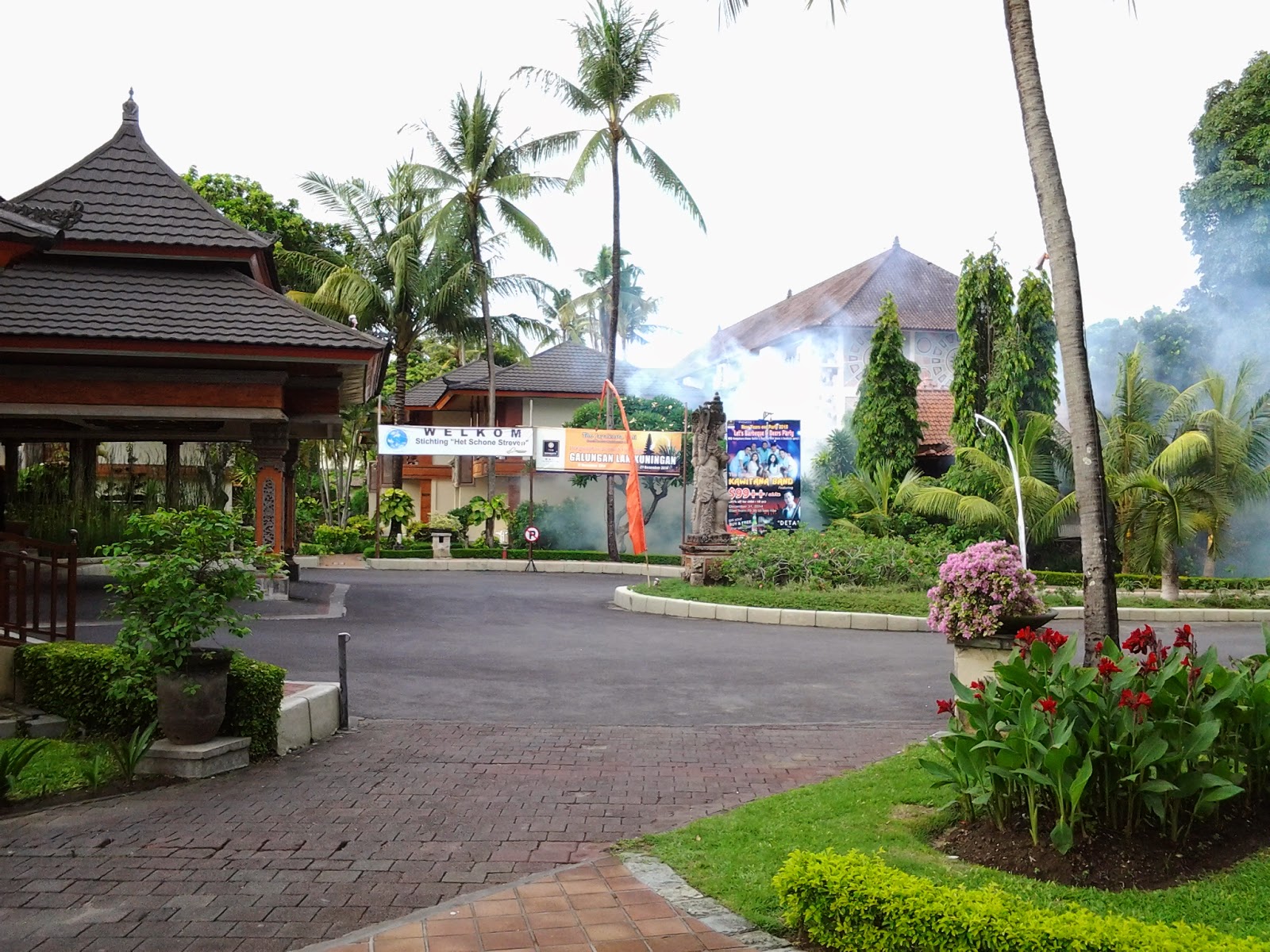
Either that, or stay tucked away in bars or nightclubs, these memories were well hidden in my memory until I heard the smoke machine again in a Bali beachside resort.

Hearing the hand held smoke machine brought back memories, forgetting about the truck, the sprint home down alleyways and backstreets, fumbling to get the key in the lock and jam a towel under the door and sealing then the window with more towels.

To be an effective leader

In business parlance, leadership is currently viewed as a higher level skill than management. In every job interview I have attended, leadership is sought but poorly defined. I myself have sought to identify the essence of leadership so as to be able to articulate the correct response to the interview panel, seeking leadership abilities is to drive culture in the organisation.

Defining the essence of leadership; I believe leadership is influencing people – by providing purpose, direction and motivation. As such, leadership is described as a social influence process whereas the leader enlists the aid and support of team members in the accomplishment of a common task. What leadership isn’t is a poster with an eagle souring over mountains, this is about outcomes, this is about influence – no problems.

Sue really nails what is required from leadership; coming from a training background, learning objectives are clearly described outcomes that trainees must achieve in regards to performance, standards and conditions. All MBA outcomes are measurable, so MBA graduates are not only conversant in economics, accounting, finance, operations, decision-making, management, marketing, quantitative analysis and strategy; graduates are able to provide leadership to achieve desired outcomes.

Capital punishment – state sanctioned murder

I am not a believer in capital punishment, it is nothing more than state sanctioned murder. It is vengeful, retrospective and inefficient, nor does it deter crimes. The government does not have the right to take the lives of its citizens; a government of the people by the people does not execute the people who live within its borders, that role is usually reserved for dictators or totalitarian regimes.

Neither am I a believer in soft policing or justice practices. The execution of Chan and Sukamartren was a political decision by a weak leader attempting to impose himself on a public racked with fatal reservations of his competence. Joko Widodo had the ability to grant clemency, he instead chose political gain over fair and just judgement. Not only that, the leader of the Indonesian opposition party stated there would be no political ramifications from the granting of clemency, he chose to ignore that.

I personally believe in strict penalties; for crimes such as drug smuggling, a sentence of twenty to twenty five years is appropriate. The two organisors had served nearly half of a drug smuggling sentence as it was. I was not convinced of the so-called rehabilitation of the smugglers; yes, they appeared to be repentant. I believed that had more to do with actually being caught than anything; that is not the issue though.

The Brazilian national was only aware of his fate as he was being fastened to the firing board of which he enquired “Am I being executed?” Even though he had been extensively briefed, such was the level of his schizophrenia, he was unaware of his fate. So the Indonesian government is executing the mentally ill, similar in nature to the NAZI regime of the 1930s. Significantly, Mary Jane Veleso was spared execution just minutes from facing the firing squad as a key witness came forward under the pressure of death threats.

Mary Jane had been the victim of a human trafficking ring and has been temporarily spared to testify at the investigation. So the failures of the Indonesian justice system were minutes away from sending an innocent person to execution, if a person has been falsely imprisoned, they at least have the opportunity to walk free after a judicial review – that can’t happen after an execution.

The double standards of Indonesia seeking clemency for its citizens on death row overseas whilst executing foreigners smacks of political arrogance. Every aspect of this execution was stage managed for political gain, Joko Widodo is a spineless leader with no authority of a morally corrupt nation; the systemic corruption encroaching on the daily lives of Indonesian nationals is absurd. The transfer of prisoners from prison to execution island was carefully stage managed for maximum effect – this was overkill. Likewise, the treatment of the families of the executed was disgraceful, this third world nation seeking an audience on the world stage is shambolic and barbaric.

One has to remember, this is a nation supporting terrorism, the same nation that frees convicted terrorists. This pair were not the masterminds of the operation, this pair was the enforcers for the masterminds, these guys were the organisers. The Australian syndicate has never been brought to justice; likewise, the Thai prostitute who smuggled the drugs from Thailand to Indonesia escaped. So the supply chain is still intact – nothing has been properly investigated and the international drug syndicate remains operational.

Had the two governments worked together, the Indonesians would have monitored the Bali 9 through customs and allowed the Australians to follow the team through immigration with surveillance through to the syndicate running the operation with the Indonesians following up the supply end through Thailand. The Australian/Indonesian authorities then announce the joint cooperation program ushering in the new era in Australian/Indonesian policing; instead we had the Indonesians eager to make a bust of seven low-level drug mules and two mid-level organisers/enforcers with the trust and cooperation between these two organisations in tatters.

Do the people running these organisations have no strategic sense at all, do they only hold short-term thinking capabilities? They totally blew a prime opportunity to smash a international drugs syndicate, cement a joint working partnership and forge closer ties to combat terrorism, the Indonesians have proved themselves to be totally incompetent.

USS Illinois – Iowa class battleship

The USS Illinois was the fifth of the six Iowa class battleships ordered for the US Navy in World War II. As with the USS Kentucky, the ship was cancelled before construction was complete due to the Japanese surrender. Had the atomic bomb not been deployed, it was envisioned an invasion of mainland Japan required naval bombardment for the proposed marine landings and fighting well into 1947 and possibly 1948.

Originally designated to be the first of the Montana class battleships, BB-65 was reordered as an Iowa class battleship due to concerns of navigation of the Panama Canal before construction began. The shift in naval doctrine to air supremacy saw the aircraft carrier given preference over the battleship with the South Dakota class battleships throughout the war.

Crucial to effective communication

Working with a manager in title lacking any definitive verbal or written communication skills, I ask myself “what fool promoted this guy?” When you work in an organisation that engages in crony selection, well, no real selection process really, then you can see why.

An incompetent manager reflects poorly on the whole organisation, they can’t respond with the old line of not having enough competent personnel, it is really an old boy’s club despite the fact it is dominated by women. Internally, the term is the purple circle, it is unfortunately true for an organisation that is performing so poorly. Leadership is sought at middle to upper management levels; yet at many organisations leadership is so sadly lacking that the term leadership is met with howls of laughter and derision.

Dropped off

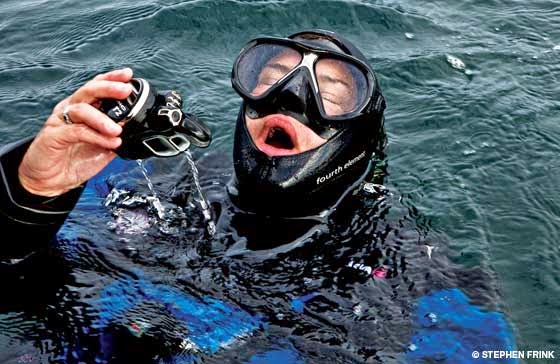
I had the recent situation where the boat dropped the dive guide and myself in the water continuing on to a nearby island to drop the passengers off before returning to pick us up at the end of the dive. Whilst it didn’t concern me at the time, I did think this was a somewhat unusual diving practice and prone to both abuse and possibly tragic outcomes.

The boat had at least a 20 minute steam to the island, the time taken unloading of passengers and return trip to our position. We were going to be an hour underwater, the current was mild but a storm was approaching. This was my second day diving with this resort so they had seen me dive previously, they knew I was comfortable underwater and was an experienced diver.

Had the vessel broken down, our dive ended abruptly, a passenger has an issue or accident or they were detained on the island for any reason – we may have had an issue. The vessel had a number of engine issues so that may have contributed to a delayed return, the engine broke down on the first day and was very noisy in the valve train.

My questions are related to what if; I am mid-40s, reasonably fit but well down on my personal standards, I have a number of medical issues but currently free of any real (or at least serious) medical problems. They, of course know none of this as they never asked me, so this tends to indicate this is normal practice and this could be a real problem.

A panic, a sting, bite or medical problem on the surface or underwater could have ended in devastating circumstances. Likewise, a stronger than anticipated current could have swept us well away from the site and pick up zone. This is poor practice and one feels this operation is an accident waiting to happen, was it just me or is this normal practice?

Is the travellers cheque history?

Once upon a time, everyone who went on holiday went down their local bank to pre-order their travellers cheques, no need to bother with this archaic ritual anymore. 

These days you can just pay by credit card nearly everywhere you go, you can also go to just about every automatic teller machine and withdraw local currency. No longer are you at the mercy of local merchants and dodgy exchange rates and commissions, nor do you need to worry about losing your travellers cheques. There is naturally the issue of losing your credit card or even credit card fraud or having your credit suspended, regardless, getting credit card fraud sorted out these days is relatively simple. I\’ve ditched the travellers cheques in favour of electronic banking.

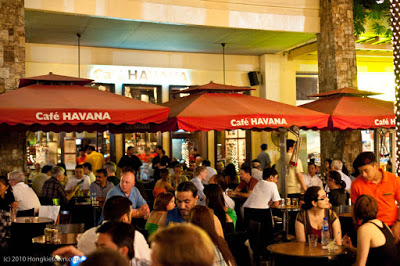
Cafe Havana

My favourite bar in Manila is Cafe Havana in the Greenbelt 3 entertainment complex. I travel to the Philippines on a fairly regular basis; such is my love of the scuba diving this wonderful country offers.

I depart Perth at 1.10 am on a Friday morning for Singapore, arriving about 6.30 am, I have my connection to Manila at 12.15 pm and arrive at about 3.30 pm – it’s always the same flights so I know the routine well. But the time I travel to my hotel after clearing immigration and the horrible Manila traffic – it’s Friday evening and I’m ready for some fun.

On a Friday and Sunday night, a long running band playing an entertaining mix of Cuban and salsa music – this is really a great evening out. I just love the set list, the Salsa and Latino sounds are great Friday night entertainment although I must admit, I can’t recall hanging out too many times on a Sunday night. I have walked past plenty of times though and just listen to the band play, yet I can’t remember their name.

I generally travel to the Philippines three times a year for two weeks at a time, that accounts for three attendances at Cafe Havana on a Friday night per trip and nine happy experiences per year, that’s more boozy outlandish Friday nights that I can care to remember for the decade I have been diving and holidaying in the Philippines.

Deep bounce dives on a single cylinder

I am recalling a story told to me by a friend whom I have dived with many times, she is a very competent recreational diver. She has not been trained for deep or decompression diving, she is a pretty good divemaster by all accounts, I have seen her in action on many occasions and can attest to her diving ability in a recreational setting. So where did it all go wrong?

First it started with trust, her buddy was an instructor with 5000+ dives experience who had worked in Thailand and Turkey among other destinations, that is high profile European and South East Asian destinations. With that many dives in high traffic dive resort destinations, he could be considered a full-time professional diver.

The dive plan was vague, she was to follow him down the line to an unspecified depth and follow computer decompression requirements back to the surface. Their equipment; standard recreational scuba arrangement – single 11 litre aluminum cylinder, standard K-valve, jacket type BCD, a single wrist mounted dive computer and standard recreational regulator with alternate air source.

The conditions – strong current, no surface wave chop, sunny day and a light wind blowing. She followed him down the line, he was descending quickly and she was encountering difficulty keeping up to that rate of descent. She was able to grab him at 40 metres, signalling to him that everything is not ok; he signaled back that everything was ok and continued the descent at the same rate.

She encountered severe nitrogen narcosis as the descent continued and stopped, at this point she decided to ascend alone, depth unknown as she was unable to read or comprehend her dive computer display instead using her exhaled bubbles as a guide. Apparently, the ascent rate alarm did not sound during her blue-water ascent. Her instructor continued his descent unaware of her difficulties nor did he seem to care about the person he was diving with.

After some time, her buddy did notice her missing and began his ascent, he had gained a decompression obligation greater than her due to his greater depth and longer exposure at depth. He did not manage to catch up up with her during her (and his) hang time. Due to her distress and anxiety, she had consumed a fair amount of gas in her single cylinder and was running dangerously low with still time remaining on her shallow 3 metre decompression stop.

There was no decompression hang tank in the water, but what did it matter anyway? She didn’t make it back underneath the boat at any rate. She had to perform her in-water stops without the aid of a lift bag and reel as she did not own such equipment instead trying to maintain depth without any aids. Hence, the maintenance of depth was pretty poor with notable depth changes during the decompression phase.

Upon arriving at the surface, she wanted to know what the hell happened, she was not experienced at that depth and the nitrogen narcosis was almost debilitating. She had plenty of time to think about it during her surface swim back to the dive boat, she was pretty upset. When he arrived back at the boat some time later, his attitude was nonchalant, this angered her as she felt real fear for her well-being.

As she had consumed a significant amount of gas at depth, had she not turned and ascended, she would have emptied her cylinder at depth, not just on the hang. As no turn pressures had been discussed let alone rule of thirds, it was just luck she began her descent when she did. Naturally, they had not done any gas planning, nor contingency planning for that matter. The wash up – at what point did this do go wrong? How could have things been different?

Discussing profit

As profit is defined as revenue minus costs, sometimes described as profit identity; in a perfectly competitive market, normal profit may be sufficient to maintain business operations for a period of time, or just barely covering financial costs, accounting profit doesn’t consider opportunity cost.

A business generally makes decisions based on opportunity costs; mission, vision and values statements dominate current management thinking. I learned the hard way, neglect the values statement on even a government management job application and pay the penalty. Previously, I worked in a tourism and retail business, where our retail sales were dominated by the actions of wholesalers. Perfect competition may be described, among other things as a market large enough to not be dominated by individual, if only.

Wholesalers dictate terms to retailers, withhold supply by refusing to open accounts in an attempt to force new competition out of business to maximise their profits. When securing supply by other means, running a loss leader to generate increased revenue also increases future bargaining power and negotiation leverage.

Wholesalers offer better terms to clients with greater purchasing power, increased volumes result in reduced prices so the longer term opportunity generated by short term profit declines builds a client base. In our case, such loss leaders (we actually generated slight profits) on certain products generated additional revenue by attracting clients who purchased higher profit items once they become a client.