The PADI educational design process

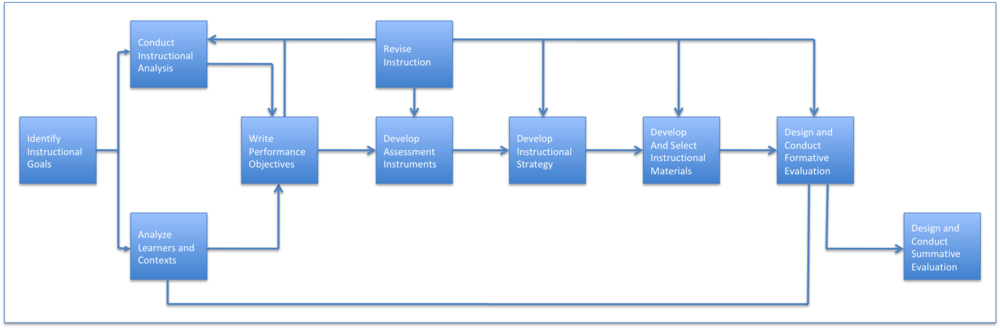
As a college lecturer and instructional designer, I view the PADI educational system as actually pretty good. As the college system is competency-based and not time-based, I see many similarities in the concepts and application.

PADI has expelled considerable time and effort to design functional dive courses based on contemporary learning theories, their learning materials are linked to course objectives and are naturally of a high quality. As an instructor, you don’t need to qualify to become an instructional designer; you just need to qualify to become an instructor in the world of PADI. This will not allow you to teach at college, it won’t even allow you to teach scuba programs from other scuba certification agencies. 
At the end of your seven day instructor course, you must attend a two day instructor evaluation run by PADI and you are off and running, your career as a recreational dive instructor just hit hyper-drive. Armed with slightly below a rudimentary level of teaching knowledge, you are now slightly more knowledgeable than a layman and able to earn a living as a dive instructor.

Naturally the hours are long and the pay is low, but hey, you can’t complain, in seven days you went from a novice diver to a certified and qualified professional. Try doing that with a law, engineering or medical degree. But in all fairness, most instructors already have a profession such as a marine biologist, retail assistant, boat skipper or trade. What you are purchasing from PADI is a lifestyle change and the former occupations of dive instructors are pretty diverse.

I do feel for the young guys straight out of school who have no other background to fall back on when they burnout – you certainly do burnout. Stuff up and injure or kill someone, you will be deemed and held accountable just as any other professional, don’t expect PADI to come running to your rescue, they will throw you under a bus at first opportunity.

As a PADI instructor for 15 years, I may not teach dive courses anymore as time constraints required to undertake further study now are just too great. Just finding the time to go and dive is difficult enough. Committing to teaching people to dive is unfortunately unattainable for the next couple of years at least. I went from a part-time instructor to a full-time instructor right back to a part-time instructor again.

During my time as a full-time instructor, I was a dive centre manager, tour guide and retail salesperson. Actually, I wasn’t a full-time instructor for all that long, six months actually. After I resigned my full time dive centre manager position, I went on holiday for half a year before going and working for a rival full-time for six months before heading back overseas again for another six months. I then returned and started my own dive business that was ironically part-time too.

I maintain a degree of isolation from the recreational dive industry now; I do view courses and programs from afar these days. PADI courses offer college level credits in the United States and other nations for a reason. They had to be evaluated to qualify for the program and their eligibility has to be renewed every couple of years. This can only be a positive, as you will never hear a PADI instructor reciting educational theory and application unless they are a qualified teacher that is burnt out and seeking a lifestyle change.

Inspiration – the determination to suceed

A picture recently snapped by medical student Joyce Torrefranca and posted to her Facebook account was inspired by 9 year old homeless boy Daniel Cabrera doing his homework by the light of a McDonalds fast food outlet in Cebu city, Philippines.

Daniel is not letting his lack of opportunity hold him back; wanting to become a policeman, he diligently does his schoolwork while his mother works at a restaurant across the road at night. Joyce told Philippine news network ABS-CBN “This kid, he doesn’t have anything but he has dedication to study” apart from his makeshift wooden bench and the light shining through the window from McDonalds. This snap has gone viral, Daniel had lost his father in a fire that destroyed his home, his sibling is sick yet this young boy isn’t letting his situation beat him – his determination is truly inspirational.

The stuff of management legends

The dreaded performance review is usually an ineffective method of motivation in the hands of an inept manager. Ineffective managers who fail to provide leadership in the workplace generally attempt retrospective actions in a performance review instead of undertaking regular and ongoing coaching.

If the manager feels the employee is exhibiting poor attitudes or behaviour, this once a year meeting to fix these alleged behaviours will pretty much waste of an hour of work time. The ineffective manager focuses on negative behaviours and the most recent efforts instead of building on positive actions whilst also providing constructive feedback on negative issues.

A lack of a regular performance review is just lazy, many employees are unfazed by a lack of performance management as the manager has already proved themselves to be a manager in title only; lacking the respect of the individual employee and team in general. The manager in such situations is usually unprepared, having not put the effort into preparing for the performance management meeting. I have attended meetings after been given just 10 minutes notice. We all know this 10 minutes is preparation time for the manager to quickly review my performance prior to the meeting – that’s a joke.

I have even had a manager put the wrong name on my performance review, did he perform a simple copy and paste from other people’s reviews or was he unsure who was sitting in front of him? The purpose of a performance review is for the manager to ensure the job is performed well, to improve their productivity by removing obstacles to productivity and streamlining task functions – it’s that simple.

Dogs get old and die

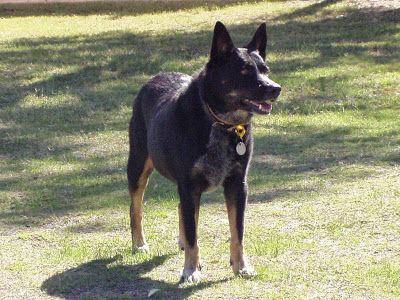
It’s great having a dog, they become part of the family complete with their quirks, moods and abundant personalities. Treated right, they are a loyal friend and companion but I feel dogs have only one downside – their lifespans are way too short. In short – dogs get old and die.

We still argue when I brought my 5 week old blue heeler kelpie cross home; I believe it was 1994, members of my family argue it was 1995, I also cross reference against my then girlfriend – interestingly, the dog outlasted her and a couple of others by a large margin. We also counted back the approximate of birth, it was the 4th of April, as a reminder, 4/4/94 had an easy ring about it.

She was so small, she was tiny. It could be argued that we picked her up too young, regardless, it didn’t seem detrimental to her development, she was well looked after and lived a long life in dog years, the problem, I live in human years and still miss her. I actually believe being pulled away from her dog family and into the world of humans was a positive experience, we were what she knew – her loyalty was to me.

My problem was I worked away, so my little friend was placed in foster care with my parents while I was out of town. This worked well for all, my father was retired and my mother was a housewife, the dog was surrounded by loving people around the clock, a daily walk in the bush kept all fit and healthy.

Around the age of 11 is when dogs start to develop problems, this is when I started to notice issues in her hips, she had arthritis, she had it bad. Now vets know people will spend freely when their animals develop medical issues, I was no exception and we became frequent visitors. My dog however somewhat disliked the vet and embarrassed me every visit, they remember me well but unfortunately not fondly. Still, I purchased every expensive medicine, injection and remedy they had on offer, I still believe the vet knew my credit card, the expiry date and cvc by heart.

Because her back legs were in such bad shape with no cartilage left, I would carry her everywhere, the sound of bone on bone was heart breaking. Eventually she got used to her lack of mobility and would bark when she wanted to move about, this mean’t one of us came running. When she spotted a cat and a chase was warranted, a 25 kg dog held to my waist racing after that pesky feline ensured the cat had ample opportunity to escape.

Boss – Number one

Boss Number One by Hugo Boss is a aromatic fougere fragrance for men; launched in 1985 and based on the input of legendary perfumer Pierre Wargnye, this fragrance is very much a product of that era – bold and unashamedly macho. Exuding confidence according to the advertising, this masculine scent is my formal cologne – this is not my daily aftershave.

According to the description, the fragrance base notes are artemisia, green apple, juniper, basil, grapefruit, caraway, bergamot and lemon; middle notes are honey, lavender, orris root, jasmine, sage, lily-of-the-valley, rose and geranium; base notes are sandalwood, amber, patchouli, cinnamon, musk, oakmoss, cedar and tobacco.

Phew, that is some pretty serious fragrance complexity, what I do know is I liked the cologne the first time I sampled this eau de toilet and had to immediately purchase a bottle, that was in 1999 traveling over the border from Greece to Turkey. I still have the original bottle and use it very sparingly as I had been unable to replace it until now.

Formally known as Boss, I have been searching for this cologne for some time now in large department and duty free stores with none of the staff knowing anything about this cologne. This is pretty concerning as staff product knowledge is severely limited, it ruins your credibility when a customer asks a specific question and the whole team is clueless. That was until I walked into a Hugo Boss branded store in Makati in the Philippines and they knew exactly what I was asking for – now I know how to get my hands on this legendary fragrance.

Bowen Estate – 2012 Coonawarra Cabernet Sauvignon

A stunning example of a great Coonawarra Cabernet Sauvignon is Bowen Estate, I was first introduced to Bowen Estate at the Perth Wine and Food Show a number of years back. Since then, I have sought out their full bodied wines whenever I am out at bottle-shops, bars and restaurants.

I grabbed a bottle on the way through at the local bottle shop to drink with my father on Friday night to watch the football. This full-bodied wine displays intense fruit flavours with a strong blackberry bouquet and strong cedar overtones typical of the region; the fine tannins allow for an elegant structure that will undoubtedly increase with cellaring.

The three-day entry level diver course

We used to run five-day entry level diver courses; in my view, everyone was a winner. The instructor was not under the pump for the duration of the course; furthermore, the instructor had guaranteed employment for the week. The dive students were not rushed adding to their personal stress, the students had a week’s worth of exposure to the dive facility with retail opportunities frequently presenting and everybody winning. Everyone got to know each other and relationships and friendships were forged.

The instructor was happy, the divers were happy and the store owner was happy; so what happened? The dive certification agencies pursued the shortened entry dive level courses recruiting a major dive centre in every strategic area, once your competition was offering shortened courses, you eventually were forced to follow. In all fairness, the certification agencies are in competition with each other, one agency forces change and if the other agencies do not counter their move, they too risk being rendered obsolete.

So who is the winner here? The student receives a faster condensed course, is that better? My opinion is no, the longer exposure to skills and more importantly, in-water practice is lost leading to only the bare minimum standard being attained. I would argue a new diver needs time to learn and embed new skills, the time spend in confined water is important.

The instructor, certainly not – now every course is conducted at break-neck speed. What about the dive centre then? To a degree yes, wages bills are down and they have the ability to run two courses per week during peak periods without running two courses concurrently requiring one instructor only and one set of hire equipment. The downside is less opportunity to up-sell as time is limited, new divers lessen their interactions with shop staff and relationships are less likely to be built.

Ok, that leads us to the certification agency – the clear winner. Shorter courses, they still receive their certification fees from the newly minted diver, they still receive the dive centre/resort annual registration and they sell all the required learning materials with absolutely no discounts for shortened times. This is a pretty good business model for them.

Chateau 1771

One of my favourite fine dining establishments in the Makati business district is Chateau 1771, this French inspired restaurant is the leading dining experience in the Greenbelt entertainment precinct.

From the classical guitarist playing solo in the corner, their extensive wine list and their attentive waiters – this dining experience is one to be savoured. The upcoming Bastille Day celebrations saw Emilly and myself seated within sight of their guitarist listening to his well crafted notes. We ordered their Bastille Day special that was fairly priced beginning with a bottle of medium bodied red wine.

The three courses began with stewed lamb shoulder with red wine and rosemary. This was followed by hotplate fish with tomato and melted cheese, slow cooked five-hour duck confit that had been marinated for three days prior. A carrot, pecan and raisin salad and finally a shared lemon meringue torte.

We arrived late, 9:30 pm is early for Mediterranean dining tastes but is fairly late for the Saturday night Makati crowd, this was no trouble even as we went well past their 11 pm closing time. At no time were we made to feel rushed or pressured to get a move on. A café with our desert – no worries. A double espresso to finish the night off, an excellent finish to a wonderful Saturday evening.

Rope-a-dope

On the evening of October 30 in Kinshasa, Zaire, 1974, the formidable and unbeaten George Foreman took on former champion and now challenger Muhammad Ali in what is now considered the greatest heavyweight fight of all time. Now Zaire has been renamed the Democratic Republic of the Congo, this was very much deepest, darkest Africa as described by Ali at the time.

Ali, famed for his speed and technical prowess was pitted against the raw and devastating punching power of Foreman. While Ali is famous for covering up allowing Foreman to wear himself out, he countered with straight punches to Foreman at every opportunity. They trained at the same facilities at different times, the welts Foreman left in the heavy bag rattled Ali, Foreman in his prime was a powerful puncher, you would not want to be on the receiving end of these bombs. 

Rope-a-dope, who would have thought covering up on the ropes to allow your opponent, one of the most powerful and devastating punchers in heavyweight history to wear himself out before springing into action and land a few blows yourself was a viable let alone a winning strategy. If Ali had run his strategy by me before the fight, I would have tried to talk him out of it. 

When you actually view the fight, Ali was very active early in the round before covering up. Ali timed each round perfectly, a the end of each round approached, he uncovered and moved from defensive strategy to offence landing some very quick combinations. I reckon he was at least ahead in the fight by five rounds, it would not be outrageous to have Ali ahead in all eight rounds before George found himself on the canvas.

Why I became a dive instructor

I love scuba diving, I had a occupation that offered much freedom and I had the opportunity to work hard in bursts and then take time off. What is hard work and what are long hours? Well, I worked an 84 hour week as standard, anything after that was considered overtime.


How many years can you do that? Quite a lot actually, naturally, I had a fairly high disposable income for all those hours worked and no immediate family ties. Time off saw plenty of overseas trips to South East Asia to dive some pretty amazing places; I dived up and down Western Australia, parts of Queensland, some Pacific nations, around the Mediterranean and the Red Sea.

On one of those extended breaks I had six months off and I was backpacking around Europe, I had worked my way down the Agean coast of Western Turkey and was now on the Mediterranean coast of Southern Turkey where I found myself in a small seaside hamlet of Kas. My plan was to get to the Egyptian Red Sea and undertake a divemaster course to pick up some part time work as a backpacker; I never made it past Kas and I have no complaints – this was a life changing event.

I worked one season as a divemaster, I returned the next year and they upgraded me to assistant instructor status and for the third year, they wanted me to become a full instructor – so off to a instructor course I went. I never made it back that year after all instead working a short stint in Africa in my profession and then taking a short six week holiday through parts of Europe and the United States. The cost of the course combined with the time off work placed me under a little financial duress, the stint in West Africa restored my finances so I was able to pursue a full time diving career in a major Australian capital city on my return.

So, upon returning from Africa, I was jaded with working in my profession and decided the time to act was now. I started as a contract instructor barely meeting payments, then picking up more contract work, this actually hindered my development too as availability suffered, you just can’t keep everyone happy. That is what’s required to break into an industry as an unknown but soon, if you are professional in your actions and are exposed to a broad cross-section of clients, you break in and succeed.

Ironically, to break into the market I worked seven days per week for a whole lot less money, would I do it again? Probably not, I already proved to myself I could cut it and I don’t feel the need to go back in time. That being said, I was surrounded by happy, carefree people on holiday you were undertaking an activity they enjoyed, they even paid you for the privilege. I had the time of my life and I have no regrets.

Sure, I have a big hole in my retirement plan from the years of low paid but highly enjoyable work. As a further sign of irony, while I am on a pretty decent income again yet I am forced to assign an ever increasing percentage of my income to prop up my superannuation account to live the life I lived during that period, I lost a lot of the benefits of compounding interest. Coupled with years of university study now behind me to catch up on career opportunities in the corporate world; I now embark on a master’s degree that will sap my time, energy and funds for a further two years – go figure.