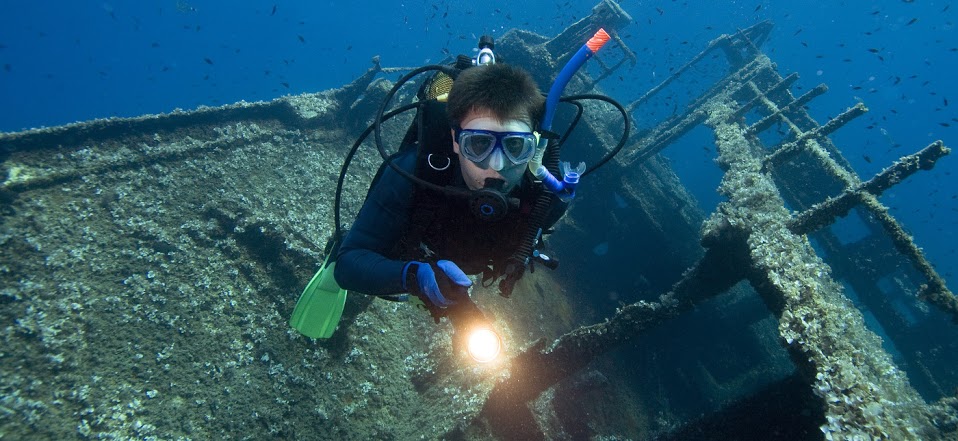
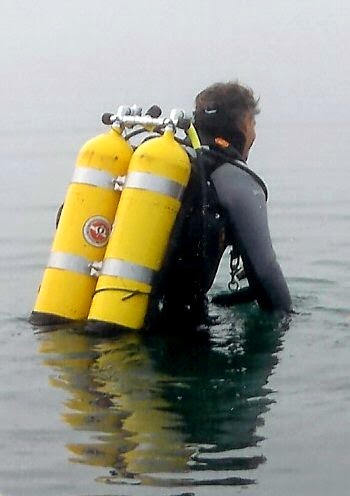
Delayed again

Singapore Airlines has done it again, we have gone past our departure time, no announcements – nothing. The Singapore Airlines staff are all huddled up the end of the departure lounge joking and laughing – what about some customer service and tell us what is going on?
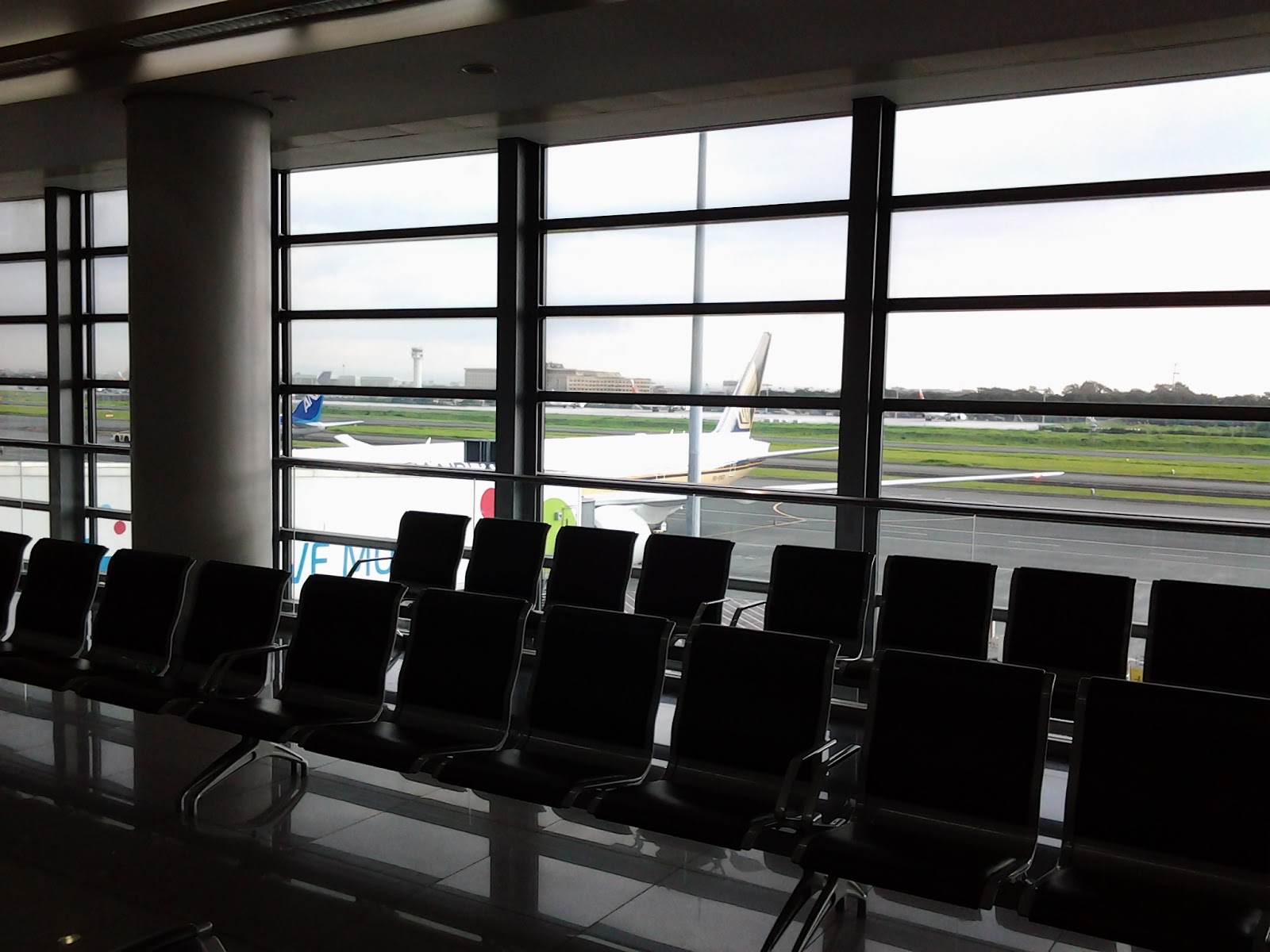
We look out of the glass of the departure lounge and we can see the aircraft parked at the loading area. We can see doors open and activity going on, we know the aircraft isn’t delayed – it is there in front of us. What is delayed is boarding, that then delays our departure and while they can burn more fuel and arrive on time, I know they won’t.

I have connecting flights and pick-ups arranged; the connections are tight, delays mean I miss connections and I will have to cancel pick-ups from the destination airport. I have to be at work tomorrow; this affects my employment too, they don’t seem to understand that. As passengers, we understand that delays take place from time to time; how about treating your customers with respect and let them know what is going on.

This is becoming typical arrogant Singapore Airlines behaviour; people are wandering up to the counter to find out what is going on, we are 30 minutes past our departure time, not boarding time and we still don’t know what is going on. This is not a budget airline, this is a full service airline, this is what you pay for yet you are treated as a budget airline customer.
Dive Bali

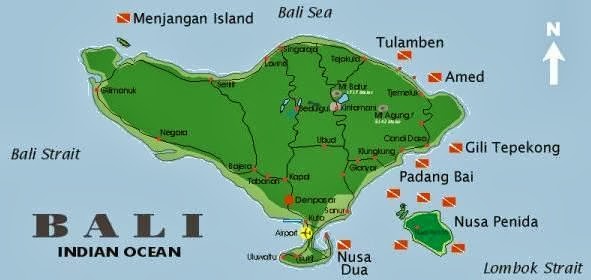
While not universally known for its diving, Bali has plenty to offer the travelling diver. While the majority of divers are in Bali on stop overs for more exciting locations throughout the Indonesian archipelago, a number of sites offer some interesting areas of diversity.

Heading up to Tulamben is well worth the drive for the fabulous Liberty wreck, likewise, just nearby is Tulamben Wall. Not far from Tulumben is Amed, a great place to stay with plenty of dive opportunities, small guest houses and accommodation and great restaurants. For me, my favourite choice of dive sits is Menjangan Island on Bali’s north west coast, less frequently dived due to its long trip from Kuta, this excellent site is mostly overlooked by the crowds.

A boat trip allows divers to access the waters around Nusa Penida, this area is known for drift diving due to its ripping currents, Mola Mola are sighted in this area during distinctive seasons and well worth a look. I don’t care much for diving around Nusa Dua, this shallow water region is located close to the five star resorts of Bali and is outrageously expensive for a mediocre dive in warm water – best to avoid.

OpenOffice

What a great open source office suite this software program is; OpenOffice is based on StarOffice software purchased by Sun Microsystems for internal use. Naturally, OpenOffice software is a competitor for Microsoft’s Office Suite so I hope more businesses get on board to support the product, Microsoft has firm control of the market. Google is challenging the Microsoft domination – this is an interesting tussle.

The program is good, whilst compatibility issues are still present one hopes businesses are willing to take the program on board and run with it. Microsoft have traditionally held the absolute market share, new entrants to the market have the opportunity to erode the market dominance of Microsoft. It is not that I am a Microsoft hater, I just want to see competition in the market, in fact, I am a huge fan of what the Bill Gates Foundation has achieved in regards to philanthropy and social justice.

I like the program, it is simple, reliable and works well. Not only that, it creates competition in the market and whilst I envision big businesses maintaining Microsoft products, the real driver could be small to medium businesses driving the program support. This is a decent program, is it as powerful as the Microsoft suite, I don’t think so, what I know is the program is user friendly and sufficient, you have to learn the program but that is not that difficult to master.

Core values of the Australian Liberal Party

The Liberal Party is a centre right political party founded in 1944 by Sir Robert Menzies, the longest serving Australian Prime Minister from 1949 to 1966. The Liberal Party first rose to power in 1949 after the initial election loss in 1946 and remained in office until 1972, a period of 23 years – the longest unbroken run in Australian political history. The political party was named Liberal for its associations with progressive nineteenth century free enterprise and social equality ideals.

The ideological framework and core values of the Liberal party is built on the foundations of freedom, choice and enterprise. There has been a narrative presented that the Liberal party is the party of big business, this could not be further from the truth as all major political parties deal with large business, the Liberal party represents small to medium business encouraging entrepreneurship and free enterprise. 

The Liberal party represents the middle class of Australia deemed then as the forgotten people, although a narrative has been put forward that the party represents the upper classes, this is simply not true. During formation, party leadership shared a common belief that Australians should be given greater personal freedom and choice than that what was offered under post world war two socialist plans. Robert Menzies believed the time was right for a new political force in Australia – one which fought for the freedom of the individual and produced enlightened liberal policies.

Citing Robert Menzies, Senator George Brandis stated at the Alfred Deakin lecture at the University of Melbourne “As the etymology of our name ‘Liberal indicates, we have stood for freedom. We have realised that men and women are not just ciphers in a calculation, but are individual human beings whose individual welfare and development must be the main concern of government … We have learned that the right answer is to set the individual free, to aim at equality of opportunity, to protect the individual against oppression, to create a society in which rights and duties are recognised and made effective.”

The Australian Labor Party

The Australian Labor Party is a democratic socialist party with the stated objectives of the democratic socialisation of industry, production, distribution and exchange. In short, the Australian Labor Party seeks to eliminate exploitation and other perceived anti-social features of capitalism. The Australian Labor Party is a centre/left political persuasion forming the political wing of the Australian Council of Trade Unions.

Immediately following the aftermath of the first world war and the Russian Revolution; support for socialism grew in trade union ranks with the formalisation of the socialist objective in Australia. Originally registered in 1908 as the Australian Labour Party inspiring trade union representation of the division of labour, the name was changed to the American spelling of labor in 1912 signifying the influence of the American trade union movement. 

Incumbent Labor governments have not attempted the democratic socialisation of any industry after the Chifley government spectacularly failed to nationalise private banks immediately in the aftermath of the second world war. Not only did the Chifley government lose government, the Australian Labor Party remained in the political wilderness until 1972, a period of 23 years.

The highly competent Hawke government of the 1980s and early 1990s implemented the Campbell report into the Australian Financial System floating the Australian dollar, deregulation of the financial system that saw foreign banks established in Australia, further opening up the tariff system, ended government subsidation of loss making government industries and privatisation of government departments and assets.

The irony of the Hawke government position saw government deregulation and a number of high profile privatisations of government assets including the Commonwealth Bank and Qantas directly opposing Labor party doctrine – yet, the Hawke government was the most successful Labor government.

Overlooked for promotion

You ask yourself, how could this happen to me? You did everything right, you worked harder than everyone else producing excellent results – you are a workplace leader. You know deep down, you challenge the manager’s authority and you suspect this is the reason why you were overlooked for the promotion despite the fact that you act as the team leader and spokesperson in an unofficial role.

Looking to get leaped over by those less technically competent is difficult to fathom, especially when my manager has absolutely no idea what is actually going on in the workplace. They are the number cruncher, the paper shuffler but you are the leader, the motivator, the technically proficient driver of change. We all know workplaces are driven by interpersonal relationships – how did it come down to this?

Your manager doesn’t like your brash outspoken persona, when they try to unload their responsibilities on you, it is a simple process to check their job description and point out in no uncertain terms that they need to do their job so you can do yours. Or maybe they need to rewrite your job description with the necessary increase in salary; maybe they need to explain to their boss why this is so, one suspects their salary won’t be reduced accordingly.

Unlike most people, you look forward to your performance review as you know the real reason for such a review is to see what the manager has to do for you to perform your job efficiently. This is your opportunity to control the review, not to sit idly by whilst criticism flows freely and you and forced to defend your actions. Turn the situation around, you control the meeting and all of a sudden they have to defend their decisions and conduct. To be sure, you had better be well prepared.

But at the end of the day, you know the manager likes the other guy better than you; really, the manager doesn’t like you at all, if it was legal to run you down in the carpark, they probably would. Even though you have not come out and said it, they suspect that you don’t respect them yet you work with them in a professional manner. Do you need to call their professionalism into question? Are you able to lodge a formal grievance? It has been said, people don’t leave jobs, they leave managers – how true this is.

Diving with a snorkel

I hate snorkels, I don’t think I have dived with one in 20 years. When I started scuba diving; like most new participants I had one mounted on my mask until I worked out how much it annoyed me.

I don’t recall the point I took the snorkel off my mask, there was no defining moment for me. I had started out, like all new divers following the rules that had been laid out in my open water course, blindly following what I was told to do. The snorkel has entanglement issues, this has the potential to break the seal on the mask causing flooding, I have seen time and time again freshly minted divers confuse their snorkel with their inflator – a serious buoyancy issue. Yet why do scuba certification agencies such as PADI maintain as a requirement that divers in training must wear snorkels?

Corporate finance – will I ever really use this?

Writing about my MBA experience, I try to reflect on what I have done and what I am attempting to achieve. Somehow I managed to fumble my way through the corporate finance unit, I even received a 65% credit; yet, I would feel less than comfortable in working in a actual finance environment. 

I get the feeling this is one of the units I have to get through and in my case; hopefully to never to use this skill set again. Sure I have utilised finance principles in my personal business dealings, doing this for someone else is a whole new ball game for me. This is by far the hardest unit I have undertaken; I am relieved this ordeal is over and I hope I don’t have to undertake anything like this in the future. As I seek to relaunch my management career from the private sector to the state government payroll, I am wondering if I will ever use such skills as a mid-level manager. 

I have gained a new respect for corporate finance practitioners; this would be a tough full-time role with tons of analysts packed in offices working diligently for the large stockbroking, banking and finance companies. In many respects, I am glad I am way too old to break into this industry; I am just hoping be am able to hold my own in meetings in the future and not embarrass myself too much. This is important to know, but as I no longer run my own business and will not be engaged in corporate finance, finance is probably not necessary for me.

Aches and pains after deep air dives

Long exposures requiring mandatory decompression stops using air as both a bottom mix and decompression gas usually results in aches and pains post dive that are difficult to explain. I used to feel pretty sore after a extended exposure dive, for me, it was mostly around the shoulder and upper arm area, I also felt like I had nitrogen bubbling out through my back.

I attribute this effect to asymptomatic bubbles kicking around the system despite executing the ascent flawlessly to the prescribed dive plan. Naturally, the best combination is nitrox or trimix for the bottom mix (depending on depth) with nitrox mixes for travel and EAN60 – EAN80 or 100% O2 for decompression gasses.

For the travelling diver to remote areas, this isn’t always feasible in both terms of logistics or cost. Once again, the highest percentage decompression gas is preferred, but you sometimes take what you can get. I feel unexplained (low key) pain in my left elbow and shoulder that may remain during subsequent repetitive dives; I feel this is the so called slow tissue compartments off-gassing probably around the site of scar tissue from previous exposures.

Incidentally, I don’t tend to feel such low-key pain when diving with nitrox as a bottom mix for dives in the 40 – 50 metre range despite low nitrox mixes for deeper dives. If I am able to off-gas on higher oxygen mixes I feel no such pain, so I have attributed this phenomenon to the high nitrogen loads of deep air diving. The obvious answer is to avoid deep air dives decompressing on air.

Slow ascent rates and extended shallow stops may lessen the impact but does not fully negate the phenomenon, nor does short duration mid-water stops lasting for 1 – 2 minutes in length. So when diving in remote areas, if no nitrox is available I will continue to utilise air as a bottom mix and decompression gas and continue to exhibit mild asymmetric symptoms attributed to the so called silent bubbles without exhibiting actual decompression symptoms.

Global warming estimates – are they flawed?

Reviewing material from global warming estimates, anyone who questions the validity of the figures or the methodology used to obtain these figures is immediately decried as a climate change skeptic.

Science is all about robust debate, the people who are trying to shut down debate really run against the principles of science. The debate to question the methodology of the estimates must be questioned, has the scientific community used flawed models to reach these conclusions?

Citing a different source, there is little doubt atmospheric CO2 has risen in line with advancing industrialisation, the question is, is it purely carbon dioxide in the atmosphere or are other factors affecting the climate? One of the byproducts of industrialisation is the building of infrastructure, is the decrease in forests and more importantly the trees that absorb CO2 the issue?