The classic martini

Instantly recognisable from the American prohibition era of 1920 to 1933; the martini is a cocktail blend of gin and vermouth garnished with either an olive or a lemon twist. An American gin innovation, the martini is the classic cocktail of the roaring twenties and then the more subdued 1930s. By 1922 the Martini reached its most recognisable form of London dry gin mixed with dry vermouth.

At a ratio of 2:1, the classic gin martini is stirred in a mixing glass with ice cubes and poured into a martini glass; a gin based martini is stirred and not shaken. Aromatic bitters can be blended into the mixing glass and then strained into a chilled cocktail glass to add a little complexity to the flavour but I prefer mine at a 5:1 ratio with only a green olive to complete the drink.

Dive centre decisions

I gained experience in managing dive resort operations overseas before coming back to Perth, my home city to work in a city-based dive centre. I had a multitude of ideas and strategies to recruit and retain divers – or so I thought.

I learned pretty quickly what worked at a dive resort didn’t work nearly as well in a dive centre. That was not to say I didn’t keep trying so it could be argued I didn’t learn all that quickly. Back in those days, I had no formal business and management training and learned from untrained peers who were experimenting just like me.

What we lacked in experience, we certainly made up for with enthusiasm. It was a very hands on approach, we had the most successful dive operation in town so what we were doing was done well, we had a customer based approach. Decision-making may be simply broken down into programmed and unprogrammed decisions; that is dealing with familiar and unfamiliar problems. Programmed decision-making is simple, it is repeating previous successful examples.

The development of unique approaches to complex problems is far more difficult – this is especially true when you have a vested financial interest. This was where my decision-making broke down at the time, I was unfamiliar with formalised decision-making models although I was open to suggestion. My previous employment saw me making high value decisions in large companies at an operational level.

This was different as I was undertaking diagnostic and trouble-shooting decisions based on proven engineering principles. I am a person who utilises models, matrix and programs; I am an extremely extremely process driven individual who detests fumbling my way through to a shaky solution.

Now viewing dive operations from the perspective of an experienced operator, I see that decision-makers in dive resorts and dive centres not only lack the experience to make good decisions based business principles.  Many dive centre managers lack vital industry experience required for a competitive service orientated market. The recreational dive industry tends to attract more alternate lifestyle types and not typical business managers.

This is why in successful dive locations, inexperienced dive operators immediately engage in a price war under-cutting each other. They fail to calculate their costs and have no idea what their break-even point is, they engage in a downward spiral of pricing their products and services below their competitors until everyone is losing money.

I sometimes marvel at the stupidity of such strategies, the consumer doesn’t always benefit as equipment and services are run down, poor maintenance and a general lack of safety tarnish the industry. So what is the answer then? The dive training agencies need to offer greater training opportunities based on the business of diving, many tertiary institutions offer hospitality and tourism courses.

The problem arises from the issue that the low wage environment of the recreational dive industry generally attracts lifestyle based workers on minimum wage. Why pay big dollars for a business orientated education for a minimum wage job? 

This means you generally don’t attract serious business orientated operators seeking a real return on investment. When dealing with micro-economic theory, a business person looks at opportunity cost, when combined with finance principles of the time value of money and accounting principles of return on investment – you have to ask, why bother?


Mastery learning

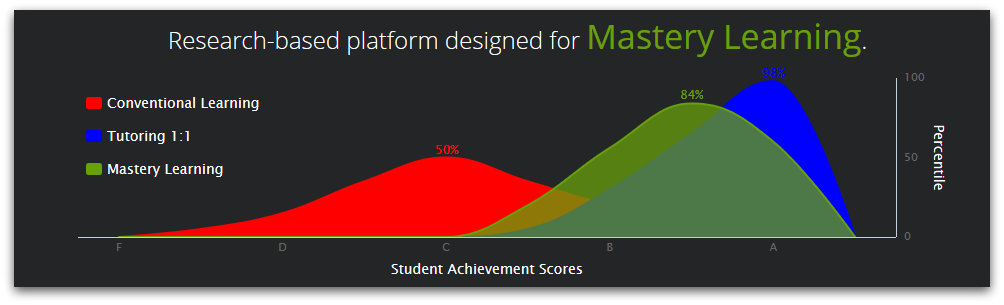
As an instructional strategy, mastery learning stems from the research of Benjamin Bloom in 1971, 1976 and 1984. Traditional classroom learning sees trainees undertake a learning event to study for a test, then regardless of the results moves onto the next chapter of the reference book or program until the course is complete.

The trainee is tested on the next chapter or stage of the program until the course is completed. Mastery learning is a unique approach as compared to traditional training methodologies where material is taught and trainee comprehension is evaluated before they are able to move on to the next unit. Bloom observed traditional classroom practice was to organise content into units evaluating progress at the end of each unit. Bloom reasoned such evaluations of learning would be more efficient if they were utilised as a sub-task in the teaching and learning process providing immediate feedback targeting individual learning difficulties prescribing specific remediation interventions to enhance learning.

The facilitator breaks down the curriculum into a series of smaller sub-lessons that are taught throughout the duration of the course. At the end of each learning intervention, a diagnostic assessment (usually a short quiz) is administered serving as a evaluation of learning. The assessment then acts as a guide where the facilitator builds a prescriptive feedback lesson targeting the areas of weakness. I am a supporter of Bloom’s research and processes, mastery learning greatly improves trainee outcomes.

The routes to wealth

The routes to financial wealth are numerous; a number of options are available for savvy capitalists on the road to affluence; instead hoping to short-cut the process of generating wealth through alternate means.

These routes to financial wealth include: winning it, suing for it, marrying into it or inheriting it. The lottery is pretty lucrative if you don’t care about odds, the legal system is also lucrative in many countries although legal fees can put a dent in your return on investment. Marrying into money is pretty instantaneous, you have the advantage of having a significant other to help you spend it, although you might have to give half of it back if the relationship turn sour and there is always the issue of pre-martial contracts.

Inheritance is good in many respects, the downside is someone has to actually die for you to get your hands on their money. That’s actually a bit of a downer but new found wealth allows you to get over it pretty quickly and people really don’t live forever. Entrepreneurship is the obvious solution to financial independence, a number of possibilities do exist if innovation, hard work or sacrifice are not for you; you really can’t beat earning it for yourself.

USS Texas BB-35

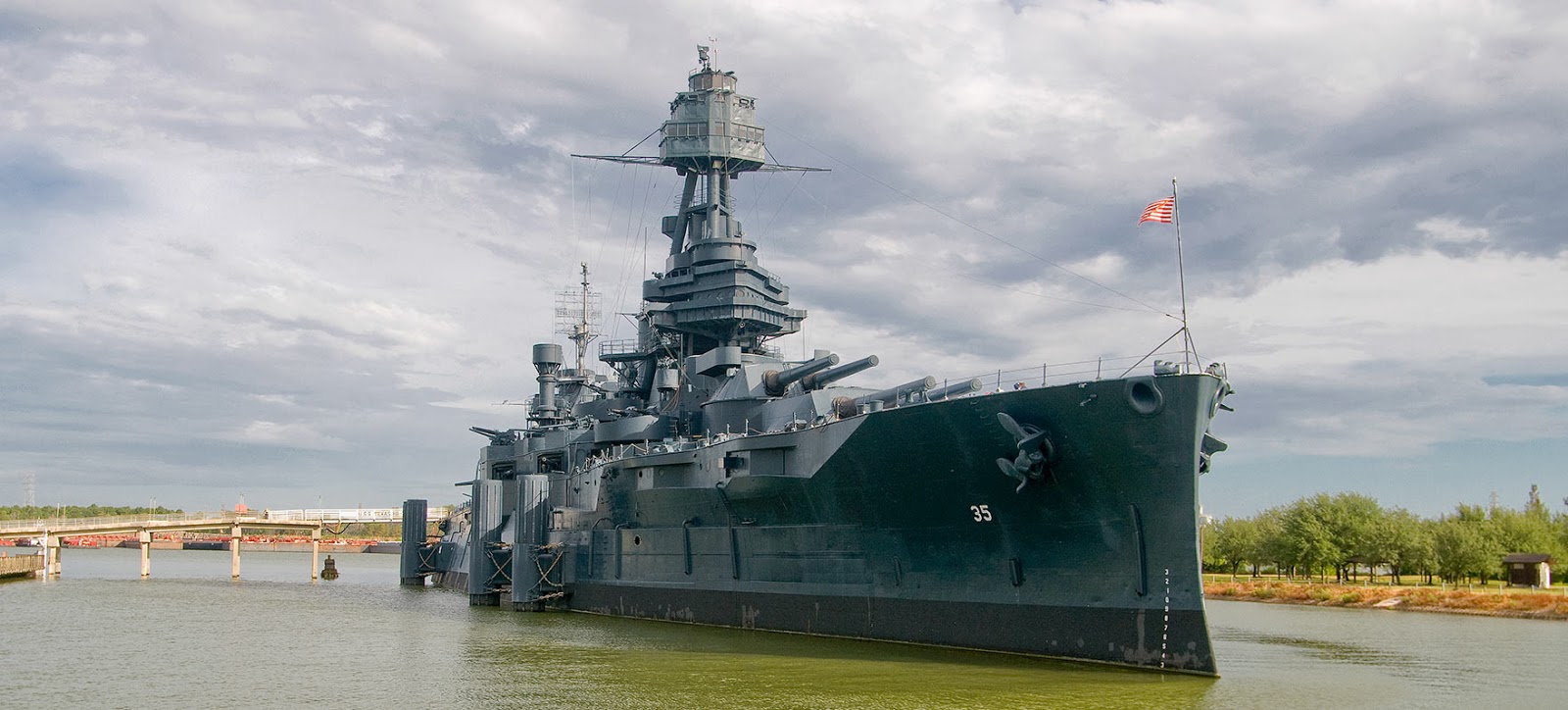
The USS Texas BB-35 is the second of the two New York class battleships; commissioned in 1914, she was a WWI dreadnought era battleship. The USS Texas saw extensive service during WWII firstly escorting convoys in the Atlantic and later in the Pacific theatre of war.

The battleship provided in North Africa and the Normandy D-day landings in the European theatre before transference to the Pacific theatre providing naval gunfire support for the Iwo Jima and Okinawa marine landings. This ship had a large crew with 1042 crew and officers, I was surprised at the number of crew but need to keep in mind this battleship saw action in WWI so was already outdated by the start of WWII.

Placed in naval reserve in 1946, the USS Texas was decommissioned and struck from the naval register in 1948; now residing in San Jacinto, Houston, Texas as a museum ship open to the public. So this battleship did not last long after the second world war, they had plenty of ships with the four Iowa class battleships still in service so there was no shortage of options.

On my next trip to the United States, I hope to be touring through Texas and will be sure to visiting this floating WWII museum. I have never been to Texas before, I never had the chance on my last trip so I am really looking forward to climbing all over this naval museum, it is an old battleship, it not an Iowa class but I don’t think I will care.

Blackwood Bar & Grill – Mandaluyong

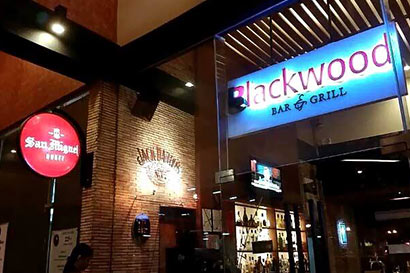
I was headed out to dinner in Mandaluyong, an city within the greater Manila area on the north side of the Pasig River. I wandered into the Blackwood Bar & Grill and immediately found out this was a bar targeting expats as their clientele – their prices notified me in no uncertain terms. I just didn’t feel comfortable in this bar, I just didn’t like it but needed to hang around a while.

Still, I was waiting to meet friends for dinner and and had to hang around for a couple of gin and tonic. I quickly noticed the service wasn’t up to the standard of the decor. Maybe because I was an interloper in their area, I wasn’t taken seriously – I was just ignored. This is apparently a bar where local expats meet for a Sunday afternoon drink, this was early Saturday evening and I just wasn’t feeling the love. Regardless, if I wanted a refill I had to chase them down, paying the bill seemed to be an almost impossible request – who would have thought?

Building the learning organisation

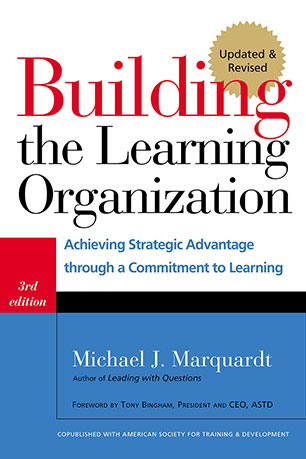
Having just racked up 10 years employed as a lecturer at a vocational college, I have a fair knowledge of traditional classroom delivery. The next step becoming more employable outside of the college system is to create the conditions to build a learning organisation within our faculty. That isn’t going to be easy as I come up against resistance at every level – this is a fight to the death.

With this in mind, I reckon that is what I was already doing so I wanted to validate the process I was undertaking so my personal assignment over the Christmas holidays was to work my way through this book. That wasn’t an outstanding success as it was mid-way through February and I still hadn’t completed the book. However, in my defense, I have not only been taking notes but I have been writing up key concepts and approaches on my computer. In order to really embed the principles expelled in the publication, I really need to do more than just read a book from cover to cover and place it back on the bookshelf and forget about it. Now it is time to embed the principles in a reluctant organisation.

2013 Hay Shed Hill Cabernet Sauvignon revisited

I purchased a bottle of 2013 Hay Shed Hill cabernet sauvignon and was must admit I was fairly disappointed. While I am very supportive of this winemaker after having purchased numerous vintages over the years, I thought the 2013 was lacking.

I have visited the vineyard down at Margaret River and loved the soft smooth notes of the pitchfork cabernet sauvignon range. I was particularly impressed with the 2012 cabernet sauvignon, I suppose I expected a degree of consistency I had not found in the 2013 vintage. Were my expectations too high? Had I opened this bottle of wine too early so that it had not developed as hoped? But as I had so many great experiences from Hay Shed Hill, I knew this was probably me on a bad day so I needed to revisit the 2013 cabernet sauvignon to be sure.

I found the 2013 to hold none of the virtues of the complex yet smooth 2012 vintage. I found this vintage to be fairly nondescript and lacking the complexity of this range – that was unexpected. I do ask myself, was this just me? Was I just being overly sensitive? Were my expectations too high as I have come to expect a certain standard from a high quality wine producer? What I do know is this won’t stop me drinking Hay Shed Hill cabernet sauvignon, I have had too many great experiences over the years to sook too long. As it turned out, I liked the next bottle of 2013, maybe I was just having a bad day.

The café Americano

I have never much like the watery rubbish that is the café Americano, the growth of American style coffee houses has seen my choices of good black coffee somewhat limited. The café Americano is a style of coffee prepared by brewing a standard espresso shot then adding hot water to the espresso shot allowing a similar strength but somewhat different flavor to drip brewed coffee.

A popular belief that the café Americano origins were born during the second world war when American Soldiers stationed in Italy diluted Italian espresso shots with hot water to brew a coffee to that they were accustomed too. I was once in a pretty good cafe down in Fremantle and I overheard an American tourist explaining to his friends that the United States has the world’s best coffee in Seattle coffee chains – I nearly fell over at the thought of that horrible watery rubbish.

The Coffee Bean and Tea Leaf – Philippines

My favourite coffee haunt when visiting the Philippines is the Coffee Bean and Tea Leaf in the Greenbelt 5 shopping complex in the business district of Makati in greater Manila. What I like about the Coffee Bean and Tea Leaf is they serve their coffee in proper cups, not those disposable paper cups of other chains – let’s get serious here.

This is a great hang, I can set up with my laptop computer and reference book and work from there for hours at a time. There is plenty of activity, but that doesn’t seem to distract me and the double espresso they have on offer is some of the best coffee on offer from the large coffee chains. I wrote up assignments, read from text books, checked online sources, read academic papers and collaborated with online groups and team members, this was a great place to study and I enjoyed every minute.