The PADI Master Instructor

Back in the mid to late 90s I was on a live-a-board dive boat from Marmaris to Fetheye on the southern coast of Turkey. I was backpacking and eventually heading through to the Red Sea to do some technical diving there. As such, I carried my IANTD Technical Nitrox certification card with me so I could prove my credentials for my expected technical diving activities. I learned that day, only offer up the minimum certification to PADI Instructors with a superiority complex. 

The dive leader, Murat, a PADI Master Instructor immediately mocked my c-card at check-in and proceeded to grab my logbook and flicked through it. He found a 60 metre dive in it and loudly proceeded to tell everyone how irresponsible I was, how I need lights a such a depth and my profile was not correct anyway.

I explained that the particular dive he was viewing was a square profile with air as the bottom mix, EAN36 as the travel mix and EAN80 as the deco mix – it was an accelerated deco. He then proceed to tell the open water dive students that such a dive was not possible and my log book was false. I explained how accelerated decompression works shortening decompression requirements. His equally clueless divemaster agreed with him and they both thought it was bullshit and continued to ridicule me for the whole week in front of the entry-level dive students.

It was then I learned he and his divemaster knew nothing about nitrox, I actually had higher dive credentials than our dive leader and he was feeling a little insecure – he wasn’t nitrox certified as a PADI Master Instructor. Not that was really an issue with me as nitrox was relatively new then and unlike now, not many people were certified. This was unfortunate as I normally only carry my PADI Advanced Open Water c-card for identification

I only had my highest level certification with me as this was prior to the days of internet and online checks and I intended to do some deep technical dives at the Blue Hole in Dahab. The first dive was a check dive with Murat, what this turned out to be was a scuba review where we descended to a shallow depth, knelt on the bottom and then had to run through the basic scuba skills taught on the entry level course and then surfaced.

Upon surfacing, I complained to Murat that this was not a dive, I paid for a ten dive package at two dives per day over five days. After a heated argument, he relented and agreed this short descent to five metres did not constitute a dive and would not be counted towards my ten dives. He did not keep his word and did indeed count this as one of my ten dive package.

As there were only three certified divers on board, we dived together with the divemaster as the guide. I quickly learned why the divemaster questioned and then berated my diving experience – his skills were lousy. He couldn’t navigate, he had no knowledge of the local marine life, possessed terrible buoyancy and went through air at an alarming rate.

During the week of diving, I never returned to the surface with less than 100 bar in my cylinder, we always had to swim back on the surface as we could never find the boat the profiles were slipshod. We never found the features underwater that were explained in the briefing (he could do that ok) that were marked on the underwater charts.

We would be told we would go to a feature such as a cavern during the briefing, what would really happen was we would swim around for the whole dive looking for the cavern, wreck or reef. He would then get low on air, we would ascend and then swim back to the boat on the surface. The final dive of the week was a dive together with the newly certified open water divers as a group. I already knew Murat was authoritarian to feed his ego and cover his insecurities. I soon learned why he was so dismissive of me.

His ability to talk a good dive on the surface was not matched by his ability to execute the skills underwater. So I learned that while he was quick to tell everybody a PADI Master Instructor was the top level of instructor, I learned that this was really a purchased level awarded by course attendance. So what did I learn? As a backpacker, I carried the minimum amount of gear with me then and still do today. But come on, how much weight and room would my PADI Advanced Open Water certification card taken up?

Now, I only give the minimum certification requirement, don’t have a logbook and certainly never list my deepest dive on the paperwork or correct number of dives, I generally only list 100 dives. Now that technical diving is relatively mainstream, it isn’t seen as mysterious as it once was. I have never made that mistake again.
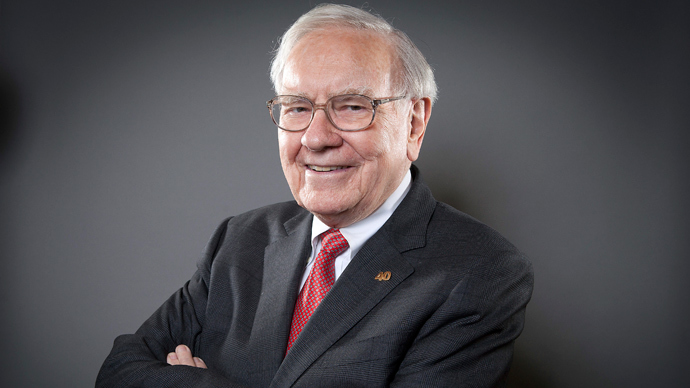
Warren Buffett – the master of value investing

Warren Buffett, the world’s most successful investor known as the Oracle of Ohaha is first and foremost a value investor. Learning from the master of value investing, Benjamin Graham of Colombia University, Buffett is the world’s most famous investor through investment vehicle Berkshire Hathaway Inc. 

Value investing generally involves purchasing equity securities appearing to be under-priced by fundamental analysis. Such securities are usually shares in public companies trading at discounts to tangible book value, holding high dividend yields with low price-to-earnings multiples. Naturally, a working knowledge of corporate finance is essential; the time to research the market and the tools to undertake such analysis.

Whilst value investing is a long term strategy, some criticism has arisen, especially in the form of growth stocks. Over the years, Buffett has apologised to investors for poor returns especially in bull markets when he has appeared to miss the boat; he has been venerated after the dot.com tech wreck and the sub-prime crisis that have all but wiped out the herd mentality of the bull market. 

Viber – a pretty reasonable messaging app

Viber, the free video app for mobile phones is really popular in the Philippines; forget Skype, Viber is the program of choice over there. I see telephone, email and Viber details listed for every business, every taxi has a Viber number, even the infamous Philippines jeepney has their Viber details advertised on the side of their vehicle.

I only became aware of Viber through friends living in South-East Asia; the app hasn’t really taken off in Australia, not to the same extent as many of the SE-Asian countries. Gone forever are the days of the outrageous phone bills for calling overseas, pretty soon I will be able to get rid of my landline and all of the associated costs. While you still need an operational mobile phone for Viber to work, you are not burning up precious call time with expensive overseas calls – great.

However, like anything there is a downside as you could be burning up mobile download data on your phone, this is why I choose to log onto the work WiFi network and make my calls from there. This is a really good program I can easily download to my tablet or mobile phone that always seems to work. The new programs that you download onto your phone are now pretty decent, I like some of these programs and are happy to pay for them, this is good programming.

Grab Taxi – a rival to Uber

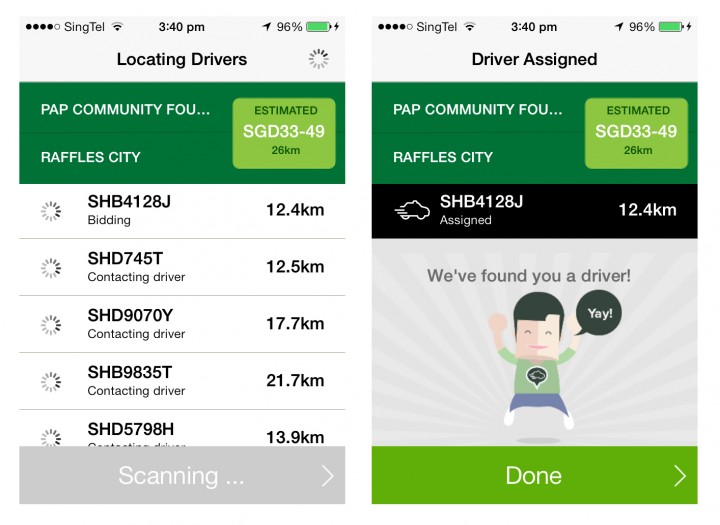
I am no fan of the ride sharing app Uber, so when I came across the mobile app for hailing a taxi on a trip to the Philippines, I was immediately interested. Grab Taxi is app allowing smartphones in taxis to be utilised to dispatch drivers utilising an app that directly messages drivers in the field. The business model revolves around Grab Taxi receiving a booking fee of 40 peso for every accepted fare, the consumer and not the taxi driver accepts the fee. That is a fair fee to ensure you get to your destination.

The drivers then decide if they wish to accept the fare booking, now this in itself isn’t too different from the general taxi dispatch model where the centralised managing model handles bookings for a fee. The difference is, the taxi industry is dominated by an owner driver model who is effectively working for themselves in a micro-business, the taxi dispatch board is acting more like an employer instead of the actual role they play – they work for the drivers.

The idea came from Harvard educated Anthony Tan who was inspired by a friend in Malaysia unsuccessfully attempting to hail a cab one evening. His international experiences in a region building business disruptive models with technology no doubt shaped his thinking to build such an app.
So how well does it work? My Philippines trip taught me that hailing a cab in peak periods is difficult, the ability to set your pick-up point and destination is critical to picking up a ride. Manila taxi drivers are notorious for attempting to scam passengers during high demand periods by turning meters off, attempting to extort outrageous fare prices and driving around in circles or taking the long route – especially for foreigners. 

Then there is the infamous Manila traffic to contend with, during such periods, drivers refuse your fares, turn the meter off, skip taxi ranks and engage in practices bringing the industry into disrepute – this app may break the monopoly of the current taxi model. After you reach your destination, Grab Taxi sends you an email with a record of the transaction, you are invited to report any impropriety so the driver now is on notice – no more shady dealings and everyone wins.

The Cosmopolitan

The Cosmopolitan cocktail reemerged in the 1990s as a preeminent cocktail after the popular television series Sex and the City regularly screened bar scenes with the four women clutching a cocktail glass filled with cosmo.

Searching to find a history of the cocktail, I have read that a marketing firm representing Ocean Spray in 1968 sought a vehicle to introduce cranberry juice to adult drinkers. There is no better way to make a juice popular than to mix a unique alcoholic blend of vodka and lime juice with it, apparently the recipe was even printed on the carton.

The drink apparently became popular by John Caine in San Francisco in the early 1970s before working its way across to New York and was then made popular by Toby Cecchini at The Odeon in Manhattan. Several other potential origins exist with Florida bartender Cherly Cook receiving a mention or Neal Murray from the Cork & Cleaver Steakhouse in Minneapolis a possible candidate or Provincetown in Massachusetts a possibility.

A fairly standard Cosmopolitan mix has changed a little from the original and consists of 2 shots (60 ml) of vodka, 1 shot (30 ml) of Triple Sec although I have seen Cointreau used, 1 teaspoon lime juice, 1/2 a cup (125 ml) of cranberry juice and shaken with course crushed ice. Even though the drink has lost some of its luster since the gay community of San Francisco embraced the drink in the early 1970s and Madonna was regularity seen out in the early 1980s in New York with glass in hand. I am happy for the odd glass as long as the drink comprises maintains a darker cranberry juice blend.

The Wall Street Journal online

The Wall Street Journal is an excellent financial newspaper, once upon a time I was limited to reading this or The Asian Wall Street Journal only when I was overseas. These days it is possible to read online and I also pick up a newsprint copy when flying Singapore Airlines or through good local newsagents. My Facebook newsfeed is linked to the WSJ headlines so I now get my daily financial fix.

Naturally, you need an interest in business and it helps if you are trading or investing in shares, bonds, commodities or forex. For me, I predominantly directly invest in the ASX through my self-managed superannuation fund. My government sponsored superannuation fund has about 30% invested in international shares and around 25% in Australian shares, 10% in government bonds, 10% in property, 6% in private equity, 5% in infrastructure, 5% in diversified fixed interest, 5% in alternatives and 4% in cash. I switch funds around as required and the WSJ keeps me informed of international dealings.

So while The Wall Street Journal has, as expected, an American focus, the very issues affecting my investments are global issues that radiate from the goings on at Wall Street. The Europeans, the Asian financial centres of Hong Kong, Singapore and Shanghai and middle eastern finance brokers are attempting to shift the focus away from American influence. I see Wall Street financiers not willing to surrender their market dominance without a fight. The Wall Street Journal will be the leading financial news service for some time yet.

The Pennsylvania class battleship

The Pennsylvania class battleship succeeded the Nevada class battleships. Built in the period prior to WW I, the Pennsylvania class was a super dreadnought battleship; the second of the dreadnought design of the United States navy after the Nevada class battleships.

Commissioned in 1916, this WW I class of battleship was looking fairly dated prior to the start of WW II and saw limited service in WW I. The New Mexico class, the Tennessee class, Colorado class, North Carolina class, South Dakota class and finally the Iowa class succeeded the Pennsylvania class battleship. This is an amazing fleet despite the fact that the battleship was considered obsolete at the beginning of the war, the aircraft carrier was the emerging technology although shore bombardment was a key requirement of the Pacific war.

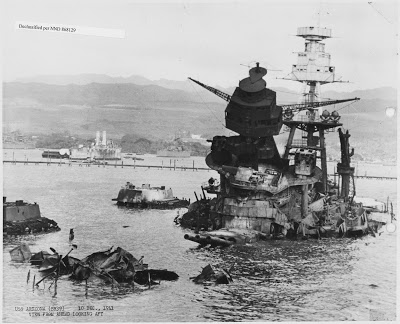
Two ships of this class were constructed, the USS Arizona BB-39, possibly the most famous of all US battleships was sunk during the surprise attack on Pearl Harbor by Japanese forces beginning the Pacific phase of the second world war. The USS Pennsylvania was in dry dock at the time of the attack and sustained relatively minor damage, the USS Arizona is now a memorial at Pearl Harbor.

Armed with 12 x 14″ main guns mounted on 4 turrets, 22 x 5″ secondary guns, 4 x 3″ anti-aircraft guns and 2 x 21″ torpedo tubes, the Pennsylvania class battleship was an significant improvement on the Nevada class armament but was ultimately an outdated battleship seeing service in the second world war involved in shore bombardment. After the war ended, the USS Pennsylvania BB-38 was involved in the atomic tests at Bikini Atoll and later sunk as target practice in 1948.  

Tap and go

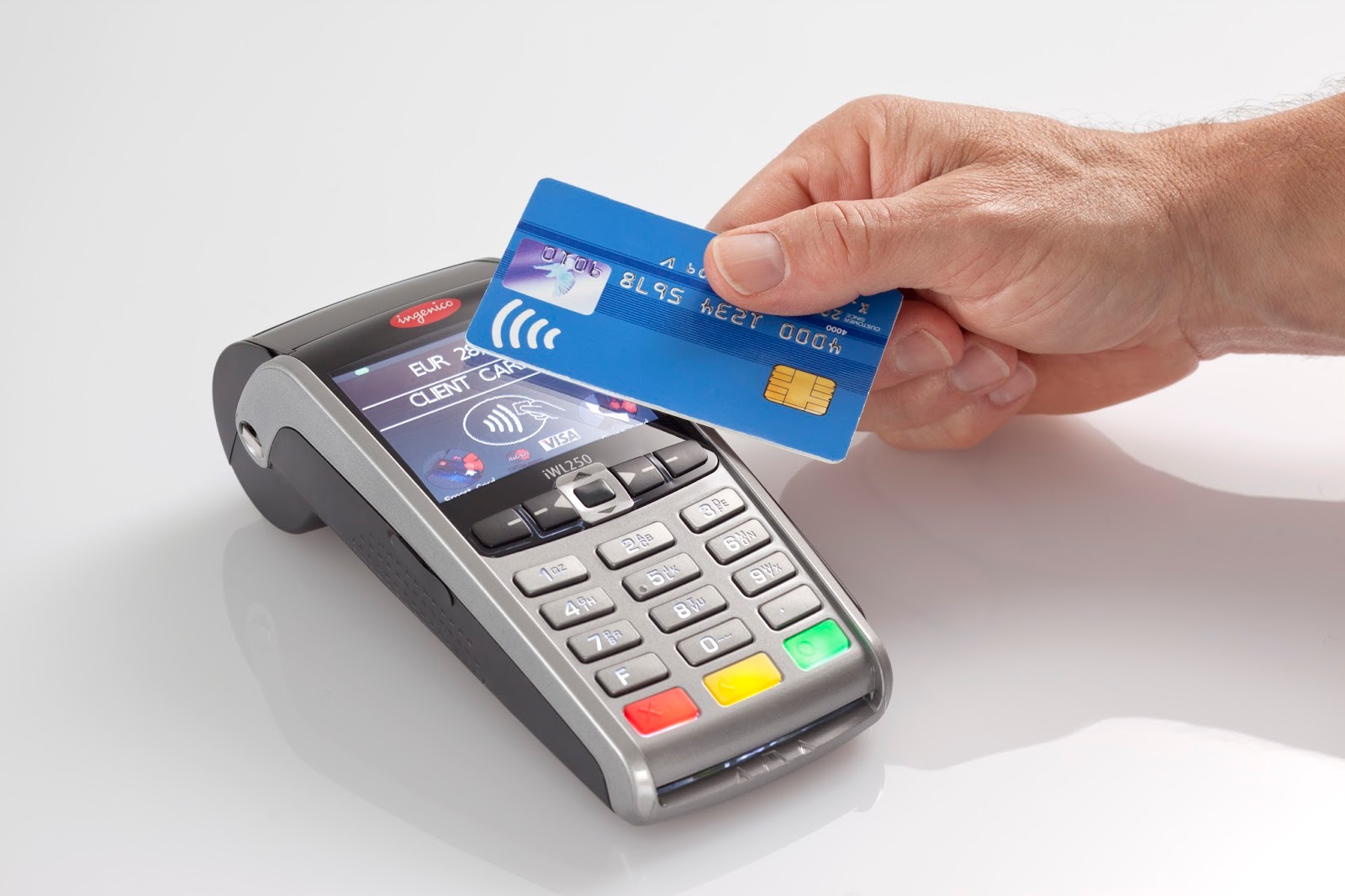
The tap and go feature on the current crop of credit cards is more than concerning, this lack of security to increase convenience is just madness. I tried to turn this feature off, I couldn’t and that really annoyed me, I am on the hook if I lose me card and it is used fraudulently.  

Credit cards previously had PIN security and signature security that the vendor was required to check, none of that now exists. If someone physically has control of your card, they are able to run up multiple bills on your account to the value of $100 each transaction unabated – the cardholder can be liable. You can’t even opt out, there is no choices, the card has tap and go for convenience – security is not an issue anymore. Let’s face it, the banks are not making a loss – they are back charging the consumer. 

To recline or not to recline?

Many a battle has been fought over airline seats but I can’t see the issue, the seats are designed to recline so people can recline if they wish. Naturally, you can’t recline on take-off and landing for safety reasons and food service for space requirements, any other time you are free to recline your seat.

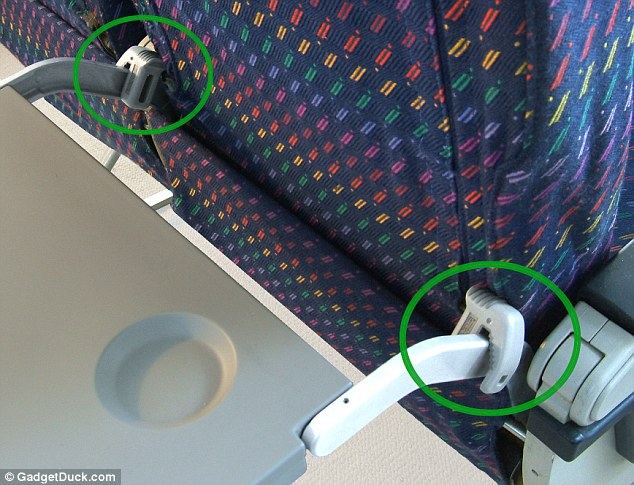
Some certain etiquette is required, do so slowly so if a person has a computer set up has a chance to move without damaging the screen. That etiquette also applies to the person behind, there is no need to carry on like a fool, get over it. What would annoy me is if a person attached those locks to a seat preventing me from reclining, this arrogance will induce a response that is sure to end in a fight.

These locks should be banned and the person charged with an offence of bringing a banned substance or item aboard a flight. If seats are designed to recline and the situation allows then a passenger is within their rights to recline, obviously take-off, landing and food service are the times a straight seat are required – all other times are open to recline.

From boom to bust – what happened?

It has been argued baby boomers received free education, lived through the age of free love, found employment easily and then there was the pill to supplement their life of free love. Sounds pretty good – I guess it was.

What did Gen X grow up with? Well, they learnt all about AIDS at school so free love was pretty much out. Jobs dried up in the 80s with the recession of 82/83 and the resulting aftermath that lasted for years. Then the recession of 90/91 further killed the jobs market just when Gen X were starting to find their feet. But all is not bad, that was the last recession Australia endured, sure there have been slowdowns but no official recession.

Want to head to university to increase your employability? A nice HECS debt influenced such a decision; yep, you paid for it as free university education was now a distant memory. Thinking of buying a house as a young person in the late 80s and early 90s; interest rates around the 17% – 18% mark certainly put a downer on such thoughts. Then when Gen X got established in their careers, the GFC came along and there goes any chance of keeping their employment – hard call.

The first of the Gen Xers are hitting 50, still too young to retire, yes they have had some of the benefits of superannuation. That started at 3% and only if your company could afford it. Likewise, when the rate moved to 6%, the unlucky ones started on 3% and when they moved to 9% the unlucky ones moved to 6% and waited another cycle before they finally received the full 9% benefit.

The baby boomers could get their hands on their superannuation at age 55, that has changed with anyone born after 1963, yeah, the baby boomers have more generous contribution rates too – gotta love it. So when the Gen Xers get to 60, that is still a decade away for first of the crowd, the transition to retirement scheme will have gone, the contributions rules have changed and they can’t dump large amounts of into their retirement accounts as they are now capped.

Wait for the age pension? That was 65 but the Gen Xers have to keep working, it is already 67 before they can get any money from a lifetime of taxes and will more than likely be age 70 by the time they get there. The new superannuation rules will prevent many Gen X enjoying that comfortable retirement as the defined benefits scheme was unavailable to most Gen Xers as that was phased out before many could get to those positions.

The defined benefits scheme is pretty much the domain of the Baby Boomers unless a Gen X was lucky enough to score that cruisy government job early in life. The defined benefits scheme will pay out 75% of their final salary until they die but these funds have be unavailable for years as they were too generous.

Most Gen Xers have an accumulation fund that is funded by employer contributions that isn’t going to cover their retirement. But hang on, this isn’t free money – this was the pay rise you never got to see. You forfeited the immediate pay rise and that was paid into superannuation on your behalf. When Gen X finally gets to benefit from that contribution, the taxation rules change and their retirements are not going to be anything like they expected.

The real benefits for Gen X was they were kids in the 1970s and teenagers in the 1980s, despite some of the problems associated with the 70s and 80s the kids played outside until dark, we had plenty of bush to run around in and sport was played everyday. Yes, we were the first generation to learn technology but as far as I recall nobody stayed inside playing video games, you ran around outside and had fun. Sure we are getting screwed with retirement benefits and in the workplace but we are going to enjoy life despite the inconveniences.