A quarter of a decade recession free

Australia just recorded a pretty substantial event, we have just completed twenty five years recession free. During the last quarter of a century, as a country we have navigated through financial meltdowns, commodity price downturns, the tech crash and the Asian currency crisis.

Until recently, we had low federal debt and posted budget surpluses; that was crushed with a change in government and change in policy but we have limped out of that phase and won’t see a budget surplus again until sometime after 2020. The state governments have been investing heavily in infrastructure projects with individual state debt ballooning. Noticeably, personal debt is soaring with indebtedness growing, the ability to circumnavigate further economic shocks is severely compromised.

We have had challenges along the way, we are currently experiencing an economic slowdown of sorts. The mining boom that sustained the country through the financial crisis of 2008-2009 is over, the construction boom has now transformed into the production phase where less manpower is required. The capital expenditure peaked in 2013, mining companies have deleveraged despite extensive capex programs although explorations programs being shelved.

Mining these days is a very automated industry, the iron ore mines are equipment intensive relying on computerised processes. Coal production is lower, base metals are experienced reduced demand although gold as a precious metal remains high. The workforce is transforming, higher skill-sets are required with lower staffing levels at mining operations now ensuring viability to remain competitive.

The service industries are recovering, tourism is steady and residential housing is motoring along. Some would argue the residential housing market is depressed. The financials of residential property aren’t great, there has been so much speculation during the boom years driving median property prices to outrageous levels that capital city markets remain overpriced and exposed to financial shocks.

The Reserve Bank of Australia has dropped interest rates to record lows, the currency has devalued with commodity prices acting as a tool to enhance exporters; likewise, imports have become more expensive with a cost to the economy. The reduction of tariffs agreed to in numerous free-trade agreements have lowered the cost of imports whilst assisting export markets.

The fundamentals of the economy are changing, non-viable industries are closing and being shipped off-shore. Unskilled jobs are being moving off-shore along with low margin industries, the knowledge economy we hear so much has yet to transform the general economy – innovation is still some way off.

The economy is currently expanding through population growth, the principles that allowed the nation to record 25 years without a recession have been forgotten and I fear the lessons of astute management are being replaced with misguided notions of invincibility and complacency. The residential property market has grown almost to the point of defying economic principles and our once dominant financial institutions are exposed. The country faces limited capital through savings, the remainder is sourced internationally. The skewing of scarce capital from essential infrastructure projects to residential property, an asset class not earning currency inflows is the greatest concern.

The New York Times online

The information age has allowed us to gain access to top notch newspapers that the average punter previously never had the opportunity to read, The New York Times is one such newspaper. I began reading the newspaper after a short two-week trip to New York in 2001; the internet has allowed me to access this excellent newspaper where ever I am in the world.

The editorial quality is top notch even when the information age has destroyed the revenues of the majority of newsprint bound papers. Yes, newsprint will be around for a while yet for quality investigate journalism but breaking news will be delivered online through various mediums. The art of journalism is on the wane; less and less journalists are employed full time instead opting for consulting positions and deriving income through blogging based on their reputation.

The New York Times has maintained its quality and actually increased its readership through online means with free online content up to a set number of articles over a given time frame. Naturally the online content has a subscriber base with the limited free articles allowing interest parties to view their content. As the internet matures, more and more content will be offered on a subscription only basis – until then I am enjoying their content.

Slut shaming – come on, get real

Firstly, I really disagree with this term as it is frivolous, derogatory and straight out bullying behaviour. An article in Singapore’s The Straights Times identified predatory behaviour by a Uber driver tasked with picking up a passenger from Clarke Quay after a night out with friends.

The driver bragged of drinking alcohol, he wanted to take her to a private house party and then refused to let the young female passenger out of the vehicle until she handed him her phone number. She reported the incident to both Uber and The Straights Times where her story appeared on their Facebook newsfeed. This report should have made readers aware of problems with predatory Uber drivers seeking to take advantage of vulnerable young people; instead the reaction from readers was anything but concern.

Firstly readers correctly identified the vehicle in the background was not a Singaporean vehicle and was not at Clarke Quay. To their credit, The Straights Times immediately responded and informed readers Ms Nicole Lee (23) supplied the photograph herself and it had been taken whilst she was in Thailand – good stuff.

What was concerning was the majority of the comments were asking about her hair colour, her clothes, why she was out at 4:15 am, the fact that she was drinking and why she was alone? A number of people commented that “she looks like a slut” or “she deserved it” and numerous similar comments.

These comments were made by both men and women – absolutely disgraceful behaviour. What we have here is a young woman who was harassed by a Uber driver who then had the courage to speak out to warn people and was needlessly targeted and set upon by sad and pathetic people.

I don’t know this woman personally but my life experiences tell me these irresponsible comments reflect the sad inadequacies of their personal lives – not hers. She can wear what she wants, Clarke Quay isn’t an area of ill repute and as an adult, she can stay out as late as she wants and she doesn’t deserve such blatant hypocrisy. I would severely doubt she is anything like these pathetic comments state – people need to grow up.

The sailing life

Hanging around yacht clubs you generally come across two groups of people, sailors who like cruising and sailors who like racing, I fall into the later group. Racing can then be broken into dingy racing and cruisers, I began in performance dingies before moving onto the larger cruisers. Racing cruisers can be identified as onshore racing and offshore racing; I fall into the onshore racing category but would love to graduate into offshore racing, that however is a time luxury I can not afford at the moment.

I was formerly a member of a sailing club before graduating onto a yacht club, I loved racing performance dingies as a young guy but as I move into my late fourties approaching fifty years of age, I need to rethink dingy sailing. The advantage of the bigger boats is you don’t need to work so hard, you are not hanging over the side by toestraps or providing counterbalance by hanging from a trapeze wire.

This is balanced by the need to sometimes scale the mast of the larger boat suspended by a bosun’s seat to retrieve a halyard or free a jammed block. I do like sailing cruisers, it is unlikely I would be  going back to dingies, but it is not entirely out of the question. I wouldn’t swap the sailing life; you need to work hard, save well, spend your spare cash well and enjoy you leisure time – I wouldn’t swap my sailing life.

My operations management debarcle

Well, I really blew operations management, this was the first time I have ever failed an assignment and I’m not happy. I had to work away on a remote gold mine during an assignment period, that is bad enough normally as I was in for breakfast at 4:15 in the morning and returning home at 7:30 in the evening, the days were long and I was tired. It wasn’t for that long though, it’s what happened next that hurt. It\’s starting to sound like excuses now as plenty of people work long hours and are still able to pass.

During my stint away I developed a kidney stone, this is never great at the best of times but when in a remote area and faced with a two hour drive to the nearest medical facility, the ride can be somewhat uncomfortable. After receiving some morphine and anti-inflamatories to settle the fun down, the 90 minute ambulance ride to the regional hospital was somewhat more relaxed. Further compounding my woes, my employer just left me up there and told me to find my own way back at my expense – very poor form.

But this is where it got tricky, it took a month to work out exactly what was wrong with me and to organise surgery – that’s way too long. Naturally I was juiced up the whole time and in some pretty interesting pain, a couple of trips down to the emergency department yielded no benefits as they believed I was imagining the problem – absolutely useless. Now during this period of blockage to my left kidney, my eGFR was measured at 47, that’s equal to stage 3A chronic kidney disease. If you drop to 44 then you are at 3B – that isn’t good.

I had to keep working during this period and when I wasn’t at work I was down the doctor, medical centre or hospital getting scans. I would bring my text book, readings and tablet or laptop with me and study whilst sitting in the waiting room or hospital bed. This was not quality study time and I missed going online and missed many of the presentation recommendations as required by the lecturer, he really savaged my assignment – but no excuses.

After the surgery I headed off overseas a week later while the second assignment was planned. This involved group work and I am afraid I didn’t contribute to the team as well as what I should have. Regardless, I feel the group made a reasonable presentation and I hope the marks from the second assignment will compensate for the poor marks from the first disaster.

I feel bad for not contributing to the standard I normally I expect of myself yet I shouldn’t as I have carried a number of people during group work in the past, maybe it was time to bank some interest. The group assignment scored a high distinction and my combined scores allowed me to pass the unit with a 67% mark, better than I expected even if I had hoped for a distinction.

I am from an operations background, this unit should have been easy for me, instead I struggled and my confidence was severely dented. This is not the outcome I was expecting and I really didn’t pull my weight during the team phase, finding out I now have chronic kidney disease certainly didn’t inspire me in the short term either – just a waste of time and money really. But time to put this past me and move on to the next unit with hopefully a better result.

Taipei – well maybe

As a Asian traveler, I really need to visit the major centres of the region at least once in my life, so Taipei needs to be placed on the list. I hadn’t thought much about Taipei until friends of mine were considering moving there to live for a number of years, they have visited a number of times and really liked the place.

So what did I know about Taipei? Not much really, I knew this was an ultra modern city equipped with a pretty formidable navy, this tiny nation wasn’t going to take any backchat from China despite kind of being of Chinese origin. As a child and later as a teenager, we learned pretty quickly Taiwan was a manufacturer of all things cheap and nasty. So much to my embarrassment, I will have to plan a Taiwan trip with a distinct lack of knowledge, I hope to know a little about the country after spending a little time there.

Leeuwin Estate 2013 sauvignon blanc

The Leeuwin Estate 2013 Art Series sauvignon blanc is an exceptional but pricey sav blanc, the tasting notes describe this outstanding example holding floral notes of jasmine and citrus blossom – that I detect. They go a little further citing lemon flesh, lime zest pink lady apples and blackcurrent – I’m struggling now. What I do get is a complex sav blanc that is one third matured in second hand barrels that doesn’t detract from the fruit driven nature of this wine. 

So the tasting notes tell me the palate is tight and fine with generous persistence; tahitian lime, lemon curd, white nectarine and black pastilles combine together and are driven by a sparkling acid line. Furthermore, the delicate creaminess tand spice is threaded throughout the mid palate,offering depth, texture and length. Whoa, I know the professionals are at work but the question is, does a hack like me wish to part with the $30 for a sauvignon blanc when the trend is towards semillon and riesling or cheaper the pinot gris and classic white blends?

Who uses dive tables anymore?

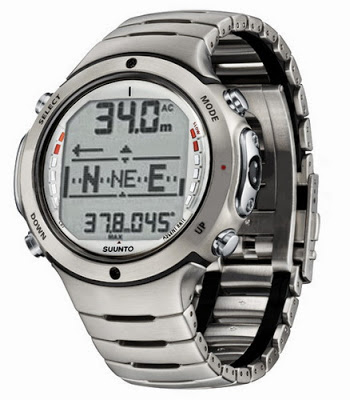
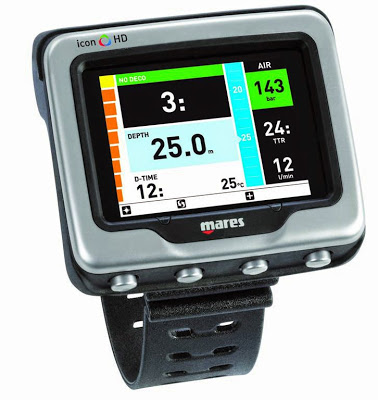
After reading numerous articles defending dive tables, I ask frequently myself “who really dives with tables anymore?” Once upon a time I dived with tables; I then learned that the feature rich dive computers are reasonably priced as opposed to what they were 20 years ago, I can now plan all types of dives on computers.

We all had to teach tables during entry-level courses; the majority of instructors knew they were just promoting the dive tables of the certification agency; then went and then went and dived with computers anyway. Dive centres want to sell dive computers, there is money in selling computers, the public wants to purchase dive computers but the dive certification agencies have promoted their dive tables so they don’t miss out on this income stream. After all, there would be no dive computer sales if there was no demand. Dive computers work, dive computers tend to be more conservative than tables, monitor surface interval time, calculate repetitive dive times and monitor ascent rates – they do everything you need for effective dive planning.

Dive computers represent the latest technology combined with latest thinking in decompression theory and application. In the modern world, people are connected 24/7 via their personal technology; they carry around smartphones, tablets and electronic organisers – you can plan dives on your smartphone app and upload the dive plan to your dive computer via Bluetooth. These devices are also connected via cloud technology and upgraded frequently.

When were dive tables developed? The US Navy tables were developed in the late 1930s, upgrades in the mid 50s with further modifications in 1992. The PADI recreational dive planner was tested in the early 80s, BSAC tables were also developed in the late 80s, the IANTD tables were developed in the mid 90s and the upgraded NAUI RGBM tables were introduced in the early 2000s. The majority of tables were based on Haldane’s 1908 research, that were tested on goats and later included in-water testing; Haldane’s work provided the basis of decompression theory that is still used to this day.


Now the dive certification agencies have not developed dive computers, we know where their bias sits; they wish to promote their own product at the expense of modern methodology. With all their restrictions, who in their right mind dives with tables instead of a computer?

The end of Google Chrome?

My choice of internet browser is Google’s Chrome platform, I have downloaded it to every device I own, my work computer and every computer I use in the network. I read that Google is intending to eventually deactivate the Chrome network and implement the Android system for all systems – I hope not.

From a commercial viewpoint, I understand the financial realities of pursuing a separate operating system and internet browser but I hope this is only speculation as I am very much a Chrome convert. I find the browser has excellent functionality and I really enjoy the linking of Google services requiring only one log in, I just wish my employer linked their systems as I have multiple log-on for each program that expire frequently. This is less secure as you are frequently changing multiple passwords meaning they are written down where they can be accessed easily. I just hope these claims are exaggerated and they keep maintaining this platform for the indefinite future.

Are bonds worth the risk now?

The Reserve Bank of Australia cut interest rates to record lows in order to stimulate the economy, was this a wise decision? We are already burdened with a hot property market showing signs of overheating yet still defying financial gravity. Do we need to fuel further speculation?

Forget about retiring if you are considering living off the safety of cash, a number of my colleagues opted to convert their retirement savings from a balanced fund that included Australian shares, international shares, bonds, fixed interest, infrastructure, derivatives, venture capital and cash to 100% cash at the bottom of the cycle locking in losses. But what about bonds as a safe investment in turbulent times?

If you are able to subscribe and lock in a low coupon rate to a newly issued bond then you have a distinct advantage when the bond expires as you get your capital back and a return along the way. But as we are entering a sustained low growth period, equities are more risky and capital preservation is the key and bonds in such a low interest rate environment could well be a good investment.