Pre-paid credit cards

I have known of pre-paid mobile phones for some time now; the market for the pre-paid credit card is a new phenomenon. Well known companies like Coles, ING, Fujitsu, Mitre 10, Dulux or Hewlett Packard offer pre-paid credit cards for their customers – this appears to be a growth industry.

I initially wondered why such a product would be introduced when a charge card such as an American Express or Diners Club International is available. Firstly, Amex and Diners Club aren’t cheap, they charge a premium to issue a card. They are not accepted everywhere and vendors don’t like them due to the fees involved. Ok, so that rules them out as they are chasing the premium market.

The modern cashless society relies on online financial transactions and plenty of people have maxed out their credit cards as the banks are intent on raising limits at any opportunity. Now you can engage in online shopping as you have a credit card to purchase goods and services. Unfortunately, modern society requires immediate access to credit and many people have multiple credit cards with high credit limits – this is their financial downfall.

A pre-paid credit card is a brilliant idea, you have access to financial services like Mastercard and Visa without the ongoing costs of credit card debt. To me, this sounds like a debit card and not a credit card. Looking at the Coles pre-paid cards, I see it cost $5 to purchase the online and gift cards and is able to be loaded with $1000 of credit.

The re-loadable Coles Platinum Mastercard costs $10 to purchase and earns 1 Flybuy point (their rewards program) for every $2 spent; the card may be loaded with $1000 credit or on application be increased to $10,000 credit so you just lost your advantage of a pre-paid credit card and now have a standard credit card with a pretty high limit.

A diving internship

Hailing from a trade background, I believe in the apprenticeship system so I absolutely support internships in diving. Unlike an apprenticeship where the apprentice is paid to undertake on-the-job training; albeit paid proportionally to their output, an internship requires the commitment of paying the course fee yourself to gain on-the-job experience or alternately working for free. 

However, the longer the dive supervisor, dive controller or divemaster gains exposure to actual diving operations and the more diverse diving surroundings, the more an individual learns in a working diving environment. Working as a divemaster on a large charter boat, we had a number of instructors working with their class. It doesn’t take long to work out who has actual on-the-job working experience and who has just moved from one course to the next. 

The bulk of their diving experience is taken under the guise of dive courses with the occasional fun dive thrown in every now and again. This experience really shows when planning, leading and executing dive courses; even though students change on a regular basis, experienced instructors make the class run smoothly whilst instructors with little on-the-job experience struggle to lead structured outcomes.

The Omega Chronostop

I asked my father for his old broken Omega watch as he had previously taken it in for repairs and was informed it wasn’t worth the cost. A local Swiss watch repair shop had done some work for me before and came highly recommended and I was very happy with their service and prices.

I had mistakenly thought this was an old style Seamaster, the staff at All About Time informed me this was a vintage Chronostop and he described it as a real watch. For me, this is a mechanical watch that needs to be wound daily as opposed to the battery powered quartz watches or the automatic self winding timepieces. The serial numbers aligned to a 1967 – 1969 series watch; the Chronostop was manufactured between the years of 1966 to 1974 so I have an early model.

There were a number of variations with the original model being the Omega Seamaster Pilot Chronostop, the second version the Omega Chronostop Regatta added yacht timers with the third variation named the Seamaster Chronostop Jumbo Diver. A driving version was available to be worn on the inside of the wrist with the watch aligned with the wrist held vertical for quick glances whilst driving at speed. The later versions were introduced as the Speedmaster became unofficially named the moon watch in 1969.

Astronauts Neil Armstrong and Buzz Aldrin wore versions to the lunar surface. Thus, with the Speedmaster driving version somewhat compromised, the Chronostop slotted into the driver’s minds as the watch of choice. The Chronostop has two movements, the 865 and 920, both are manual wind and the 920 movement has a date function with both movements featuring 17 jewels.

The Chronostop has a single button to operate the stopwatch but there is no minute sub-dial so any stopwatch movements over a minute have to be counted manually. As with most luxury brands, there is an entry-level model and the Chronostop was the third line to the Seamaster and Speedmaster. I’m looking forward to getting this vintage watch repaired and giving it back to the old man as he is retired and we all know retirees have to be more frugal with money than working sons.

Booking.com – great hotel deals

When traveling overseas and domestically, the majority of tourists prefer to book online these days. Once upon a time, this was the domain of the travel agent, those days are numbered with the humble travel agent in decline.

A number of decent online booking sites exist, my preference is Booking.com as I prefer to deal with only one business and this site has been excellent. I prefer to not book too far ahead and instead wait for the last minute hotels to advertise on the site. You can pick up an excellent hotel deal on the day as hotels would rather offer rooms for highly discounted rates as opposed to a vacancy where no revenue is generated. 

On many occasions, patrons spend money in the hotel on services so this is an excellent business deal for all involved and I will continue to support this site. I receive no benefits from Booking.com, I am a paying customer and I don’t mind naming businesses that have treated me well – these guys have always provided flawless service. 

Is strategy dead?

Is strategy dead? The curriculum currently taught at business schools revolves around an internal and external analysis seeking to identify a sustainable competitive advantage – so far so good. Whilst many of the strategy textbooks are similar in nature, the underlying principles of strategy formulation revolve around vision, mission and values leading to external and internal assessments leading to Porter’s five generic strategies, strategy analysis, implementation and evaluation.

It may be argued traditional strategy is dead, it may also be argued that strategy evolved from military origins of setting objectives, collecting intelligence and making decisions based on the achievement of the stated objectives. Adaptive strategy revolves around a rapidly changing business environment requiring a less static approach to business based on fluid interpretation and rapid implementation. The downside is that this may be too reactive relying more on seat of the pants type business management that generally leads to failure. So no, strategy is definitely not dead.

An SSB or SBS?

I was at a bar in East Perth overlooking the waterfront development with the new sports stadium in the background on a warm summer afternoon after finishing work. I came straight from work so I was still in my cotton drill work clothes and steel capped work books but they were not worried as I was neat and tidy as i get out in the workshop but don’t actually do anything.

My friend who I was meeting wanted an SSB, that is a semillon sauvignon blanc blend and I mistakenly ordered an SBS, a sauvignon blanc semillon before quickly correcting myself to the barmaid ensuring I got her order right. The barmaid replied “they are both the same anyway” and I thought I had misheard what she had said.

The grape variety listed first is the predominant variety in this blended and highly popular wine, then you can be assured that this is the larger percentage and after a little searching I found that there is no real standard with some blends being as close as 55% – 45% right up to 70% – 30% blends. I enjoy a semillon as the variety is fairly dry as this is more to my preferred drinking style.

For many, a semillon is a little waxy as the variety has a reputation of being a little drab. A pure sauvignon blanc on the hand is a little too sickly for my tastes, but a splash of SB in a semillon can bring the drink to life offering a fuller taste for most palettes. I’m normally happy with an SSB on a warm summer’s evening if I am unable to find a semillon I like as long as the semillon is the dominant variety.

I do ask myself, did the barmaid think I didn’t know the difference or did she not know the difference? Regardless, a bar is an establishment serving alcohol and their staff should be conversant in what they serve to the public. I defiantly prefer a SSB over a SBS, these days a SB comes out of a tap, it is awful and only want a SB from a bottle.

Plenty of us know the difference in what we want, many people have discerning tastes, my friend certainly has and we shouldn’t be taken for fools. Then I thought, I was sitting at one of the best bars in Perth overlooking the waterfront development on a warm summer afternoon with a longtime friend – really, what’s the problem?

The last man on the moon

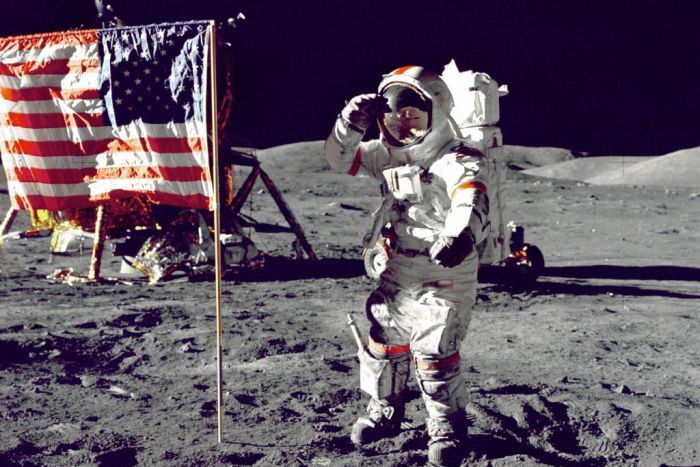
Eugene Cernan, the last man to walk on the moon has passed away at age 82, as a former naval aviator and aeronautical engineer, Cernan was a space pioneer with three missions to space in a thirteen year NASA career.

Cernan’s first mission to space was on Gemini 9 in 1966 with Thomas Stafford after the original crew were killed in a jet crash. As back-up crew, Cernan was the second American astronaut to undertake a spacewalk.

On a trip to NASA’s Kennedy Space Center Visitor Complex, I was lucky enough to view the Mercury and Gemini capsules and you would have to seriously respect these pilots from this era, this would not be a flying experience to forget. This was serious risk they were undertaking, these spacecraft would probably not meet today’s safety standards.

Launched on the 18th of May 1969, Thomas Stafford, John Young and Eugine Cernan orbited the moon on the Apollo 10 mission with Eugine Cernan acting as the Lunar Module Pilot. This was the trial run for Neil Armstrong and Buzz Aldrin’s first manned lunar landing on Apollo 11 on the 20th of July 1969.

The Apollo 17 mission with Cernan as the Mission Commander landed on the Taurus-Littrow valley on December 1972 spending over 22 hours on the moon’s surface with Lunar Module Pilot Harrison Schmitt. As the Apollo 18 mission was cancelled, Eugine Cernan is credited with being the last man to walk on the moon. It is incredible that in 2017, no space agency currently has the capability to get a human to the moon’s surface and return them safely to Earth. Eugene Cernan not only lived through an incredible period of history – Eugine Cernan made history.

TWG Tea

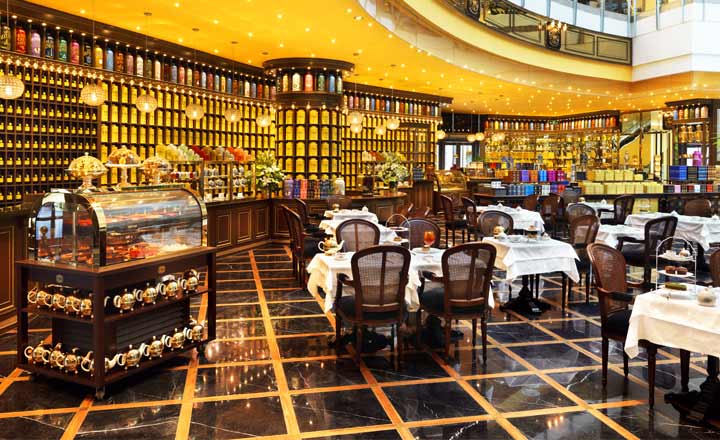
On a trip to Singapore I spotted a TWG Tea outlet in the Marina Bay Sands plaza; the business was pumping and there was barely a free seat in the establishment. The was something familiar about TWG Tea and I wasn’t sure if I had ever seen this business before, the establishment had a degree of familiarity and I was somewhat perplexed. I was considering taking a table, but owing to the popularity, that wasn’t going to happen that day without a lengthy wait in a long line.

A couple of months later, I was wandering through the Shangri-La Plaza in Mandalayung and spotted a TWG Tea outlet and I had to step in. Unlike the Marina Bay outlet, this well-presented outlet was nearly empty. Regardless, the service was outstanding, the food was very good and their choice of iced tea was excellent. I am not a tea drinker but after sampling their choice of fine tea, I might just be a convert. Needless to say, I’m more than happy to return to the Shangri-La outlet anytime and I can’t believe there isn’t a long line assembled out front.

Building wealth after 50

If you are seeking to build a retirement income to take yourself through to retirement and beyond; the decade from age 50 through to age 60 is the most important period to save. For many, the family home has been paid off, the kids have left home (well maybe) and most are still at their peak earning period based on knowledge, experience and education.

Whilst we have been told to put 10% of our pre-tax income into their retirement funds, many of us have now come to the realisation that this will be insufficient for a comfortable retirement. We have to make changes and we need to make good decisions that are both growth orientated and tax effective.

We now live in a low-growth, low-interest rate world with stalled economic activity in many major economies. Most governments lack the foresight to properly plan economic growth any further than the next election cycle and this issue has been detrimental to long-term growth prospects. The United States has a new president vowing to rebuild worn out and outdated infrastructure. Whilst this announcement in itself is a positive decision, many of us are wondering where the money will come from in an already indebted society.

But with economic activity comes opportunity; with correctly targeted spending on income producing assets the potential to purchase shares, bonds and convertible notes in infrastructure projects. No doubt complicated financial instruments are being drawn up finance such projects – we all remember the collateralised debt obligations leading into the GFC.

If bonds are being offered in infrastructure projects then they are well worth a look. Likewise, shares in engineering, construction, project management, utilities, building materials and maintenance companies are looking to leverage grown in major infrastructure projects in the next four years and beyond.

The US sharemarket has already fought back to rise above pre-2007 levels; the Australian sharemarket measured by the ASX200 is well below 2007 levels. Technically, Australia never was in recession in the aftermath of the GFC as Chinese demand and not stimulus spending ensured the economy continued along unabated. Australian GDP recorded negative growth for the quarter mostly driven by the former economic powerhouse economic decline in Western Australia.

You can pour over macro-economic statements such as balance of payment figures, CAPEX, the unemployment rate, interest rates, currency prices to seek answers. Many just look out the window to see businesses closing, friends and co-workers becoming unemployed, declining property prices based on forced sales and prices falling to base their judgement on the economy.

Blackberry – done and dusted

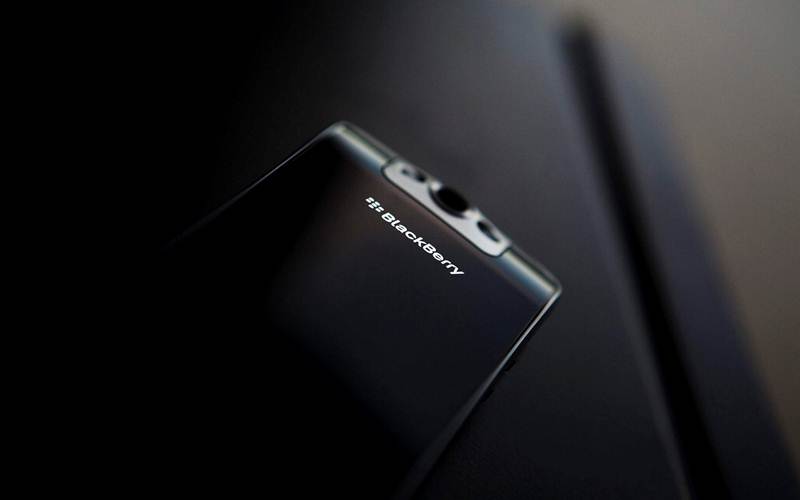
Blackberry is officially out of the telephone business, the Canadian phone maker stopped manufacturing handsets in 2016, so where to now? Research in Motion as a company will survive outsourcing hardware development to external partners instead concentrating on software development with an emphasis on security and applications.

Company revenue peaked in 2010 and have been in dramatic decline since then, the popularity of Samsung and Apple phones have swamped the business orientated Blackberry. The launch of the iPhone changed the dynamics of the telecommunications market with Android powered devices commanding a dominant market share. The distinctive Blackberry keypad was rendered obsolete by the touchscreen, once the popularity of the iPhone and Android took hold.

The development of apps for the Blackberry phone pretty much dried up and all but the most dedicated users wasn’t enough to arrest declining sales. Even the release of an Android powered handset wasn’t going to reverse the company’s fortune so Blackberry as we know it is no longer. I had a couple of Blackberry handsets but I along with everybody else have moved over to either an iPhone or Android powered device and Blackberry will be relegated to business school case studies.