Completing my MBA in my late 40s

I believe I have led a fairly robust business life after beginning my working life as an apprentice back in the mid 1980s. I then moved into the mining industry in 1989 after becoming a tradesman and never looked back.

After a couple of attempts at a small part-time business enterprise as an apprentice; I was given the opportunity to run an engineering workshop at 21. By the time I was 23, I was working as a sub-contractor and that proved to be an ideal opportunity. My second major business was share trading and investment, my daytime job generated cashflow and funds for investment and to cover living expenses, my after hours was spent studying balance sheets, drawing up charts and analysing cashflows.

I had a margin trading account with my stockbroker and a bank loan for my house, I was a quarter of a million dollars in debt which doesn’t sound a lot these days. There was a fair amount of stress involved, you learned to perform under pressure. That was more than two and a half times the average house loan, interest rates had peaked at over 18% and I had locked in a pretty good rate of 13.5% for three years. My margin account was pretty much the same, I had to get my decision-making right or I would be heading to the bankruptcy court.

I never had any time for a formal education after studying at trade school although I took a introductory sharemarket course as an eighteen year old. My first buy after a recommendation from a stockbroker resulted an immediate gain so I bought some more at two and a half and then five times the price. You need to pay for an education and I guess I paid for mine as I was conducting no research, I had no strategy and I didn’t know what I was doing. Nevertheless, I wasn’t spooked and frequently visited the Australian Stock Exchange library to work on my education.

That self-paced financial education involved reading financial statements, charting, macroeconomics and banking. Fast forward to now, I’m late 40s and getting a formal education in accounting, finance, operations, marketing, decision-making, economics, leadership, team-building and strategy. It could be argued that late 40s is a little late in my career to be undertaking such a pivotal qualification, I feel I have a further 13 years before I qualify for my retirement benefits. I want to be working part-time past that stage, I can work past retirement age and be under no pressure to pay down debt.

As a mature age student, I am paying off each unit as I go so I will carry no tuition debt when I complete the course. A scholarship certainly helps manage the repayments, the argument needs to focus on return on investment and whether the money would have been better spent pumping the cash into my superannuation fund – time will tell.

The aviator’s watch is popular again

The modern aviator or pilot’s watch resembles the timepieces issued to Luftwaffe pilots during the Second World War featuring a black dial, simple Arabic numerals aligned vertically, an inverted conical crown, a triangle with two dots either side at the 12 o’clock position with luminous hands and numbers. This is a default pilot’s timepiece design, for IWC, this is a heritage model.

This magnificent timepiece inherits much of the tradition of the 1940s Big Pilot’s Watch; whilst still a large timepiece at 46 mm, this modern variation is still not as large as the illustrious 55 mm predecessor. Powered by the in-house 51111 calibre movement, this watch features the Pellaton pawl-winding system designed by technical director Albert Pellaton in the late 1940s and early 1950s.

The movement maintains a whopping a 168-hour power reserve keeping with the retro style of the watch. Apparently a mechanism stops the movement after 168 hours preventing the mainspring from completely running down ensuring a constant level of accuracy over the entire period of functioning. I have to admit, I really like the style of the aviator’s watch – the question is, how do I get one at a reasonable price?

The principles of project management

Project management is a skill-set that really enhances employment opportunities, the unfortunate part of studying project management at post-graduate level is the costs are about double of an undergraduate course despite learning pretty much the same concepts. That being said, I would recommend a principles of project management unit for most business based qualifications.

At the diploma level, a qualification in project management offers candidates eight units including employability skills such as workplace relationships and personal time management but is unfortunately a lightweight qualification. You really want to focus on project management principles, not the rest of the employability skills that are picked up during general business courses. The focus is learning the principles of project management, one would expect a project manager to possess the necessary people management skills.

At the tertiary level, the Program Management Body of Knowledge (PMBoK) meets entry criteria into the Program Management Institute so graduates have the ability to network with project management professionals. As I am entering the final two units of my online MBA, I am beginning to reflect on the previous two years and how I can embed my prior learning into actual projects. This is a course I am actually looking forward to taking as it has so many practical applications.

The TAG Heuer Kirium

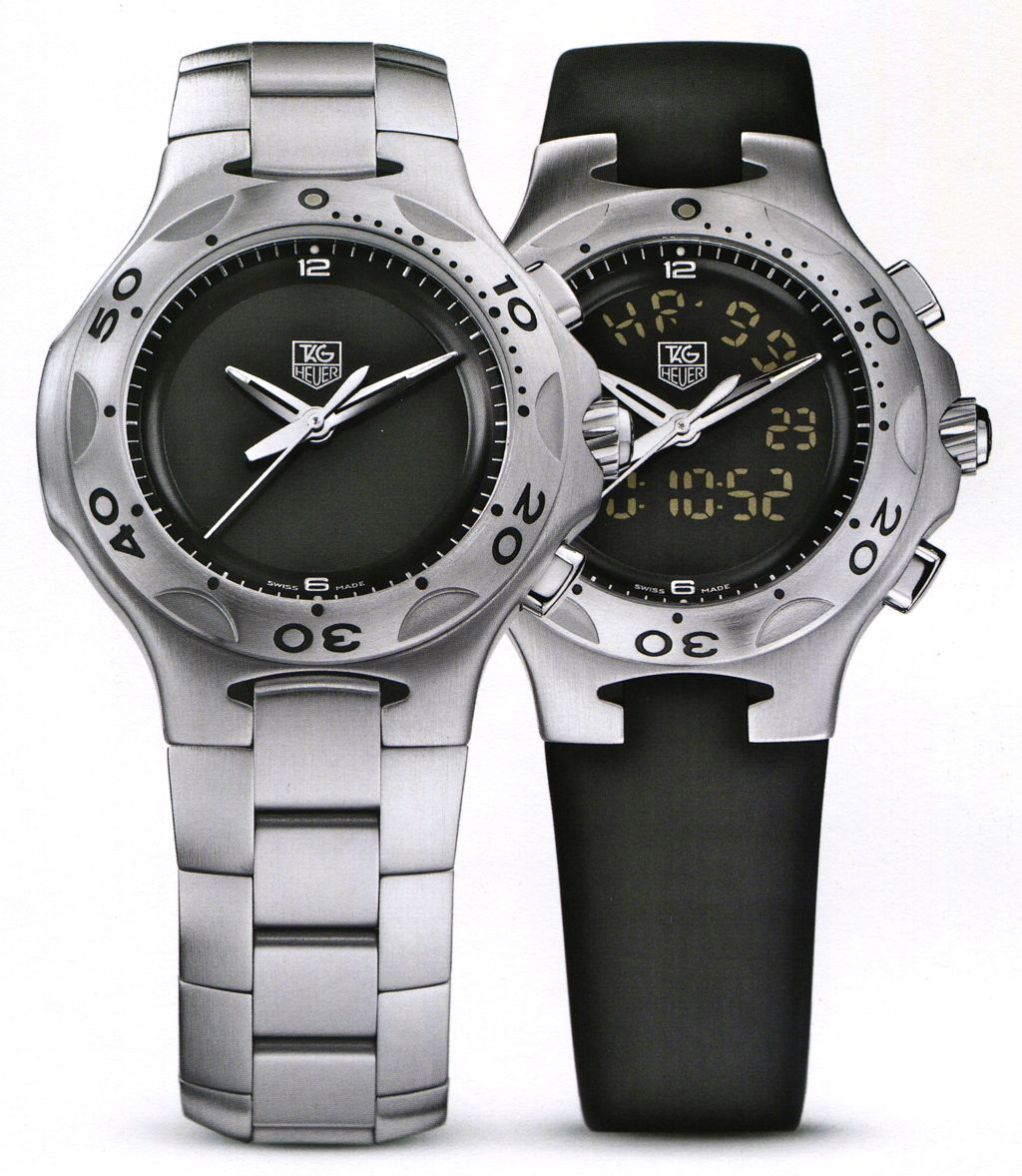
I can’t say I am a big fan of the Kirium, I was given one in non-working condition so I decided to take the timepiece down to the watchmaker to see if it was economical to get the watch working again. I wanted to see how it goes as I wouldn’t mind a bit of a retro watch to sometimes wear for different occasions. Initially launched in 1997, the Kirium was a subtle move away from the six features design principles.

TAG Heuer had promoted the six features design principles since the 1985 takeover of Heuer from the TAG group. The Formula 1 series was added in 2003 maintaining the motorsport heritage running until 2008. The Kirium Formula 1 featured a dual analogue/digital face that lights up when the chronograph wasn’t being used but maintained a three hand appearance during normal operation.

I knew none of this when I first took the watch in for repairs but I became suspicious when I was informed the mechanism was burnt out. I was a little concerned, I didn’t want to replace the movement for it to only burn out again. When I inquired as to why the movement was damaged, the watchmaker replied that the watch had more than probably been left in the sun so I relaxed a little. Ok, this isn’t a standard burnt out quartz movement so I was no longer concerned.

A little research informed me this was an ETA movement so I guess this was probably sun and heat damage as ETA has an excellent reputation. ETA manufactures a pretty decent quartz movement, I have moved away from quartz movement to automatic movements now. Replacing the 4000 series, the Kirium was a mid-range watch designed to take the place of an outdated style. Ironically, TAG Heuer was very successful re-releasing the Carrera and Monaco models in 1996 and 1997 respectively.

The style of the Kirium is liquid metal with the case, bracelet and bezel designed to look as if the watch is flowing into a single form. Ok, the design is a little dated, this is late 90s design but I am ok with that. The bracelet is a simpler design than former models with inter-locking links; a vulcanised rubber strap was also available although I have never actually seen one. The watch is kind of smaller than I am used to with a 39 mm case.

I have read the bezel is uni-directional on the later models although I thought I owned one that doesn’t have a rotating bezel. I was incorrect, once the watch was returned from the watchmaker the bezel was working again, it had just locked up with non-use. I’m still not a big fan of the Kirium, this is not a style of watch I would normally purchase. But since I have now invested in this watch, I will keep it to wear every now and again. I wear it every now and again, sometimes over a weekend or sometimes during my work week.

Just a small detail

I was early to the Jetstar check-in desk and boy was I glad. Such a small detail now threatened to derail my impending overseas holiday. My full name is Jeffrey yet I filled out my online booking with a shortened version of my name, now those three extra letters could cause a serious issue, it can be repaired at a cost.

I thought back and how I could make such a fundamental mistake, I never normally mess up like this, then it suddenly became clear. My browser of choice is Google Chrome and auto-complete drives me mad sometimes, so auto-complete shortened my name and I didn’t pick it up completing the online form. Maybe it is time to only book online with the Mozilla browser. I should know this as I usually type over the auto-complete function and cancel it out – but not this time. Fortunately, the Jetstar staff member explained to me the implications and agreed to waive the charges, my holiday was back on track and no unnecessary credit card charges.

Self-serve check-out failure

The major supermarkets in Australia are pursuing self-serve check-outs, this efficiency drive is destroying jobs without the savings passed onto consumers. I make sure I never use the self-serve, I will wait in line until an operator check-out is available – without fail.

I cannot endorse customers stealing groceries from the supermarkets, yet what did they expect? I started to use self-serve check-outs, but then I considered my actions, by using self-serve check-outs I was supporting the destruction of jobs in the retail industry. However, the theft from supermarkets is so high that senior management have been forced to limit the items checked through these self-serve check-outs.

The irony is the supermarkets are being forced to put staff back on the cash registers to limit the theft and better serve their customers. Do the supermarkets have a shoplifting problem or a customer service problem? The customers now view the supermarkets as faceless chains to be ripped off as they are only concerned with generating profits at the expense of the very customers that purchase their groceries.

How frequently should you be servicing your regulator?

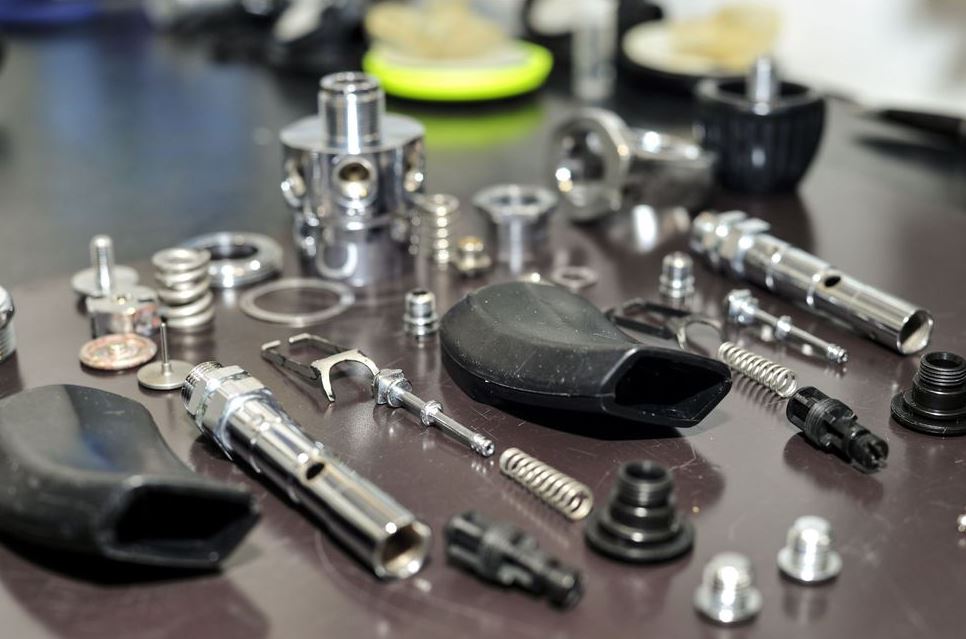
We are told we must service our scuba equipment annually including the regulator, buoyancy compensating rig and cylinder. Well, I can forget about servicing the jacket annually and most people can do that themselves so the cost is negligible.

Servicing the regulator annually is a waste of money when the equipment is purchased new, a better option is to look after the regulator yourself including an annual soak in 50/50 vinegar/water solution for 20 minutes before rinsing in fresh water and air drying. Every third year based on the savings, a new regulator may be purchased so a diver keeps up to date equipment.

Servicing costs are expensive in Australia, you can’t beget people getting paid for their effort yet with the money coming straight out of your wallet – that is the last thing on your mind. Most of the servicing and inspections can be done by the owner, this involves checking for leaks, measuring the intermediate pressure to ensure seat leakage isn’t occurring and making sure the second stage is clean with no build up of scale or slime.

Venture capital or vulture capital?

I have a stake in a superannuation fund and after reviewing the asset allocation, I see around 6% is allocated to venture capital. I know I am not really a venture capitalist so I need to ask myself, what exactly is venture capitalism?

So venture capital is defined as private equity investing that is a form of financing for emerging and early-stage start-up businesses deemed to have high growth potential. These start-up businesses require capital to grow and tend to burn through capital in their initial stages of development. Naturally these business ventures tend to be risky investments and more conventional forms of debt financing are not available due to the risk factors that bankers avoid. Notwithstanding, the returns for investors are going to be greater than more traditional forms of finance.

For businesses without access to traditional capital markets, venture capital is an essential form of financing and I love this new wave of entrepreneurial value creation. Ordinary people with great ideas and drive have the ability to succeed in this new wave of business activity that is generating wealth for the owners, investors and providing jobs for the employees of these new businesses. That being said, apparently the conditions placed on firms in exchange for venture capital are arduous as the risk has increased and more traditional lenders are more concerned with their risk profile that growing small businesses.

Middle-class millionaires

The term millionaire is a little over used with high net worth individuals gainfully employed and living among the middle-class workers. When we take into account property ownership in Australia, especially those living in Sydney, Melbourne and Brisbane the price of owning a residential property put home owners in the millionaire bracket despite being in financial duress.

There are plenty of financially secure individuals that blend in so well in the middle-class that the average person is unable to distinguish between high rollers and middle-class millionaires. In my experience, these high net worth individuals tend to be very modest and rarely speak about money outside of professional networks. They have nothing to prove to anyone except themselves – they don’t need to brag.

Middle-class millionaires work together with us, play sport with us, drive second-hand cars and live in modest homes. These tend to be people who are self made through hard work and endeavor; they may be self-employed or professionals that are highly motivated and strong money managers. In Australia, trades-people fall within the spectrum of a skilled workforce possessing the knowledge, skills and attributes to succeed as entrepreneurs.

Through hard work, a strong savings ethic, prudent investment and educating oneself on investment matters – there are plenty of high net worth individuals among us and we mostly don’t know that they are. I have a lot of respect for the humble tradie, they are now well paid, hold no student debt and invest their earnings.

The Longines HydroConquest

The Longines HydroConquest, a stunning dive timepiece from Swiss watchmaker Longines is sometimes overshadowed by well known dive watches such as the Rolex Submariner, the Omega Seamaster or the TAG Heuer Aquaracer.


Without researching watches, you are not able to objectively compare the features, style, differentiating factors or pricing of each individual timepiece. In the initial stages of research for the purposes of comparison, price is not a factor – naturally that changes as you begin to eliminate timepieces. I was looking to upgrade my dive watch as I have a quartz and I wanted an automatic, a somewhat unusual situation as I dive exclusively with a dive computer these days. Still, I enjoy a high quality dive watch and want a dive capable timer. 

When I’m overseas diving as I would prefer to keep my watch with me and not left in the hotel room or on the boat. I researched an Omega Seamaster Diver 300, the TAG Heuer Aquaracer and the Longines HydroConquest with the Omega being the most expensive and the Longines the least expensive. I do like the style of the Longines, so I spent some time at a number of watch retailers to get a feel of the watch, you can undertake plenty of online research but you can’t beat the feel of the watch sitting on your wrist. 

From the screw in crown, 300 metre water resistant case, screw in case back, scratch resistant sapphire crystal glass with anti-reflective coating, this timepiece is well built. Looking at all the images online, I wasn’t able to determine if the bezel was ceramic, it wasn’t until I wandered down a watch retailer to try one on and I found the bezel is not ceramic so that is negative as both the Omega Diver 300 and TAG Heuer Aquaracer are fitted with ceramic bezels.

The uni-directional bezel, Arabic numerals on the face, luminous hands and a H-link bracelet and locking clasp – this is definitely a dive watch. You have a choice of movements with an ETA automatic or a quartz. This is a quality watchmaker with a long heritage of manufacturing stylish timepieces at very competitive prices. Ultimately, I went with the Aquaracer but the value for money of the HydroConquest made the decision so much harder.