The Tissot PR100

I enjoy wearing a reasonable quality watch on my wrist; as such, I prefer the timepiece built by the Swiss as their quality is unsurpassed. Tissot offers a quality product at a reasonable price, the PR100 was my first foray into the Tissot brand.
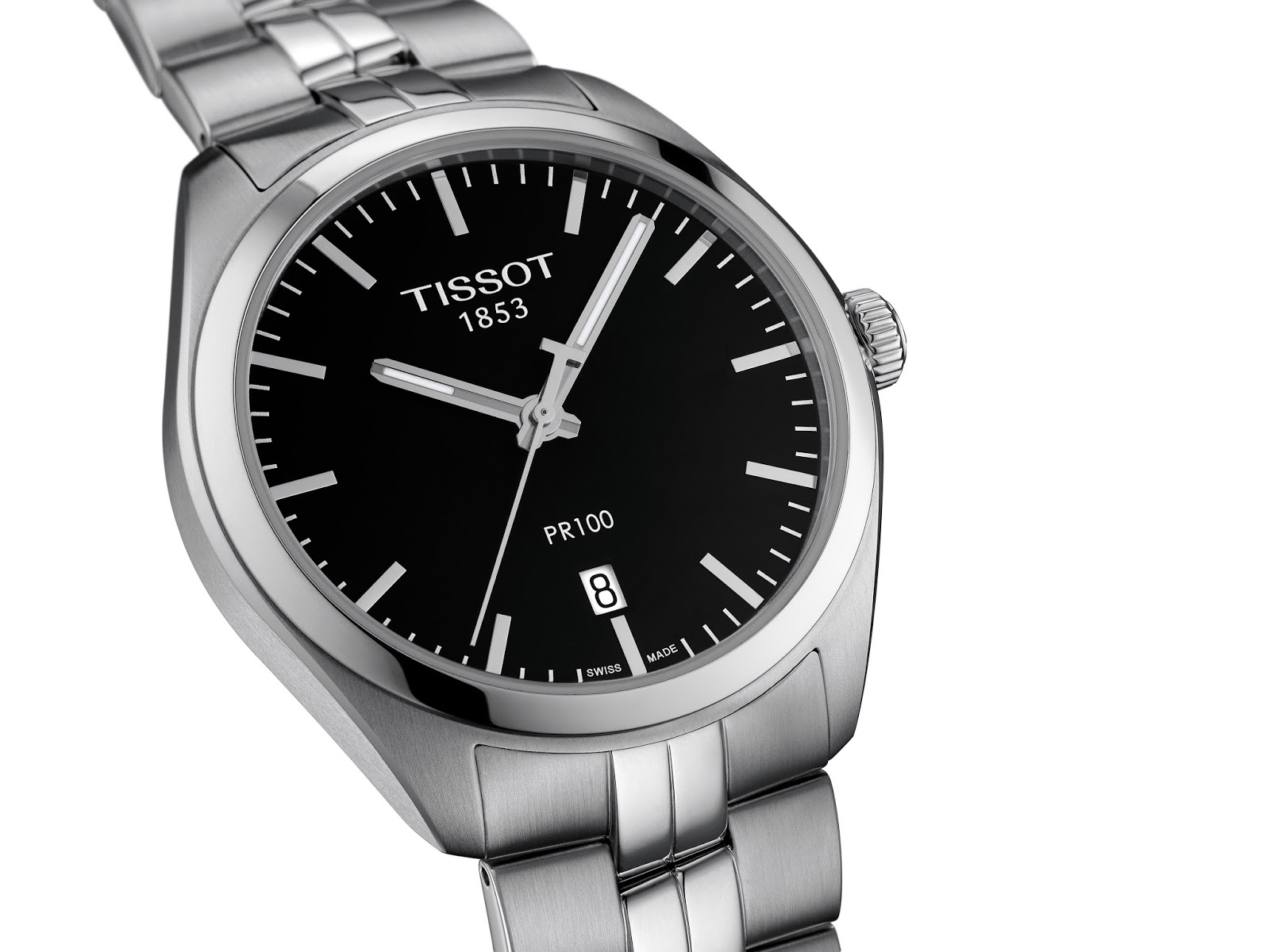
So one choice of timepiece is the Tissot PR100 from the T-classic range – this was my preferred dress watch. Whilst I have a number of dive watches that make excellent timepieces, I feel they lack the elegant simplicity that the PR100 offers, the PR is particularly robust. Tissot as a watchmaker has been around for a long time, dating back to 1853 with their facilities in Le Locle. What Tissot isn’t is a high end timepiece manufacturer such as Rolex, Breitling, Omega, Rado or Tag Heuer; they however produce quality merchandise at a reasonable cost.

Tissot and Omega merged in 1930 to form the Société Suisse pour l’Industrie Horlogère with Tissot concentrating on the medium price ranges leaving Omega free to pursue the luxury market segment. However, the company was under extreme pressure caused by the dual economic pressures of recession and stagflation in the late 1970s coupled with the heavy competition factor brought about by the Asian quartz movements.

Recent sponsorship of the timekeeping duties for the Australian Football League has seen the brand gain plenty of exposure in the Australian marketplace. Tissot sponsors a range of sports including the NBA, Tour de France and Moto GP among others. Tissot is a brand falling within the Swatch Group mid-range timepieces along with Certina, Balmain, Hamilton, Mido and Calvin Klein. The high range consists of Rado, Longines and Union Glashütte with the prestige brands of Omega, Blancpain and Breguet and the entry-level Swatch filling out the range.

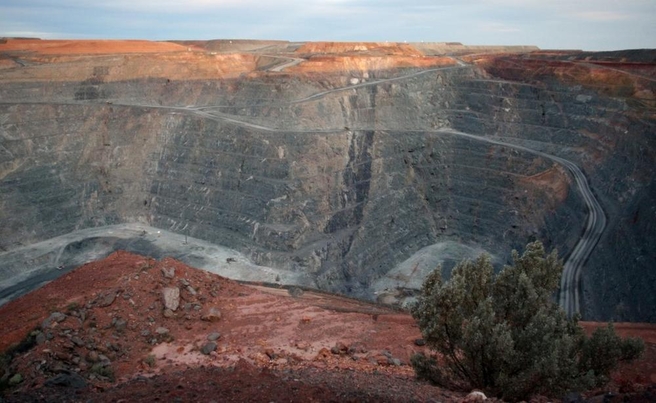
Before FIFO

For those not conversant with mining industry acronyms, FIFO is fly in, fly out, DIDO is drive in, drive out and then there is always residential. Before FIFO you just worked away and you had do work some pretty hard rosters, it was nothing like it is today, you went away and you stayed away.

I started my working life in 1985 as an apprentice in an engineering trade, after completion of my four-year trade in 1989, I moved straight into the mining industry where I toiled for on and off for nearly two decades, that means sometimes heading down to the city to work on mining equipment that was being repaired before sending it on its next assignment. I would end up back on site after my short break working in the city, it was never long enough but I made my choices.

Back then, FIFO wasn’t really well known, they flew you to site and you pretty much stayed there for 12 – 16 weeks on average, I did a couple of 30+ weeks stints in the late 1980s. If they were upset with you and you got your marching orders, their obligation was to drive you off-site and dump you on the side of the road.

Fortunately I had plenty of supervisory and managerial experience in construction, mining and tourism. That gave me the foundations to become a director of a start-up entrepreneurial business and a director of a self-managed superannuation fund – the mining life gave me opportunity and for that I am truly thankful.

As a sub-contractor, the problem with working in mining and construction in Western Australia was you had to work on remote mine sites through-out Western Australia and you were not on roster. WA is a big state and you spend a large amount of time working away in almost uninhabited and remote locations.

These days they work on fixed rosters, they do things like 8/4 and 9/5 and 2/1, that is 8 days on and 4 days off or 9 days on and 5 days off. You know your roster for the whole year – easy to plan your life. I have never done those rosters in my life although I did work towards the end of my mining career on 2/1, that’s 2 weeks on and a week off.

Seriously, these days I hear how hard it is working away. Even working on a 14/7 roster you fly in on the first day and fly out on the 14th day, that’s really 12 days being away from home and you still get a full 7 days at home. They provide pretty good facilities these days, not like before when it was pretty rough. Oh yeah, they fly you there and fly you back during work hours – I can’t believe how soft people are becoming.

Perth’s best office – it’s difficult to argue otherwise

Ok, I had to work somewhere and there is no better place to set up office on Thompson Bay on Rottnest Island. Just 17 kilometres off the coast from the port city of Fremantle, this is in my opinion Perth’s best office.

With my notebook computer set up, a portable WiFi hotspot and mobile phone I was in business. I had to research and write my legal brief, I unfortunately didn’t bring my multi-function printer/scanner with me but I was able to make do. I had to be back in Perth the next day to lodge my brief at the Western Australian Industrial Relations Court so my respite was brief – still, better than writing at my home office.

Can you really overdive a site?

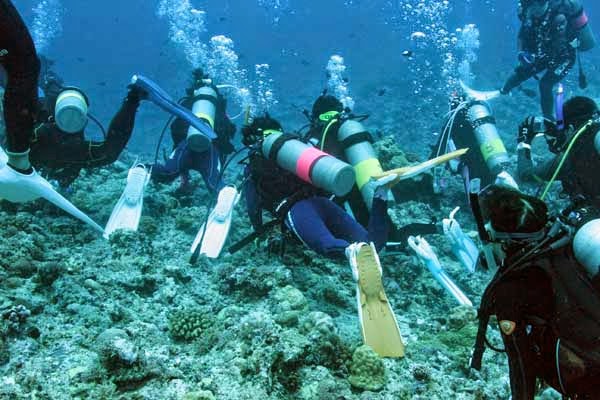
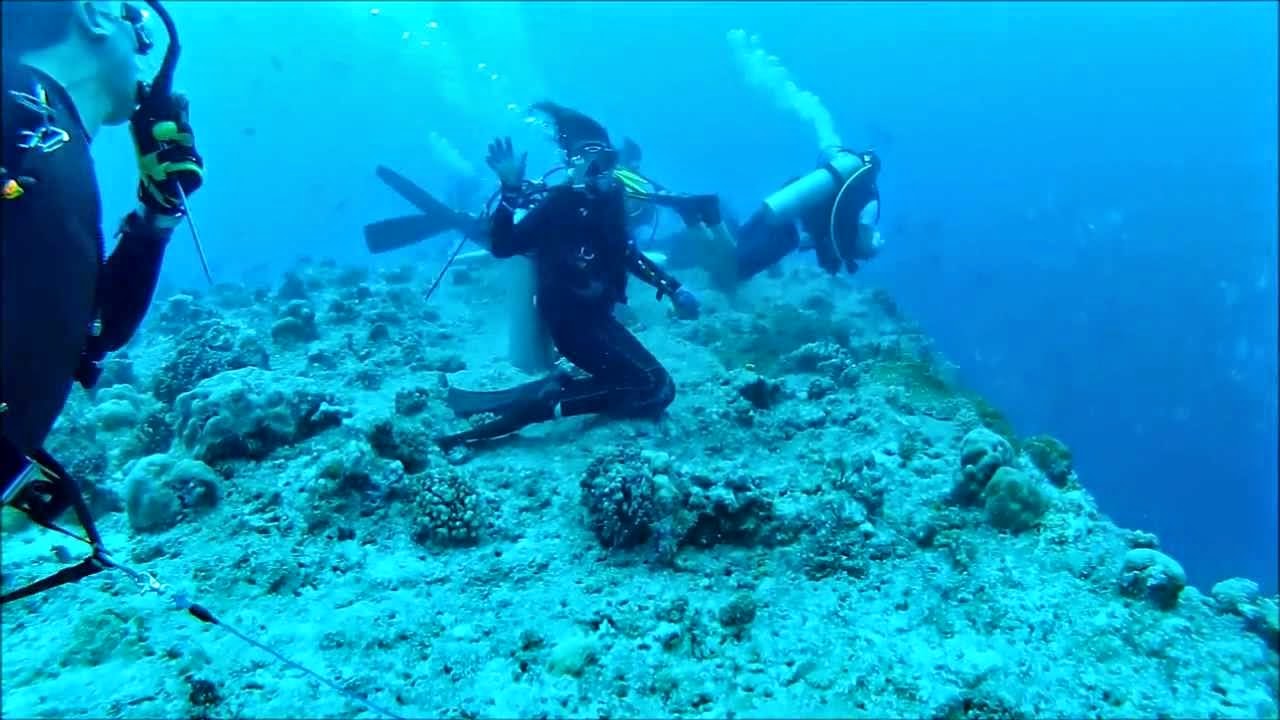
I sometimes read about certain dive sites being over dived and ask myself “How does this happen?” I view these photographs and I am appalled by the behaviour of the dive guides – they need to take responsibility of the divers in their charge.

Scuba diving entails visiting a site, swimming around underwater for a bit, surfacing somewhat slower than swimming around and then departing – not difficult, one would think. When diving South East Asia and the Southern Pacific; dives are guided, the guide takes responsibility for both the group and the environment. Let’s face it, this is their livelihood at stake here, you would expect the guides to be extremely protective of their work environment and ultimately their future.

I was researching material for a dive post on Blue Corner in Palau and came across these photographs, it’s hard to believe dive guides allow such practices occur. Sitting on top of this amazing wall crunching the coral is eco-vandalism – this has to stop.

The role of China sustaining Australia’s economic boom

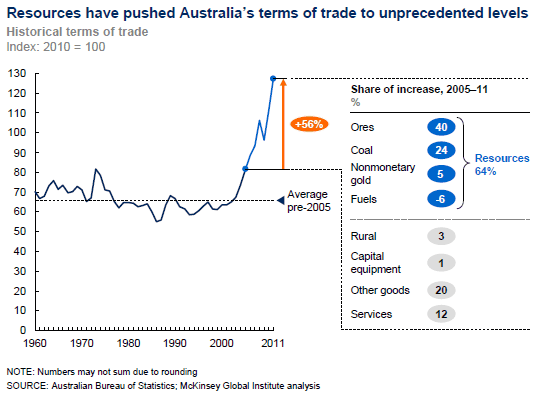
It is well known China was Australia’s most important trading partner during the mining boom continuing after the worldwide economic slowdown. Whilst Japan had been Australia’s main trading partner, the freeing up of the Chinese economy ensured dramatic growth during the period of economic reform – that relationship was important to Australia.

Australia was well positioned to take advantage of China’s boom with unprecedented prices for raw materials, namely iron ore and coal. The GFC didn’t hit Australia hard like the rest of the world, sure there was a slowdown, but with the Chinese appetite for Australian commodities keeping demand and prices high throughout the aftermath of the GFC, the Australian economy rolled on relatively unaffected. China was investing in their own economy constructing cities and infrastructure and the export of finished goods. Australian mining capital expenditure peaked in 2012 as the construction boom ended and the production phase started.

The Australian stimulus announced during the GFC was a poorly focused spending spree designed to buy votes blowing a huge hole in the federal budget – damage that hasn’t been repaired yet. Ironically the Chinese stimulus was more beneficial to Australia than the federal government stimulus. Whilst I was not against increasing spending in a controlled targeted manner, the wild spending increases just wasted money whilst the mining industry drove the country along. Now that the iron ore price has plummeted throughout 2016, the Australian economy was in decline with 2016 proving to be a whole lot worse than what 2015 was and unfortunately 2017 is looking to still be pretty concerning.

Heading to Hong Kong

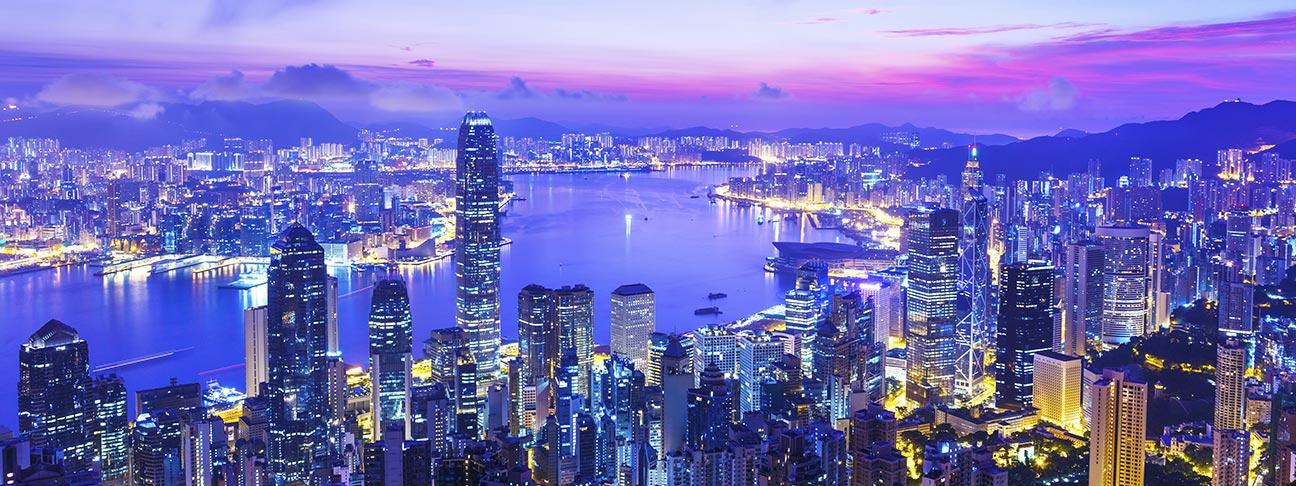
It’s been a long time since I have traveled to Hong Kong, I reckon it would have been 1997 for the first trip and the second time in 1998 – so it’s been a while. I have transited through the new airport since then but unfortunately never left the airport, that was a  real disappointment. This won’t happen next time – I want to look around.

So as an Asian traveler, it’s about time I reacquainted myself with the financial centre of Hong Kong. My first trip was when the old airport was in operation, I was told I must have a window seat as the aircraft approaches the runway between the buildings and you are able to look into people’s windows and watch them going about their daily life.

It was true, it was a very interesting landing and I was glad I insisted on a window seat. Now I’m off to Hong Kong in mid June right in the middle of a Perth winter, I can say I’m looking forward to this trip over a long weekend. Not only do I miss a weekend of winter, I get to spend a long weekend in Hong Kong going out to some pretty decent restaurants and bars – good times.

A professional dive industry

After some fairly robust discussions on the state of the recreational diving industry; the effects of the dive certification agencies and the creation of a professional dive industry, I feel the dive certification agencies have been instrumental establishing a professional dive industry.

Sure, the dive certification agencies are in the business to make a profit – that is to be expected. Yes, they are self serving and could even be accused of gouging divers and operators to suit their own agendas. They also promote the industry, attend forums to ensure government intervention remains minimal by removing the reckless operators and maintaining industry standards to training and dive operations.

It could be strongly argued that the recreational scuba diving industry is self-regulated resulting in an efficient and regulated market. Many recreational industries struggle to gain acceptance and provide job and investment opportunities, the recreational dive industry does provide full-time employment, albeit with low wages but lifestyle conditions of work and a source of income especially to developing communities.    

Is TAG Heuer a victim of its own success?

Is TAG Heuer a casualty of its own success? It has been mentioned to me that TAG Heuer is a second line Swiss watch, is this really true? I asked a sales representative at a well known Perth retailer who had always been forthright with me.

Her answer was the brand was well marketed and very popular with the younger crowd but still a very good brand. Plenty of people are aware of the Rolex and TAG Heuer branding but are much less aware of Patek Philippe, Blancpain, Audemars Piquet or Girard Perregaux despite the high quality but low volumes. Is TAG Heuer the ultimate Swiss watch? The answer is clearly no, a number of lesser known high quality brands eclipse the TAG Heuer brand for sheer quality and prestige whilst remaining low sales volume and ultra high prices.

The low volume nature of the high end brands increase value and prestige whilst the high sales of TAG Heuer definitely damage resale value, a simple case of supply and demand is witnessed here. TAG Heuer as a luxury brand has a higher sales strategy than competitors and the greater supply certainly satisfies demand without being a mass produced product. Naturally the scarcity factor of the product is diminished as sales soar, now supply is being met. Do you really manufacture a product for customers, retailers or the second hand market? I thought the answer was pretty obvious.

In the lower end market, the Formula 1 series has a relatively low entry price around the $1500 mark, most budding and start-up entrepreneurs can afford a TAG Heuer Formula 1 series watch. I have never been interested in the Formula 1 style of watch, as style is fairly personal, I can see plenty of people jumping onboard the long running Formula 1 series.

There are times entry-level products undermine the prestige ranges and it sometimes requires a decline in sales of lower-end products to enhance the more prestigious ranges and higher profitability. TAG Heuer doesn’t really retail a high end watch, I’m thinking in the $40k range with diamond encrusted faces and gold plating, TAG Heuer is well positioned in their price range holding a dominant market share.

It is argued that as TAG Heuer is part of the luxury goods conglomerate Moët Hennessy Louis Vuitton, the brand has really suffered but I disagree. As part of the LVMH group, TAG Heuer also markets eyewear, accessories and mobile phones, something watch purists hate but in order to not only survive but prosper a certain degree of diversification is required to add value to the brand. Sure brands get damaged and TAG Heuer isn’t a Rolex or IWC but a rationalisation of the Swiss watchmaking industry in the 1980s and without such intervention the brand could well cease to exist.

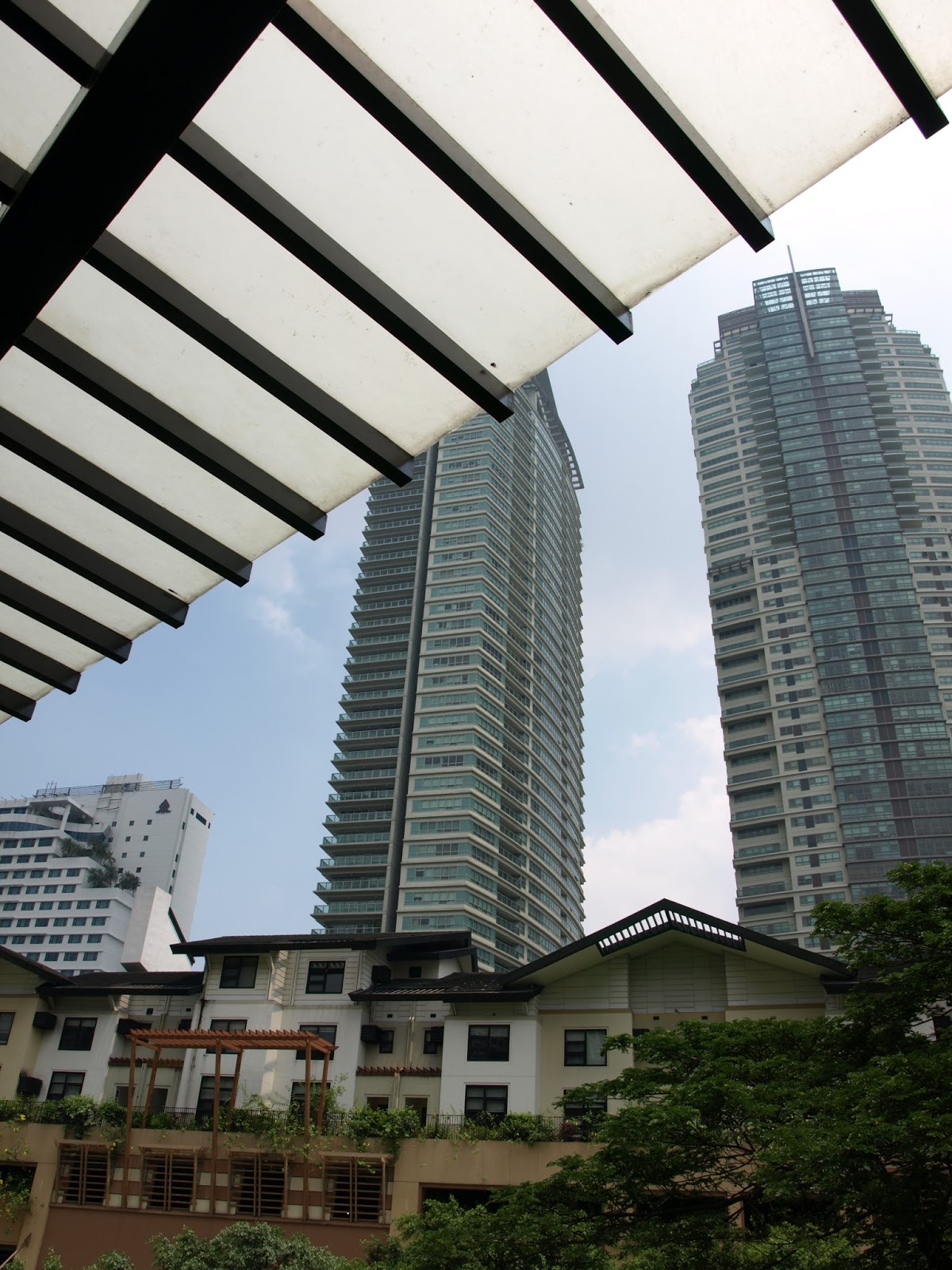
Hanging at the Greenbelt shopping complex

When I’m in Manila, I generally stay in the business district of Makati. I usually hang out at Greenbelt shopping complex during both the day and evenings when I’m not doing all that much, this is a high end entertainment precinct catering to high earning locals, expats and international tourists.

I have seen the shopping centre grow over the years; Greenbelt 1, 2 and 3 had already been constructed when I started vising the Philippines after a long absence of more than ten years. They were in the process of constructing Greenbelt 4 when I started staying at a hotel over the road and Greenbelt 5 completed the project.

I am told the restaurants are world class, they are certainly popular with well heeled locals, a Friday night sees plenty of suits heading out straight from the office. For me, the restaurants are the reason to be there, Friday nights are my favorite, the atmosphere is vibrant, there are no issues regarding safety – I’m looking forward to the weekend.

Singapore Airlines charges

I have at times been critical of Singapore Airlines and their dogmatic approach to customer relations, this time I can commend them on their processes. I see a decline in Singapore Airlines customer service, they were once the best in the world, I now no longer think that.

I had to rebook a flight due to surgery on the day of the flight and I was unable to complete the process through their webpage so instead I rang their booking office. I was able to rebook after a number of attempts and they were to charge me a $200 rebooking fee on a $1000 ticket – I was outraged. I had to give my credit card details over the phone and they were to charge my account, the consultant never referred the matter to a manager for consideration.

I immediately contacted customer service via email once again explaining as a long time customer who has taken well in excess of 50 flights over 10 year period and have never missed a flight or rebooked. Due to the extenuating circumstances, I had to accept surgery on that day after a long wait. I scanned my confidential medical records and attached to the request. To their credit they took action and refunded my extra charges and I’m happy with how they responded and handled my claim.