Adelaide trams

I got to use some of the public transport whilst in Adelaide including some buses and the tram. Unfortunately I missed using the heavy rail as the line was out where I needed to travel for long term maintenance. Fortunately, I found the tram to be an excellent service that is a really cost efficient mode of travel, this was really a great service.

Adelaide only has a single tram line running from the Adelaide Entertainment Centre, through the CBD, that’s the central business district or downtown to Americans to the beachside suburb of Glenelg. This is simple tram line, one can’t really call it a network but it is highly effective and I was pretty impressed with its patronage. If you stay within the confines of the CBD then travel is free, you can’t get any more cost effective than that. I would hope in the future they would look into an east/west service to complement the excellent north/south service running now.

Hugo Boss – Tonic

2017 saw the release of a new Hugo Boss fragrance named Tonic. This eau de toilette is a fresh daytime edition to their range of quality cologne. According to their advertising, this fragrance is intended for ‘modern men who aspire for success’ – I kid you not. I am sure advertising is a tricky business but I have to wonder when advertising borders on comedy.

So, I found the eau de toilette a little lackluster insofar as the concentration of an eau de toilette is much weaker than an eau de parfum but still apparently stronger than an eau de cologne. As such, an eau de toilette doesn’t last the day and has to be reapplied but I won’t be doing that but it a light fragrance that’s not too over-powering.

Described as fresh but not too intense, containing citrus notes of grapefruit, lemon, apple and bitter orange over-layed with ginger and cinnamon. This offering has a woody base and considered earthy, dry and elegant. The bottle is light blue and coming from Hugo Boss is undoubtedly reasonably expensive. The question that needs to be asked though, is Tonic worthwhile? My answer is yes, this is worth the outlay.

The age pension in Australia

I have been reading comments online lately with individuals trying to influence people by stating the age pension in Australia is not welfare but an earned right. Instead, these people argue the pension was administered using the tax paid by your employment and invested in public infrastructure paying dividends for your retirement pension – wrong.

These people argue the system has been poorly managed and now there is no money left for pensioners; this is unfortunately a total fabrication and possibly repeated by people pushing nationalistic agendas. The aged pension is a safety net for those who are not able to support their own retirements and is means tested – that is income and asset tested.

The pension system also has to be read in conjunction with the introduction of universal superannuation in Australia in the early 1990s known as the Superannuation Guarantee Levy. The superannuation scheme was supported in lieu of pay rises and paid by your employer on your behalf into a designated superannuation account. As such, we funded our future retirements by offsetting current pay rises for future retirement savings.

This formed part of the Prices and Incomes Accord of the Hawke government where pay demands were moderated for improvements in the social wage. The elements of the social wage included improved public health provisions, increased unemployment and pension benefits, tax cuts and eventually superannuation. Naturally, the social wage included tax payers supporting those who were not in paid employment.

So the age pension was introduced in Australia in 1901, although a number of schemes were in use by several of the former British colonies. As Australians, we know 1901 as the year of federation where the six British colonies joined together to become the Commonwealth of Australia – a nation was created. So, the age pension was pretty much around when the nation was formed although it took nearly a decade for payments to begin.

The pension system, once adapted had residency clauses attached that were reduced from 25 years to 20 years in the early stages. The current rules require Australian residency for 10 years with a period of at least 5 years with no break in residency. Originally, the pension was paid to men from age 65 onwards and women from age 60; currently both men and women must be at least 65 with the age requirement climbing to 67 for people born after 1957.

The pension was financed from general revenue right from the beginning and still is to this day and not investment returns from infrastructure as has been claimed. There was, and still is no taxation paid requirement, a portion of your tax is not placed in a separate retirement account as occurs in other nations. As such, a person living in Australia who has never worked a day of paid employment in their life or paid tax still draws a pension upon meeting age requirements.

Likewise, a person who has paid taxes their whole working life who has built up assets above asset test limits does not qualify for the age pension receiving nothing instead funding their own retirement. There is partial public funding for retirees with a part-pension paid based on assets and income to supplement self-funded retirees.

However, current government policy to limit superannuation payments during your working life and benefit total limits have been imposed to the detriment of those willing to support their own retirements in a short-term thinking cycle. The purpose of superannuation is to provide an income in retirement where the retiree pays their own way.

Now I’m a union representative

So following an election, I am now the union representative. Well, it wasn’t much of an election, I was nominated and nobody else put their hand up. It wasn’t the old cliché where they asked all volunteers to step forward with everyone taking a step backwards leaving me standing all exposed – I really wanted to take on the role.

I am taking this role very seriously, the quality of life of union members is at stake. For some, this is their only support they receive; they have families to feed, rent or mortgage payments, school fees and then there is their life they should be leading. I am no stranger to the actions and tactics undertaken by senior management; or should I say, the lack of action by the very department entrusted to serve the needs of employees.

These are hard working and dedicated people driven to provide the highest standard of service to their clients, if only the senior management showed the same level of dedication there would be little issues. I am looking forward to this challenge and serve the people who provide the great service we require to our clients.

Hanging at Adelaide Oval

We were in Adelaide on a Sunday looking around the city and wandered over the Adelaide City Bridge to the revamped Adelaide Oval. We had seen plenty of footage of the oval in use with day/night cricket test matches, T20 Big Bash games and AFL games played against the Adelaide Crows and cross town rival Port Adelaide.

So when we had the opportunity to wander in to look around, we didn’t hesitate to view the final day of a four day Sheffield Shield match between South Australia and Tasmania. There was no charge as the result was inevitable with Tasmania only requiring a handful of wickets to clinch victory. It was good to sit there a while and watch the match unfold, I can’t say it had all the drama of a test match, but it was entertaining none the less.

Regardless, these two state teams were playing to an empty house which is sad for a state level professional sport. Also, a number of international players were involved and even though they were not currently selected for national duties, this is the competition where players must perform to gain national selection to represent their country internationally.

Regardless of the patronage on this particular Sunday, next week was to host the 2nd test between Australia and England to fight for the Ashes, one of the greatest international sporting rivalry in any sport in terms of history, patronage and emotion. The Barmy Army, that is the English supporters so elegantly named who travel from city to city across Australia to attend the test match providing enthusiasm and support for their team.

The Adelaide Oval was booked out the following weekend and despite the sad attendance for the local state level match was booked out for the five days of 2nd test. Fortunately we were departing on the Thursday and very lucky as pretty much all of the accommodation was booked out for this important test match.

Is shareholder value an outdated concept?

I was reading a finance article in the Sydney Morning Herald with the author proclaiming shareholder value is one of the dumbest ideas in finance and asking, is capitalism on its last legs? For those unfamiliar with the SMH, this was once the premier newsprint in Australia’s largest city before the Fairfax family lost control of the newspaper; the editorial content is now very left wing and their articles tend to follow their political narrative and views. This got me thinking, is shareholder value an inherently outdated concept?

True to form, the socialist tendencies of the newspaper shone through with the comments section riddled with references to their number one enemy Rupert Murdoch, trickle down economics, shareholder dividends, the class debate including financial envy and CEO salaries – ok, I agree with their CEO salary diatribe. So, what is shareholder value? The definition of shareholder value relates to the value delivered to shareholders due to managerial ability to implement the process.

Their premise of their argument is capitalism is on it’s last legs is without foundation. Firstly, citing recent economic history, both the former USSR and the People’s Republic of China have transformed from centrally planned economies based on communism to market based capitalist economies. China will eventually move to the world’s largest economy in the not too distant future. The Chinese are embracing capitalism as their citizens are lifted out of poverty and into a burgeoning middle class. Russia went from pretty much bankrupt after the cold war ended to flush with petro-dollars and a superpower again.

Capitalism is evolving but that doesn’t mean it is on it’s last legs. The triple bottom line and corporate social responsibility are not new concepts. These ideals are driven by both shareholder and stakeholder values. Shareholders are members of the community and although the firm is not a living breathing entity, the shareholders who own the shares are and they are beginning to exert pressure on senior managers to adapt to new ideals.

The shareholders own the company, they are the ones who put up the capital and take the risk – they deserve to be remunerated accordingly. I don’t subscribe to Friedman’s argument of the one and only obligation of business is to mazimise profits whilst engaging in open and free competition without fraud or deception. As shareholder theory asserts shareholders advance capital to the management to invest in a manner that increases shareholder returns.

Stakeholder theory asserts shareholders advance capital to the management with a duty to both shareholders and stakeholders contributing voluntarily or involuntarily to the wealth creation capacity and are therefore potential risk takers or beneficiaries. As employees and staff members are remunerated already, as long as they are not subjected to workplace hazards and adhering to measurable standards of behaviour. Many corporations invest in the community providing facilities and support enriching the very people where they operate.

Shareholder value is not the dumbest idea in business nor is it an outdated concept. As a shareholder in Australian firms, I endorse the shareholder value concept and I also endorse the stakeholder view as investing in stable communities increases value in the long-term. What I do not endorse is short-term views that are currently prevalent, capitalism is not an outdated concept and capitalism is in a constant state of change and evolution.

Roger Federer nailing the Quokka selfie

Durable tennis champion and all round good guy Roger Federer has a massive social media following, what Roger says or does is news. He is not just a sports star, he is very much a social media influencer.

So when Roger was in Perth for the Hopman Cup over the New Year’s holiday period, what he did and where he went was certain to gain exposure as a global netizen. Now dubbed Perth’s unofficial ambassador, Roger’s trip to Rottnest Island was big news and his selfie with a quokka was sure to gain plenty of international interest in both Perth and Rottnest Island. Sure, he was paid generously for his time and these payments have remained undisclosed for commercial purposes. The quokka has been described as the world’s happiest animal, Roger’s selfie was certainly a great shot and has been reposted repeatedly – a fantastic shot.

What constitutes a comfortable retirement?

Much of my time is now consumed with thinking about, planning and preparing for retirement. I’m 49 and we don’t have a mandatory retirement age in Australia but you can access your superannuation savings once you turn 60 if you are born after 1964. At age 67 you can access the government paid pension if you don’t have sufficient funds to support yourself, one suspects this will probably be raised to age 70 in the next decade so people in my age bracket had better be prepared.

The cost of living is outrageous in Australia and it is my belief that I want to retire as soon as I can so I can enjoy a healthy outdoor lifestyle while my body holds out. I suspect a further 10 years of living will limit my mobility as I spent a large proportion of my working life as a blue collar worker. The fifteen or so years of physical work takes a toll on the body, although by my early 30s I had accepted my fate and taken a desk job to lessen the toll on my body.

So, like many others I have to consider health issues and the required support services. My plan is to live the summer months in Australia and the winter months overseas. This will take some planning as I will have to finance an Australian household all year round as I don’t want to give up my primary residence but with just base electricity and water charges the cost might be achievable. There is council rates, they hurt and telephone and internet would expected to be minimal as I wouldn’t be seeking large data plans.

Perth is a great place to live in summer but there is so much of the world I want to visit. The northern hemisphere just happens to be in summer whilst Perth is suffering through another dreary winter so an endless summer is possible. Fortunately Australia has reciprocal health agreements with eleven countries including the UK, the Netherlands, Slovenia, Belgium and Italy – my future is pretty much planned.

Pewsey Vale Riesling

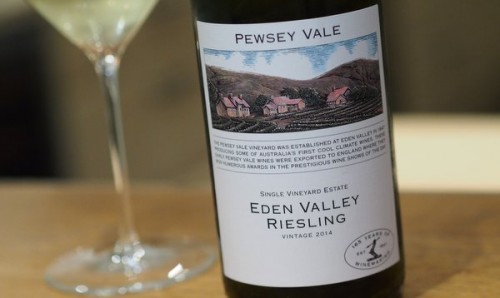
I love Pewsey Vale Riesling, I was introduced to it by my old man when we sit out in the back garden on a Friday night. I can’t say I’m a huge fan of Eden Valley reds, but their dry whites are high on my list as a pretty good example of warm climate wines.

On Friday, instead of driving my car to work I catch two trains and a bus from my place to work and two buses to my parents house after work. Whilst I could be hitting the city on a Friday, I enjoy the time with my family and wouldn’t swap it for anything. I know I will be having a few drinks and this is the responsible way to prevent drink driving by planning ahead.

So what I do now is send cartons of wine from my supplier straight to my parents house as my father has been retired for over twenty years and I am still pulling a salary – simple economics really. But in typical old man style, he likes to pick up the bill all the time so I have to make sure I am paying my way. So when I go to the wine rack or refrigerator I try to select something that I purchased so I don’t drain his stocks.

However, if I find a bottle of Pewsey Vale Riesling in the refrigerator – all bets are off. When I was researching this riesling I logged onto the Pewsey Vale website and was surprised to find they had four rieslings in their range. Now I had the embarrassing task of finding the one I liked, not such an easy task I found out. I like dry white wine and Pewsey Vale sits well on the dryness factor, yet still exhibits fruit and character.

So, to the tasting notes; according to Pewsey Vale this riesling exhibits dried herbs, white flowers with lemon and lime overtures. Ok, I get the zesty citrus flavours but would never have described white flowers as a taste and seemed to miss the dried herbs. However, I feel this is more complex than pure citrus flavours so what would replace the dried herb aroma?

I’m struggling now to describe the aroma and instead move on to the palate with tropical fruit, astringent acidity keeping the flavours in check with a fine balance of the pale straw coloured white wine with twinges of green hues. They recommend enjoying with salt and pepper squid, natural oysters, seared scallops or a Thai beef salad or like me just enjoy this wine on a warm summer Friday night with good company.

Disposable coffee cup madness

I believe in the virtues of capitalism and the benefits that the private sector brings to the masses through free choice and efficiency; however, what I don’t support is serving coffee in cardboard cups. Capitalism has a social and environmental aspect; we all understand the need to create profits but these shouldn’t come at the expense of society and the environment.

As both consumers and shareholders, we have the ability to dictate corporate decision-making through our purchasing power and habits. The major issue with disposable coffee cups is that they are mostly not recyclable and end up in landfill – this is a terrible outcome for everybody. This is not only inefficiency, this wastage is detrimental to the environment with the plastic caps and cardboard insulators adding to the waste. Single use plastic bags are being phased out in Western Australia and one hopes the policy may be extended to disposable coffee cups to protect the environment.

Strategies may include a levy on disposable coffee cups to change consumer behaviour as a deterrent although I would prefer to raise awareness through a shared ideals. As I believe in free choice, we as consumers can exercise our free choice and choose to not purchase our coffee in disposable cups instead selecting our coffee served in real cups and not rely on government intervention. As a collective group, we have the ability to change corporate behaviour through consumer behaviour.