CEO pay packets back in the spotlight

With CEO pay-packets and bonus schedules back in the public domain after Apple’s Tim Cook received a 74% increase in pay. Cook had a base salary of $3.06 million, incentive pay of $9.33 million and and equity award of $89.2 million to bring his pay to $102 million.

I believe entrepreneurs taking the full personal risks to start and build the company should benefit financially. My issues arise from CEOs who are hired to run a business don’t have a personal stake in the success of the business. These CEOs aren’t taking any personal risk as they receive golden handcuffs initially with their real risk more concerned with missing out on their potential bonus.

With such a rewards system in place, they are not inclined to make decisions in the long term interests of the business owners – the shareholders. Then, if it doesn’t work out then they are endowed with a golden parachute so they don’t lose. Then there is the Apple battery scandal, shareholders would be very concerned as to what this is going to cost? Pretty poor to be receiving such a bonus when there could be lawsuits pending.

An Australian recession – not just yet

Heading into 2018, the US bull market run continues, the American price earning multiples are increasing but people are getting nervous but with the low interest rate environment and lag effects of the quantitative easing that poured large amounts of money into the financial sector – the risks increase. One expects US tax cuts to fuel the party for another two or so years – then what?

Down over the other side of the Pacific Ocean, the Australian index has not eclipsed the 2007 highs and although the Australian economy didn’t melt down like the US or Europe as Chinese demand kept Australia from recession. Ten years on, the XJO, that is the S&P/ASX200 is sitting just over 6000 points still below the October 2007 high of 6700 points before plunging to just over 3000 in March 2009. No recession maybe, but we felt wealth destruction without the rebound but fortunately not on an American scale.

We still have soft conditions with low wages growth; the major concern to the economy being the high personal household debt. With non-mining business continuing to improve we are finally seeing increased business confidence. When we get some decent wages growth we should see improvement in the retail and services sector and increased jobs. The bright side is we don’t appear to be hemorrhaging jobs anymore as jobs growth is improving; even if full-time jobs are being replaced with part-time work, at least an income is coming in. Easy to say for a person who maintained full-time employment through the whole GFC saga and beyond.

Bank dividends and pay-out ratios

There has been plenty of criticism of banks in Australia with a special emphasis on the big four banks of the Commonwealth Bank of Australia (CBA), the Australian and New Zealand Banking Corporation (ANZ), Westpac Banking Corporation (WBC) and the National Australia Bank (NAB). Looking into banking misconduct will be the role of the Royal Commission; one expects some poor practices to come to light with some improvements required. Despite the popular opinion, the banking and finance industry is pretty stable in Australia.

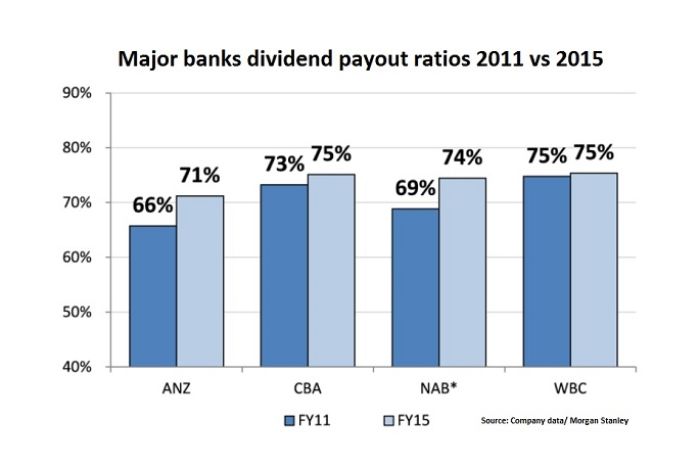
Bank pay-out ratios are high, really high. This is the dividend paid to shareholders from profits with ANZ sitting at 71%, NAB is 74%, CBA is 75% and WBC is also 75% of profits paid to shareholders. Then the argument reverts to greedy shareholders taking all the money that should be the people’s money. Hang on, the federal government once attempted to nationalise the banks directly after world war and spent the next twenty five years out of government, so this isn’t the answer.

Banks are commercial entities and make profits; they are also the nation’s largest corporate taxpayers with CBA paying $3.3 billion in tax. This was followed by WBC with $3 billion, NAB with $2.4 billion and ANZ paid $2 billion paid in tax. Approximately 168,000 people are employed in the banking sector in Australia with the finance and insurance sector the 11th largest employer in the country.

So who are the shareholders? To begin with, anybody who has held employment over the past 25 years or so will be holding money in a superannuation account of some form. The default plan for a superannuation fund is a balanced plan generally holding approximately 25% of their assets in Australian equities. The superannuation funds of Australia are the majority owners of Australian banks with the members of the funds collectively owning the assets of the fund.

The big four banks lead the top four positions in the Standard & Poor\’s ASX 200 index in terms of market capitalisation with CBA making up 9.25% of the index, WBC the second largest bank accounts for 6.9% of the index, ANZ makes up 5.5% and the smallest of the the big four banks is NAB with 5.25% comprising of approximately 27% of the value of the Australian sharemarket.

So we are the shareholders and the profits are paid out to our retirement accounts. The average worker has the ability to contribute extra funds to their superannuation fund through salary sacrifice increasing their retirement benefits. But most prefer to spend it now and rely on the aged pension instead, then complain when the federal government raises the pension age as the country can’t afford it.

Alternately, salary earners could directly purchase shares in banks or other investment opportunities but mostly chose not too. Instead of wagering cash on horses down the racetrack, lotto, poker machines or at the casino maybe people would be better off investing their excess funds for their future and cut down on cigarettes and alcohol to make some savings. I have done some calculations for some broke work colleagues and their nicotine habit finding they could have doubled their retirement accounts by diverting their smoking habit to investment funding.

I left school early after just turning sixteen to start an apprenticeship and I was able to take a part time evening class at my local TAFE, the Americans would know this as Community College, to learn the basics of the sharemarket. So if I am able to find the time as a guy who didn’t finish high school I am sure plenty of others are capable of a little study.

This included purchasing some books and doing some extra curricula reading. If you can’t afford to purchase books then the library is the answer as long as you are putting in the effort to invest in yourself. If you can’t be bothered to put in the effort, then don’t complain when you have to work until seventy.

So, what’s in the hang tank?

I was diving in Subic Bay in the Philippines at a pretty good dive centre and we were undertaking no-stop diving activities at deeper recreational depths. As a safety precaution, they suspended a hang tank at five metres for low on air situations – great stuff for recreational diving operations.

In their hang tank was a nitrox blend of 31% oxygen and entry-level divers with no nitrox certification were undertaking dives – was there an issue here? I would suggest the answer is no as a blend of EAN31 has a partial pressure of 0.15 ATA at 5 metres – that’s pretty conservative. Referencing a CNS table, a partial pressure in the 0.6 range has a maximum CNS limit of 720 minutes. Generally most recreational divers undertake a safety stop for 3 to 5 minutes, that’s not a huge uptake of CNS oxygen toxicity so at this point, who really cares?

A busy Saturday morning

The alarm screeched interupting my sleep at 4 am, a quick shower and packing up my motel room to make sure I am on the road at 4:30 heading east of the Kalgoorlie city limits before any traffic slows me down. It is still dark and I drive carefully heading towards the rising sun as I don\’t want to hit any wildlife, the hire car is attached to my personal credit card and has a $4000 excess.

I arrived on site at 5:15 with time to spare as I wanted to speak to the nightshift at their 5:30 to 6:00 shift handover meeting. I also needed to meet with two of their maintenance personnel before driving back to Kalgoorlie for the morning flight to Perth. I needed to meet with the As I had missed my pervious flight, I was empthatic that this wasn’t going to happen again.

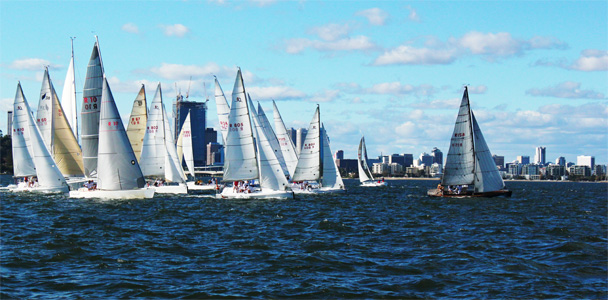
I had informed the skipper of the yacht I sail on of my movements, they were to wait at the jetty until a pre-determined time and depart without me if I couldn’t make the deadline. My schedule was tight but I believed I could get to Royal Perth Yacht Club on time. I was lucky to get a taxi straight away as I needed to get home, get changed out of my drill press work clothes and into my sailing whites.

Fortunately I live within a 15 minute drive away from Matilda Bay, if traffic conditions allow and I had envisioned any traffic delays I will be there on time. Dropping through the clouds as we descended, the flight was on-time so I have to quickly collect my bag from the carousel and straight to the waiting taxi – no sweat. I know I have a pretty good job when I am 600 km away and still able to get an afternoon sail in – life is good.

Why I won’t be officially reprimanded for my social media use

I have been dragged into the office and unofficially reprimanded for my social media use. The first question was after a number of print-outs of my blog posts were held up asking if this was me, naturally I replied yes.

Firstly, Observations in an Undemocratic World is my blog, secondly there is a picture of me on the page and thirdly I stand by what I write. I was never going to deny writing this. Now let me explain for the record, I do not dislike this particular director, he is undoubtedly an usual fellow by virtue of his communication methodology, but I don’t think he is necessarily a bad person.

I fully expect he is under pressure from others higher in the organisation to get this sorted and then hampered by not allowing him the latitude to make the decisions to make this go away. The union representative speaks well of him and his attempts to do the right thing by the union members instead being burnt by higher management. Based on his personal experiences, he now only pursues causes he believes he can win. Despite our professional differences – I hold no personal animosity towards him.

A number of weeks before I was questioned over my social media use, a colleague contacted the Minister of Training and Workforce Development over workplace issues. He was reprimanded for his social media use giving me the impetus to write about the issue. It was pretty easy to trace it to him as he used his personal account to write directly on the Minister’s Twitter account.

So I decided to write a post titled Twittergate and the perils of social media in relation to his social media use and his misguided attempt to ensure better outcomes for the students in his care. Let’s not forget, this is all about student outcomes and his intentions were purely for his students. We need to progress student outcomes, we come up against so many internal obstacles, we need to navigate an internal bureaucracy that is intent doing very little.

But my case is different, firstly I took the organisation [who will forever remain nameless] to the Industrial Magistrate’s Court over intentional breaches of of a certified agreement ratified in the Industrial Relations Commission. Despite their attempts by the state solicitor to get the case thrown out of court, the magistrate declined the motion allowing me to refile.

This was due to my poor wording of the submission as it was never expected to be tabled in the court but he felt the case had merit. The points raised in the submission were directed at the internal audience of my employer and not for legal dissection in the Industrial Relations Court. I do not write legal briefs, they require a certain wording and I did not follow the template for legal proceedings.

Probably had they handled the issue better it wouldn’t have made it that far and the issue would have been dealt with in a positive manner. I believed the actual threat of legal action would be enough for them to back down as they were acutely aware that they were wrong. They held a different point of view; they thought if they could apply enough pressure I would wilt. What they didn’t know was that certain managers and people in positions of authority had over-stepped the mark and scope of their authority.

I had kept all written communication and the verbal threats and intimidation contained certain information that was not in the public domain. Whilst I can’t verify verbal threats as it is illegal for me to record such conversations without personal consent, only certain people in positions of authority were in the know to the details of such threats. This is confidential information and somehow I seem to now know some limited details of the corruption enquiry when they questioned me in an attempt to flush out the anonymous reporter in breach of legal protections.

We then went back to mediation where they admitted they were wrong and I dropped the case based on a handshake. Needless to say, they then denied parts of the meeting and backed down on their word. So here we go again, they thought that once I dropped the legal action I had lost my leverage; what they didn’t know was that I was in possession of information that would support my legal action and take it to a whole new level.

So when they came across my social media accounts, they were not going to officially reprimand me because I had not posted on the Minister’s Twitter account. I hadn’t named the organisation where I am employed so it wouldn’t be unreasonable to conclude their were stalking me on social media based on my actions in the Industrial Magistrate’s Court.

It would be difficult to explain how they actually came in across Observations in An Undemocratic World including my Facebook account and other social media accounts. Finally there is the use of the State Solicitor and the costs involved in an unsuccessful attempt to defeat me in the Industrial Relation’s Court when they later admitted wrongdoing in return for me to drop legal action.


I have had it with Hewlett Packard, no more

I have had it with Hewlett Packard, no more. This is the last time I will own a HP computer, it drives me insane, the slow processing, locking up and generally not performing. I don’t really want to have to purchase a new computer as this one is reasonably new, what I never want to own is another computer like this one.

For a minute, let’s forget it was loaded with Windows 8, the most useless operating system I have ever had the misfortune to use. Let’s forget about the fact that this computer will just not upgrade to Windows 10 and has compatibility issues with just about every program I run. Do I run disk scans – you bet. Defrag the drive, yes I do. Do I run the problem solving program? Well I try but it locks up with no resolution so this is the last HP I will ever own.

A denial of carriage

Standing at the check-in counter allowed me to witness a denial of service by an airline. A gentleman was checking-in until the counter staff detects his passport has less than six months remaining and he is pulled aside and will be denied carriage. He actually took it reasonably well, he made a couple of phone calls to his friends and was planning to head back to the city.

He was given advice to immediately head off back to the city and get to the passport office that afternoon before the office shut for the Christmas break. I understand the reasoning, he needed six months remaining on his passport despite only taking a week’s break in Bali. Should he get injured requiring hospitalisation then he will have an expired travel document but although plenty of people get involved in scooter accidents, most don’t require six months work of medical treatment and should they need such treatment, it can be organised during the bed rest.

Missing a work flight

Over the past decade I haven’t flown much for work, the previous twenty years I flew on a regular basis and never missed a flight – this was all to change. So when I missed a 7am flight for work, I knew I was in trouble. The flight was paid for by the client whom we were consulting as they outsourced their maintenance training.

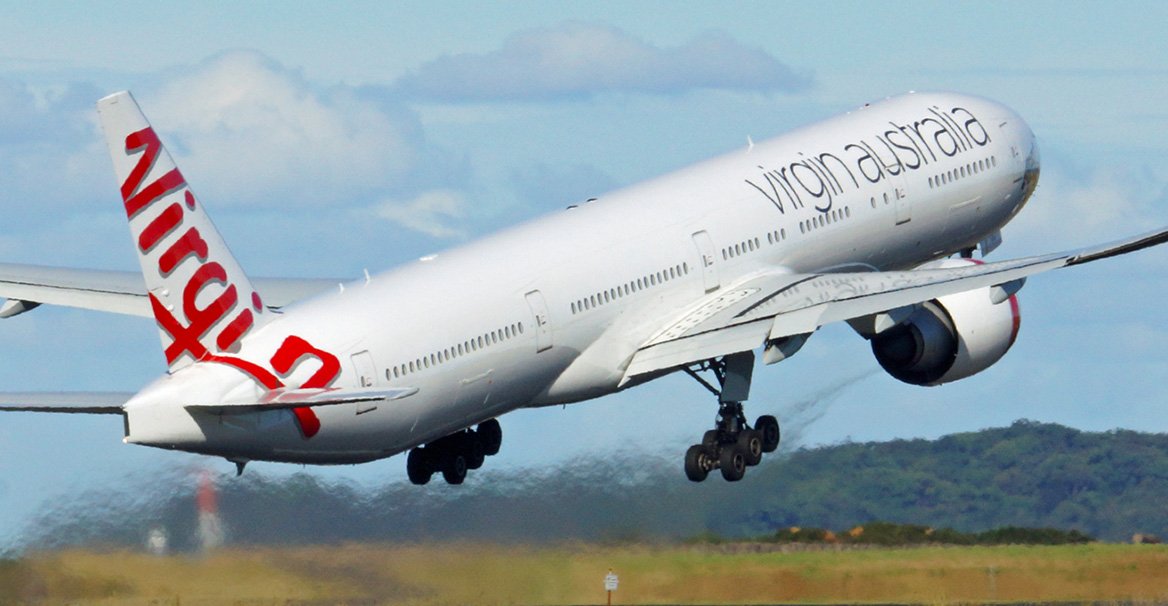
We were experiencing a number of difficulties due to non-aligned strategies and whilst we had plenty of reasons for this, we needed to get back on track quickly – this just blew that. I was booked to fly Virgin Australia from Perth to Kalgoorlie and there wasn’t another flight to Kalgoorlie by Virgin until around 4pm. I had effectively messed up a two and a half day visit. I was thinking, this could be the issue that really blows the relationship apart.

Breaking into a stressed state, I felt like throwing up, this missed flight was my mistake and I knew it. I had ordered a taxi and it was late to arrive, I am guessing this is when the taxi drivers cross over from nightshift to dayshift. I went onto their automated booking system and booked the taxi later than I should have. Regardless, plenty of people make it to the airport on time so there is only one responsible person at fault here. There is no value trying to apportion blame to taxi drivers, it was me who booked the taxi too late and left no room for late arrival.

Enquiries with the Virgin floor staff were no help so I quickly jumped onto a terminal bus and made my way to Terminal 4 and purchased a ticket with Qantas on a midday flight. This last minute flight was fairly reasonable and since this was my mistake I didn’t mind placing this charge on my credit card. Trying to call our office and going onto voice mail didn’t calm me, I rang the phone number on my business card and it wasn’t working so I know why clients get agitated. I couldn’t get through to the client either, they went to voicemail too so I was really getting annoyed.

I am of the belief that whilst it isn’t ideal when you make a mistake, the way you approach the solution is the primary factor in achieving favourable outcomes. Despite my initial stuff-up, I was determined to ensure this was a successful trip for both the client and ourselves and it turned out to be exactly that.

Bitcoin – bubble or hysteria?

I am hearing many stories about crypto-currency and the associated payment system Blockchain transaction ledger. I am also closely watching how bitcoin is reaching unprecedented levels of speculation making tulips look like just a minor bubble. You know you are witnessing a speculative bubble when everyone is talking about it so I’m interested to witness what will happen next.

So I read there will only ever be 21 million bitcoins minted, so there is a finite supply that apparently won’t be increased. So far, in an attempt to create an artificial scarcity by the anonymous creators are controlling the release of bitcoin to create demand. But unlike tulips, possibly the first financial bubble to implode, there is no physical actual bitcoins you attain, instead they are purely a electronic transaction although people are willing to trade bitcoin for actually currencies, goods or merchandise.

So crypto-currencies are both a payment system and a currency of sorts, yet are not backed by a standard such as gold or other precious metal. Instead bitcoin is a decentralised currency that is not associated with any country or bank. This is a peer-to-peer payment system and not supported by an economy as national currencies currently are or as gold once backed national currencies.

Previously national currencies were once backed by the gold standard under the Bretton Woods agreement implemented directly after the second world war. Although, that policy was repealed when American President Richard Nixon ended the convertibility of US dollars to gold in 1971 in a series of economic reforms.

The argument is that as an economy grows so should the currency in circulation. The gold standard acts as a brake and limits economic growth with monetarists arguing that recessions are created by limits to money supply. I\’m expecting bitcoin to go higher in the short term as demand soars as supply is set with people willing to apparently purchase at any price. I am also waiting for the implosion that follows every speculative bubble and this speculative bubble won’t be any different.