Retiring young

How young is too young to retire? I meet people in their 20s living a travelling life of part time work throughout the year. That is full time work for 3, 6 or 9 months of the year and then spending the remaining time travelling to an overseas destination. This is normally a developing country where the currency conversion is good and the cost of living is cheap. The plan is usually work in a country with a strong currency and a high cost of living coupled with high salaries to compensate for the cost of living.

Is this really retiring? No, not at all because to retire is to give up work completely. However, there is always a caveat because a retiree can engage in a little part time work to keep themselves busy and to supplement their retirement income. The next group is in their 30s, they have had a decade or so of employment and have either been extremely well paid, developed a successful business or come into money through a lottery win, inheritance or marriage.

They could have a successful travel blog, Instagram page, YouTube channel or some other electronic business to generate an income whilst travelling the world. There is always family money, that can come at any age but who really wants to live off their parent’s money? I was lucky enough to be able to work half a year and travel half a year in my late 20s right up to my mid 30s before rejoining the workforce full time again at age 37. I still get to travel overseas on a regular basis anywhere from three to five trips a year, but it is short term travel of two weeks duration these days.

That decade was the greatest period of my life in terms of lifestyle but a real career killer – not that I’m complaining. I had to re-enter the workforce to ensure my retirement was looked after. I needed to pull my head in and get serious about contributing to my superannuation fund. I was lucky enough to join the state government at the right time and still be able to join the state government retirement fund before they clamped down on the conditions.

The majority of people I have come across who have retired early are in their 40s, they have had enough time in the workforce to save for an early retirement, they could sell a business, derive an income from investments or received an inheritance. These people have sold businesses, have investment accounts and own property and I have seen people rent out their house to travel.

Living in low cost of living countries and owning properties allows them to live a relaxed lifestyle and their property usually appreciates in value. I have come across a number of people living in the Philippines in their 40s and 50s who owned their property that is rented out. This is a great strategy, owning just a single property allows a retired lifestyle of relaxation.

Most of the guys I have met through scuba diving so these guys have a job in a dive centre but there isn’t much work involved. In the low cost wage world of developing countries where locals are hired to wash the equipment, fill cylinders, carry equipment, boat crew and equipment repair; all they have to do is step on the boat and hang around the dive centre chatting to people before and after dives.

The last group I come across in the Philippines directly after the global financial crisis was a bunch of London stockbrokers, finance guys and IT people. They were displaced, they lost all their benefits, their income and their lifestyle. They were hanging out in a developing country where the living was cheap and the diving is good, some of them were still working remotely via virtual teams.

After diving they would have to go back home and log on and work; every now and again they would have to fly to Hong Kong for a series of face-to-face meetings. I never discussed income with them so I don’t know how good their deal is, I’m guessing their cost of living and their lifestyle more than adequately compensates them. Maybe semi-retirement can be achieved through a lifestyle change and low-cost living, the people I meet seem to be enjoying their new status and lifestyle.

No promotions from this one

I always try to be positive when commenting on the Western Australian Police; they do a fantastic job under trying and difficult conditions. They have a strong social media presence; their posts are lively and funny and they have strong community support. I haven’t heard too much chatter from the police communications unit on this one though – we are all laughing nonetheless.

The police were tipped off about a cannabis crop cultivation at a semi-rural property in Perth’s southern suburbs so the decision was made to intervene. The police raided the property finding a hydroponic system growing plants in structures around the property. I guess the raid was pretty textbook, an elderly male and middle aged female, they wouldn’t put up a great fight.

As a result of the raid, the police arrested a 61 year old male and 41 year old female; a crime scene was established and two uniformed officers were posted to guard duties of the property overnight. Apparently, removing the drugs at night would have required overtime so this is the most probable reason for leaving the crop at the scene.

In the morning after a warrant had been issued, the main police detective contingent returned to the property finding the crime scene had been breached with 100 cannabis plants now on the run. Yep – all the cannabis plants had been stolen whilst under police guard and they didn’t know until the detectives arrived in the morning. It’s hard to believe, but I kid you not – the Western Australian police had the whole crop stolen from right under them.

So now the Internal Affairs Unit are involved along with the Organised Crime Squad, what a disaster this raid turned out to be – they are now the laughing stock of the country. The police have been busy raiding multiple properties in the aftermath seizing plants and cash, as far as we know detectives have taken all confiscated property with them.

The Western Australian economic upkick

Whilst not a quantitative analysis, I am beginning to see not only an improvement in business confidence, I am also beginning to see an upkick in recruitment and selection. After years of decline, we are finally beginning to see some economic light.

The state government had announced a gold tax in a feeble attempt to restore state finances ravaged by the GST distribution inequity but that bill failed in Parliament so the largest risk to the state economy has passed. Iron ore prices are depressed, other commodities are down but gold is hanging in there around the $1344 USD mark per ounce.

I was recently on-site assessing the competence of maintenance personnel when discussions with the maintenance supervisor almost knocked me over, they were seven personnel understaffed in their engineering workshop facing difficulties with not only current projects but future projects tendered upon.

The government is mad insofar as trying to place extra taxes above and beyond normal taxation in order to improve budget deficits. Why destroy an industry already adding to the economy? The job of government is to create the environment for stable investment with the dividends of that investment returning to inhabitants improving services from health, education and transport.

Regardless of state government inefficiency and meddling in the economy, the worst of the downturn appears to be over and the mining based powerhouse is expected to once again drive the economy. We might not return to full employment as we did before but the people displaced from their jobs might begin to gain a regular income again.

The Australian of the Year

Leading into Australia Day, there are plenty of times I disagree with the selection of the Australian of the Year after high profile sports stars and actors/entertainers such as Adam Goodes 2014, Ita Buttrose 2013 and Geoffrey Rush 2012 were selected over more anonymous but no less tireless achievers. We could probably argue Ita is a journalist and not a television star even if she has a strong TV presence.

The Australian of the Year is announced on the eve of Australia Day with Quantum physicist Professor Michelle Yvonne Simmons winning the 2018 award. Whilst there is a little irony that the Australian of the Year emigrated to Australia from Britain in 1999; she was educated and grew up in the UK so one could argue holds English traits and values.

However, we could also argue it doesn’t matter where you are born and grew up, it is what you bring to Australia; there are worries here, she brings heaps to this country and has been an Australian citizen since 2007. We are more than lucky to be able to claim her as an Australian and the population I suspect is more than happy to adapt a person of her calibre. I would argue she she has adapted Australian characteristics as much as we have adapted her.

Professor Simmons leads a team at the University of NSW Quantum Physics Department where her team developed the world\’s first transistor manufactured from a single atom including the world’s thinnest wire. Her team is now seeking to develop a quantum computer capable of revolutionising artificial intelligence, facial recognition, drug design, finance, traffic flows, weather forecasting and a whole load of applications requiring amazing computer power and capability.

Her acceptance speech touched on Australian researchers holding unique advantages from being down to earth, being results driven and a holding a distrust of authority. Whilst Professor Simmons makes a great role model for women seeking to break into science and technology, I would argue she makes a great role model for anyone regardless of gender. This year science beats sport and entertainment.

Australia Day and our convict heritage

Leading into Australia Day, this is celebrated on the 26th of January; the national discussion has challenged the current date with calls to change the date of Australia Day. I believe this is a poorly conceived idea but some people argue otherwise. There are some that call this invasion day in solidarity for the Aboriginal population, but I believe this is a simplistic argument. It is my belief that this is an inclusive country and we need to accept all inhabitants and their heritage, we need to be respectful of the Aboriginal heritage and include their culture as part of Australia Day celebrations and not create divisions within society.

When travelling overseas, I have been taunted on a couple of occasions and told that I am the descendants of convicts. This is clearly an attempt to rile me up and never works – I actually enjoy the laugh. Some research is in order as I do want to have an answer for them, if anything, just to shoot down their ill-conceived insults.

This has been when I have been first introduced to people I have never met before – very strange behaviour. My family name is OHalloran, that\’s Irish and the family came out during the Victorian gold rush before moving to the goldfields of Western Australia. My grandmother came from Kalgoorlie, still the capital of the West Australian goldfields. Besides, this appears to be their problem and not mine, so I ask myself, how many convicts were actually transported to Australia?

The eleven ships of the First Fleet arrived in 1788 in Sydney Harbour departing from Portsmouth in England for the 13,000 mile journey carrying about 1500 people in 1787. Prior to that, Joseph Banks had returned from a expedition in 1770 and declared this land as suitable for a penal colony. On board the ships of the First Fleet were 751 convicts and their children along with 252 marines and their families.

A further two convict fleets arrived in 1790 and 1791 before the free settlers began arriving in 1793. The French had also been interested in colonising the great southern land and the British wanted to get there first and claim the land for Britain. I believe the French were also interested in establishing a penal colony as this was as good a way to claim new territory.

Over on the west coast of the continent, the Swan River Colony was established in 1829 after an expedition in 1827. These were not the first Europeans to explore the west coast as the Dutch seafarers had navigated the west coast then known as New Holland with Dirk Hartog planting a pewter plate on an island in what is now known as Shark Bay in 1616.

Willem de Vlamingh mounted a rescue mission searching for survivors of the Ridderschap van Holland that had gone missing a number of years earlier. The three ships under his command landed at Rottnest Island in December 1696 and ventured up the Swan River in January 1697. They are believed the first Europeans to do so, although Frederick de Houtman may have also ventured up the Swan River in 1619 but this is unclear. Vlamingh’s trek headed north up the coast where they replaced the pewter plate left by Dirk Hartog also inscribing their own visit on the replacement plate.

The last shipment of convicts arrived in Western Australia in 1868 with the total number of transported convicts recorded at approximately 162,000 men and women transported on 806 ships. The convict transportation to Australia ended at a time when the population of the colonies was approximately one million people.

The purpose of the convicts was to provide labour to the fledgling colonies and by the mid–1800s there were enough free settlers in the colony to undertake the work with the colonies becoming self sustaining with convict labour no longer required. What is interesting is that even though slavery had not been abolished, at least in the British Empire, there was no slavery in the colonies although the convicts sent to the colonies were for reasonably minor infractions. 

The Aboriginal and Torres Straight Islander population in Australia is 2.8% of the total population with 649,200 people according to the Australian Bureau of Statistics in 2016 with the approximate population of 24,770,000 people in 2018. The 2011 population census identified approximately 25% of the population claimed their ancestry to be Australian.

An interesting statistic from the 2011 population census is 30% of Australians were born overseas with 46% having a parent born overseas. We might have started off as a penal colony back in 1788 but we are truly a nation of immigrants embracing a mixed race heritage growing as both a country and nation. 

Welcome to Adelaide

Our Jetstar flight landed at 10:05 on a Saturday night, the airport was all but closed with no shops open. The final flight of the evening was an Emirates flight departing at 10:35, that was it. So this was a Saturday night in the capital of South Australia.

Welcome to Adelaide, the city where fun goes to die. A little too harsh of an assessment, well maybe, but that was first impressions. As we climbed into the cab and headed to the CBD we weren’t left with much of an impression of a fun city. Our hotel was on South Terrace and it was like the city was shut down and off we went in search of some food at about 11 pm on a warm Adelaide Saturday night.

There were a few hotels open but they didn’t seem to be buzzing and they didn’t look to be serving food at not only this time of night or earlier and the five nights we booked here weren’t looking all that exciting. My first impressions of Adelaide were not brilliant – that’s true. I just hoped that during the course of my stay my impressions of Adelaide were to improve.

Locking your dog in a car almost always ends badly

Last week was a pretty cool week for Perth in January, we had the remnants of a cyclone further north drop a deluge of rain on the city bringing temperatures down. The authorities run community adverts on television and radio throughout the warmer months and possibly magazine and billboard ads too. There is no excuse for locking your dog in your car, you can’t claim ignorance as the advertising campaign is pretty good, they even run stories on the news about this.

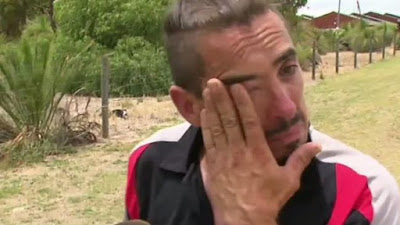
So when the news report came through that a dog had been died after been locked in a car my initial reaction was you arsehole, how could you be so stupid and cruel? But like most things, there is more to this story, this isn’t just a simple case of neglect and animal abuse. The man, Steve fronted the news camera sobbing “To the public out there, I’m sorry” as he apologised for his dog’s death. “If I could take it all back I would, I made one simple error, my intention wasn’t to kill my dog.”

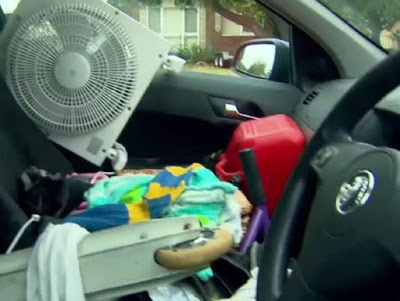
So how did this tragic story unravel? Steve had been living in his car since losing his job and then his home after the death of his teenage son to cystic fibrosis. He had left his dog in the vehicle as he went to lodge a rental application to hopefully organise himself a home for his dog and himself to live. I am guessing his dog Bully was his best friend at this point in his life as they lived together in his car. People argue, well he could have taken the dog out of the car and tied it to a tree in the shade while he lodged his rental application.

Unfortunately, people are losing their dogs from their backyards as people steal them for illegal dog fighting – so that really isn’t an option. He had no home to leave the dog so that isn’t possible either, could he have taken his dog as he lodged his rental application? Possibly, but that is usually frowned upon.

Leave the dog at a friend’s house? Once again possibly, but that is isn’t always practical and we don’t even know if that option was available as he could have been living at friend’s homes if that was the case. Well, why didn’t he wind the windows down whilst the dog was inside? One expects the simple answer was that as he had all his possessions in the car he wanted to lock the vehicle but the answer is even more basic – his battery was dead and he couldn’t wind the windows down.

A couple of people passing by saw the animal in distress and broke into the car to rescue the dog. The woman, Nicci is a trainee vet nurse along with another person got the dog out and placed under running tap water whilst performing CPR and chest compressions to the stricken dog in an attempt to revive the dog.

According to reports, the dog had two seizures and was bleeding from the mouth after throwing up in the vehicle. The temperature was 27°C which wasn’t really as hot as a normal summer day, but due to the cloud cover from the remnants of the cyclone the humidity was higher than normal. This is horrible, the poor dog was in a terrible state, this shouldn’t have happened, that’s for sure.

She told reporters that the bull mastiff at 40 kg was just too big and she didn’t have the lung capacity to revive the dog despite her attempts. Despite her heroic attempts, the dog died a painful death and that is a tragedy. Taking Steve’s circumstances into account; I think he has lost enough and on this occasion, I hope the RSPCA doesn’t prosecute as I am sure this won’t happen to him again as he was genuinely distressed and remorseful.

Flying domestic again

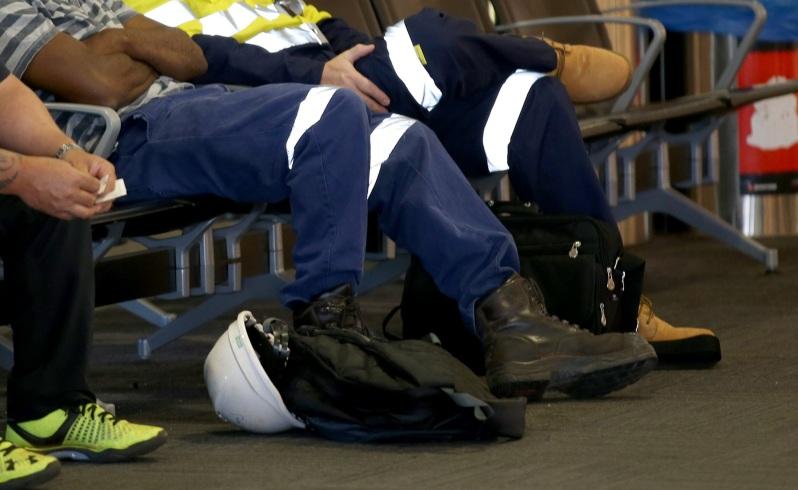
For the last decade the majority of my flights have been international and I have had little need to fly domestic routes, some, but not many. Over a four week period just before Christmas, I saw about eight domestic flights due to work commitments, so I have reacquainted myself with domestic flying procedures. I did not mind spending some time at the domestic terminal, it is a change for me.

With the exception of a return flight to Adelaide, the flights were within Western Australia and just a hour’s duration. This suits me, I really don’t enjoy flying insofar as I need to get to the airport early, begin work as soon as I arrive after hiring a car and driving out to see the client before getting back in the evening for the flight home.

I don’t mind getting up at 4:30 am and waiting for the 5:15 taxi to catch the early flight and walking back through my door at 8:30 in the evening. Actually, I really like getting home again even if is a little late as I will be back in my workplace again in the morning but I get to do it from home. For over a decade I worked away from home, times change and coming home in the evening is great.

The unimaginable consequences of cyber-bullying

It saddened Australia and the story needs more coverage to hopefully prevent this occurring to more families across the nation. The suicide of fourteen year old Amy ‘Dolly’ Everett due to online bullying is a disgrace; how could a young life be cut so short? How could a person feel they have no other option but to take their own life to stop the cyber-bullying?

The way the family have conducted themselves during this ordeal has won the respect of the county to raise awareness of teenage suicide. I am personally full of respect for the family and I can not feel or comprehend the loss they suffered. This was a shocking event that shook the nation, the cyber bullying is real for these teenagers and they are trapped.

Her father, Tick Everett invited the cyber bullies to the funeral to witness the complete devastation they had caused their family. This challenge is not made out of anger or hate, but so they could comprehend the consequences of their actions to prevent future occurrences – he wants this cycle of cyber abuse to stop.

He, along with wife Kate and sister Meg has been very vocal openly discussing his daughter’s suicide because he doesn’t want another family to go through the same devastating loss they are going through. The Everett family has launched an online campaign to raise awareness of cyber-bullying and harassment. I feel I should also do my part, however small, to help raise awareness of the effects of cyber-bullying.

The Everett family and friends has established a foundation via a GoFundMe fundraiser page to provide financial support to charities through promotion and discussion to recognise cyber-bullying to prevent the devastation of this loss afflicting other families; the page is https://www.gofundme.com/dollys-dream-foundation

Lifeline 13 11 14

Suicide Call Back Service 1300 659 467

Kids Helpline 1800 55 1800

Reporting wrongdoing is not vexatious – it is a requirement

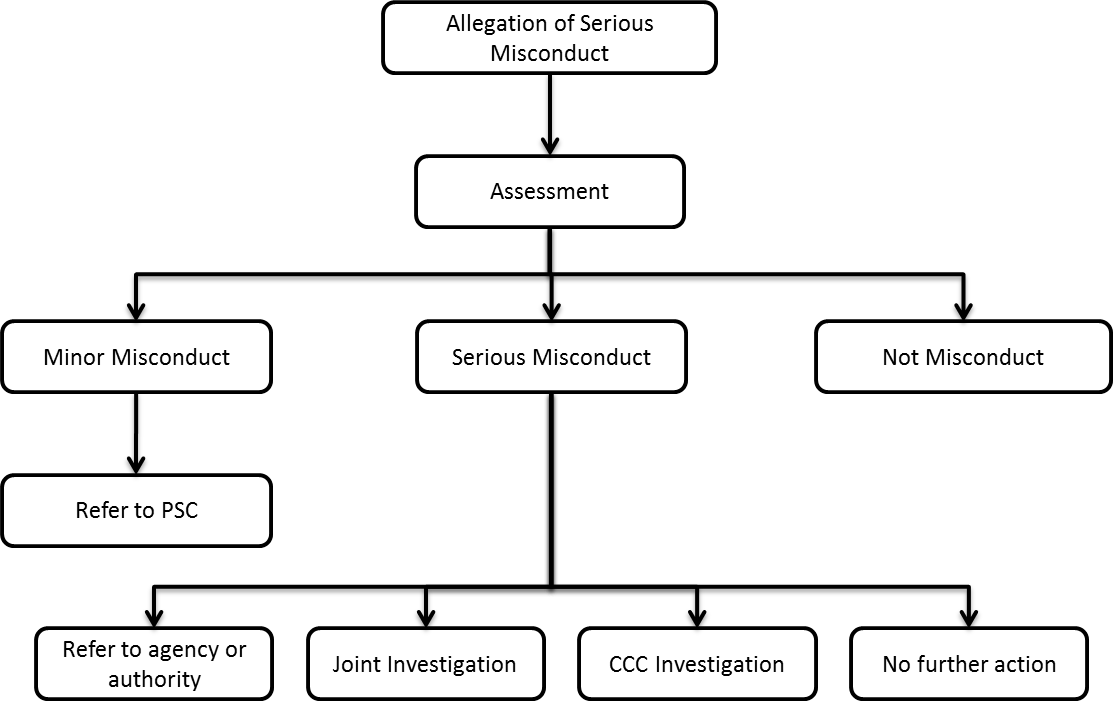
It is not vexatious to report misappropriation of government funds and/or corruption; in fact, it is the duty of every public officer to report inappropriate dealings, actions or behaviour. In the public sector, we actually undertake training so as to understand and identify such behaviour so as to not inadvertently commit an act of wrongdoing and believe I am acting within the scope of this training.

The purpose of ethical decision making is to train staff to identify inappropriate behaviour, the risk to the organisation and the community as a whole. I am loathe to use the term fraud as the requirements involve receiving a personal financial gain, that will all come out in an investigation. The onus then falls onto me to prove my claim against an individual and I am not targeting any individual; that is not my intent, my purpose is to protect the organisation and the public who is served by the organisation.

I am attempting to keep this issue in-house; but you argue, hey, you are writing about it on your blog. True, I am also taking a series steps to keep my government department anonymous as my wish is to avoid reputation damage to my employer. My blog is Observations in an Undemocratic World and deals with such issues since I began this blog back in 2013.

It is true I write about my anonymous organisation so they feel they are under pressure to act and not become involved in a cover-up – this is entirely my intention. I am aware they cyber-stalk me reading my blog as this discussion has come up on a number of occasions. But since I do not identify my employer, they won’t take formal action – I am almost daring them to so but they don’t want this to become common knowledge.