The Lucky Country – no recession for a generation

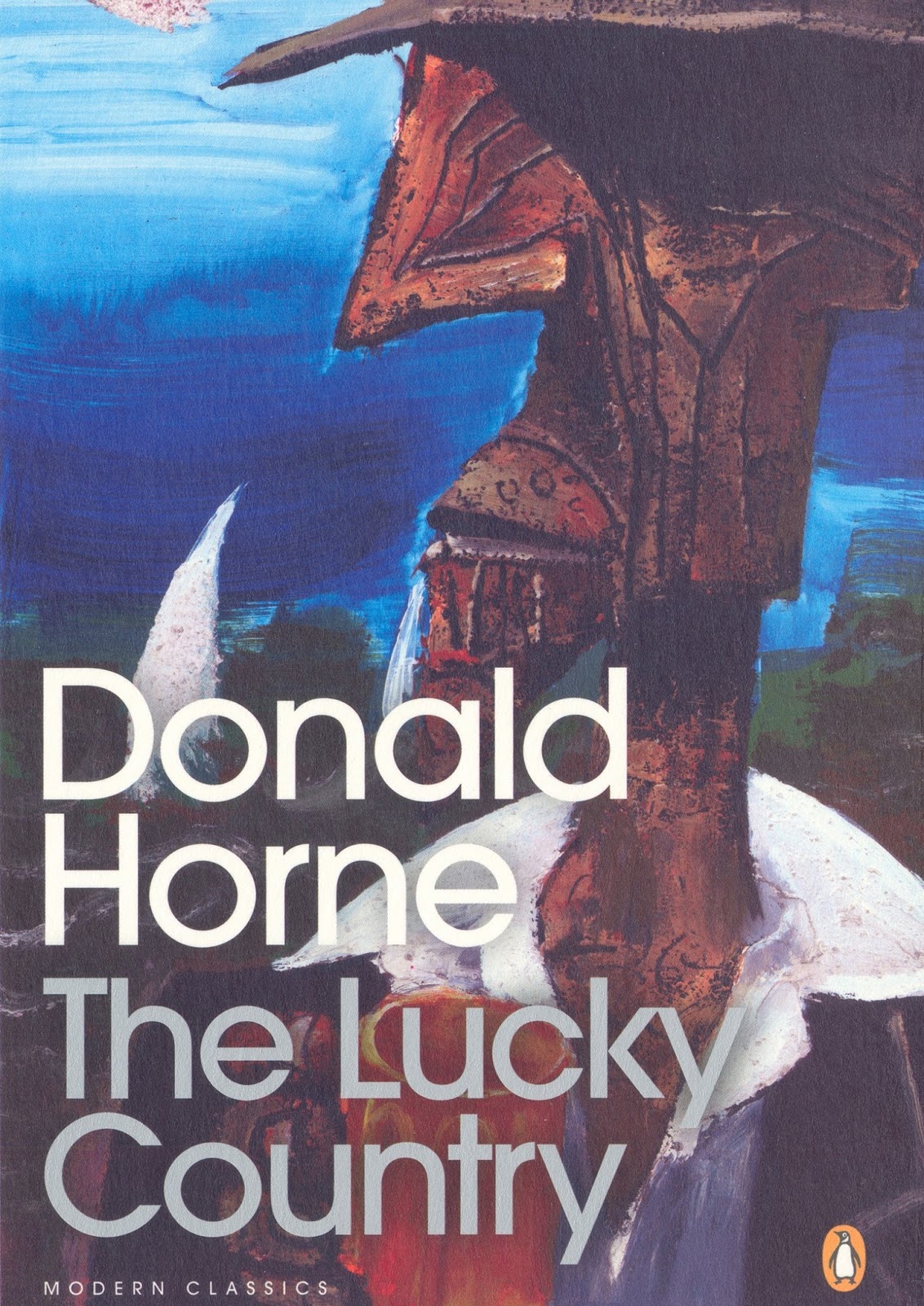
Australia was dubbed the lucky country as a somewhat of a ironic term, but the description has been largely misquoted from an insult to a positive. Penned by Donald Horne in 1964 in his book of the same name; Horne’s critique of the nation is “Australia is a lucky country run by second rate rate people who share its luck.”
We may well fit Horne’s description as the lucky country as we have avoided a recession for over a quarter of a century. Prior to the 1990/91 recession we had become accustomed to a recession every seven years or so. Post 90/91 recession we have had a number of economic downturns from the Asian currency crisis, the tech crash, the GFC and Chinese demand slowdown but we have somehow managed to avoid a technical recession.

Tell that to anyone caught up in the downturn and they will struggle to pick the difference. We are now in the midst of an economic downturn and people are feeling uneasy, people are feeling we have delayed an economic downturn but still feel we are going to pay the debt somehow. Even though we have managed to avoid a recession, the household debt we have accumulated during this period is now the largest risk to the economy.

Our failure to squander the twin mining construction booms by firstly paying off debt before taking on more debt without initiating a sovereign wealth fund for future generations. The Howard Government established the Future Fund to cover the expenses of federal government retirement obligations with $156 billion of funds currently under management. However, this isn’t a true sovereign wealth fund for the benefit of all Australians, just senior public servants.

To a lesser extent, there is a Medical Research Future Fund, Disability Care Future Fund, Education Investment Fund and Building Australia Fund but the funding is well under what they should be. Whilst some may argue the retirement savings of Australians held in superannuation with over $2 trillion in funds under management is a wealth fund.

This is the fourth largest pool of retirement savings in the world constituting a form of wealth fund, this is a private series of funds and not a sovereign wealth fund as such. There is however plenty of discussion that the funds under management still won’t fully finance the retirements of the majority of Australians and the federal government will still be required to partially fund.

Our concerns are the investments that could decline in value following an economic downturn similar to Black Monday, the Tech Crash and the GFC could wipe out the values of retirement accounts when we do finally suffer a major economic downturn resulting in a lengthy and costly recession sending our retirement funds to money heaven.

The tall poppy syndrome

The tally poppy syndrome may be described as a social phenomenon where people of genuine talent and intellect are resented due to their outstanding achievements distinguishing these individuals from the average everyday person.

In many respects, I admire the egalitarian attitude of Australians seeking to dismiss pretense; but greatly dislike the resentment of successful people who have achieved or over-achieved. The tall poppy syndrome runs contrary to everything positive people achieve instead focusing on negativity, jealousy and reinforcing the behaviour of their own inadequacies.

There is much I like about the American persona and their attitude of wanting to achieve success whereas the Australian attitude seems to be if they achieved success of some sort is by deceptive means and not talent, hard work and skill. In this regard, the American attitude of success and achievement is superior to the Australian attitude where we cut down successful people.

Live sheep exports – this has to stop

The story 60 Minutes Australia reported that aired on Sunday night was an outrage to all rationally minded people. The live sheep export to the middle east is exposed with the 60 Minutes promotions stating that the report on Sunday night at 7.00 will spark an outrage – this is absolutely true.

Whistleblower Faisal Ullah secretly filmed the conditions sheep on board bulk carriers are exposed to – horrible. They are squalid, for years, live sheep exporters have assured the Australian public the well-being of sheep on these voyages is their priority – this claim has now been well and truly refuted.

The footage sent to the Federal Minister on Wednesday by Animals Australia needs to spark a federal enquiry; one suspects the footage was also passed onto 60 Minutes Australia who aired the segment – for this we are thankful. Pressure needs to be applied to the federal government; now 60 Minutes has aired the story, the federal government will be forced to act.

Filming onboard sheep ships has been banned by the operators; all requests by news organisations had previously been denied – it’s now not hard to see why. 60 Minutes describes this as explosive footage in their promotions and they are correct. They air secret footage they claim will shock the world, this animal cruelty had to be exposed and action needs to be taken immediately.

Channel 9 reporter Liam Bartlett stated on Twitter that Australians will be horrified, that is an understatement. Bartlett also hinted that the only reason Federal Minister for Agriculture and Water Resources David Littleproud acted was because of the footage aired on the program. Possibly, but I like no doubt many others will want answers and those answers had better be good.

Faisal Ullah, who is a graduate of Pakistan’s Marine Academy was employed as a trainee navigation officer on five shipments from Australia has done our nation a great service; he couldn’t just stand by and do nothing. One suspects his whistleblowing has just scuttled his maritime career just as it was beginning, we hope he is not black-banned and able to enjoy a long and distinguished maritime career as he did the right thing and doesn’t deserve this.

Three days in Hong Kong

It had been nearly twenty years since I had spent a couple of days in Hong Kong, this was back in the days of the old airport well before Kai Tak Airport was decommissioned so I got a pretty good close up view of Hong Kong as the plane rumbled in between buildings.

Sometimes just getting there is half the adventure; however, my transit flight through Singapore wasn’t eventful and the cabin crew performed their jobs admirably. Jetstar to me is a cheap and nasty airline, they have plenty of little tricks to squeeze some more money out of you. I have been informed their staff aren’t well remunerated and the conditions are nowhere near as good as a major airline; regardless of their work conditions, they acquitted themselves well.

I too am cheap and I am willing to forgo comfort for a cost saving on selected flights. So with this in mind, I departed Perth after work on a late night flight to Singapore. I have been known to be a little critical of Jetstar in the past, although in my defence, this normally relates to their clientele on Bali flights.

Tonight was good, to save money I didn’t take any check-in luggage as the ticket costs soared so I decided on just carry on luggage. I exceeded the 7kg carry on luggage limit by 2kg and I was given a friendly warning to not do this again, I will heed her advice in the future. My next bout of anxiety began when I recalled the bottle of Hugo Boss aftershave I had thrown into my bag. There is a 100ml limit of liquids allowed on flights, this stuff is a little pricey and I wasn’t entirely enthusiastic about having this confiscated as potential bomb-making materials.

This was a brand new bottle so I wasn’t keen on confiscation. The customs and immigration staff asked about toiletries and liquids so I handed over my cologne and toothpaste; she thoroughly checked the contents and I must have not exceeded the limit – second win tonight. The aircraft arrived in Singapore at 4:30am and I was pretty tired, Terminal 1 at Changi Airport was open with only a few food and beverage shops open for business. I grabbed a little sleep on the floor to clear my head, I was tired and I don’t sleep well on flights.

I cleared immigration and jumped on the MRT heading to Marina Bay for some breakfast at TWG Tea in the main shopping complex. I wandered around the mall for a while before heading back to Changi Airport. Arriving at Hong Kong International Airport late in the evening, I was surprised at the scale of the airport as all the terminals were remote. None of them were joined and arrival information was limited. Obviously the language was Chinese, I was thankful English flashed up every now and again but this was on little help.

I caught the Airport Express into Kowloon, this was well after midnight and although $75 HKD per person sounded somewhat expensive. The 5.9:1 exchange rate did make everything appear expensive, about $13 is actually pretty good value considering the distance traveled from the airport to Kowloon terminal. The first day was spent down in the Tsim Sha Tsui district on the Victoria Harbour waterfront. I was really looking forward to wandering the waterfront before heading into the space museum but this was unfortunately closed for refurbishment and the opportunity was missed.

I visited there back on my first trip to Hong Kong and I really wanted to visit again. There was intermittent rain throughout the day and a pretty good day was had in the district. Going out to dinner was interesting, the area was really exciting on a Friday night, this was fun. The second day was spent on the Hong Kong side of Victoria Harbour, the plan was to walk the old town through the historic streets viewing the sights. The rain had not let up all morning and I was attempting to navigate the undercroft areas.

I was the only person without an umbrella and when the downpour came, all hopes were dashed and the day was spent in the malls around Central and Hong Kong MRT stations. The rain never let up all day and even returning home via Jordan station in the evening resulted in a drenching. Lunch at WG Tea was excellent but I had to enquire about the name change and was given a pretty good answer as the name was already registered in Hong Kong.

Still raining on Sunday, whilst it didn’t let up on Saturday, I was hoping the final day was going to be fine – it wasn’t. Headed back over to Hong Kong Island to see the sights we missed on Saturday and ended pretty much where we were on Saturday. I’m okay, there was so much more I could do and experience in Hong Kong but I have no regrets, I have more to do on my next visit and hopefully it won’t be another twenty years between visits.

Reckless riding

Domination of the roads continues in Perth with the war between motorists and bike riders showing no signs of abating. New laws have come into force requiring motor vehicles and trucks to keep a minimum of one metre between their vehicle and rider and one and a half metres if the vehicle is travelling at a speed above sixty kilometers per hour – fair enough.

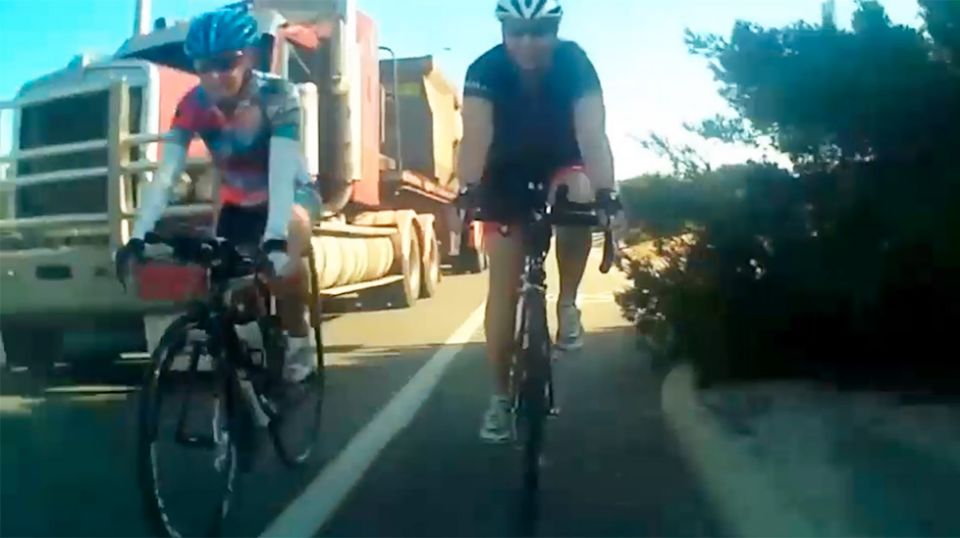
Bike riders are doing themselves no favours, a bike lane exists and riders want to ride along side by side with each other having a chat outside the bike lines. As we can see, the truck has moved well over and outside the lane to avoid the cyclist but should have never been in that position in the first place. Clearly both riders should have been within the confines of their bicycle lane riding in single file. Instead of complaining about truck drivers passing too close, pull your head in, stop being arrogant and use the dedicated bike lane as it was intended.

Hendrick’s Gin

For a country known for its whiskey, Hendrick’s Gin certainly got it together as an alternative to the Scotch whiskey normally produced in Scotland. That being said, distillers William Grant & Sons are known the world over for Glenfiddich, Grant’s, Tullamore Dew and Drambuie; so gin is an unusual addition to their range.

I rarely drink a martini anymore but a gin and tonic is my choice of a refreshing drink on a hot summer day. According to Leslie Gracie, Henrick’s Gin Master Distiller, Henrick’s is best served with tonic water over ice with a cucumber garnish instead of the more traditional lime or lemon slice. Gin is flavoured with juniper berry as the main ingredient; Henrick’s Gin is additionally flavoured with rose petals and cucumber infusions to add a distinctive flavour. I also read that Henrick’s utilises a marriage of two spirits produced from a Carter-Head and Bennet still to create a smooth gin balancing subtle flavours.

Considering the Oris Aquis Date

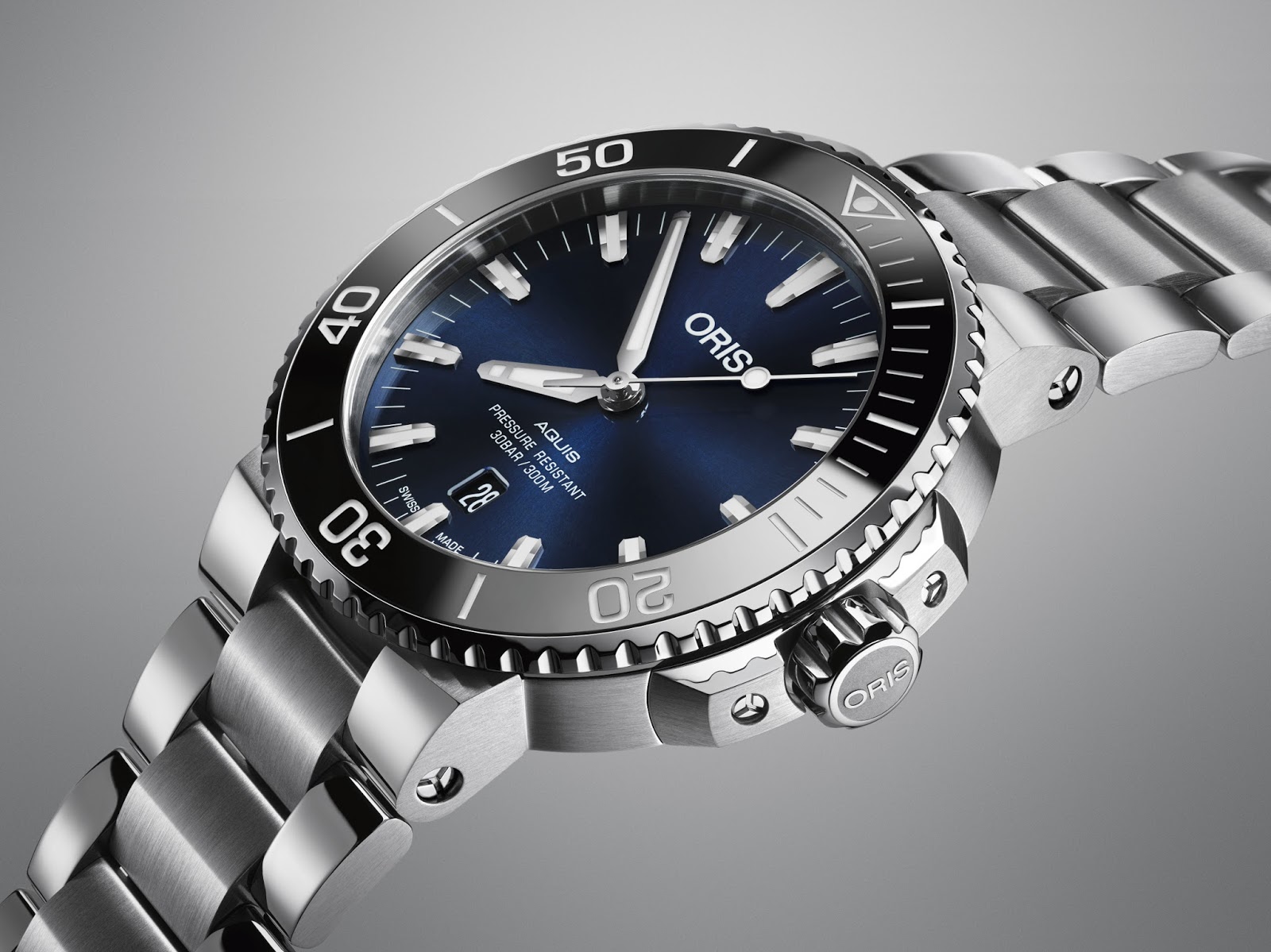
There is nothing subtle about the Oris Aquis Date, this is a large chunk of watch and exactly what I am looking for; so for this purpose – I want overstated. I am somewhat of a watch collector and although I currently don’t have a Patek Philippe, Audermars Piquet, a Vacheron Constantin or a Rolex in my collection – I am happy with my timepiece collection.

I don’t have a watch with a display case-back showcasing the intricacies of the mechanical movement. The Aquis is fitted with the Sellita SW200-1 automatic movement. Oris has stated that they have never produced a quartz watch and never will – a bold statement. The 2016 is constructed with the chunky bracelet whilst the 2017 model is described as more elegant shaving the bracelet thickness significantly.

The bracelet connection to the case is somewhat unusual as compared to standard dive watches adding to the uniqueness of the Aquis. The weight of the timepiece doesn’t match the bulk and I am left wondering about the grade of stainless steel used, still, it doesn’t appear soft. So I will more than likely add a Oris timepiece to the collection if I can secure a decent deal. Searching for the Oris on dive trips in the Philippines, I noticed that the Oris brand is significantly discounted as compared to Australian prices.

This is unusual as prices for both mid-range and high end timepieces such as Rolex, Omega, TAG Heuer, Breitling, Blancpain, Breguet, Tudor, Tissot, IWC, Longines, Bremont and Patek Philippe being significantly higher in the Philippines. I put this phenomenon down to the rich in the Philippines being readily willing to flaunt their wealth and willing to pay the going price whereas the average Australian prestige watch buyer is more price conscious.

This doesn’t explain the discounting of the Oris range, they are a quality watchmaker so I\’m guessing the range just doesn’t sell in the Philippines with numerous distributors willing to immediately drop 30% of the retail price. With a 42 mm case and very heavy-set bracelet, possibility this watch is too big for the average Asian wrist.

This is somewhat contrary to my view, I was sitting at a restaurant and spotted an Oris on the wrist of a diner and he was local Filipino. I thought I might go for the large dive watch look, I have been a diver for 25+ years and had previously selected understated timepieces – time for a change. It won’t be a desk diver, this will be spending time underwater throughout the upcoming summer.

If you push the distributor, they are willing to discount even further although sales staff must receive permission from the store manager to engage in further discounting. What I do see is authorised distributors in a dedicated Omega, a dedicated Longines, a dedicated Rolex or dedicated IWC store.

I am yet to see a dedicated Oris store in the Philippines so the general branded watch stores may be seeking to dump a line that sits in their showcases occupying space and tying up capital. It appears this timepiece is carried by more independent Philippine watch retailers with the larger retailers less interested in carrying Oris.

2010 Vasse Felix Cabernet Sauvignon

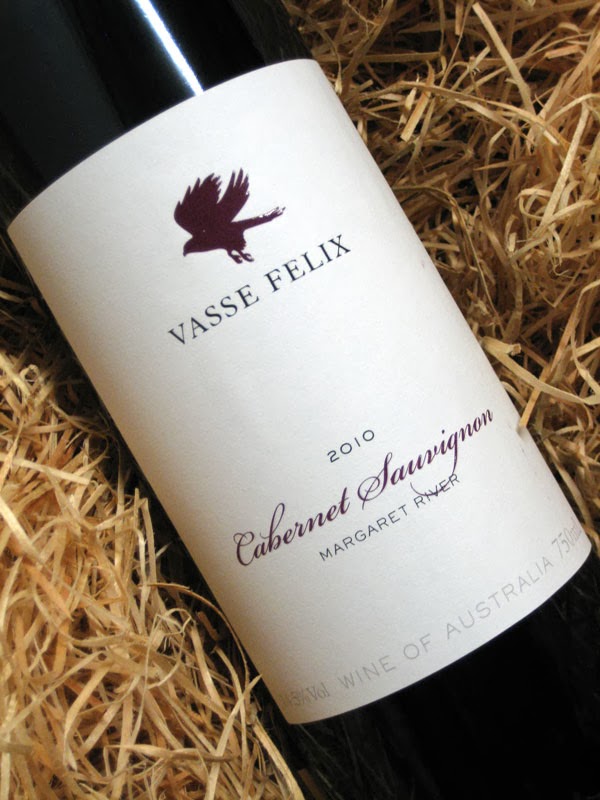
Knocking the top off a 2010 Vasse Felix cabernet sauvignon, I knew I was in for a good evening. The Vasse Felix cabernet sauvignon has legs, so a 2010 is an aged wine that has softened out somewhat and has plenty left, a further six to eight years is reasonable although the tasting notes listed up to 2021. Winemaker Virginia Willcock has certainly developed a reputation for quality, this an excellent example of Vasse Felix Margaret River winemaking.

As the opaque dark crimson wine flowed from the bottle into my glass, I viewed the dark red hue against my counter top, to my way of thinking, a good cab sav is dark but due to aging the hue is slightly brown at the edge. The bouquet exhibited complex aromas of blackcurrant, bay leaf and some hints of tobacco; the palette is described as medium bodied but I tend to think this 2010 is more full bodied.

Looking at the tasting notes, the 2010 is 88% Cabernet Sauvignon, 10% Malbec, 1.5% Petit Verdot with just 0.5% Cabernet Franc to round out the blend. The 18 month maturation took place in French oak with 51% new barriques and the other 49% in a mix of one to four year old barriques. I tend to buy in bulk directly from the winemaker and have to check exactly how much of the 2010 I have left as I will take some down to the holiday house to share with the family at Easter.

No style – no boundaries

On a pre-Christmas holiday flight from Perth to Denpasar, a flight I always dread owing to the clientele this flight attracts, I was once again left dismayed. Poking through my armrest and into my seat area was the bare foot and painted toenails of the person behind me.

Unbelievable, do people have no boundaries? Firstly, this is an armrest on my seat, the foot rest resides at the lower section of the seat in their space. So rubbing against my elbow was the foot of a thoroughly disgusting individual, needless to say I jammed my elbow back yet they refused to withdraw their foot. I tried to jam a book in there to form a barrier but it wouldn’t stay there.

I couldn’t raise the armrest as it was fixed and they didn’t get the hint. I couldn’t recline the seat either or I would have considered thrusting that back in a forceful manner so they jam their legs in the space and hopefully learn their lesson. Maybe I might take my shoes off and sit them on their armrest, so this how air rage starts?

Even with my headphones on I was unable to drown out their accent of their German language they decided to project across the cabin at maximum volume. Not that I have anything against Germans – just keep the decibels to normal speaking volume – this is how backpackers get a terrible reputation. These budget flights space their seats in a very close proximity so they are able to squeeze more passengers in so space is at a premium.

I am ok with this, I like cheap flights to a holiday destination as much as anyone and understand a critical mass of people reduces costs for everybody – great stuff. However, this isn’t a license to act in an anti-social manner, show some respect for other people in the cabin you self-centred arseholes. We have to deal with you as well, we want to go on holiday too, yet we still have to deal with you fools.

The New Silk Road

Globalisation is heralded as a new concept and chided as the destroyer of jobs and livelihoods in developed higher cost nations. Are high standards of living being eroded in developed nations through high costs and benefits?

Nothing is further from the truth as trading has been around since ancient time with the Greeks, Romans, Egyptians and Phoenicians as every nation must remain competitive in international markets. It wasn’t just the Mediterranean seafaring nations engaging in international trade, further east the central Asian nations were pretty adept at trade as well.

The Silk Road was an ancient network of trading pathways and communication channels linking the countries of Eurasia to not only merchandise and commodities but ideas, knowledge, values and beliefs. The Silk Road was not just limited to overland passage but also included maritime routes through a network of ports and coastal villages.

The overland thoroughfares linked the Greco-Roman civilisations to the far east with passages traversing the deserts of Syria through Iraq, Iran and Mongolia to China. This wasn’t a single route but a network of paths and roads purely linking China to Europe as India, Indonesia and the gulf countries were also connected by sea and land routes.

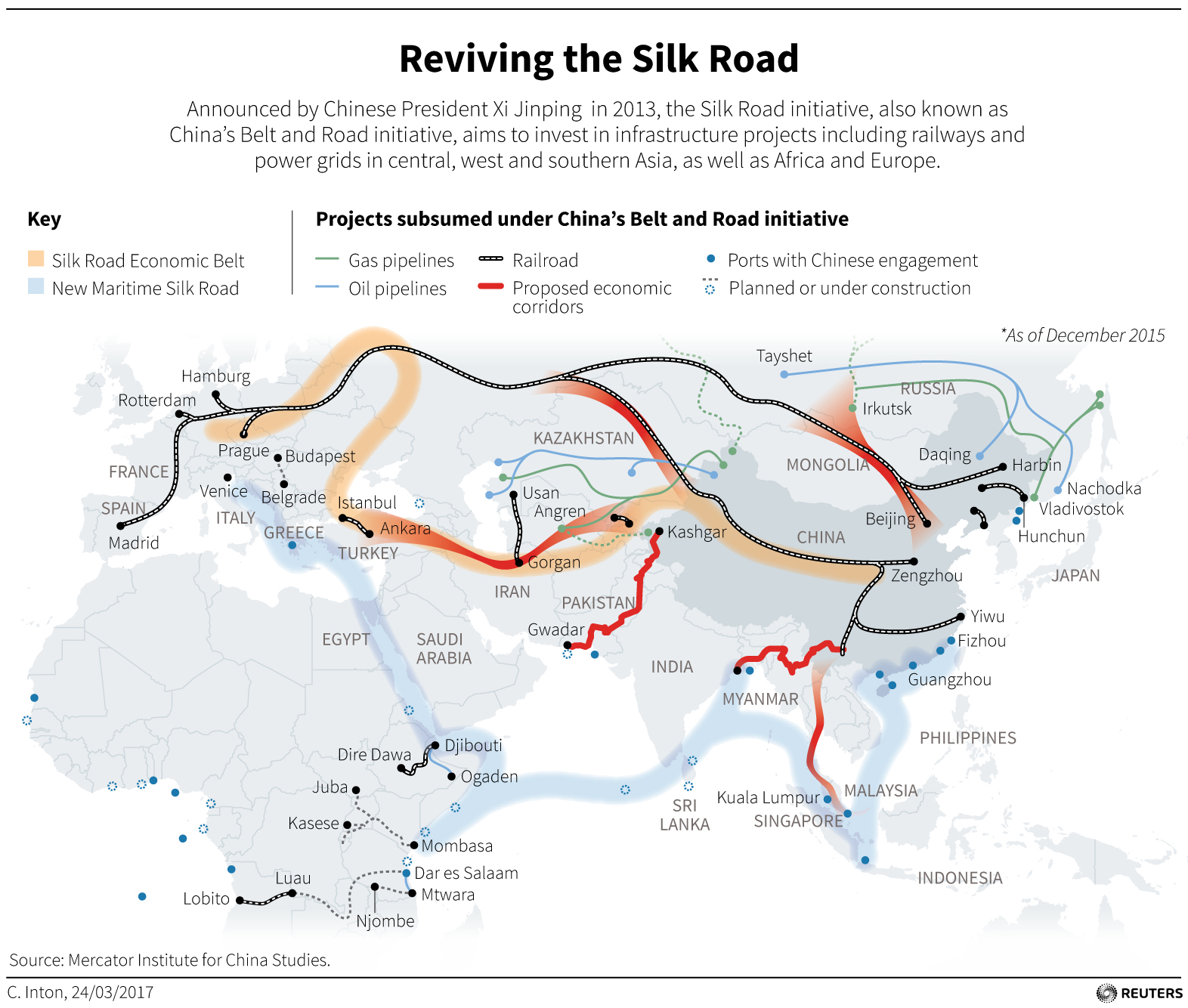
Chinese President Xi Jinping announced in 2013 an ambitious plan to build a new Silk Road known as the Belt and Road Initiative requiring the largest infrastructure programs the world has seen. An expected trillion dollar budget with Beijing announcing up to 8 trillion dollars will be lend to participating nations.

So, who stands to benefit from the New Silk Road? Naturally China, their manufacturing base has an over capacity and seeks not only new markets but higher value industrial goods. The Chinese manufacturing sector was pretty much the creation of western nations seeking to outsource their manufacturing to low cost centres, this was a mistake.

Chinese engineering and transportation is poised to benefit with construction and heavy equipment required during not only the construction phase but also ongoing maintenance. Nations that may have been seeking to move into cheaper low-cost manufacturing had been looking to undermine current low-cost Chinese manufacturing will undoubtedly be suspicious.

Some nations have expressed concern that this is domestic Chinese policy with geopolitical consequences. It is argued that whilst some countries are moving to a more self-centric policy withdrawing from international affairs. The Chinese government is seeking to build bridges and not walls. So who else benefits? The China Development Bank has set aside funds for infrastructure projects including gas pipelines, roads, bridges, ports and rail. A number of poorer underdeveloped nations appear to be the biggest beneficiaries although the terms of capital input.

There appears to be plenty of concerns with claims of a lack of transparency, negligible contract arrangements, high debt burdens and possible inabilities to repay loans. The question then arises, who takes control of the assets in these countries with poorer nations possibly losing sovereignty? It is fairly clear that China is the main beneficiary here, they appear to be buying votes at the United Nations.

There are claims of neo-colonialism and the expanding military presence seeking to economically marginalise the United States whilst expanding Chinese cultural influence. Whilst China has assured nations their intentions are pure, are richer developed nations concerns driven by paranoia or fear of marginalisation?