Circus Animals – Cold Chisel

After the success of Cold Chisel’s 1980 album East, their follow up album Circus Animals released in 1982. I would probably rate Circus Animals as my favourite Cold Chisel Album behind East as I feel the whole album is a little more polished that the raw and powerful East.

Cold Chisel, well known for the pub rock blues, I have heard the term boogie blues bandied around, but to be honest, I don’t really know what that is. A google search informed me the boogie definition is a blues style played on the piano with a strong fast beat. That possibly makes sense as key songwriter and pianist/keyboards player Don Walker had plenty of influence on the sound of the band.

As a young teenager knowing nothing of Cold Chisel, I purchased the single Forever Now at my local record shop for $1.99 and was amazed at the quality of the B-side Bow River. Later on I really related to the lyrics of Bow River describing the 12 hour days and “the money I saved won’t buy my youth again.”

My favourite song of the album was When the War is Over written by Steven Prestwich, described by John Farnham as the best pop song ever written when he covered the song at a concert. Forever Now was the song that got me interested in Cold Chisel, I already knew the most famous Cold Chisel song Khe Sanh, back then, I just didn’t know it was them who sang it.

The songs from the album:

  1. You Got Nothing I Want.
  2. Bow River.
  3. Forever Now.
  4. Taipan.
  5. Houndog.
  6. Wild Colonial Boy.
  7. No Good for You.
  8. Numbers Fall.
  9. When the War is Over.
  10. Letter to Alan.

A perfect strategy?

There is no such thing as a perfect strategy, there are no perfect organisations either, I totally agree with Sanjay as I doubt anybody would ever argue that point. 

The crafting and execution of strategy is the pinnacle for many CEOs and senior managers tasked with creating shareholder value. I have often been told you don’t need a perfect organisation or strategy, you just need a better strategy and implementation than your competitors – get that right and you will outperform your rivals.

Transiting through Addis Ababa

I am unsure if this is the longest route possible, it was a stopover I could do without but I was still happy to be heading home. I was boarding an Ethiopian Airlines 787 in Lubumbashi bound for Addis Ababa before changing flights for Singapore and then another Perth. This route has a four hour flying time so I have a couple of hours stopover time before the nine hour flight to Changi Airport.

I have been on site for nine weeks and was heading home for two weeks break. This passport saga had now cost me three days from my break. My return flight to site is based on my normal roster so this delay takes time away from time off site. I was already overdue for my break as I am on an 8/2 roster and this is further eating into my break time. As I was sitting in the departure lounge, I was aware I was already supposed to be sitting at home so that fact wasn’t lost on me.

I had organised family engagements, that was a non event but I have no complaints, this is all part of the lifestyle choices I made when I accepted this overseas contract. I’m tired, I was already feeling the effects of a long swing and I know this trip is going to wipe me out for a few days. I was surprised when we touched down on the tarmac in Ethiopia, the airport was nothing as I imagined. They have two terminals the airport is way larger than I expected. I had just departed Lubumbashi International Airport and that was exactly what you would expect for an airport in a developing African nation.

The Omega Planet Ocean METAS certified timepiece

I’m a big fan of Omega, this company has plenty of heritage to draw upon but it is the current models that I really like. The Seamaster line is 70 years old with the Diver 300, Aqua Terra 150, Seamaster 300, Railmaster and Planet Ocean 600 as the current range with 13 or so variations within the Planet Ocean category. My favourite Planet Ocean is the blue chronograph reference 215.30.46.51.03.001, the deep lacquered blue dial and ceramic bezel insert really sets the timepiece apart from competitors in my view.

Aesthetics aside, the powerplant is the 9900 co-axial movement that is METAS certified as a master chronometer with co-axial technology first designed by George Daniels and implemented by Omega. The Planet Ocean is a big timepiece with a 45.5 mm diameter that sits well on larger wrists but probably wouldn’t work for smaller wrists.

The eight tests to attain METAS certification by the Swiss Federal Institute of Metrology are administered at Omega headquarters in Biel. The METAS tests exceeds the Contrôle Officiel Suisse Des Chronomètres (COSC) certification that the majority of high-end Swiss timepieces comply to meet chronometer certification. Whilst METAS testing is pretty much an Omega certification, any brand may submit their timepiece for the 10 day certification process.

The eight METAS tests are:
  1. Average daily precision of the watch.
  2. Function of COSC approved movement during exposure to 15,000 Gauss magnetic field.
  3. Function of watch during exposure to 15,000 Gauss magnetic field.
  4. Deviation of daily precision after exposure to 15,000 Gauss magnetic field.
  5. Water resistance.
  6. Power reserve.
  7. Deviation of rate between 100% and 33% of power reserve.
  8. Deviation of rate in six positions.

Not all Omega timepieces achieve the METAS certification with only the high-end currently seeking such certification although I believe Omega is transitioning all timepieces over to METAS certification. The Si14 silicon balance spring, otherwise know as a hairspring that together with the balance wheel forms the harmonic oscillator in nonferrous ensuring the balance spring is not magnetised for magnetic resistance.

The other and older method to protect watches from magnetic fields is to encase the movement in a magnetic permeable cage, usually iron to attract the magnetic field ensuring the movement is unaffected. Needless to say, the Planet Ocean 600 chronograph is well outside of my price range. I do like to wander in an Omega boutique to try on a Planet Ocean from time to time when overseas to admire the engineering. Unfortunately, this chronograph won’t be taking pride of place in my watch collection anytime soon.

The Vacheron Constantin Overseas Automatic

I love the works of art that the luxury watch market produces, one such manufacturer is Vacheron Constantin, one of the three manufacturers forming the holy trinity of haute horology.

VC Overseas [Automatic]The first Vacheron Constantin watch I viewed really wasn’t a design I thought much about, I found the bezel distracting as the shape clashes with my sense of style. That being said, I am more utilitarian than most so tend to under appreciate styles that many consider notable. The 2016 release of the Overseas Automatic features a redesign with the Arabic numerals at the 3, 6, 9 and 12 positions replaced with baton index markers. The date window has been moved from just above the four index to the 3 o’clock position and hands receiving a finer finish. Viewing these timepieces in person, the Vacheron Constantin is a fine timepiece but not one I will be lusting for.

A right wing unionist

How on earth did I become a union representative who holds capitalist views? I believe in a fair go for all, the strong should protect the weak. I believe in the value of advocacy, you need to look after your colleagues.

Since I have worked in the state government, the only way you can negotiate salaries is via the union – there are no other options. The process is very hierarchical in nature, the management, who belong to their own union have their salaries negotiated on their behalf. So, I become the union representative for the branch; I made sure individuals who are marginalised and powerless in the workplace are treated fairly. This actually wasn’t that difficult, you listen to people, identify their issues then negotiate a response.

I studied business, nowhere does it state in any management literature I had read or referenced the need to belittle, humiliate or abuse individuals. In my studies we investigated strategies to develop a culture with the conditions to create value for the business leading to a sustainable competitive advantage. I wholeheartedly subscribe to leadership virtues espousing values, culture and respect allowing the ability of individuals to work hard for the organisation. In order to achieve this, the value of human capital needs to unlocked allowing these hardworking, creative and innovative staff to contribute as valued team members.

Millionaires in Australia

Thanks to the most popular asset class that currently propels the nation along, this is especially true on the eastern seaboard of Australia, more Australians are now able to call themselves millionaires.

The property boom that has showed no real signs of abating with the median house price in Sydney now over a million dollars ($740k USD) has also spilled over into Melbourne and Brisbane. Residential property is the primary reason for the increased numbers of millionaires in Australia that has grown to more than 1.16 people according to 2017 figures provided by the Credit Suisse Global Wealth Report. For me this is a real concern, this isn’t real income producing assets driving the economy along adding to GDP although the sector is valued at $6.9 trillion at the end of 2017.

Sure, people are employed because of residential property from real estate agents, architects and financiers (130,000 people) to builders including trades such as bricklayers, tilers, plasters, carpenters and electricians (390,000 people). If residential real estate was such a sound investment class surely large corporations would actively involved? Corporations are involved in the investment of commercial real estate ranging from industrial/warehouse, medical/consulting, office, showroom, retail and hotel/leisure.

They are happy to be involved in financing residential real estate, they build properties, manage properties for clients but want to sell them off to investors as soon as they can, sometimes straight off the plan but they don’t want to hold the properties themselves. From my research I find the percentage of investors in the residential property market was around 20% in the 1980s growing to over 45% but my concern is the debt involved and what happens when the Reserve Bank of Australia finally raises interest rates from historical lows.

I classify millionaires and high net worth individuals somewhat differently. I would class a millionaire in Australia as a person controlling $1 million in assets in local currency; that is of course AUD. A high net worth individual is valued in USD (approx $1.35 AUD) that does not include their primary residence in net assets, that’s investable assets that includes superannuation (retirement savings).

Sure being a residential property millionaire is good if you live in the major centres, but with low wages growth and rising bills, most aren’t living like millionaires. It would probably be better if you own the property outright but most seem to now be straying perilously close to negative equity. So I’m becoming more concerned what will happen if the residential property market deflates and what happens to the families holding these properties. Apparently we are richer but are we really just holding onto overpriced assets in a hot market?

Recomencing weight training

I feel terrible, ever since my early 20s when I really seriously began weight training, I have never felt this bad. I feel weak, I feel lethargic and I feel demotivated – I need to begin weight training again.

I really stopped this year because the stress of study got too much for me, I would come home and stumble to the lounge chair where I would fall into a quick sleep after work before embarking on some study. I’m done with study now and ready to not only rebuild my strength but to regain my fitness. While I am aware of the differences between anaerobic and aerobic exercise, if I rebuild muscle tone then the aerobic training becomes so much easier. After getting through winter where my backyard weight set is less than appealing, the weather is improving and my timetable is free.

Moving back to the private sector

I was employed in the private sector for twenty years, took a position in the state government for thirteen years before returning to the private sector, I was ready to return to the mining industry.

What a revelation, after working in an environment rewarding low-performers, becoming an integral member of a high-performance team is gratifying. So why does the public sector reward such low-performance? Ok, it attracts a certain individual initially, they tend to fit in with the low-outcome culture and embed themselves in the meritocracy that they envisioned. Then, for the performers, the bureaucracy creates as many obstacles as they can to hinder performance.

High-performing individuals tend not to be promoted, instead the prevalence of favouritism, nepotism and cronyism abound. I broke free of the public sector and the public-sector mentality, the reason I never achieved my goals in the public sector were clear. I was asked to engage in corrupt behaviour and I flatly refused – I maintained my personal integrity.

So when I moved back to the private sector in a leadership position, personal attributes like values, integrity, credibility enhancing culture are desired. What I learned at business school is being applied in the workplace, not just the terminology but the principles. I had never worked in the government before, as a private sector employee I had learnt a certain work ethic, a standard of work and required attitude.

Yes, the government sector does attract a certain type of applicant and I learned that I couldn’t change their attitude. I can’t recall why I stayed working for the state government for so long, it is so depressing. The most obvious noticeable difference is work ethic, that goes without saying. A lack of both personal and organisational accountability fairly clear, leadership is a term thrown around pretty loosely.

Leadership posters are hanging on office walls everywhere, I struggle to recall any concrete displays of any leadership examples. Teamwork is also an obvious answer, for reasons I cannot fathom, teams just don’t seem to gel in government. However, if I got to select my own team then we would over-perform but these would be rare instances. So now I am back in the private sector, the mining industry employed on an international project and loving it. As an expat the role is pretty much leadership. There are no leadership posters hanging on walls anywhere but we are expected to display measurable leadership on a daily basis and I couldn’t be happier.

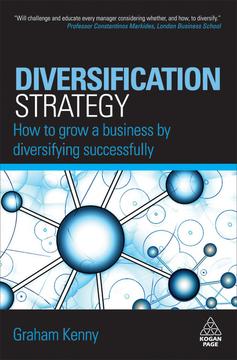
Diversification – how much is really required?

I am an investor, but not a trader anymore yet I am told I need to be diversified to lessen the effects of any downturns. Naturally this also limits the benefits of any upturns as well as you tend to average your gains as well as your losses. Reading about master investor Warren Buffett, he invests big in a single position; he doesn’t go for a great deal of diversification in Berkshire Hathaway portfolio, well not in the way that a hedge fund manager invests.

Warren advises people to invest in index funds if they don’t have the skills and knowledge to directly invest feeling that fund managers rarely out-perform the market as their fees are outrageous so they burn what little they make. In many respects I am diversified as I  have a managed superannuation fund with Australian equities, international equities, investment grade bonds, infrastructure, private equity, cash and fixed interest. Taking advice from accountants is never great – I try to avoid where possible.

I also have a self-managed superannuation fund that predominantly invests in Australian equities, cash and fixed interest. I could possibly look at some managed investments to round out the portfolio. As I move closer to retirement I will be seeking bonds as a hedge against short to medium downturns. I can’t complain, the managed fund offers a degree of diversification and still offers pretty decent returns although not spectacular.

An argument exists where in the earlier stages of retirement investments should still be reasonably aggressive as a twenty year projected retirement time scale is a pretty long time without an income coming in through the sale of labour or knowledge. The option exists to return to work, but nobody really wants that nor do they want to be living on handouts sleeping under a bridge. Retirement is a risk, that’s for sure, made even harder by government interference intent on getting their hands on the pot of gold you have worked for over the past 40 years.