Back in the mining industry

I have been out of the mining industry for around fourteen years, I had enough of being sent away for extended periods and was looking forward to being home every night. I could go to the football in winter, sail in summer and spend time at the family holiday house just south of Perth.
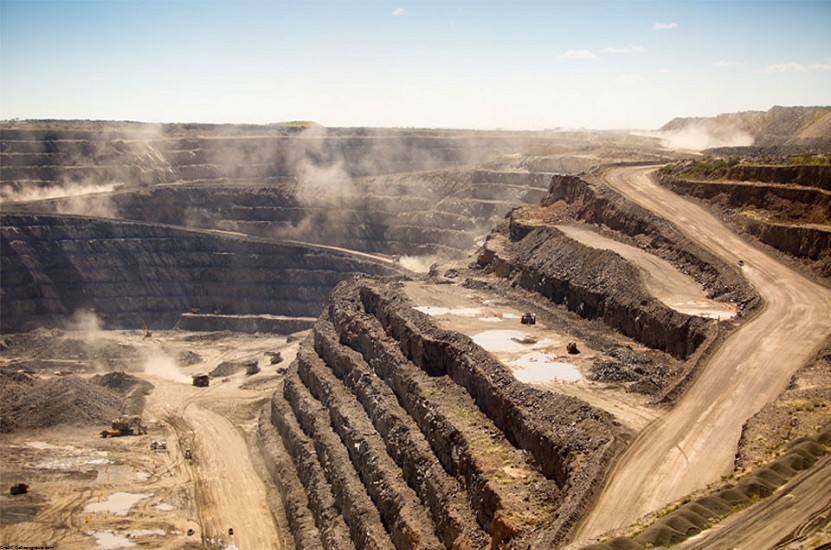
I enjoyed my time away from the industry I spent more than a decade in, but it was time to step back into my former employment. What I learned is I wasn’t as up to date with current industry practices and knowledge as I had hoped although as I already had a solid foundation, it didn’t take long to get back to speed. Sure, I had to live away from home in remote areas, I had to be dictated to in just about every facet of life. I was back to the regimented life getting out of bed early, eating at a mess and limiting alcohol intake due to daily employment checks on the breathalyzer.

I actually enjoyed re-engaging the mining lifestyle, I was living on a new continent with new cultures to learn and immerse myself in. Sure, there was a language issue to overcome, this particular site was dual French/English but we had enough English speakers to get the message across. An overseas assignment is an excellent way to return to the mining industry. I am happy with where I am in my life right now, I don’t really need the money but I have no complaints, the extra income is appreciated and I am enjoying the challenges.

An interest in organisational development

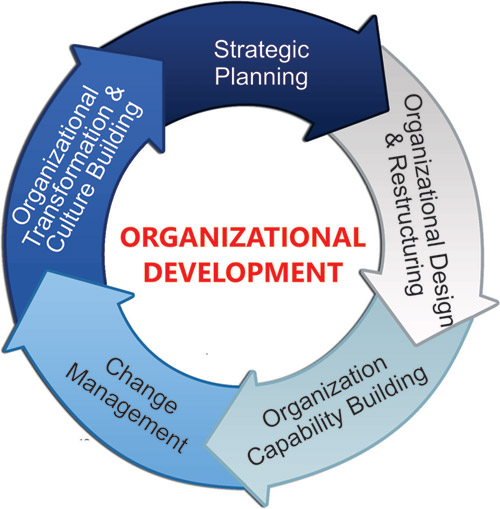
I am interested in organisational development from both an academic and practitioner stand point. My time as a college lecturer was heavily skewed towards gaining the experience to utilise my knowledge and skills to move to the next position, it took a year post MBA but now I’m moving forward again. After thirteen years, there wasn’t much more I needed to learn in my position; I was going backwards in terms of experience, industry knowledge and motivation. I was picking up a salary but I wasn’t engaged; in such a scenario, it is better to get out than continue. That is exactly what I did, I was looking for opportunities and found a pretty good one.

When you invest in your education, if the company that employs you doesn’t want to promote you then the decision is simple. Invest your time and effort into an organisation that both acknowledges and rewards your output. I always believe that if your current employer doesn’t reward your qualifications and experience, then it is time to seek enhanced employment opportunities elsewhere. I am told so many times that a company doesn’t owe you a living. Ok, I am fine with that as long as staff members don’t try to tell me that I owe the company any loyalty. This is because loyalty is earned, this a reciprocal deal. The company must demonstrate exactly the same loyalty as they demand – an equal partnership exists.

This is rarely the case, as soon as a business downturn occurs workers get laid off en mass. You are merely a commodity to be traded, you are selling labour to the company and they are pretty quick to eliminate a labour cost once demand for your knowledge and expertise wanes. So now I am back in the private sector as a organisational development practitioner, this entails a fair degree of on-the-job training to minimise time lost from work, training structured to specific workplace requirements, embedding learning, greater retention with the hands on approach creating value within the organisation.

Corona Extra

As one of the top selling beers worldwide, is Corona Extra a decent beer? I don’t think so, it is certainly a fashionable beer, people seem to like it and people are certainly happy to purchase Corona Extra.

I really don’t get why either a lime or lemon slice is jammed down the neck of the bottle. It certainly makes the beer taste nicer adding some tartness, but does any other beer producer require a citrus wedge to improve the drink? I know of no other beer served in such a manner and I can’t say I much like the beer if a lemon or lime wedge isn’t thrust down the neck.

Departing Lubumbashi

It was a feat in crisis management and organisation, firstly receiving my passport back after nine weeks of inept handling of my work visa application. After so many delays I was moving again so I was glad to just be mobile, so I have no complaints at all – none whatsoever.

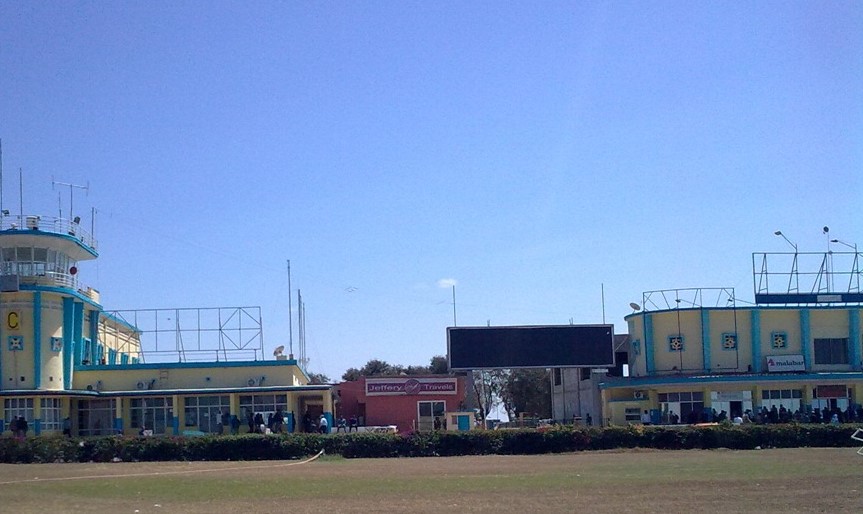
I missed multiple international flights and had to take a domestic flights without my passport, l was issued a letter of travel from the immigration department allowing me to get as far as Lubumbashi where my passport would be returned to me. How can I describe Lubumbashi International Airport? Mayhem – it is certainly that; disorganised – absolutely. There was pushing, shoving and line jumping but all the touts, I was caught up trying to get to the check-in counter – if you could call it that.

There was a computer but it couldn’t enter my frequent flier details. There were no electronic scales or conveyor belt taking checked-in luggage to a secure area. The tout took my bags and shoved them in the corner with all the other bags. After I was handed by luggage tags, I wandered over to the corner and attached my luggage tags. Needless to say, this was not a secure area and there was no security personnel attached. This is not a secure airport, this has international flights operating and there is no system, it is not difficult to slip unsecured items on this aircraft.

Alternates to an MBA

I often ask myself how many styles of MBAs are on offer? The leading formats are full-time, part-time, executive, global & international and finally online versions all priced for different market segments.

Then there are general MBA programs or you can choose from specialised programs in management, finance, marketing, human resources, operations, entrepreneurship, accounting, supply chain management, information systems, accounting and media/communications. No longer does a candidate have to undertake a full-time two-year course losing two years of income and other opportunity costs – there are now plenty of options.

The ambitious career orientated individuals considering an MBA may also seek alternative options to full-time business school but might not be just related to part-time and executive MBA courses. Top business schools are running short intense customised programs specialising in leadership, strategy, value creation, strategic innovation, communication and technology.

The online courses from Stanford Online, HarvardX, Cousera, edX and a host of business schools provide excellent online content in short courses. For me, the obvious choice would be to engage in entrepreneurship; there are of course entrepreneurship specialisations and the real purpose of an MBA was to prepare professionals for a broad business education.

Developing an idea into a start-up business is very rewarding and can start as an idea generated in an entrepreneurship class or even during a case study presentation. Gaining a specialised master’s degree in a business related field such as logistics, operations, accounting, finance, human resources or strategy gives the candidate the opportunity further excel in their chosen field. They tend not to carry the premium that a fully fledged MBA costs.

Project management is a growing field but I have always felt an individual needs to have a technical background and only then learning management as their specialisation. Leadership is also a growing area but I never thought much of specialising in the area. Potential candidates have the opportunity to enroll in an undergraduate bachelor program such as a Bachelor of Commerce or Bachelor of Business but I still view the Master of Business Administration as the ultimate business qualification that carries more weight.

Espresso at Binar Warung

Another of these great little Ubud coffee house is Binar Warung, not far from our cottages, this is just a small establishment well off the main streets.

The staff were nice, once they had seen us head in a couple of times they were even more welcoming. After breakfast, this was first stop heading out to wander around Ubud so we could burn a little time in the morning. On the way home in the evening, Binar Warung was the final stop for the night. A quick espresso is an excellent way to complete the day. Unlike the much longer stopover in the morning where I work work on a few posts, the evening espresso was exactly that, an espresso and home.

Visa dramas

What a disaster my two-year work visa for the Democratic Republic of Congo turned out to be, in what should have been a simple process, this turned out to be a monumental stuff-up.

On my first day of work I handed my passport to the company representative to be sent to Kinshasa, this apparently happened as per their procedures. I followed their procedures exactly, I made sure there was no delays or hold-ups on my part. However, the next step is where it all went wrong, instead of forwarding my application along with my passport to immigration officials they sent it back to site. Of course, I was not informed of these changes at all, I was none the wiser and thought everything was progressing exactly as it should.

Naturally, I followed up via emails and telephone calls to be told everything is ok – clearly they lied to me. The process is supposed to take six to eight weeks so I pushed a little harder after six weeks. As the deadline approached I followed up more closely, I was still unaware serious problems had arisen. With only a week to go, I was becoming a little more vocal, I demanded answers as I had not had my passport returned and I wasn’t flying without that all important document. As I found out, I couldn’t even board the company jet for domestic flights without my passport.

As it transpired, no passport and still no visa. So my passport was pulled early and I received a three month working visa. Still, I couldn’t fly because the day of the flight there was still no passport but I was able to able to step on the company jet with a special identification letter to fly internally. I had to spend days of my leave sitting around in a guest house in Lumumbashi, fly the long route and lo se three days of my leave. I was exhausted as I got all the centre seats in the centre aisle as I was booked on last minute flights. The first days back on leave were a total washout as I was tired and sick. I never want to do this again.

Watch collecting – an expensive hobby

So watch collecting is becoming an expensive hobby, fortunately for me it remains within the bounds of my finances. I think for now though, it is time to not buy anything new unless an opportunity too good to pass up comes along. As a watch enthusiast, I am still able to research and try on timepieces when I am out researching individual pieces. I don’t do this much in Perth since competition and ranges are limited, also I prefer to research away from home where people don’t know me and I can walk out of the shop anytime.

Naturally, not too many people get to collect  A. Lange & Söhne, Patek Philippe, Vacheron Constantin or Audemars Piguet and I am one of those people. Still, I can admire robust engineering and magnificent styling without owning one. I have found watch enthusiasts also tend to be car enthusiasts, motorsport and race timekeeping tend to merge together. This accounts for so many automotive series from the Speedmaster, Carrera, Monza, Silverstone and Daytona series.

Since I’m more into yachting, brands such as Rolex and Omega tend to support these activities although the Seamaster range is more aligned to diving these days. Is the Audemars Piguet Royal Oak a dive watch or a marine timepiece? So too with the Patek Philippe Nautilus. Dive watches, where to start? The Blancpain Fifty Fathoms, the Rolex Submariner and Omega Seamaster are leading brands but every manufacturer from Ulysse Nardin, Breitling, Tudor, Officine Panerai, TAG Heuer, Bremont, Mühle-Glashütte, Tissot, Oris and Jaeger-LeCoultre have dive watches.

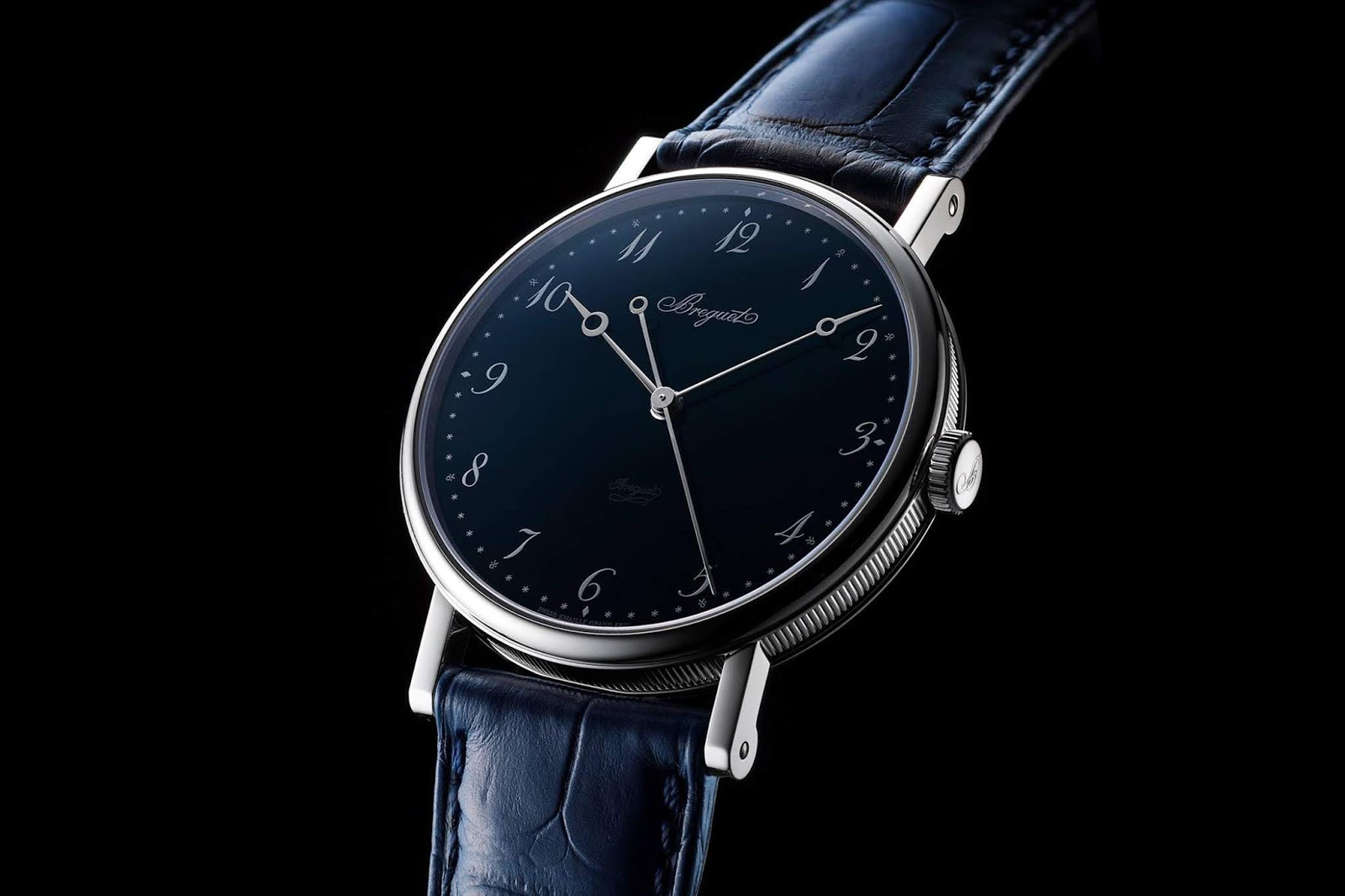
Aviation is well supported with IWC, Breitling, Bremont, Bell and Ross and Omega. Rolex came out with a GMT for dual timezones for international travelers and business people, apparently after a specific request from Pam-Am. Cartier is credited with creating the first aviator timepiece with the Santos in 1904. Then there is out and out style, A. Lange & Söhne, Vacheron Constantin, Patek Philippe, Breguet, Glashütte Original, Zenith, Cartier, Girard-Perregaux,  and Chopard are leading examples of how style meets functionality. Even the Rolex Cellini cracks a mention here; then there is Piaget, Mountblanc, Rado, Baume and Mercier, Jaeger-LeCoultre  and IWC.

You are not really supposed to be seen in a dinner suit in a chronograph, dive or aviator watch; that’s where the low profile and elegant timepiece is desired. Your timepiece is supposed to sit under your shirt cuff. I love researching timepieces, trying them on and writing about features, styling, functionality, value and finally wrist feel. I collect manufacturer catalogs from retail outlets, download specifications and read as many reviews as I can handle. Yeah, it’s fun and yeah, it’s expensive but who cares as you only live once.

Pressure to meet quotas

Whilst understood, there isn’t too many businesses I have been involved with that doesn’t place timeframes on employees. There is an argument that tight schedules increases productivity but naturally increases stress at work, this is only feasible for short term projects as it tends to burn people out over the longer term.

So where does that leave us? I work in the engineering maintenance department on a copper and cobalt mine and our project based maintenance work requires tight timeframes and budgets. You need to find creative solutions to solve problems within budgetary frameworks and tight schedules. Now I understand that I am viewing this from my own perspective and I would like to work in a job where I had neither financial or time constraints – but I don’t. I would like to know who does and how they are able to produce a service or product in a business without any of these factors – now that would be a good job.

Flying the A380

I love flying on the Airbus A380, I know airlines are looking to downsize to the Boeing 787 Dreamliner, but as a passenger, I find the A380 far superior for long haul travel. I understand Airbus is having trouble selling new aircraft and the A380 production may cease – that’s a shame.

I had a long-haul flight from Perth to Dubai on a 777-200 and I can’t say it was a great experience. The aircraft was operated by Emirates, a pretty decent airline but I still felt uncomfortable and cramped. Even with a aisle seat, I was able to stretch my legs but was bumped into by staff moving up and down the aisles.

The entertainment system didn’t work, the movie kept losing sound, the screen froze or I had issues loading programs. Maybe that just added to my annoyance, I gave the entertainment system away and used my own tablet to pass the time instead. I understand this is just an annoyance and not indicative of the aircraft design.

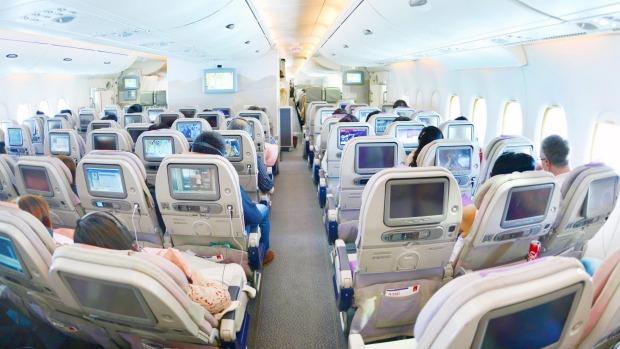
From Dubai to Frankfurt, the A-380 was a totally different experience, it was easy to get up and move around. I was four rows back from the front of the aircraft, people were standing in clear spaces chatting, walking around and generally looking relaxed. I felt the atmosphere was vastly improved, people genuinely looked better and appeared happier. My choice is definitely the A-380 even though the 787 has been promoted to ultra long-haul travel from point-to-point instead of the current hub-and-spoke model.