United against corruption – corruption clues

These graphics are courtesy of the Corruption and Crime Commission (CCC) in Western Australia. My employer (forever to be anonymous) reposted on LinkedIn where I decided to both comment and download the graphics.

Questions need to be asked, does the workforce not declare corruption because they are unaware that it is going on or because they realise corruption is occurring and choose to do nothing? From an organisational level, the leadership then needs to analyse why wrongdoing isn’t being reported.
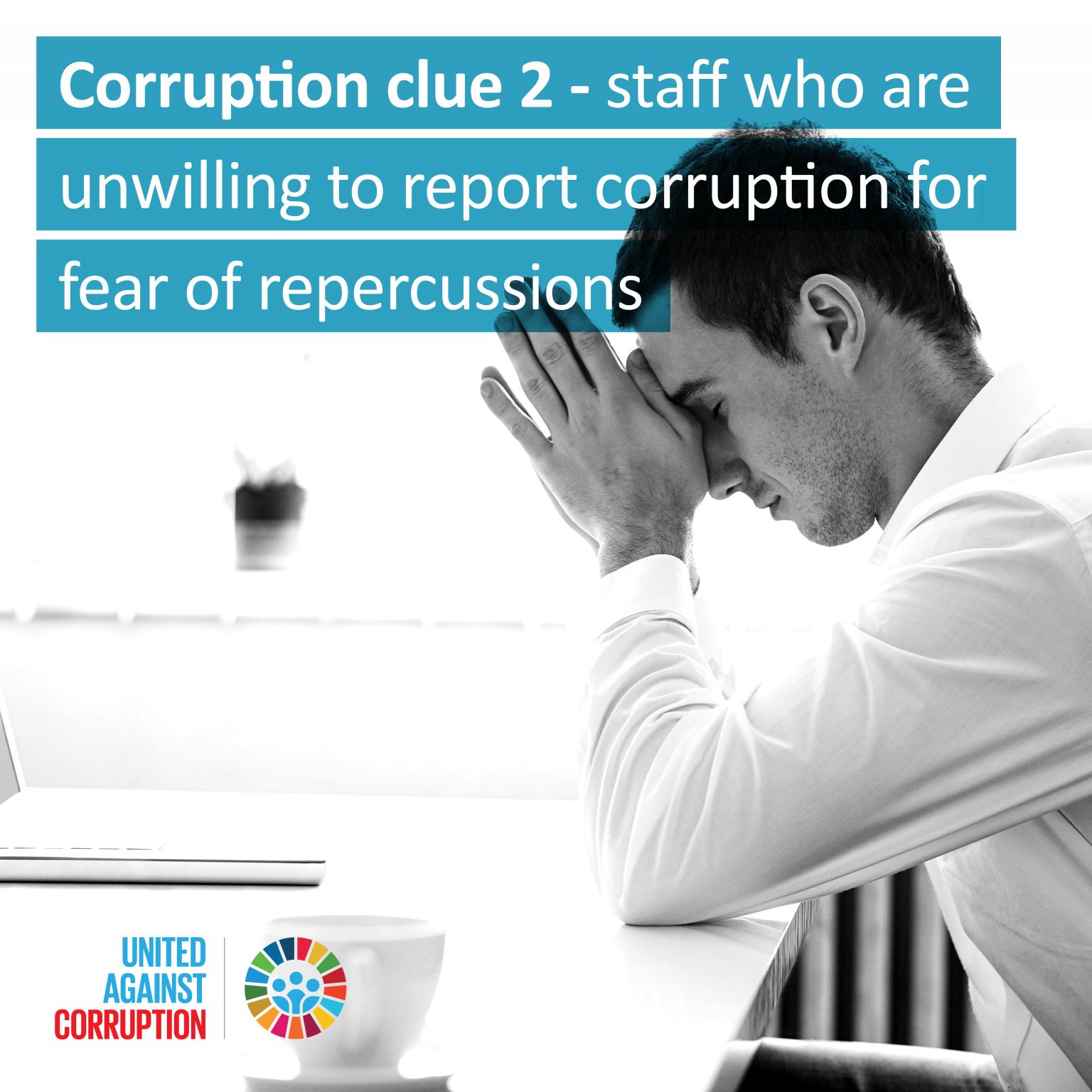
There is protection for staff under the Public Sector Disclosure Act 2003, an Act is a law that has provisions to maintain the confidentially of the reporter. Part 3 [Protection] Section 13 deals with immunity incurs no disciplinary action (i) to be dismissed (ii) have services terminated (iii) breach of secrecy or confidentiality (iv).
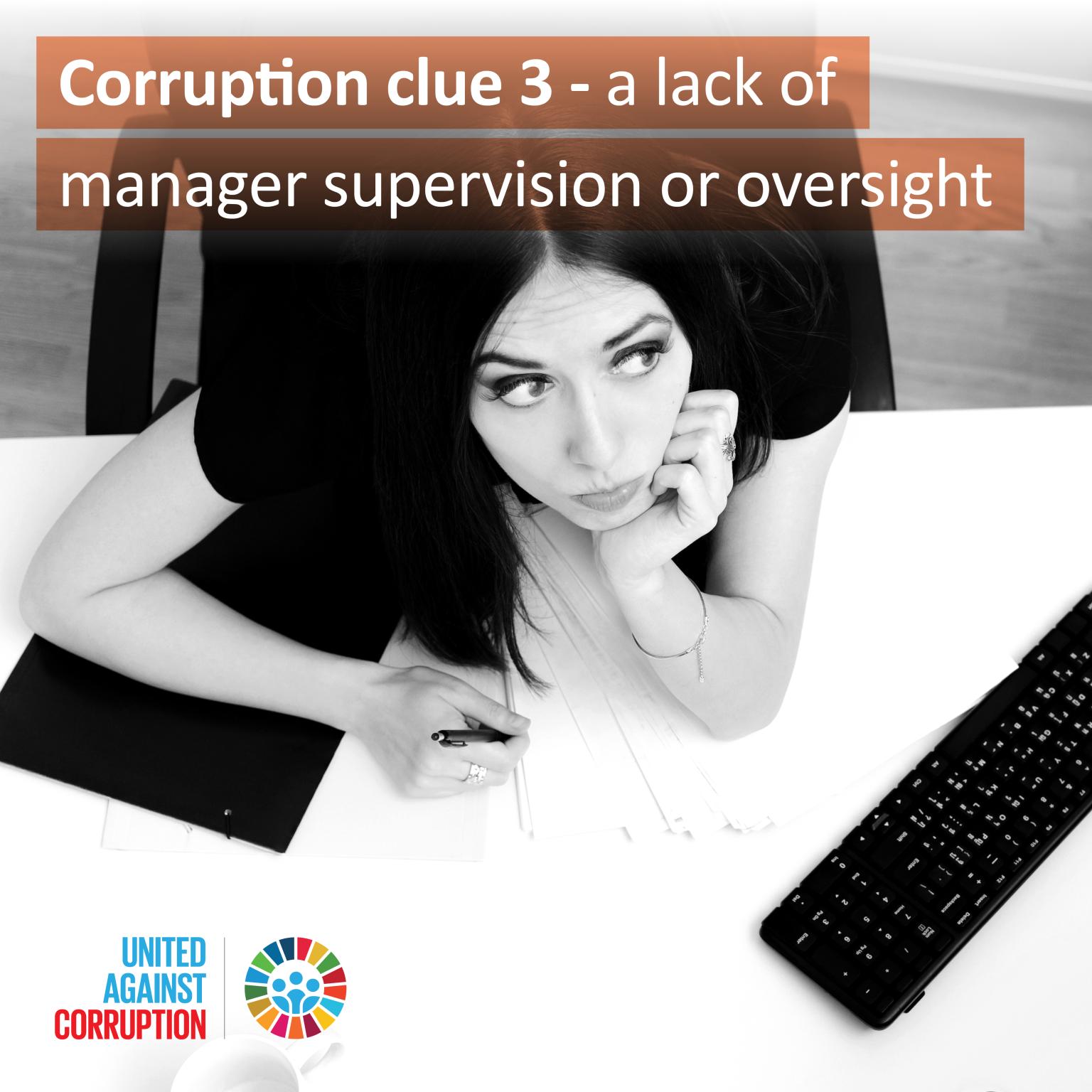
This is where corruption begins – a lack of leadership. This may be due to weak management practices with Part 3 [Protection] Section 14 dealing with threats of detrimental action against the reporter. A person must not take or threaten to take detrimental action against another because of a public interest disclosure with a penalty of $24,000 fine or imprisonment of 2 years (1). Furthermore, (2) a person who attempts to commit an offence (a) or incites another person to commit an offence (b) also faces a $24,000 fine or imprisonment of 2 years. That’s not a penalty to be taken lightly.

My original comment on the LinkedIn page addressed workplace culture “The culture of the organisation is determined by the worst behaviour the leadership is willing to accept. Supporting and protecting whistleblowers sends a clear message that corruption cannot be tolerated in state government organisations”.

Further examining Part 3 [Protection] Section 15 deals with a person takes or threatens to take detrimental action commits an offence commits an act of victimisation that may be dealt with as a tort (1). That means proceedings against the perpetrator or employer may be taken in tort (2) with a tort being a civil wrong. The act of victimisation may be dealt with the Equal Opportunity Act 1984 under Section 67 Victimisation and that is something an employer would be loathe to do especially if the media is present. The costs to the organisation financially are an important consideration along with the reputational damage along with the destruction of senior management careers so they would be well advised to (apart from the obvious ethical reasons) do all they can to prevent corruption.

Tax rates in Australia

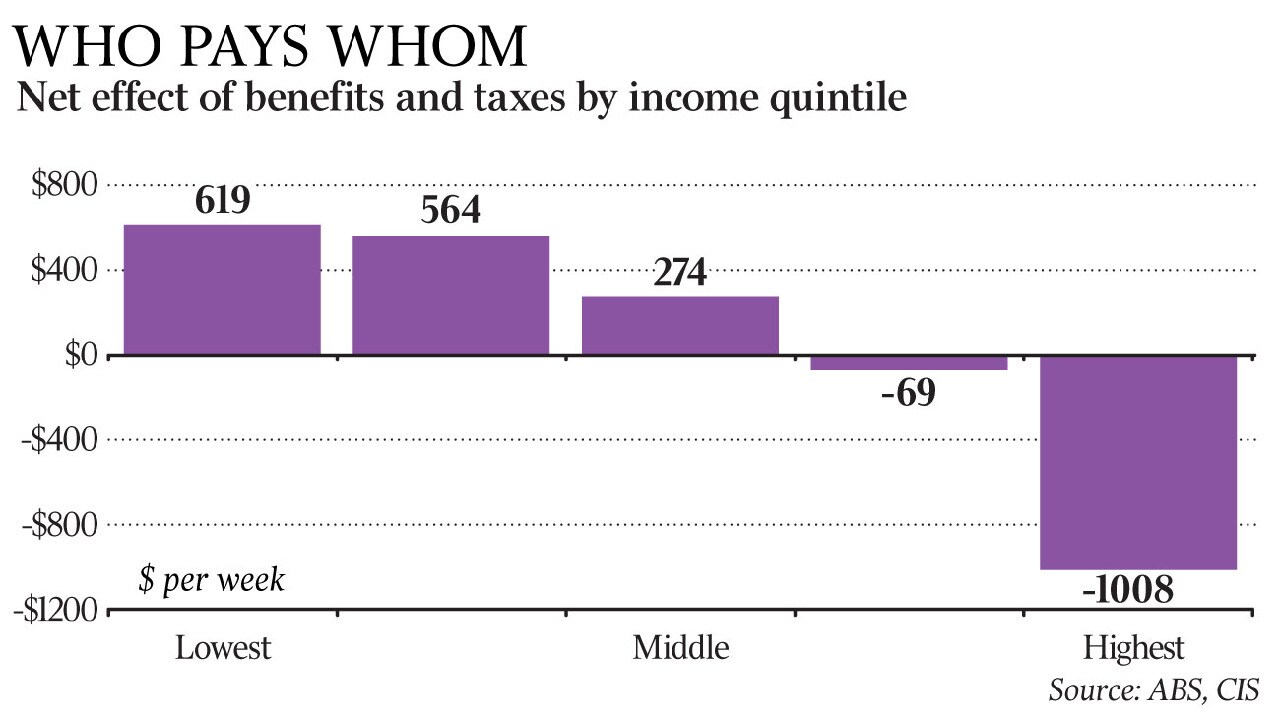
Everyone complains they pay too much tax in Australia, there is also a cry that we are the most taxed nation in the world – that isn’t correct either. The net effects of tax by income tell us that the top 40% of salary earners in Australia pay all the tax to run the nation whilst 60% get given money by the government.

What we do see is the top 1% pay of salary earners pay 17% of the total tax in Australia, whilst the top 20% of salary and wage earners pay 60% of the total income tax burden. What we see in Australia is 46% of the population pay no tax after deductions and offsets. That’s pretty stiff but whilst many complain they pay too much tax, who really pays the greatest proportion of tax in Australia? Generally speaking, the more money you make the greater tax liability you are required to pay due to marginal tax rates so that is fair. Due to rebates including the family rebates A and B, the vast majority of families in Australia pay no net tax. They have income tax deducted from their salaries at their marginal rate and then returned via family assistance programs, they get back the money they paid and then some.

Bank fraud – why is this so difficult to address?

Admittedly it wasn’t a great deal of money, it was $649.47, but credit card fraud is fraud and it is my money. As the bank processed the transaction without my permission, so they have an obligation to follow up this fraudulent transaction.

I want to make a clear statement to the bank, this type of behaviour is unacceptable. This is not the first fraud transaction registered on my account and stalling tactics of you haven’t provided the right form or signed the form is wearing thin. As I have been into the branch on multiple occasions, I have absolutely followed bank processes and used bank staff to complete forms and provide the required signatures. They know me in the branch now, this fraud case first raised in late 2018 is still going in 2020 – amazing. This excuse of being unable to locate my case is a pathetic excuse, all correspondence and documentation must be retained in the appropriate file. There needs to be a case officer and the matter should be escalated to appropriate supervisors and managers as required – lift your game.

QE on the agenda again

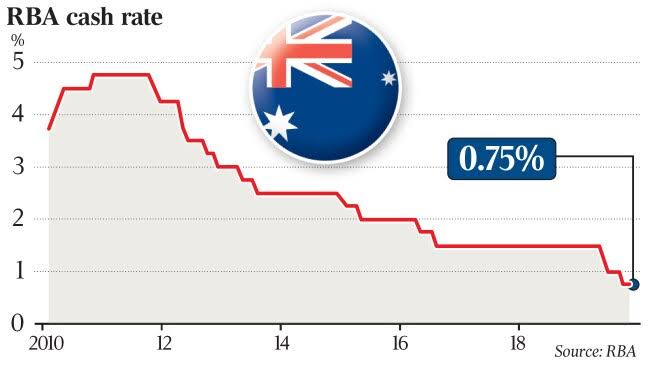
So as interest rates are lowered again by the Reserve Bank of Australia in a bid to stimulate the economy, we are still seeing economic activity stall. Whilst Australia has 28 an unbroken run of nearly three decades, this run of constant growth appears to be coming to an end.

As the interest rate on government secured bonds fall, a demand for bonds as an asset increases. By the Reserve Bank of Australia purchasing a high volume government bonds, the intention is to push down interest rates to such a low level that banks are better off lending money to businesses and households than holding cash. The Reserve Bank of Australia is spending large quantities of newly printed cash to ease monetary policy. Government workers are not receiving pay rises, the private sector is not competing for talent with the public sector so the government is not under pressure to raise salaries and conditions to attract workers.

As an unintended consequence of the banking royal commission, tighter lending standards leading to higher levels of risk aversion made it increasingly difficult for lenders to take advantage of historically low interest rates to increase cash in the economy. Low international interest rates are designed to increase the degree of investment and speculation in the economy by private enterprise leading to economic growth. This is not happening, once official interest rates hit 0.25% then the Reserve Bank of Australia will consider more unorthodox practices – that will be quantitative easing.

Generally speaking, an increase in money supply results in higher inflation. Yet, this has not occurred so one has to question why this has occurred. The US Federal Reserve and European Central Bank have engaged in quantitative easing for what is regarded as successful outcomes. The Reserve Bank of Australia has lowered interest rates to historically low levels and this has still failed to stimulate the economy. Economic growth has stalled, unemployment has increased to over 5% and wage growth is non-existent so I think we will be headed into QE mid to late 2020.

Opening Day at Royal Perth Yacht Club

Back for another season at the yacht club for the 2019/2020 sailing season, the Royal Perth Yacht Club opening day was a success.

This wasn’t a long race, a shortened course was used as we had the opening day presentation and welcome to country, an aboriginal welcoming ceremony and a dignitary address the members. This was a warm sunny day with a bit of breeze around to make it interesting but not a 25 knot strong wind warning. Generally, 16 to 18 knots is a decent amount of wind without getting overtaxing. Then some drinks in the pen on the boat with the crew before heading upstairs to the clubhouse where the formal function begins. Sailing attire is not only accepted but is the norm, I sail in bare feet and no footwear is required at the bar – a great casual atmosphere.

Same problem – different flight

The same problem with the climate control occurred again on South African Airways aircraft on the same route, that means it is the same aircraft I flew from Perth to Johannesburg a little over a week ago.

The turbine on the tail for electrics and air-conditioning was non-operational, the cabin was uncomfortably hot just as it was flying from Perth to Johannesburg. Same problem on the same route means the problem was not resolved, they just keep running the aircraft with known maintenance defects. Will this mechanical issue prevent the aircraft from flying? Well, clearly no but it is uncomfortable for passengers and that pretty much tells us that South African Airways isn’t performing maintenance on their aircraft and they more than likely have liquidity issues so let’s see how this pans out.

Bringing my mountain bike back into Australia

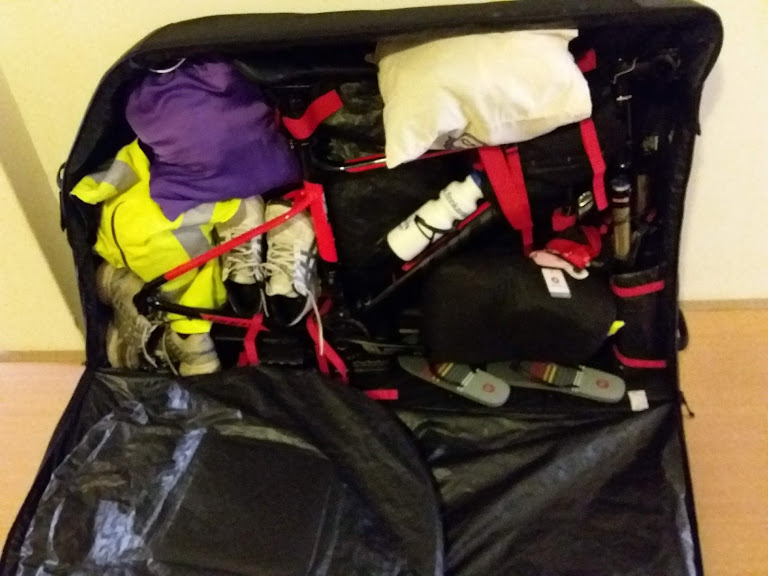
As we prepare for landing, I think about my next set of problems. That is, bringing my mountain bike back into Australia. I spent hours cleaning that bike, first there was a preliminary wash with water to get it half clean. Next I rode from my room to the house of the Field Maintenance Superintendent for the next cleaning cycle, that was running water and a brush of the bike assembled. That took a few hours to do, I think about four hours – still, it is the right thing to do.

Then the wheels were removed and more washing took place, still with the hose, brush and paper towels. Then I started packing the bike up, handlebars off and the bike was dried and packed in the travel bag. The next weekend the bike was pulled out of the bag and another cleaning took place with paper towels and spray. I started with CO spray and then onto a water dispersal fluid, that took another four to five hours and the bike was repacked into the bag.

So after those hours spent cleaning the bike, what was quarantine going to say? I’m pretty sure they are going to inspect the bike, it is clear they don’t want soil brought into Australia. We have strict bio-security rules for a reason and I’m doing my best to comply with those rules. I can’t say I’m nervous, I’m not trying to hide anything so the question is now, how long am I going to be held up with inspections and how much is this going to cost me? I guess they will require further inspections, cleaning and possibly treatment. I am going to find out pretty soon I guess.

Smoking during work hours

As a non-smoker, I wondered if I could start taking breaks pretty much whenever I wanted? Maybe I need to take constant fresh air breaks. I reckon I will be losing 45 minutes to one hour lost productivity per day based on the smoking social gathering that is taking place in my workplace. Strangely, management isn’t concerned about lost smoking productivity, knock off 15 minutes early and you know about it.


Our office was unattended, the phone is ringing and people are queued up at the counter while the whole front office staff are standing out the front together having a smoke. There is no point complaining to the boss as he is the one leading the smoko break – go figure. You walk out the front and there are cigarette butts everywhere, this is the front gate of the college – the main entrance. People entering the college are greeted with staff standing out the front standing around puffing on a cigarette, students lazing about smoking and the grass is littered with cigarette butts – is this really the image the college wants to project?

Ironically, our evacuation point is the smoking area, this isn’t an actual legitimate or designated smoking area but it is an official evacuation area. So the last time we had a fire drill, I reckon I inhaled more smoke than if I stayed in a burning building. I fired off an email to the campus manager asking about this and was not met with an answer, nobody wants to tackle this issue and that is why it will continue to be a problem. Now I am out, this doesn’t affect me just now but my job is open and I may be back – I will tackle it then.

Sipping Riesling in Frankfurt

It was a cool Friday evening, glancing at my watch, it had just turned 7:30 and the crowd was in a wonderful mood. The first thing I noticed was everyone was standing around sipping Rhine Riesling on this beautiful autumn evening. In the plaza, pop-up bars abounded, a plethora of options were available, there was no shortage of choices, the real issue was to find a clear spot to stand. As I wandered up to the one of many bars, I was astounded at the choices of Riesling on offer.

I was offered a selection with a simple question of sweet or dry? This wasn’t a difficult decision, of course, the answer was dry. I was given the option of a tasting that supported my initial selection and a glass was poured with a choice of 0.1 at €2.50 or 0.2 at €5. The choices are so simple, there was a €2.50 deposit for the glass that wasn’t unreasonable, I was so happy to be drinking from a decent quality glass at a pop-up bar in the heart of Frankfurt.

Friday evening was a wonderful atmosphere, guys in suits standing around soaking up the long days of sunlight, women in work attire happily chatting away after their work week had drawn to a close and the weekend approached. This was a great lead into the weekend, everyone was happy and I certainly was. I found Frankfurt to be a wonderful place to visit, I would certainly be happy living in this city.

The five-step problem solving model

I love the use of models in a workplace environment, my business training is supportive of models and efficient decision-making should be highly structured. From my personal experiences, haphazard, ill-informed and misconceived decisions occurred after ad hoc ideas lead to poor decision-making.

At business school, I undertook a unit on decision-making, we read a ton papers loosely related to decision-making but never really reviewed one model. So I went searching for my own models, the whole framework of university education is research based after all. The five-step problem solving model begins with the recognition that a problem exists, the identification of the problem of what should be occurring as opposed to what is actually happening. The analysis of the identified problem

The second step is to gather information, in order to make an informed decision. All decisions should be based on fact and the only way to do so is via reliable data collected via information. On the data is collected and analysed, you are able to devise alternate solutions and then analyse the consequences of each potential solution. A number of quantitative data analysis exist that may use extensive mathematical modeling and programming.

Implement the decision, in many respects is the easiest step. To properly implement a decision, in many instances a matrix is required that not only sets out responsibilities and tracks progress, it identifies obstacles and provides solutions. A step often overlooked is evaluating the decision, this step is important for future decision-making as the process is reviewed in relation to the data collection methods, evaluation criteria and compilation of the action/consequence grid.