
Natural justice is procedural fairness, what this means is this is a fundamental concept requiring a process free from bias in judgements and decisions. As a principle of procedural fairness, the accused must be allowed to present their defence once a case has been brought against them. Natural justice is a doctrine of law, according to the Federal Court of Australia, procedural fairness embodies two different rules, they are a rule against bias [apprehended and actual] and the right to a fair hearing.
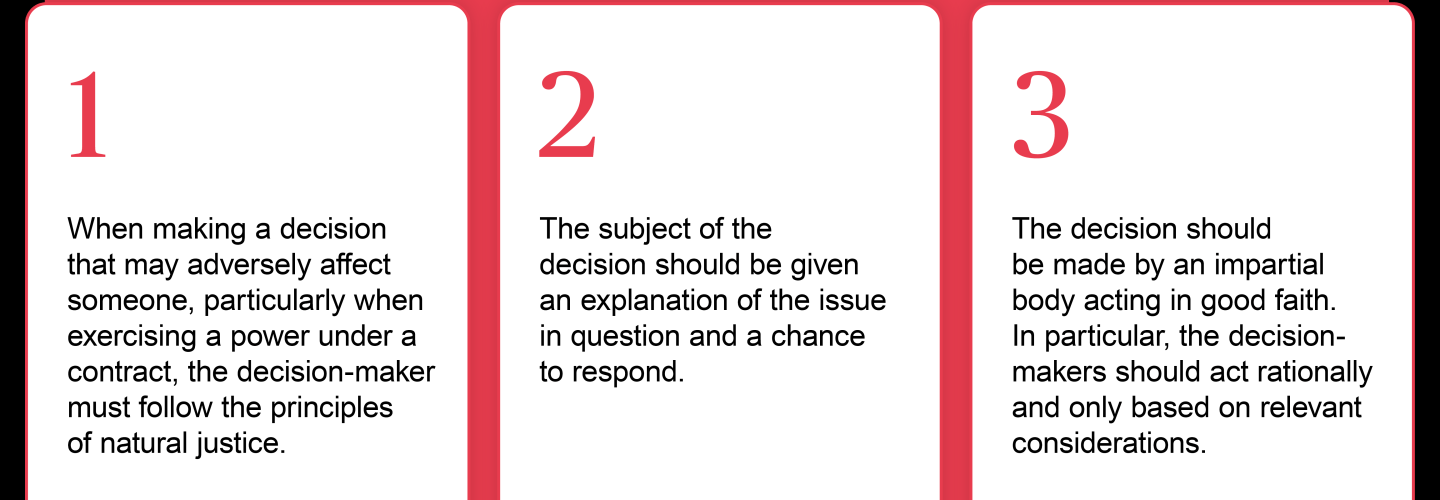
As such, natural justice is not a rule that is capable of direct application; however, it informs the accusing party of the rules of prejudice, impartiality, and favouritism. Therefore, an accused has the right to notice, they must be informed of the case against them. They must have an opportunity to respond, state their case to respond to the adverse claims, a rule against bias so that the decision-makers are free from conflicts of interest. The decision must be free of bias, they cannot rule in their own case, the decision-making authority must be detached.
The consequences of a denial of natural justice allows a higher authority such as a court to determine the decision invalid. Therefore, the affected party can seek a judicial review to challenge the decision based on the grounds of denial of natural justice. The denial of resources, access to resources, or insufficient [and/or unequal] time to mount a response could be argued is a denial of natural justice. Therefore, the party bringing the case against an accused party must allow the accused party sufficient time and resources to defend the case against them including the self-judgement clause.
 Observations in an undemocratic world