
Is the Valjoux 7750 the greatest chronograph movement of all time? Maybe, maybe not. I tend to think it probably is based on units sold. So what watches were fitted with the Valjoux 7750?
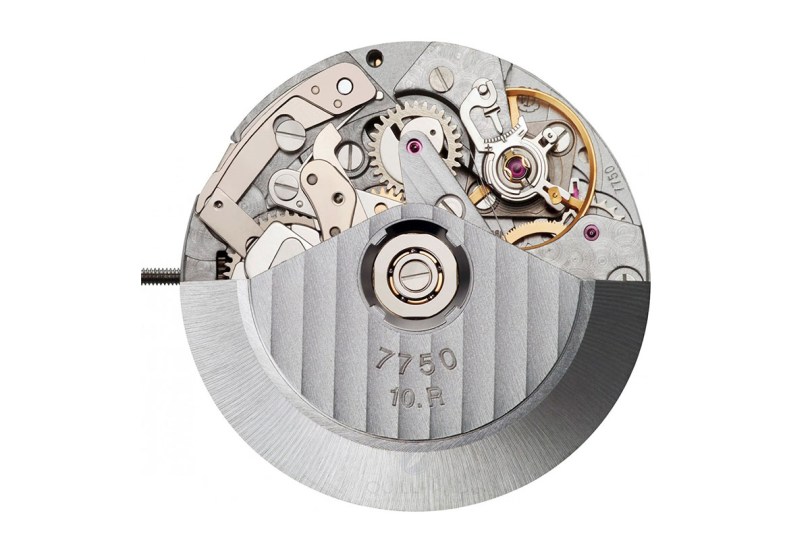
The 7750 isn’t necessarily the most complicated or technical chronograph. The 7750 differed from other chronograph movements due to simplicity. There was no column wheel, a set of levers rotates a cam to engage and disengage the chronograph. I had always thought the legendary Rolex Daytona ran a Rolex modified 7750 until the 4130 inhouse movement became available. Researching this post, I found I was mistaken, the Cosmograph Daytona was fitted with a hand-wound Valjoux 72.
A vintage Cosmograph Daytona can fetch serious money, I can seriously say, this highly collectable timepiece is out of my price range. The Valjoux 72 is a column wheel with lateral clutch that is hand-wound, not just a hand-wound version of the self-winding 7750. The IWC 1985 perpetual calendar chronograph used a modified 7750, Hamilton had a H31 version, Panerai, Fortis, Maurice Lacroix, Sinn and Damasko. Heuer ran a number of different chronograph movements, the Pasendina was an example along with the Breitling.
Valjoux is now part of the Swatch Group manufactured under ETA. Selitta manufactures a clone of the 7750, the SW-500 is pretty much the 7750. Apparently, the 7750 and SW-500 movement use interchangeable parts, interesting since the 7750 was introduced in the 1970s. Now you can probably call the Valjoux an inhouse movement, but that would be a bit of a stretch for most people, so the Valjoux mechanical chronograph can be considered a universal chronograph.
 Observations in an undemocratic world