
I frequently ask myself, what is a cognitive bias? For me, a cognitive bias is a preconceived notion that is based on incomplete information. This bias is a systematic flaw in thinking based upon individual perception, point of view or observation. Since my blog is named Observations in an Undemocratic World, this irony is not lost on me.
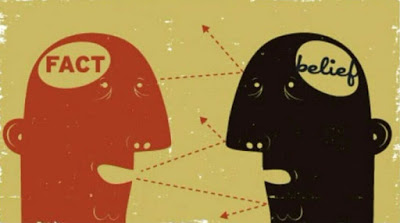
This is based on my personal observations, perception and way of thinking and is [naturally] not without bias or flaws. That being said, this blog is based on my personal observations and beliefs that may vary with readers. For me, this isn’t bad or incorrect, we all have differing viewpoints and perceptions and I frequently review cognitive bias to ensure I am not going too hard on one specific bias.
Confirmation bias: The individual seeks information to support a belief they already hold.
Hindsight bias: They knew it all along – of course they did. The outcomes are perceived to be more predictable after the event.
Anchoring bias: The focalism illusion is the tendency to give too much weight to one particular piece of information.
The Dunning-Kruger Effect: My favourite, this is where people perceive a concept to be simplistic because they have limited knowledge of the subject matter.
In-group bias: This bias tends to manifest when we support those within our own group and shun outsiders.
Self-serving bias: An assumption that good things happen to us when we have behaved in a certain manner, but through circumstances beyond our control bad situations occur. We tend to blame outside circumstances for bad situations instead of taking personal responsibility.
Availability bias: This is where we tend to use information we can immediately recall, that is not necessarily the most appropriate or valid representation of the problem encountered. We then tend to ignore alternative opinions or solutions.
Fundamental attribution error: Attributing people’s behaviour to unfounded stereotypes whilst attributing our own behaviour to external factors.
Optimism bias: Estimating a positive outcome if we are in a positive or good mood.
Pessimism bias: Estimating a negative outcome if we are in a negative or bad mood.
The halo effect: The tendency to allow an impression of an organisation based on individual behaviour.
Status quo bias: The preference to maintain a situation or relationship in its current state.
Assumption bias: Restricts the possibility of change based on static beliefs locking out possible alternatives.
 Observations in an undemocratic world