
I am doing some reading up on the situation in the South China Sea. I see the region flaring up at some point in the future. I see the US leading the conflict, whilst I expect Taiwan to be the point of conflict, a misjudgment from either side could easily trigger this conflict. This does not mean a conflict will occur, this is the offensive/defensive positioning in the geopolitical environment.
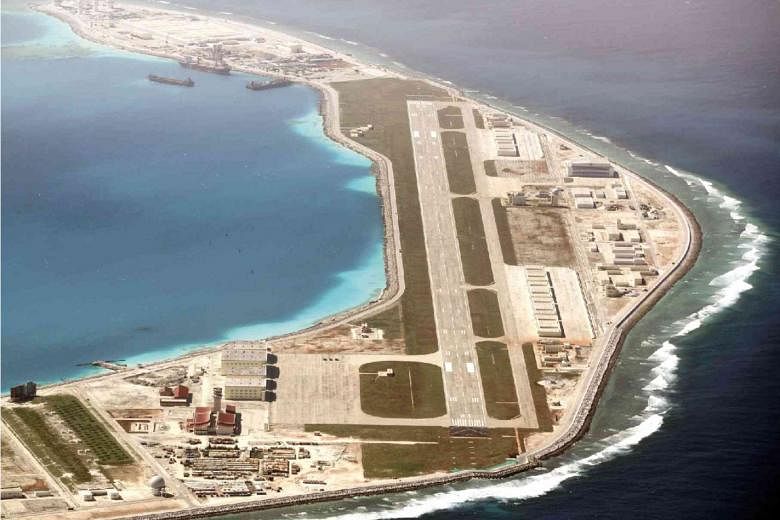
The Chinese anti-access and area denial strategy is of particular interest to me. To begin with, I was asking myself what is China doing by militarising the Spratly Islands between the Philippines and Vietnam in the South China Sea. China has armed these islands with anti-ship and anti-aircraft missile systems, the Chinese have a sophisticated radar array to seek threats and targets.
So having never served in the military, I have to learn these terms so I can grasp this strategy. Anti-access is considered an offensive strategy utilising attack aircraft, cruise and ballistic missiles and ships to strike targets. Anti-access is designed to prevent military movement in an area of operations, area denial prevents freedom of action under control of the military force. What China is seeking is an anti-access and area denial policy in the South China Sea.
So what China is attempting to do is create an area denial strategy in the wider Western Pacific to specifically deny the US Navy and more broadly the United States military access to the region. This is difficult with US bases in Japan, South Korea and access to the Philippines. Although Philippines military cooperation was difficult under the Duterte administration and looks just as difficult under the incoming Marcos government, there are still assets available.
With the disputed Spratly Islands very much a consideration, an area denial strategy is created through the heavily armed islands having runways, missile defence and missile offence systems along with an extensive radar array. The purpose is to deny access to the US Navy to the first island chain, and possibly pull back behind the second island chain.
The range of aircraft carriers is limited here, the fighter jets have a range of around 650 km. This is a concern as Chinese anti-ship missiles are increasing in range, this is now a threat to the fleet and whilst a carrier strike group has a range of ships and defensive capabilities, no one really wants to find out if a carrier can survive a direct hit from a Chinese anti-ship missile.
 Observations in an undemocratic world