
I am fascinated by both the definition and application of leadership and how leadership is applied in the workplace. Sue Desmond-Hellmann makes a very valid point, great leaders act like themselves on a daily basis, I am a firm believer that leadership can be taught as not everyone is a born leader. This is why tertiary institutes have leadership programs, this is an important facet of a program.
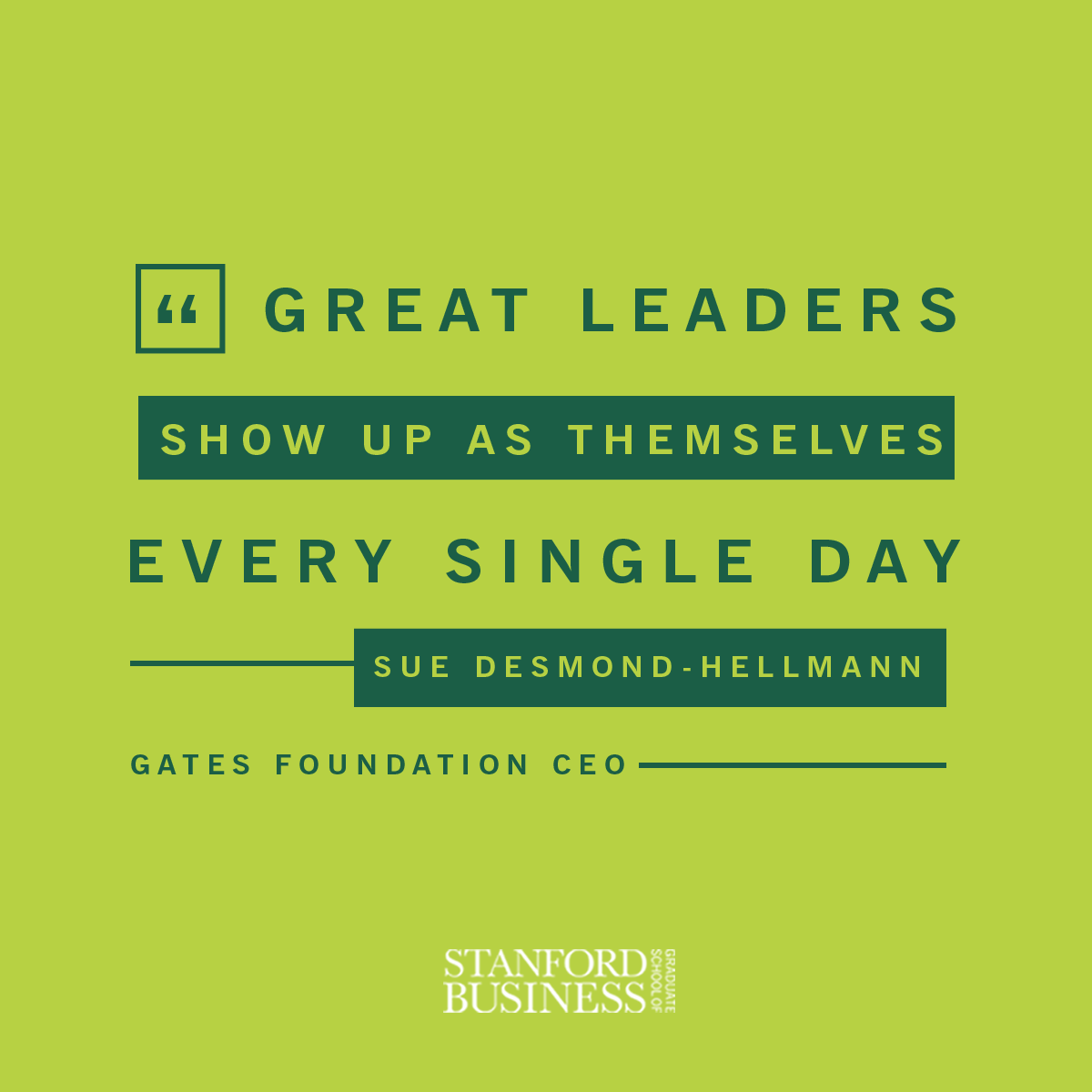
Great leaders have self-doubt, great leaders have fear just like everyone else, they start to question themselves. However, great leaders have the ability to overcome self-doubt and potential self-destruction to influence team members in positive interactions to maximise team performance. Self-doubt is healthy, it makes you question yourself, your motives and your abilities to create positive outcomes for team members.
Leadership is a political game, leadership is persuasion and the best leaders are very persuasive relating to team members in a way that influences team behaviour. Likewise, networking is important to widen their scope and increase offers for future advancement even if they are not looking right now but never more important than team relationships.
It has been argued that leaders in progress are well supported by managers and team members alike but as they start to reach expectations they become unpopular. I tend to disagree with this view as I notice new leaders try to stay grounded to remain part of the crew they were recruited from. As the pressures of the job start to weigh on them and they have to make unpopular decisions, this support will subside if they are unable to effectively communicate with team members.
This is fine as this is a natural progression in the role, what especially grates on former team members is when the promotion goes to their heads and they start to believe they are special and better than everyone else. This has a negative effect on the team, it is a misuse of both power and trust with detrimental consequences for the team, the best thing in my opinion is to return the person to their former position and search for a new leader either internally or externally.
 Observations in an undemocratic world