
A very contemporary news topic is Chinese influence and interference in Australian politics. This is part of a broader strategy of the Chinese Communist Party to dominate the region, this is very much related to the South China Sea and Chinese claims based on their nine dash line. This claim by China does not stand up to scrutiny and was dismissed by the International Court of Arbitration on the United Nations Convention on the Law of the Sea in 2016.
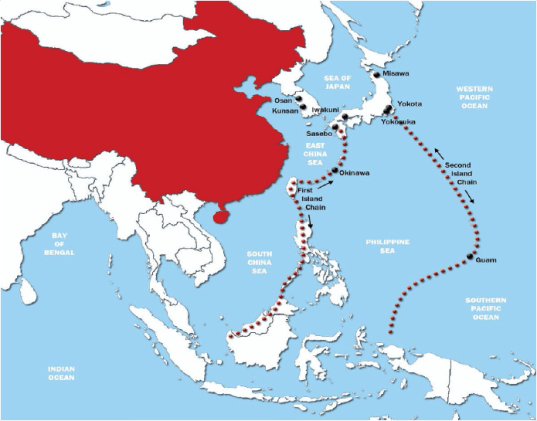
The second issue is Xi Jinping and his warning that China will take Taiwan by force if necessary. The United States and a number of allies have stated that they will come to the aid of Taiwan if it is invaded. The United States is involved in a number of treaties including ANZUS, the Quad, and AUKUS. The ANZUS treaty was ratified in 1951, Thailand [1951], Philippines [1951], Japan [1952], South Korea [1953] and Taiwan [1954].
Then there is NATO, the French have a presence in the South Pacific, Germany is patrolling the South China Sea and the United Kingdom is also involved through the Quad alliance. Whilst Australia burned the French in dumping their error riddled submarine program, once the French elections are completed in 2022, there will be the opportunity for rebuilding the relationship, this also involves the United Kingdom and the United States.
The flashpoint will be either access to the South China Sea or the invasion of Taiwan. On the second point, an invasion of Taiwan by China will not be an accidental action, this will be planned and executed. The Chinese air force regularly flies bombers and fighter jets into Taiwanese EEZ and a miscalculation may be the justification for escalation. They are attempting to create a flashpoint so they have an excuse to invade Taiwan in the eyes of the international community.
A Chinese amphibious assault will be required to take Taiwan by marines. There is some concern if Taiwan will fight or capitulate, they have extensive hardware but there is a number of questions if Taiwanese troops are trained to the level required and whether they have the will to fight. They may just give in and wait for the United States and the international community to come to their aid. One expected troops will be massed for training and exercises and a surprise invasion will begin.
The Chinese marines will be exposed in the trip over, the Taiwanese navy has older decommissioned United States Kidd Class destroyers transferred to Taiwan, decommissioned Knox class anti-submarine frigates, Oliver Hazard Perry class frigates and French La Fayette class stealth type frigates. The Taiwanese air force has F-16 fighters, Mirage 2000 fighters, Taiwanese developed fighters and older Northrop F-5 fighters soon to be retired. They have plenty of air defence and anti-ship missiles and air defence radar but no submarine coverage.
The Quad alliance of Japan, India, Australia and the United States is a huge concern for China, should conflict occur, both Japan and India will be vital to the alliance. China is surrounded, India has a land border to the west and direct access to the Indian Ocean. There have been border disputes between China and India since the 1960s, there has been recent escalation and India has a similar population and is armed with nuclear weapons.
Should a conflict break out, India would be a key player, they should only patrol the Indian Ocean denying Chinese transit. They should not at any cost become involved in Pacific Ocean operations, they have over 150 ships and submarines and a sizable fleet air wing. India shares a land border with China and skirmishes have erupted along the disputed border. A conflict with the United States would draw India into the fight, India has the ability to open a second front with China to their west and divert resources. India then has the opportunity to reclaim disputed territory and stretch China resources.
China imports its energy from the middle east, this must transit through the Indian Ocean right past India through the Straits of Malacca to the South China Sea. The Indian navy would patrol the Indian Ocean limiting Chinese trade through Malacca Strait and Lombok Strait. The US navy utilises logistical support and resupply through Singapore’s Changi naval base. This would effectively starve China of energy, shut down their industry and their economy. An overland oil pipeline is not the answer, it is neither practical nor feasible.
Japan limits Chinese movement northwards to the Sea of Japan with a bottleneck with South Korea. The island chain south of Japan is the Ryukyu Islands including the larger islands of Ōsumi-shotō, Amami-shotō in the north past Okinawa to Sakishima-shotō in the south to Taiwan. Extending south from Taiwan, the islands of the Philippines and Malaysia prevent naval movement eastward with Vietnam forming the land border, the choke point is Singapore and Indonesia. Unfortunately, China has territorial disputes with the Philippines, Vietnam, Malaysia, Brunei and issues with Indonesia encroaching on their territory.
Guam with Anderson Air Force base, an extensive munitions supply and fuel capability. This is the main base for US troops that will also resupply South Korea, Japan and the Philippines. The US Navy has extensive infrastructure on the mid section of the island in Apra harbor, Marines and the US Army have less resources on the island. The naval facilities are staging points for submarines, surface ships and troops that includes logistical support.
Australia has Tindal air base in Katherine, 320 km south east of Darwin. An Australian military base in Darwin also supports a United States marine base. US Air Force bombers from B-52 and B-1 have the ability to conduct missions flying to Southern China, jet fighters from F-15, F16, F/A-18 have the ability to be based at Tindal with F-22 and F-35 stealth fighters in atacking roles.
Western Australia has a couple of part-time air force bases with Curtin Air Base near Derby and Learmonth Air Base near Exmouth that can be utilised along with Amberley Air Base in outer Brisbane, Townsville Air Base with the remote Cape York Scherger Air Base in Queensland. The forward air bases Curtin, Darwin, Tindal and Scherger really lack solid infrastructure and should be upgraded for a more dominant roles.
The Philippines has the Subic Bay naval facilities operated by the US navy right up to their withdrawal in 1992. The Clark Air Base was abandoned by the US Air Force in 1991 after Mt Pinatubo blew, this would allow flights in close proximity to the South China Sea. Clark is still an operational airport, now used for budget airlines removing congestion away from Ninoy International Airport in Manila.
The United States strategic bombers that include the B-52H stratofortress, the B-1 Lancer and B-2 Sprit aircraft that can also carry extensive missile loads. Whilst a B-52 cannot fly over mainland China to drop cluster bombs, it can carry 12 external pylon mounted cruise missiles on the wongs and a further 8 missiles in the bomb bay. With a 1000 km range, the B-52 has the potential to launch cruise missile attacks from outside the first island chain.
The B-1B Lancer can fly at supersonic speeds and carry 8 x air launched cruise missiles [800 – 1600 km range], 24 x short-range attack missiles with a range of 200 km or 84 x 500 lb bombs. This is massive firepower, with anti-ship missiles, the Chinese navy is locked in the first island chain with any ship escaping is exposed to missile attack.
So why bother going head-to-head? Set up a naval blockade behind the second island chain to prevent Chinese navy access to the Pacific and strangle Chinese shipping and their economy. Use bombers to carry out select missile runs with aircraft carriers in the open ocean preventing a breakout of merchant shipping in the South China Sea and associated bottlenecks of Malacca, Sunda and Lombok straights to the south and Philippine Sea to the north.
 Observations in an undemocratic world