
In what could be the heavyweight battle of the chronographs, the Rolex Cosmograph Daytona v the Omega Speedmaster is an interesting comparison. Both are iconic chronographs from two of the best known Swiss watchmakers, they both have incredible pedigrees, they are sought after and both a premium product.
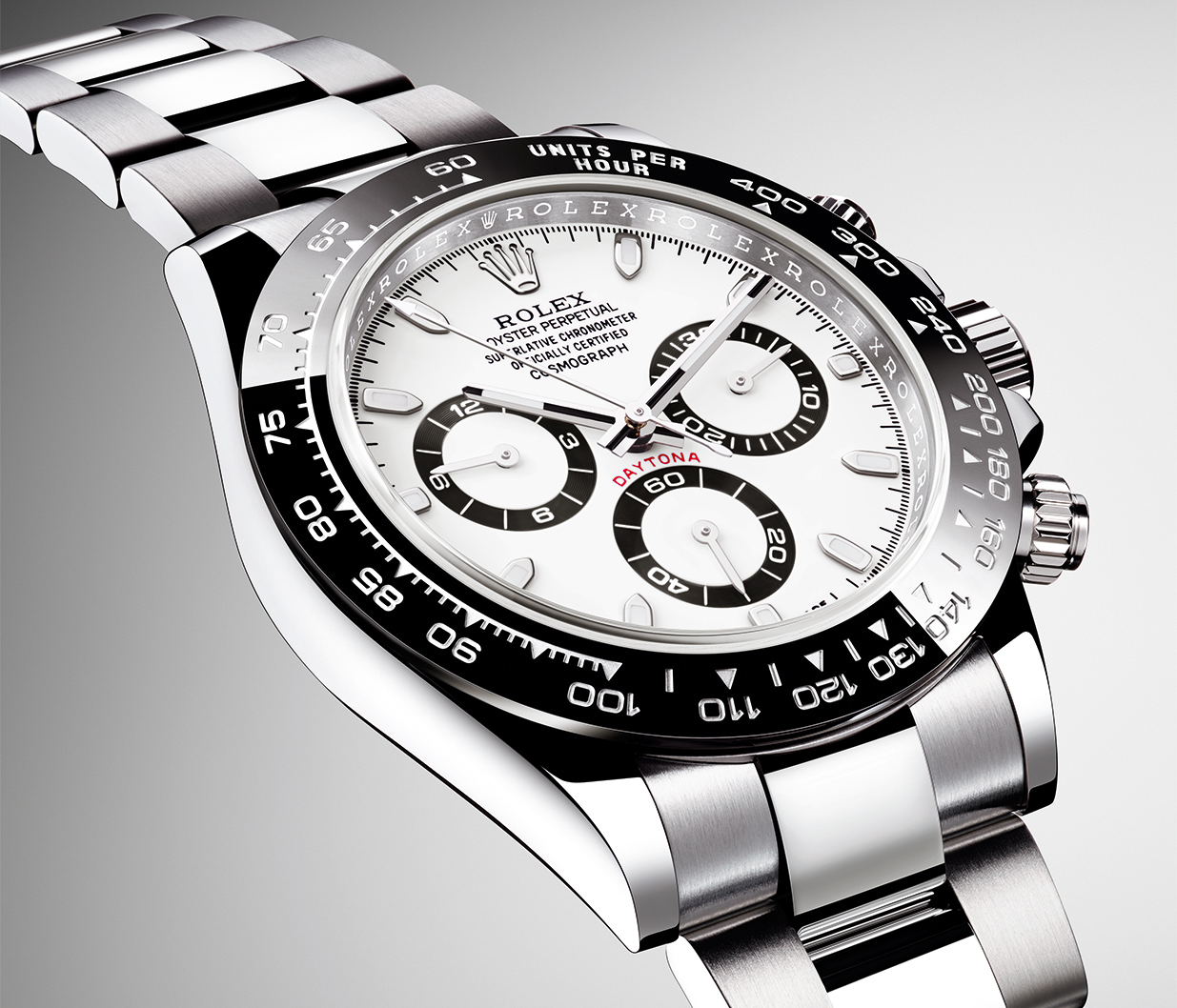
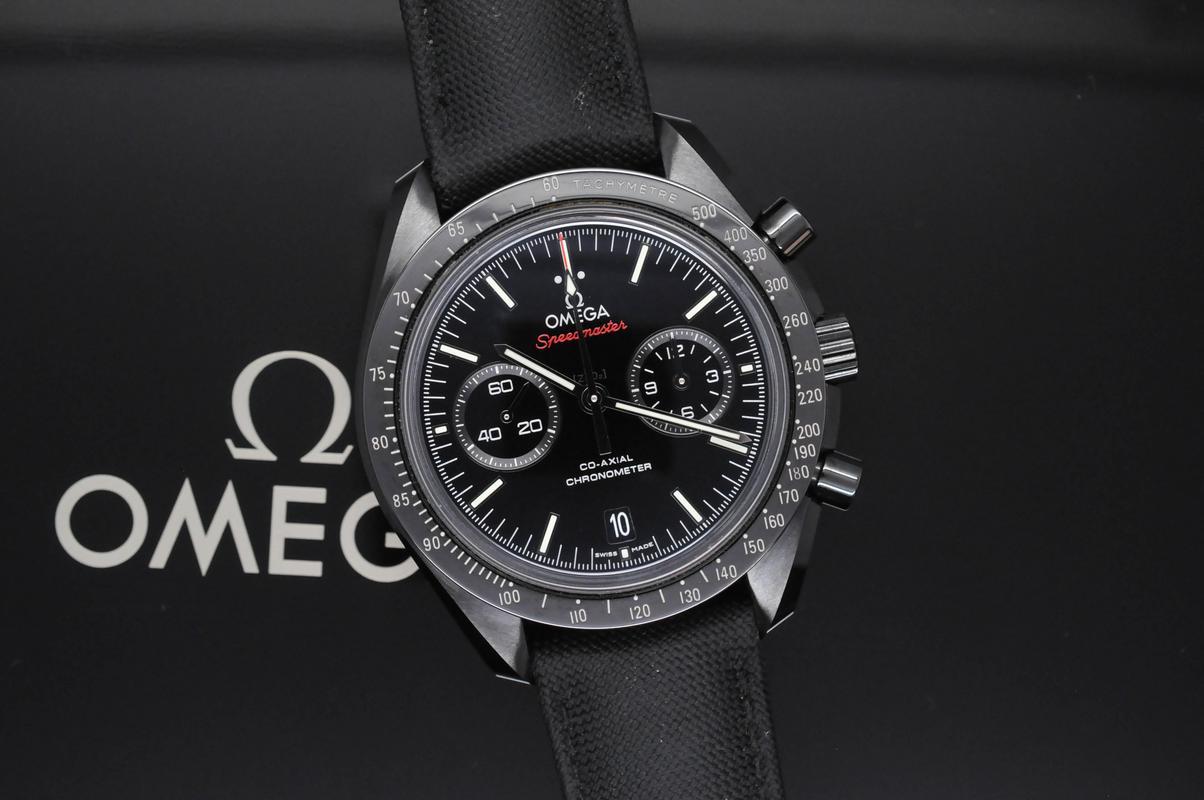
Without going too strongly into reference numbers, the Rolex Cosmograph Daytona reference number 116500LN and Speedmaster Dark Side of the Moon reference number 311.92.44.51.01.003 was selected. Both are automatic movements, both are fitted with sapphire crystal and both the Daytona and Speedmaster are priced in the $15k region – an expensive purchase.
Starting with the Daytona, it is difficult now to believe the Daytona wasn’t held in the same high regard back in 1960s. Who would have guessed that distributors had a hard time moving this chronograph and the early chronographs, now known as the pre-Daytona from 1955 to 1961 were discontinued.
When Rolex became the official timekeeper of the Daytona International Speedway in 1962, the Cosmograph Reference 6239 was introduced and nicknamed the Daytona. The original racetrack run partially on the beach was now run solely on asphalt from 1959 and the Cosmograph was designed specifically for race timing.
These days, when you walk into a Rolex boutique outside of Hong Kong you have difficulty even getting to try one on. You can put your name on the waiting list and then spend a couple of years wondering when they will call you, a two year wait-list is common for anything less than a Datejust. Technical specifications for the Daytona include the 4130 in-house movement with 72 hours power supply. Up until 1988, the Valjoux Calibre 72 sourced hand-wound movement was fitted to the timepiece.
Rolex used Zenith’s El Primero movement, renamed the 4030 with some modifications including reducing frequency from 36,000 to 28,800 vph that increased the power reserve. The 4130 was introduced in 2000 and has 44 jewels, shock absorbers for the balance and column wheels in-house blue Parachrom hairspring. Due to lock-down and a lack of international travel, it has been some time since I have had a Daytona strapped to my wrist. The Daytona I selected for comparison on the Rolex page is oystersteel, that’s 903 stainless steel, the oysterlock clasp fitted to the three piece oyster bracelet.
The history of the Speedmaster is impressive, first manufactured as a racing timer, the Speedmaster was a surprise view on the wrist of moonwalking astronaut Ed White on Gemini IV along with James McDivitt who stayed inside the capsule. Whilst an unofficial timepiece of NASA astronauts during the Gemini project, the Speedmaster was the only watch to meet stringent NASA testing requirements for the Apollo program. Astronaut Wally Shirra purchased one from a Houston jeweller and wore during his Mercury mission on Sigma 7 on the 3rd of October 1962.
The Speedmaster I selected for comparison isn’t the legendary moonwatch, the Speedmaster Dark Side of the Moon isn’t fitted with the 1863 hand wound movement or hesalite crystal. The moonwatch with the 1861 movement and hesalite crystal is almost identical to the NASA 321 movement versions but lacks that scratch resistance of the sapphire crystal. The 9300 co-axial movement fitted to the reference 311.92.44.51.01.003 with a 42.25 mm ceramic case is certainly solid. This automatic movement requires less maintenance thanks to George Daniels invention, the silicon hairspring is resistant to magnetic fields.
I really like the sapphire sandwich of the Speedmaster, the view of the 9300 movement through the caseback showcases the movement as the watchmaker intended. I am a big fan of the Speedmaster Professional Moonwatch, this is a classic 1950s design. However, looking at the Dark Side of the Moon, now I am not so sure, and I am leaning more towards the Daytona as my selection.
 Observations in an undemocratic world