
Having upgraded my failed Heinrichs Weikamp 2N dive computer to the supposedly feature rich OSTC3 model, I am seeing major improvements from the 2N. The milled billet aluminum housing is an improvement over the polymer plastic housing of the 2N although I actually preferred the screen configuration of the 2N over the OSTC3.
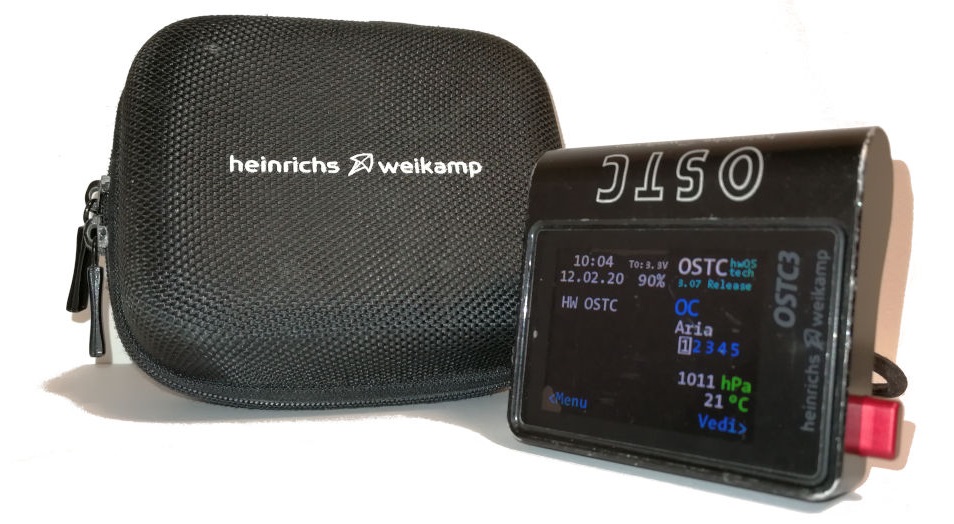
The Buhlmann ZHL-16C algorithm with user programmable gradient factors is greatly enhanced, this is a much better design from the 2N. I dived the computer side-by-side with my proven and dependable VR3 computer to compare algorithms in what one expects to be comparable profiles. When diving square decompression stop profiles, the two computers pretty much calculated similar profiles less the two deep stops programmed into the VR3. However, multilevel profiles were reasonably close bar a few disturbing occurrences once I reset the gradient factors to become more conservative.
Much to my surprise, when I dived the 2N alongside the VR3 and old Aladin Sport dive computer, the no-decompression limits varied enormously; the 2N give anywhere from 30 to 45 minutes more time at each level than the two other Buehlmann algorithm computers – alarm bells started to ring. Whilst it may be argued the Aladin Sport utilises a Buhlmann ZHL-8 algorithm, the differences in no-decompression limits are extraordinary. This makes me nervous, the last thing I want to do is get bent diving within the limits of a particular dive computer, this time I am a little more cautious than I usually am.
Still, despite my apprehension, I still dive the Heinrichs Weikamp OSTC2 dive computer as the computer is easy to navigate, easy to gas switch and reasonably reliable. As with any decompression application, I dive with two depth/time monitors so I am happy following my main dive computer with the OSTC2 as my redundant device.
 Observations in an undemocratic world